
Preparing a child for their first year of primary school is a major milestone that involves organizing a vast array of books, stationery, and personal items. In Singapore, Primary 1 students are expected to manage their own belongings, making clear and durable labeling essential to prevent items from ending up in the lost-and-found bin. The most effective alphabet stickers for a Primary 1 book-labeling checklist are highly durable, water-resistant vinyl stickers featuring clear, high-contrast, sans-serif fonts. Because young children handle their school supplies daily, these labels must withstand constant friction, sweat, and occasional spills. While simple paper stickers are cost-effective for dry, low-wear items like notebooks, flexible vinyl or synthetic stickers are necessary for curved surfaces like pencils and items exposed to moisture.
Core Selection Criteria for Primary 1 Alphabet Stickers
When selecting alphabet stickers for a Primary 1 student, readability is the first and most critical factor. Children at this stage are still developing their reading confidence, and school staff need to identify owners quickly during busy classroom activities. Opt for clean, sans-serif fonts such as Arial or Helvetica, which mimic the print styles children learn in school. Avoid highly decorative, cursive, or stylized fonts that can confuse young readers or make the letters difficult to distinguish from a distance. The size of the letters should be balanced; they must be large enough to read clearly on a book cover but small enough to fit neatly on narrow pencil cases or ruler edges.
Adhesive strength is another vital consideration for school environments. A student’s school bag is a high-friction environment where textbooks, files, and pencil cases constantly rub against each other. Standard craft stickers often lack the adhesive power required to stay attached under these conditions, leading to peeling corners and lost labels within the first few weeks of school. Look for stickers with strong, pressure-sensitive acrylic adhesives that bond securely to plastic, paper, and laminated surfaces.
Products mentioned in this guide
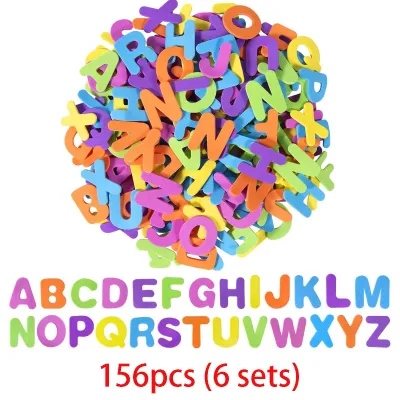
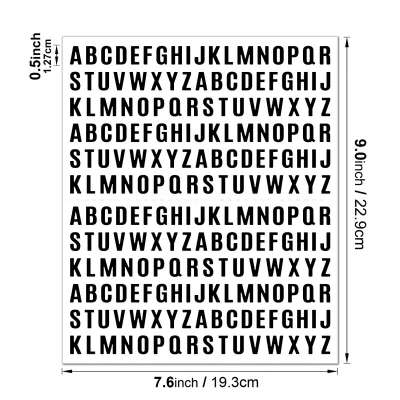
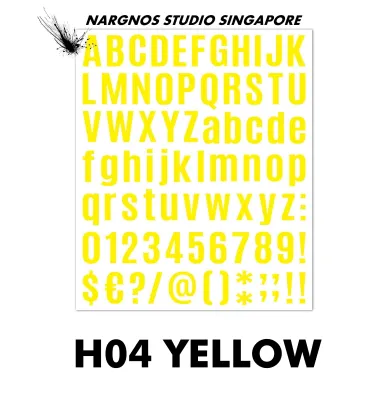
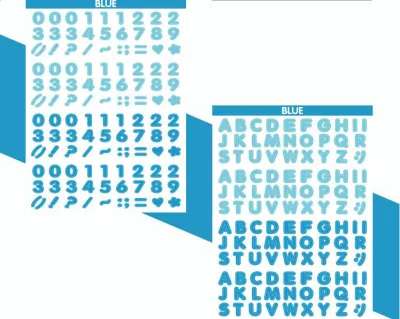
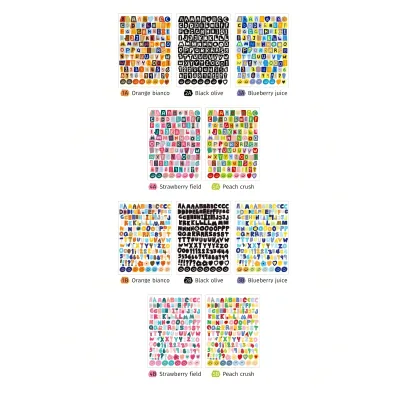
![[SG SELLER] [FREE SHIPPING] Gold Silver Foil Alphabet Numbers Stickers Scrapbook Scrapbooking Calendar Planner Art Craft](https://img.lazcdn.com/g/ff/kf/S428860c7f38747cf960c1c9adf4c1b9fC.jpg_400x400q80.jpg_.webp)
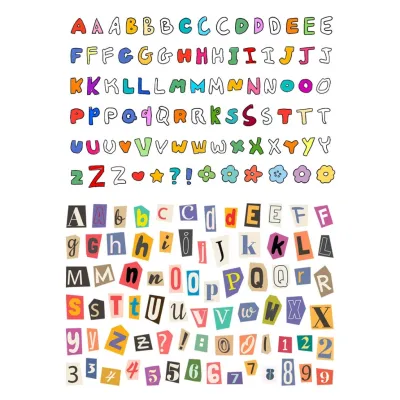
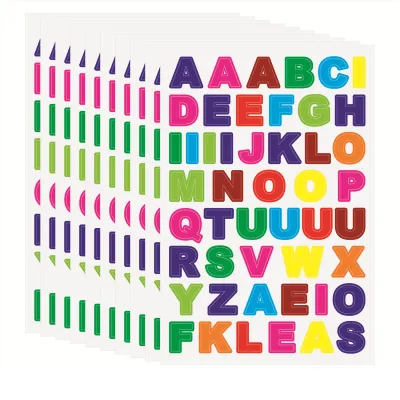
Prices are valid at publication and may change. Please refer to the product page for the latest price.
Finally, the stickers must offer excellent resistance to water, oil, and smudging. Primary school children frequently handle their stationery with warm, sweaty, or sticky hands, especially after recess or physical education classes. If the sticker material or ink is not resistant to moisture and skin oils, the letters will quickly fade, smudge, or disintegrate. Choosing materials that seal the ink beneath a protective layer ensures the labels remain legible throughout the entire academic year.
Matching Sticker Types to Specific School Items
Not all school supplies are shaped the same way, which means a single type of sticker may not work perfectly for every item on your checklist. Matching the physical characteristics of the sticker to the shape, material, and usage pattern of each stationery item is key to ensuring long-lasting labels. By understanding how different materials interact, you can apply the right sticker format to the right surface for maximum durability.

Labeling Books, Folders, and Notebooks
Books, folders, and notebooks present large, flat surfaces that are ideal for labeling, but they also experience significant wear and tear as they are slid in and out of school bags. For these items, background visibility is a primary concern. Opaque alphabet stickers, such as those with solid white, yellow, or bright pastel backgrounds, offer the best contrast against colorful, patterned, or dark book covers. While transparent stickers can look sleek and minimalist, they often become unreadable when placed over busy illustrations or dark-colored folders, defeating the purpose of the label.
To ensure school staff and students can easily identify books, aim for a minimum font height of 5mm to 8mm. High-contrast color combinations, such as bold black lettering on a solid white background, provide the quickest recognition. This is particularly helpful when teachers are sorting through stacks of exercise books or when students are looking for their own materials during transition times between classes.
Another challenge with books and plastic folders is flexibility. These items bend and flex as they are handled, which can cause rigid stickers to lift at the edges over time. To prevent edge-lifting, select flexible vinyl or thin synthetic stickers that can bend along with the book cover without losing their bond. Avoid thick, rigid plastic labels or heavy paper stickers on items that are prone to bending, as the physical tension will eventually pull the adhesive away from the surface.
Labeling Pencils, Erasers, and Small Tools
Small stationery items like pencils, pens, erasers, and rulers require a completely different approach due to their limited surface area and curved shapes. Labeling cylindrical objects like pencils is notoriously difficult because the curved surface exerts constant outward tension on the sticker. A standard flat sticker applied to a pencil will quickly peel off at the edges. To solve this, use narrow, flexible stickers designed for wrap-around placement, where the sticker wraps completely around the pencil and overlaps itself, bonding the adhesive directly to the sticker material for a secure hold.
Because space is highly constrained on small tools, you will need to adapt your labeling strategy. Instead of trying to fit a full name using large alphabet stickers, use smaller letters to represent the child’s initials, a shortened first name, or their class number (such as “1A”). This keeps the label compact while still providing enough information to identify the owner. Pre-cut, narrow strip stickers are particularly useful for these tiny surfaces as they fit neatly along the flat sides of rulers or the narrow barrels of pens.
Furthermore, small tools are held constantly in warm, active hands, making them highly susceptible to sweat and friction. Paper stickers will quickly turn to pulp or rub clean under these conditions. For writing instruments and small tools, always opt for laminated or vinyl alphabet stickers that are completely smudge-proof and sweat-resistant. This ensures that even after months of daily writing and drawing, the letters remain perfectly intact and readable.
Evaluating Material and Durability Claims
When shopping for alphabet stickers, you will encounter a wide variety of material descriptions and marketing claims. Understanding the physical differences between these materials allows you to make an informed decision based on actual performance rather than unverified product descriptions. The two most common materials you will find are vinyl and paper, each offering distinct advantages and limitations.
Vinyl stickers are the gold standard for school labeling due to their inherent water resistance, high tear strength, and excellent flexibility. Unlike paper, vinyl is a synthetic plastic material that does not absorb moisture, meaning it will not disintegrate when exposed to water bottles, rain, or sweaty hands. It also stretches slightly, allowing it to conform to curved surfaces without tearing or creasing. Paper stickers, while highly affordable and easy to write on, lack these protective qualities and are best reserved for dry, low-contact items like the inside covers of notebooks.
The finish of the sticker also plays a role in its durability and usability. Matte finishes offer a non-reflective surface that is easy to read under bright classroom lights and can often be written on with standard pens if you need to add extra details. However, matte surfaces can sometimes be more prone to scuffing. Glossy finishes, on the other hand, provide a shiny, protective barrier that resists scratches and repels liquids exceptionally well, though they can be highly reflective and difficult to write on without specialized markers.
To verify durability claims when purchasing, look closely at the product specifications on the packaging or listing. True waterproof stickers will often specify that they are made from vinyl, polyethylene (PE), or polypropylene (PP). If you plan to label items that will be washed regularly, such as water bottles or lunch boxes, check for explicit “dishwasher-safe” or “microwave-safe” ratings. Avoid products that make vague claims like “highly durable” without specifying the actual material or adhesive type, as these are often standard paper stickers with a thin, non-waterproof coating.
Building a Conditional Shortlist for Online Shopping
E-commerce platforms offer an overwhelming number of alphabet sticker options, making it essential to have a structured filtering framework to find the best fit for your Primary 1 checklist. Start by evaluating the sheet layout of the stickers. Alphabet stickers are typically sold either as pre-cut individual letters on flat sheets or as continuous rolls. Pre-cut sheets are highly organized, allowing you to quickly find and peel the exact letters you need, which is ideal for parents with limited preparation time. Continuous rolls may offer more stickers for a lower price, but they can be harder to manage and may require manual cutting.
Next, leverage the power of buyer reviews to verify the actual quality of the stickers. Product listings often use digital renders that make the stickers look flawless, but real-world performance can differ. Look for buyer-uploaded photos in the review section to assess the true print clarity, color accuracy, and dimensions. Pay attention to photos showing the stickers applied to actual school items; this will give you a realistic idea of how well they adhere to curved surfaces and whether the font size is appropriate for your needs.
Finally, learn to identify red flags that indicate a low-quality product. Be cautious of listings that omit material specifications entirely or use vague terms like “high-quality paper-plastic blend.” Another red flag is the lack of clear photos showing the entire alphabet sheet, which can hide poor letter distribution (such as having too few common vowels like A, E, and I). Unclear font styles that make letters like ‘I’ and ‘l’ or ‘O’ and ‘0’ look identical should also be avoided, as they will cause confusion for young readers and teachers alike.
Best Practices for Application and Longevity
Even the highest-quality alphabet sticker will fail prematurely if it is not applied correctly. To maximize the lifespan of your labels and ensure they survive the school year, follow a systematic application process. The first step is thorough surface preparation. Before applying any sticker, clean the target surface to remove dust, oils, fingerprints, and manufacturing residues. For plastic and metal items, wiping the surface with a clean cloth dampened with water and a drop of mild dish soap is highly effective. Ensure the surface is completely dry before proceeding, as any trapped moisture will ruin the adhesive bond.
When applying the sticker, position it carefully and press down firmly from the center outward to the edges. This technique pushes out any trapped air bubbles and ensures full contact between the adhesive and the surface. Pay extra attention to the corners and edges, pressing them down with your thumb or the edge of a plastic card to seal them tightly. Once applied, allow the adhesive to cure undisturbed for at least 24 hours before placing the items in your child’s school bag. This curing period is crucial for the adhesive to form a permanent, high-strength bond.
Throughout the school year, perform routine checks on your child’s labeled items, especially after school holidays or periods of heavy use. If you notice a sticker beginning to peel at the corners, replace it promptly to prevent the item from being misplaced. When it comes time to remove or replace a sticker, do so carefully to avoid damaging the underlying surface. For stubborn vinyl stickers, applying gentle heat from a hairdryer on a low setting will soften the adhesive, allowing you to peel the sticker off smoothly. Any remaining sticky residue can be easily cleaned by rubbing it with a small amount of cooking oil or eucalyptus oil on a soft cloth, followed by a quick wipe with soapy water.
Frequently Asked Questions (FAQ)
Can I write on transparent alphabet stickers with standard pens?
Most transparent alphabet stickers are made from non-porous plastic or vinyl materials, which do not absorb liquid inks. Standard ballpoint pens, gel pens, and water-based rollerballs will not adhere to these surfaces, causing the ink to bead up, smear, or rub off almost immediately. If you need to add handwritten information to a transparent sticker, such as a class name or subject, you must use a permanent marker or a specialized multi-surface pen. After writing, allow the ink to dry completely for several minutes without touching it to ensure it sets properly and does not smudge.
Are pre-printed name labels better than DIY alphabet stickers?
Pre-printed name labels offer excellent convenience, a uniform appearance, and high durability, as they are professionally printed with your child’s full name and class details. However, they require advance ordering, have longer delivery times, and cannot be easily modified if your child’s class or details change mid-year. DIY alphabet stickers, on the other hand, provide immediate customization, allowing you to label items instantly with custom abbreviations, initials, or specific color codes. They are highly cost-effective and versatile, making them an excellent choice for last-minute school preparation or for labeling items of unusual shapes and sizes.
Community discussion
Share your experience or ask a question. Comments are reviewed before publication.