
Selecting a freestanding whiteboard for home-based learning involves balancing physical safety, magnetic strength, and space efficiency. When teaching young children using magnetic letters, the board must not only provide a smooth writing surface but also feature a robust, ferromagnetic backing that prevents heavy letter tiles from sliding down. In typical Singapore apartments where space is highly valued, choosing a mobile or adjustable stand ensures the learning station can be easily tucked away when not in use. By focusing on structural stability, magnetic receptivity, and ergonomic design, parents can create an engaging, safe, and durable educational environment at home.
To make an informed decision, it is essential to understand how different frame designs, magnetic backings, and surface coatings interact. A whiteboard that wobbles during use or fails to hold magnetic letters securely can quickly lead to frustration for both parent and child. This guide outlines the key physical specifications, safety considerations, and maintenance standards to look for when selecting a whiteboard with a stand for your home.
Core Selection Criteria for a Freestanding Kids' Whiteboard
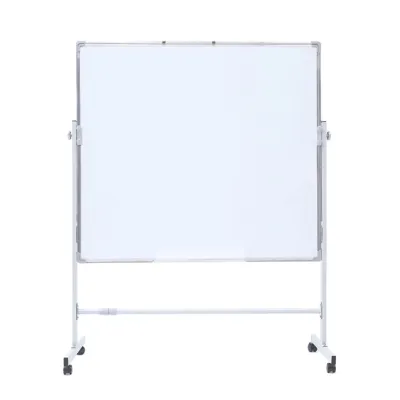
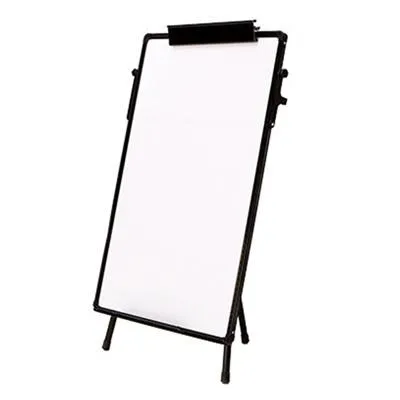
Frame stability is the most critical safety factor when choosing a freestanding whiteboard for children. Because young kids naturally lean on surfaces, pull themselves up, or push against objects during play, a flimsy stand poses a significant tip-over risk. Look for stands with a wide, low-center-of-gravity base that distributes weight evenly across the floor. H-frame designs, which feature a flat T-bar base on either side connected by a central crossbar, generally offer excellent stability and are less prone to tipping than lightweight tripod or A-frame easels. If the stand is equipped with wheels for mobility, ensure that all four casters feature robust, independent locking mechanisms to keep the board stationary during active learning sessions.
Products mentioned in this guide
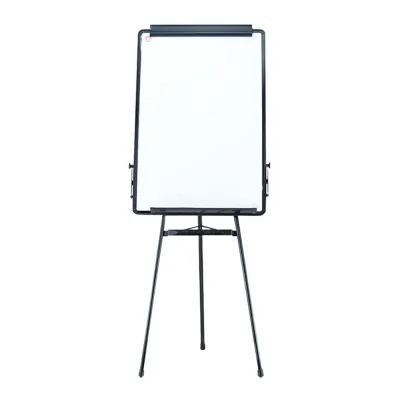
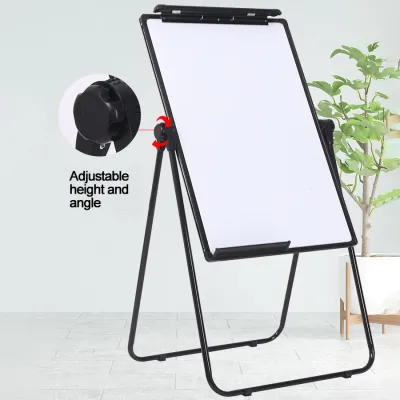
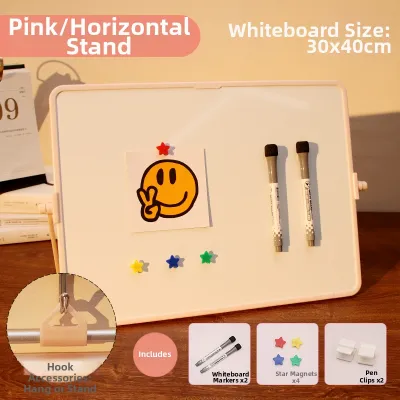
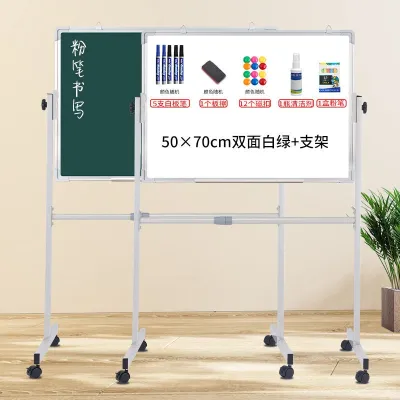
Prices are valid at publication and may change. Please refer to the product page for the latest price.
Height adjustability is another essential feature that ensures the whiteboard grows alongside your child. Children’s physical reach changes rapidly between toddlerhood and early primary school, meaning a fixed-height board will quickly become uncomfortable or unusable. Opt for stands that offer a wide range of height adjustments, ideally allowing the bottom of the board to sit as low as 50 cm from the floor for seated toddlers, and extending up to 110 cm or more for standing older children. When evaluating adjustability, prioritize dual-locking knobs or spring-loaded pin-lock systems over simple friction-based clamps. Friction clamps can gradually slip under downward pressure, whereas pin-lock systems physically lock the frame into pre-drilled holes, preventing sudden drops.
Evaluating the physical footprint of the stand against your available living space is crucial, especially in cozy residential layouts. While a larger writing surface provides more room for spelling out long sentences, a massive stand can easily overwhelm a living room or study corner. Measure the depth of the stand’s base rather than just the width of the board; some stable stands require up to 60 cm of floor depth to prevent tipping. For homes where space is limited, look for stands that feature a folding mechanism, allowing the entire unit to be collapsed flat and stored behind a door or wardrobe when school hours are over.
Ensuring Magnetic Compatibility for Letter Tiles
Not all whiteboards are created equal when it comes to magnetic receptivity. Many budget-friendly whiteboards utilize a melamine surface over a non-magnetic medium-density fibreboard (MDF) core, which will not hold magnetic letters at all. To ensure compatibility with educational letter tiles, the board must feature a steel backing. Look specifically for terms like “painted steel,” “lacquered steel,” or “porcelain-on-steel” in the manufacturer’s specifications. These materials contain a layer of iron-bearing steel beneath the dry-erase coating, providing the necessary ferromagnetic surface for magnets to cling to.

Understanding the weight limits and magnetic pull of your specific letter sets is vital for a frustration-free experience. Standard educational magnetic letters typically feature small, lightweight ferrite or rubber magnets glued to the back of molded plastic or foam shapes. Because these magnets are relatively weak, they require a highly receptive steel backing to overcome gravity. If the steel sheet inside the whiteboard is too thin, or if the dry-erase coating is excessively thick, the magnetic pull will be severely weakened, causing the letters to slide down the board or spin upside down. Heavier wooden magnetic letters require an even stronger magnetic connection to stay in place.
To verify the magnetic strength of a newly purchased whiteboard, perform a simple sliding test immediately upon delivery. Place several of your heaviest magnetic letters on different areas of the board, including the top corners, the center, and the bottom edges. Observe whether the letters remain firmly in place or slowly drift downward. Gently tap the side of the board; a high-quality magnetic surface should hold the letters securely without any shifting or sliding. If the letters slide or fall off with a light touch, the steel backing may be insufficient, and you should consider returning the product under the retailer’s defect policy.
Sizing and Ergonomics for Different Learning Stages
Designing an ergonomic learning space requires mapping the whiteboard’s height and dimensions to your child’s physical reach and viewing angles. For toddlers aged two to four, the active learning zone is relatively small, typically extending from 40 cm to 80 cm above the floor. Placing magnetic letters within this zone allows them to manipulate the tiles without straining their shoulders or bending uncomfortably. For early primary students aged five to seven, the comfortable reach zone extends up to 110 cm. Ensuring the board can be adjusted to these specific heights prevents physical fatigue and helps maintain focus during lessons.
Double-sided whiteboards offer significant advantages for collaborative play and structured lessons, though they come with design trade-offs. A dual-sided board mounted on a central pivot allows a parent to pre-arrange a spelling lesson or visual aids on one side, while the child uses the opposite side for active writing and letter placement. This setup is also highly suitable for siblings, allowing two children to work simultaneously on opposite sides of the board. However, double-sided models are inherently heavier than single-sided ones, which can make the stand top-heavy. If choosing a double-sided board, verify that the frame features a secure, heavy-duty locking pin to prevent the board from spinning unexpectedly while a child is writing.
Accommodating both seated and standing configurations keeps learning dynamic and engaging. Standing activities encourage gross motor development, bilateral coordination, and active physical engagement, making them ideal for energetic children who struggle to sit still. Conversely, seated sessions are better suited for focused writing practice or longer storytelling activities. To support both styles, the stand’s minimum height setting must allow the bottom edge of the board to sit low enough that a seated child can comfortably reach the entire writing surface without slouching forward.
Surface Quality and Observable Maintenance Standards
Evaluating the quality of the whiteboard coating is essential for ensuring long-term usability and easy cleanup in a busy home environment. High-quality coatings resist “ghosting,” which is the permanent staining left behind by dry-erase marker pigments over time. Painted steel surfaces offer a practical balance of durability and affordability for home use, while premium porcelain (ceramic) surfaces provide exceptional resistance to scratches and ghosting. Avoid cheap melamine surfaces, which wear out quickly under frequent use and are highly prone to permanent staining.
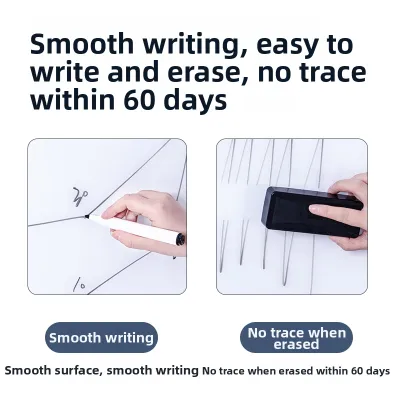
Singapore’s tropical climate and high relative humidity can significantly affect dry-erase ink performance and surface maintenance. High humidity can cause dry-erase ink to dry more slowly, leading to smearing, or conversely, cause the ink to adhere more stubbornly to the board’s surface if left on for extended periods. To verify the erasability of your board and marker combination, perform a simple trial test: write a few strokes on the board, wait exactly 60 seconds, and wipe them away with a dry microfiber cloth. The ink should lift cleanly without leaving a faint shadow or requiring vigorous scrubbing. If ghosting occurs during this initial trial, it indicates that the specific marker ink and board coating combination is not compatible, or that the board’s protective seal is insufficient.
To maintain the board’s surface without exposing your family to harsh chemicals, use only safe, non-toxic cleaning methods. Avoid abrasive scrubs, window cleaners, or strong chemical solvents, which can permanently strip the protective silicone coating from the whiteboard, making it highly susceptible to future staining. For daily cleaning, a damp microfiber cloth is usually sufficient. For deeper cleaning or to remove stubborn marker residue, use a mild solution of dish soap and warm water, or a diluted isopropyl alcohol solution (70% or lower) applied by an adult. Always wipe the board dry with a clean microfiber cloth after cleaning to prevent moisture from sitting on the surface.
Over time, constant contact with plastic magnetic letters, rough erasers, or accidental use of permanent markers can cause surface degradation. Look for observable signs of wear, such as micro-scratches on the surface, persistent graying or yellowing of the board, or areas where dry-erase ink consistently smears instead of erasing cleanly. These signs indicate that the protective topcoat has worn away, allowing marker pigments to penetrate the porous layers beneath. Once a board reaches this stage of degradation, it should be replaced to maintain a hygienic and functional learning tool.
Pre-Purchase Checklist for Building Your Shortlist
Before finalizing your purchase on an e-commerce platform or at a local stationery store, use this concrete verification checklist to ensure the whiteboard meets all your household’s needs:
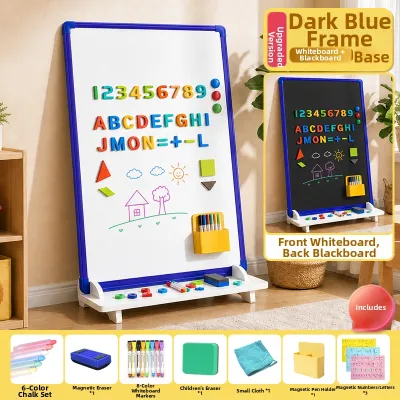
- Verify Included Accessories: Check if the whiteboard package includes essential accessories such as a dedicated marker tray, a magnetic eraser, and non-toxic, low-odor dry-erase markers. A sturdy marker tray is particularly important for keeping magnetic letters and markers organized and out of reach of younger siblings when not in use.
- Assess Assembly Requirements: Review the product description or user manual to determine the complexity of attaching the board to the stand. Look for models that include all necessary assembly tools, such as hex keys or wrenches, and check if the instructions are clear and easy to follow. A poorly assembled stand can lead to structural instability and wobbling.
- Review Retailer Return Policies: Ensure the retailer offers a clear, robust return policy specifically covering manufacturing defects. This is crucial for addressing issues such as warped frames, uneven magnetic pull, or shipping damage that may not be visible until the product is fully assembled in your home.
- Check Floor Protection: Inspect the product specifications to see if the stand's feet or casters are made of hard plastic or metal, which can easily scratch parquet, laminate, or vinyl flooring. If necessary, budget for additional floor protection accessories to safeguard your home's surfaces.
By systematically verifying these details, you can confidently select a stable, highly functional, and durable whiteboard with a stand that will support your child’s educational journey for years to come.
Frequently Asked Questions (FAQ)
Can I use regular fridge magnets on a freestanding whiteboard?
While some lightweight fridge magnets may work, many decorative fridge magnets are too heavy or have weak magnetic backings that will cause them to slide down a freestanding whiteboard. Refrigerator doors typically feature a much thicker sheet of steel than the backing of a portable whiteboard, allowing them to hold heavier magnets. For educational activities, it is highly recommended to use lightweight, flat rubber sheet magnets or specialized plastic educational magnetic letters, which are specifically designed to cling securely to thinner steel whiteboard backings without sliding or spinning.
How do I protect my floors from the whiteboard stand?
To protect delicate home flooring such as parquet, laminate, or luxury vinyl tiles from scratches, inspect the base of the whiteboard stand before assembly. If the stand features stationary metal or hard plastic feet, apply heavy-duty, self-adhesive felt pads to the bottom of each foot to distribute the weight and prevent scuffing. For mobile stands with casters, consider replacing the standard hard plastic wheels with soft polyurethane rubber casters, which roll smoothly without scratching. Alternatively, you can place the entire whiteboard stand on a non-slip foam play mat, which not only protects the floor but also provides a comfortable, cushioned area for your child to stand or sit during lessons.
Is a double-sided whiteboard necessary for home learning?
While a double-sided whiteboard is not strictly necessary, it offers significant practical benefits for structured home learning and multi-child households. A dual-sided design allows you to keep one side permanently set up with calendar grids, sight words, or daily schedules, while using the other side for active writing and magnetic letter play. It also enables siblings to use the board simultaneously without interfering with each other’s work. However, double-sided boards are heavier and can make the stand more top-heavy. If you choose a double-sided model, ensure the stand has a wide, stable base and a secure locking mechanism to prevent the board from rotating unexpectedly during use.

Community discussion
Share your experience or ask a question. Comments are reviewed before publication.