
Selecting a reliable Chinese calendar in Singapore requires balancing astronomical accuracy with physical durability. Because these calendars guide daily routines, auspicious planning, and multi-generational family events, choosing the right format and verifying its data sources is essential. A well-chosen calendar serves as both a practical scheduling tool and a meaningful connection to traditional heritage.
To find a calendar that fits your household, you must evaluate how the lunisolar data is calculated, inspect the physical materials for durability in a tropical climate, and choose a format that matches your daily habits. This guide outlines the key criteria for assessing accuracy, compares popular physical formats, and provides practical methods for verifying calendar information.
What Makes a Chinese Calendar Reliable for Daily Tracking
A reliable Chinese calendar must accurately represent the complex lunisolar system, which synchronizes both the moon’s phases and the sun’s position. Unlike purely lunar or solar calendars, the traditional Chinese calendar incorporates twenty-four solar terms, known as jieqi, which track the sun’s celestial longitude in fifteen-degree increments. A high-quality calendar calculates these solar terms down to the exact minute, ensuring that seasonal transitions are recorded correctly.
Products mentioned in this guide
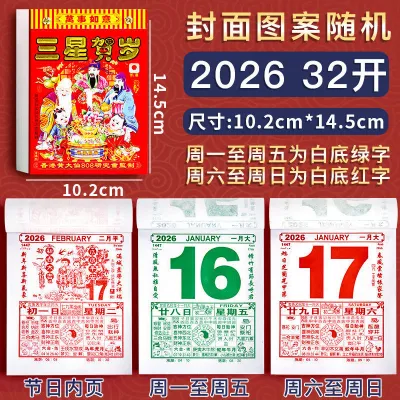
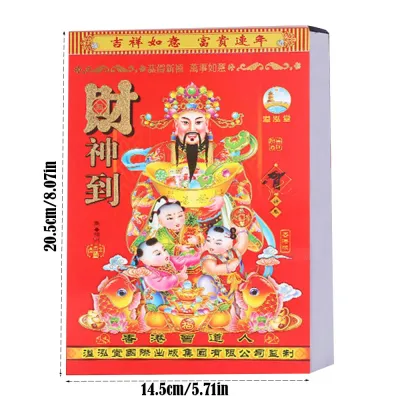
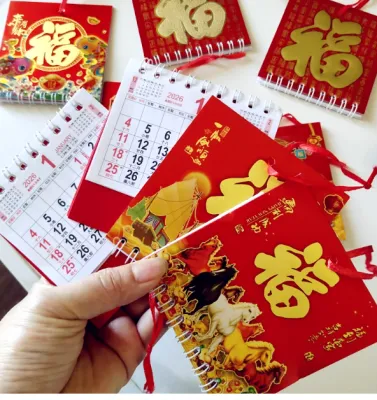
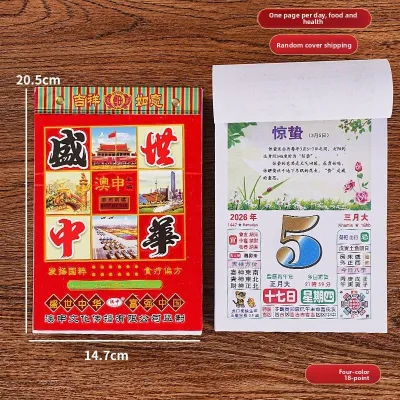
![2027 LUNAR CALENDAR 365 DAY [CHINESE] Traditional Hong Kong Small Medium Large Size(1 Pcs)](https://img.lazcdn.com/g/p/f37ce3b494d6a5a2bbdab67cbfcf0053.jpg_400x400q80.jpg_.webp)
Prices are valid at publication and may change. Please refer to the product page for the latest price.
Another critical accuracy requirement is the proper placement of intercalary months, or runyue. Because a lunar year is shorter than a solar year, an extra month must be inserted approximately every three years to keep the calendar aligned with the solar cycle. A reliable calendar publisher utilizes precise astronomical calculations to determine when these leap months occur, preventing scheduling errors for major cultural festivals.
Beyond basic date tracking, a comprehensive calendar provides clear and traditionally compliant almanac elements, often derived from the traditional Tong Sing. These elements include daily auspicious and inauspicious activities, daily zodiac clashes, and hourly forecasts. The layout should present this information clearly, using standard symbols and legible text so that readers can easily identify favorable times for activities like moving house, starting a business, or traveling.
Physical durability is equally important, especially in Singapore’s humid tropical climate. High relative humidity can cause low-grade, thin newsprint paper to absorb moisture rapidly, leading to curling edges, ink bleeding, and fragile pages that tear prematurely. Look for calendars that utilize high-quality offset paper or wood-free paper with a minimum weight of sixty grams per square meter for daily tear-offs, and at least one hundred and twenty grams per square meter for monthly wall calendars. The binding must also be robust, utilizing double-loop wire-o binding or a heavy-duty metal tin rim at the top to prevent the calendar from sagging or falling apart before the year ends.
Key Features to Check Before Buying
When selecting a Chinese calendar for your home or office, the layout format is the first major consideration. Daily page views offer the most detailed almanac information, dedicating an entire page to a single day’s auspicious ratings, hourly forecasts, and zodiac clashes. Monthly overviews, on the other hand, sacrifice granular detail in favor of a broader perspective, making it easier to plan events several weeks in advance. Desk calendars provide a convenient personal reference for workspaces, while wall calendars serve as a central hub for the entire household.

Supplementary cultural data adds significant value to a calendar. Many publishers include yearly zodiac forecasts, Feng Shui directions for the home, and traditional health tips based on seasonal changes. For users in Singapore, it is vital that the calendar integrates local public holidays alongside traditional Chinese festivals. This integration prevents scheduling conflicts between work commitments and cultural observatories, ensuring that family gatherings can be planned smoothly.
Bilingual text options are highly beneficial for multi-generational households. In Singapore, older family members may prefer reading traditional Chinese characters, while younger generations may find English translations more accessible. A well-designed bilingual calendar bridges this gap by translating key terms, such as “auspicious for renovation” or “unsuitable for travel,” into clear English alongside the original Chinese text. This ensures that all family members can consult the calendar with confidence.
Finally, inspect the ink and print quality. High-contrast printing with sharp, legible fonts is essential, especially for older adults who rely on the calendar daily. The ink should be smudge-resistant and fade-resistant, ensuring that the text remains clear even when exposed to bright sunlight or handled frequently. Testing the paper’s bleed resistance is also recommended if you plan to write notes or highlight specific dates directly on the calendar.
Evaluating Popular Calendar Styles and Formats
Wall Calendars and Tear-Off Desk Calendars
Traditional wall calendars and daily tear-off calendars are iconic fixtures in many homes. Wall calendars require dedicated vertical space, which can be a consideration in modern apartments where wall space is limited. Lightweight wall calendars that can be hung using damage-free adhesive hooks are highly practical for these environments, allowing you to display the calendar without drilling holes into the wall.
Daily tear-off calendars offer a satisfying tactile experience, where tearing off a page each morning serves as a mindful daily ritual. However, this format generates daily paper waste. If you prefer to keep specific pages containing important almanac notes or memorable dates, look for calendars with clean, micro-perforated edges. This feature allows you to detach pages easily without ripping the main binding or damaging the remaining pages.
Pocket Planners and Diary Integrations
Pocket planners and diaries with integrated lunar dates offer excellent portability for busy professionals. These compact formats fit easily into bags or briefcases, allowing you to check lunar dates during business meetings, travel, or family gatherings. They are ideal for quick cross-referencing when you are away from home.
The primary trade-off with portable formats is the depth of information provided. Due to space constraints, pocket planners usually only display the Gregorian date, the corresponding lunar date, and major traditional festivals. Detailed daily auspicious hours, zodiac clashes, and Feng Shui directions are typically omitted. If you require comprehensive almanac data for planning major life events, a portable planner should be used in conjunction with a larger, dedicated home calendar.
Where to Source Authentic Chinese Calendars in Singapore
Established stationery chains and local bookstores across Singapore are reliable sources for high-quality Chinese calendars. These retailers typically begin stocking their shelves with the upcoming year’s calendars around October or November. Sourcing from physical stores allows you to inspect the paper quality, binding strength, and print legibility firsthand before making a purchase. It also ensures that you are buying from reputable regional publishers who adhere to strict astronomical calculations.
Traditional cultural shops and specialty stores, particularly those located in heritage districts like Chinatown or near prominent temples, offer a wide selection of traditional almanacs and daily tear-off calendars. These shops often import authentic calendars directly from established publishing houses in Hong Kong, Taiwan, or mainland China. The staff in these specialty stores can often provide valuable advice on which calendar style best suits your specific tracking needs.
Online marketplaces and official brand storefronts offer convenience, especially if you are looking for a specific format or design. When purchasing online, verify the seller’s reputation by reading customer reviews and checking ratings. Look for listings that provide clear, high-resolution photos of the inner pages to confirm the year is correct and the print is legible. Be cautious of extremely low-priced listings, which may be outdated stock or low-quality reprints with missing pages or typographical errors.
How to Verify Lunar Dates and Auspicious Information
To ensure your printed calendar is accurate, you can cross-check its dates against official astronomical data. Reputable institutions, such as the Hong Kong Observatory or the Purple Mountain Observatory, publish precise lunisolar calculations, including the exact dates and times for solar terms and lunar phases. Comparing your calendar’s dates with these official records is a reliable way to verify its accuracy.
For daily auspicious information and almanac details, you can cross-reference your printed calendar with established digital almanac applications. Many of these apps utilize standardized algorithms based on traditional calculation methods. If you notice a discrepancy between your printed calendar and a digital source, prioritize the astronomical data for physical dates, such as the start of a lunar month, and consult multiple traditional sources for auspicious activities.
When evaluating a new calendar, use this quick verification checklist:
- Check the Lunar New Year Date: Verify that the start of the lunar year matches official astronomical records.
- Confirm Solar Term Transitions: Cross-check the exact date and time of major solar terms, such as Lichun or Dongzhi.
- Inspect Local Public Holidays: Ensure that Singapore's gazetted public holidays are correctly marked and do not overlap with regular working days on the calendar.
- Verify Page Sequence: Flip through the calendar to ensure there are no missing, duplicated, or misprinted pages, especially in daily tear-off formats.
Frequently Asked Questions (FAQ)
Do I need to replace my Chinese calendar before the start of the lunar year?
Yes, it is highly recommended to have your new calendar ready before the Gregorian New Year begins on January 1st. This is because the solar year and certain solar terms, such as Lichun, which marks the start of spring and the transition of zodiac signs, often occur in early February, sometimes before the Lunar New Year itself. Having the calendar early ensures you do not miss these important transitions and can plan ahead for the upcoming year.
Can I use a standard Gregorian calendar with lunar dates printed on it instead?
A standard Gregorian calendar with small lunar sub-text is sufficient if you only need to track basic dates, such as the first and fifteenth days of the lunar month for dietary or religious observances. However, if you require detailed guidance on auspicious hours, daily clashes, zodiac forecasts, or Feng Shui directions, a dedicated Chinese calendar or almanac is necessary, as standard calendars lack the space to display this comprehensive information.
Community discussion
Share your experience or ask a question. Comments are reviewed before publication.