
Selecting a notebook brand to serve as your wedding guest book in Singapore requires balancing visual elegance with practical paper performance. Because guests will use various pens—ranging from classic fountain pens to metallic paint markers—and write in environments that may range from air-conditioned hotel ballrooms to humid outdoor garden venues, no single brand fits every celebration. The ideal choice depends on matching the notebook’s paper weight, binding style, and cover material to your specific event setup and writing tools.
Rather than searching for a universal winner, couples should focus on how different notebook categories handle the physical demands of a wedding reception. A book that looks beautiful on a shelf might feather badly when signed with a rollerball pen, while a highly functional sketchbook might feel too casual for a formal banquet. Understanding the technical specifications of paper and binding allows you to select a notebook that preserves these precious signatures for decades.
Key Criteria for Evaluating Wedding Guest Book Notebooks
To function reliably as a wedding guest book, a notebook must meet specific physical and aesthetic standards. The signing table at a wedding reception is often a busy place, with guests queuing to leave their well-wishes. The notebook you choose must be resilient enough to withstand quick handling, diverse writing styles, and various pen types without compromising the legibility or preservation of the messages.
Products mentioned in this guide
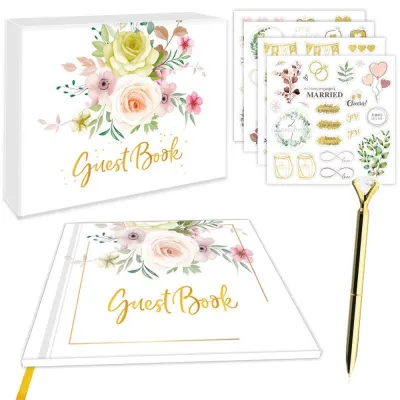
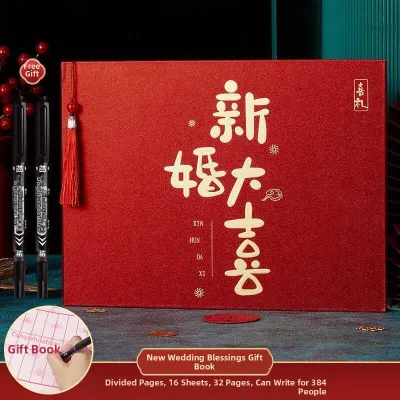
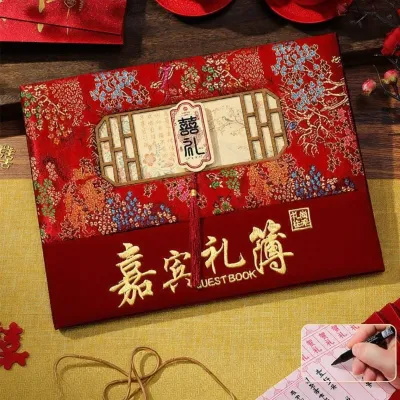
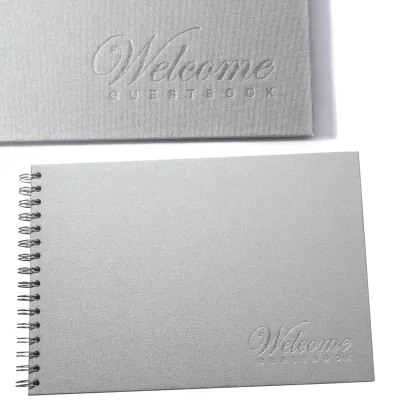
![[SG Stock] Guest Book A4 | Event Guest Book | Guest Signature Book | For Weddings And Events](https://img.lazcdn.com/g/p/d5280d33b4fcdbc954ab10e593f6625c.jpg_400x400q80.jpg_.webp)
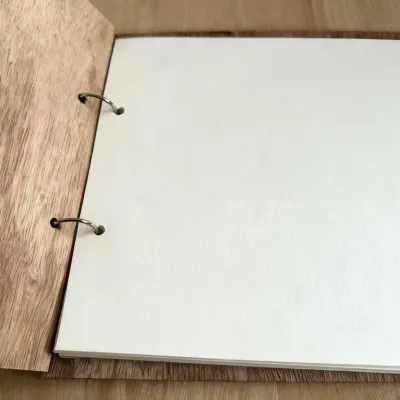
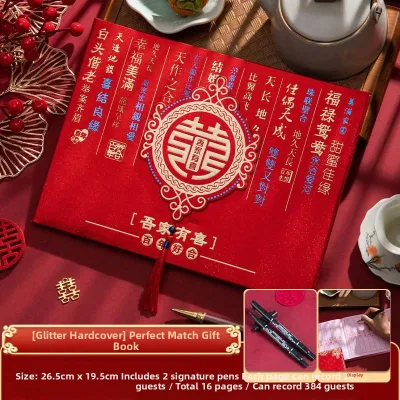
![[Hot New Release] Wedding Guest Book Wood Creative Personalised Wedding Record Album Guest Book Rustic Wooden Guest Book Wedding Party](https://img.lazcdn.com/g/p/a1d816f2c170d90dbe1aa7b37acb97e4.jpg_webp_400x400q80.jpg_.webp)
Prices are valid at publication and may change. Please refer to the product page for the latest price.
Paper weight, measured in grams per square meter (GSM), is the most critical factor for ink resistance. Standard office paper is typically around 80 GSM, which is highly prone to ghosting and bleed-through when used with heavy inks. For a guest book, look for paper with a minimum weight of 100 GSM for standard ballpoint or gel pens. If you plan to provide fountain pens, brush pens, or metallic markers, opt for 120 GSM to 160 GSM paper to ensure the ink does not seep through to the reverse side of the page.
The surface coating of the paper also plays a vital role in how ink behaves. Coated papers, often found in premium heritage notebooks, offer a smooth writing experience and prevent ink from feathering or spreading sideways. However, these coatings also slow down drying times significantly. In a fast-paced wedding environment, slow-drying ink can easily smudge when a guest closes the book or turns the page. Uncoated papers absorb ink much faster, reducing smudging risks, but they require thicker fibers (higher GSM) to prevent the ink from bleeding through.
Binding style is another crucial consideration for usability. A guest book must lie completely flat on the reception table so guests can write comfortably across the entire page. Thread-bound or Smyth-sewn bindings are the gold standard for this purpose, as they allow the notebook to open flat without requiring the writer to hold the pages down. Avoid tight, glued perfect bindings, which tend to spring closed and force guests to struggle with the book, often resulting in rushed handwriting or a cracked spine.
Finally, evaluate the cover materials for long-term durability and tactile appeal. Hardcover notebooks wrapped in bookbinding linen, book cloth, or high-quality leatherette provide excellent structural support. This rigidity is especially important if your signing table lacks a perfectly smooth surface or if guests need to sign while standing. The cover material should also resist fingerprints and light moisture, ensuring the book remains pristine throughout the evening and during years of storage.
Comparing Popular Notebook Brands for Guest Books
When selecting a notebook brand for your guest book, you will generally choose between classic heritage stationery brands and modern minimalist or artisan brands. Each category has distinct design philosophies, paper characteristics, and structural strengths that make them suitable for different types of weddings.

Classic heritage brands are renowned for their traditional aesthetics and highly engineered, lightweight paper. These notebooks often feature leatherette hardcovers, elastic closures, and ribbon markers, offering a timeless, professional look. The paper in these brands is typically cream-colored, smooth, and optimized for fountain pens and fine gel pens. However, because their paper weights often hover between 80 GSM and 100 GSM, they may not handle heavy paint markers or wet calligraphy inks without some ghosting.
Modern minimalist and artisan stationery brands, on the other hand, focus on tactile textures and heavy-duty paper. These notebooks frequently feature unbranded linen or book cloth covers in a wide array of contemporary pastel or earthy tones. The paper inside is often bright white or natural off-white, with weights ranging from 120 GSM to 160 GSM. This thick, sketchbook-grade paper is highly absorbent and virtually impervious to bleed-through, making it the ideal canvas for bold metallic markers, brush lettering, and even pasted instant photos.
In terms of sizing, standard A5 notebooks are highly portable and widely available, but they can feel cramped if guests want to write longer messages. B5 or true A4 landscape notebooks offer a more generous layout, allowing multiple guests to sign a single page without crowding. When evaluating page counts, keep in mind that a lower page count (around 80 to 120 pages) is often preferable for a guest book. A notebook with 200 or more pages may end up looking mostly empty, which can detract from the presentation of your keepsake.
To help you compare these options, the following matrix maps the general characteristics of popular notebook categories to specific wedding requirements:
| Notebook Category | Typical Paper Weight | Best Pen Compatibility | Binding & Cover Style | Ideal Wedding Scenario |
|---|---|---|---|---|
| Classic Heritage | 80 – 100 GSM (Coated) | Fine gel pens, ballpoints, fountain pens | Thread-bound hardcover, leatherette | Traditional indoor ballroom, formal seated receptions |
| Modern Minimalist | 100 – 120 GSM (Smooth) | Gel pens, rollerballs, fine-liners | Lay-flat hardcover, linen or book cloth | Contemporary restaurant venues, minimalist themes |
| Artisan Sketchbook | 140 – 160 GSM (Uncoated) | Metallic markers, brush pens, polaroid pasting | Exposed spine or heavy board, textured paper | Outdoor garden weddings, interactive photo guest books |
Matching the Notebook to Your Wedding Theme and Pens
Aligning your notebook selection with your wedding theme ensures a cohesive visual experience for your guests. For a rustic, bohemian, or outdoor garden wedding, a notebook with a natural linen, cotton-wrapped, or kraft paper cover fits the organic aesthetic perfectly. For a classic luxury ballroom setting, a sleek leatherette or gold-embossed hardcover adds a touch of formal elegance that complements the sophisticated decor.
The choice of writing tools is equally important and must be directly paired with your notebook’s paper type. If you have your heart set on using metallic paint markers or thick brush pens to match a glamorous theme, you must pair them with an artisan sketchbook-style notebook featuring paper of at least 140 GSM. Using these heavy markers on standard 80 GSM heritage paper will result in severe bleed-through, ruining the subsequent pages. Conversely, if you prefer the elegant look of fine-tip gel pens or fountain pens, a smooth, coated 100 GSM paper will provide a superior, skip-free writing experience.
Always conduct a physical pen test before the big day. Purchase your chosen notebook and the exact pens you plan to provide at the reception. Write a few test messages on the very last page of the notebook to observe how the ink behaves. Pay close attention to the drying speed; if the ink takes more than five seconds to dry, guests are highly likely to smudge their messages as they turn the pages or close the book.
The signing environment itself should also influence your decision. Singapore’s tropical climate and high humidity can affect paper behavior, especially at outdoor or semi-outdoor venues. Uncoated papers can absorb moisture from the air, making them softer and more prone to ink feathering or slow drying. If your reception is outdoors, opt for slightly thicker, moisture-resistant paper and quick-drying ballpoint or micro-pigment gel pens rather than slow-drying liquid inks. Additionally, ensure the signing table is stable; if guests must sign while standing, a rigid, heavy hardcover notebook is essential to provide a firm writing surface.
Decision Framework: Which Brand Should You Choose?
To finalize your selection, use this conditional framework to match your priorities with the right notebook category:
- Choose Classic Heritage Notebooks if you prioritize a traditional, formal aesthetic, plan to provide fine-tip gel pens or fountain pens, and want a compact, durable book that fits easily on a standard bookshelf after the wedding. These brands offer exceptional binding durability and classic cover designs that never go out of style.
- Choose Modern Minimalist or Artisan Notebooks if you want to use bold metallic markers, plan to have guests paste instant photos alongside their messages, or prefer a tactile linen cover that matches a contemporary, rustic, or pastel color palette. The thicker paper ensures that heavy inks and adhesives will not damage the pages.
- Verify first if the notebook's binding allows it to lie completely flat without assistance, as this is the single most important factor for guest comfort. Additionally, check local stationery stores in Singapore to feel the cover textures and paper weights in person before making your final purchase, budgeting approximately S$30 to S$60 for a high-quality, keepsake-grade notebook.
Frequently Asked Questions (FAQ)
Can I use a standard dotted or grid notebook for a wedding guest book?
While dotted or grid notebooks are highly functional for personal journaling and bullet journaling, they can look overly casual or distracting as a wedding guest book. Blank pages offer a cleaner, more elegant canvas for heartfelt messages, signatures, and creative doodles. If you are concerned about guests writing in crooked lines, you can slide a lined guide sheet behind the page they are signing, provided the paper is translucent enough, or choose a notebook that includes subtle, light-grey printed lines.
How many pages do I need for a wedding guest book?
To calculate your required page count, do not simply match the page count to your total guest count. Guests usually sign as couples or families, meaning a wedding with 150 guests typically requires only 70 to 80 signatures. On average, expect two to three messages per page in an A5 notebook, or four to five in a larger B5 or A4 book. For a 150-guest wedding, a notebook with 40 to 60 blank pages (or 80 to 120 sides) provides ample space, leaving a comfortable buffer for larger handwriting and preventing the book from looking sparse.
Community discussion
Share your experience or ask a question. Comments are reviewed before publication.