
When teaching young children the alphabet, a high-quality magnetic white board serves as an interactive canvas for letter recognition, phonics, and early spelling. To choose the right board, you must look for a non-porous surface that resists ghosting, a steel backing thick enough to hold heavy magnetic letters, a size that fits within your child’s physical reach, and robust safety features like rounded corners and secure mounting.
The ideal selection depends heavily on your specific learning environment. For example, a dedicated classroom or a spacious home playroom can easily accommodate a large, wall-mounted board. Conversely, a compact living space or a multi-purpose room may benefit more from a portable tabletop option or a mobile easel that can be tucked away when not in use.
Before making a purchase, always verify the product specifications for surface warranties, magnetic compatibility notes, and mounting hardware details. Checking these elements beforehand ensures you select a durable, safe, and highly functional educational tool that will support your child’s literacy journey for years to come.
Products mentioned in this guide
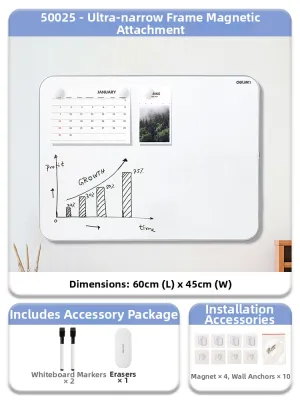
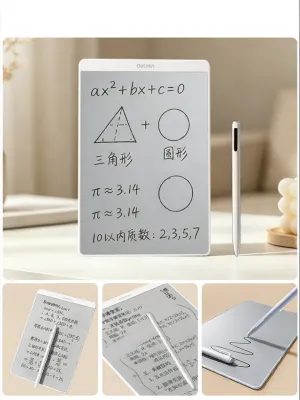
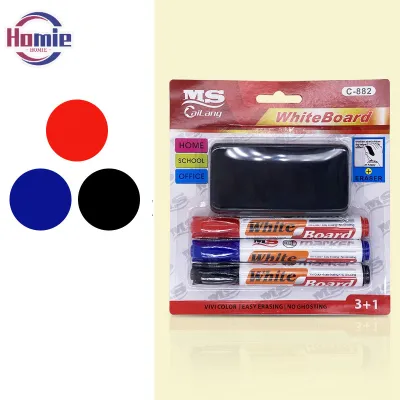
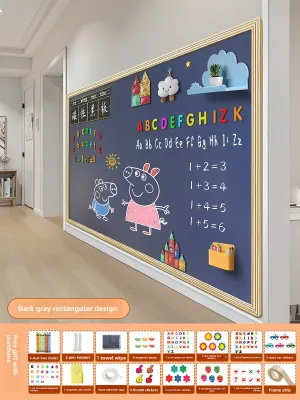
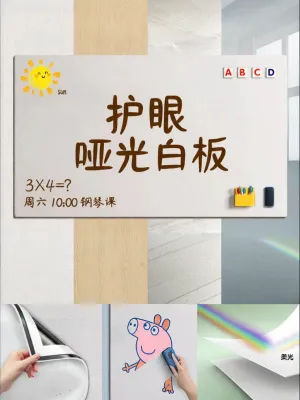
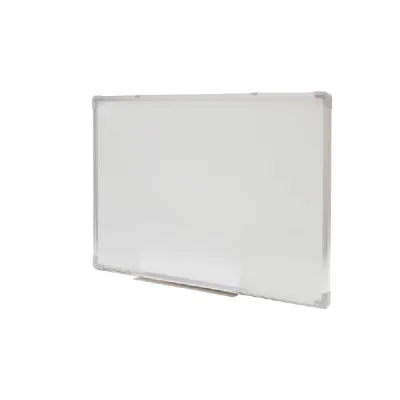
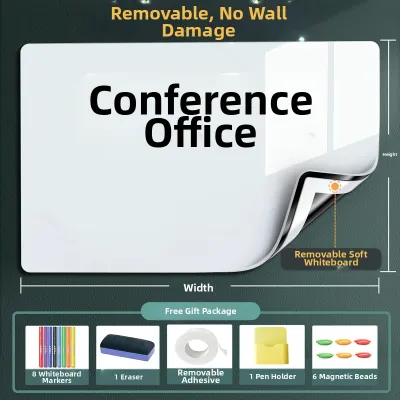
Prices are valid at publication and may change. Please refer to the product page for the latest price.
Evaluating Surface Quality for Frequent Erasing
The surface material of a white board directly determines how easily dry-erase marker ink can be wiped away day after day. In an early childhood teaching setting, children will frequently write, scribble, and erase letters, making surface durability a top priority. Understanding the differences between common materials helps you avoid the frustration of a stained, unusable board.
Melamine is the most budget-friendly option, consisting of a resin-coated paper layer over a particleboard backing. While lightweight and inexpensive, melamine is highly porous and wears down quickly under daily use. Over time, the protective resin layer erodes, allowing marker pigments to penetrate the surface and leave permanent stains.
Painted steel offers a significant upgrade in durability and performance. This material features a steel sheet coated with a baked-on paint finish, creating a smoother, less porous surface than melamine. Painted steel provides excellent magnetic pull and resists staining well, provided it is cleaned regularly with appropriate dry-erase cleaners.
Porcelain or ceramic surfaces represent the premium standard for educational environments. These boards feature a steel backing topped with a ceramic-glass coating fired at extremely high temperatures. The resulting surface is completely non-porous, highly scratch-resistant, and virtually immune to ghosting, making it the ideal choice for heavy, long-term use.
“Ghosting” refers to the faint, cloudy outlines of old writing that remain on a board even after it has been erased. This phenomenon occurs when microscopic pores or scratches in low-grade surfaces trap dry-erase ink pigments. For young learners, a ghosted board creates visual clutter, making it difficult to see new letters clearly and distracting them from their phonics lessons.
To evaluate surface quality, check manufacturer specifications for terms like “non-porous,” “scratch-resistant,” or “lifetime surface warranty.” If you are purchasing a board in a local stationery shop, you can perform a simple test: draw a small line with a dry-erase marker, wait a few minutes, and wipe it away to observe the smoothness and erasability. If buying online, review the seller’s return policies and look for user feedback regarding long-term stain resistance.
Remember that actual erasability is a joint product of the board surface, the quality of the dry-erase markers, and your cleaning habits. Even premium surfaces can suffer if low-quality markers are left on the board for months. For teaching children, choosing low-odor, non-toxic markers is essential for safety, but these formulas sometimes require more frequent surface cleaning to prevent residue buildup.
Checking Magnetic Strength for Letter Tiles
A magnetic white board does not actually contain magnets; instead, it features a steel backing that attracts magnetic objects. The strength of this attraction, or magnetic receptivity, is crucial when using educational letter tiles. If the magnetic pull is too weak, heavy plastic or wooden alphabet letters will slide down the board, disrupting the flow of your lessons.

The thickness of the steel backing is the primary factor determining magnetic pull strength. Standard boards often use thin steel foil laminated to a cardboard or MDF core, which may only provide enough attraction for lightweight paper magnets. High-pull magnetic boards utilize thicker sheets of steel, typically ranging from 0.4 mm to 0.8 mm, ensuring a strong, reliable hold for heavier three-dimensional items.
The thickness and type of the surface coating also play a significant role in magnetic strength. Magnetic force decreases rapidly with distance, meaning a thick layer of paint, melamine, or glass can act as a barrier, reducing the effective grip of your magnetic letters. Porcelain and painted steel boards generally maintain a thin, high-density coating that allows magnets to make close, secure contact with the underlying steel.
When shopping for a board, look closely at the product specifications for terms like “magnetic receptive,” “high-pull,” or “suitable for educational magnets.” Manufacturers targeting the school market often specify the gauge of the steel backing or provide compatibility notes indicating the types of magnets the board can support.
To verify magnetic strength before committing to a purchase, you can use a simple hands-on test if shopping in person. Bring a representative magnetic letter tile—especially one of the heavier wooden or thick foam varieties—and place it on the board. Observe whether it holds its position firmly or slides downward when gently tapped.
If you are purchasing online, carefully read user reviews, searching specifically for terms like “magnetic letters,” “alphabet tiles,” or “classroom magnets.” Parents and educators frequently leave detailed feedback about whether a board successfully holds common educational toy brands. If the manufacturer recommends specific magnet types or warns against certain heavy accessories, take those guidelines into account.
Sizing and Mounting for a Child's Reach
When setting up a learning space for young children, the physical dimensions of the white board and its installation height must match the child’s developmental stage. A board that is too large or mounted too high will have unused, unreachable areas, while a board that is too small will limit the complexity of spelling and word-building activities.
The “reachable zone” refers to the area of the board that a child can comfortably access without stretching, bending, or standing on a stool. For toddlers and preschoolers (ages 3 to 5), the comfortable vertical reach is typically between 60 cm and 90 cm from the floor. Designing your active learning area within this zone ensures a safe, ergonomic, and engaging experience.
White boards come in several standard size categories, each suited to different teaching scenarios. Small boards (such as A4 or 30×40 cm) are excellent for individual tabletop work, allowing children to practice fine motor skills by placing individual letters. Medium boards (60×90 cm) are highly versatile, offering enough space for short sentences while remaining easy to mount in a standard room. Large boards (90×120 cm or larger) are best for dedicated classrooms or spacious playrooms, allowing multiple children to collaborate simultaneously.
To determine the optimal mounting height, first measure your child’s eye level and shoulder height while they are standing. The center of the active learning area—where you will place the magnetic letters—should align with the child’s shoulder level. This positioning allows them to manipulate letters and write with a natural, relaxed arm posture, reducing fatigue and frustration.
When calculating the total space required for a wall-mounted board, do not forget to account for the frame width and mounting hardware. A standard aluminum or wooden frame can add 2 to 5 cm to each dimension of the board. Additionally, some mounting systems require extra clearance above or beside the board to slide the unit onto its brackets, which must be factored into your wall measurements.
In Singapore, where concrete or structural walls are common in HDB flats and condominiums, mounting a board securely requires drilling with a masonry bit and using plastic wall plugs. If you are mounting on a drywall partition, you must locate the wooden or metal studs or use heavy-duty toggle bolts. Always check your wall type and select the appropriate hardware to ensure the board remains firmly fixed to the wall.
Safety and Durability for Young Learners
Safety is a paramount consideration when introducing any educational equipment into a child’s environment. Because young learners are highly active and often lean on, pull, or bump into furniture, a white board must be structurally sound, securely installed, and free of sharp edges or pinch points.
The corners of the board frame are a common source of bumps and bruises during active play. Standard industrial white boards often feature sharp, mitered aluminum corners that can pose a hazard to a running child. Look for boards designed specifically for early childhood or home use, which typically feature rounded plastic corner caps or soft, padded edges to minimize the risk of injury.
Frame materials also impact both safety and long-term durability. Aluminum frames provide exceptional rigidity and resist warping over time, making them a durable choice for busy classrooms, provided they have protective corner caps. Plastic frames are lighter and softer, making them safer for portable or tabletop use, though they may crack if dropped on a hard tile floor. Wood frames offer a classic aesthetic and natural sturdiness but must be checked for splinters or rough finishes.
Secure mounting is critical to prevent the board from pulling away from the wall under the weight of a child. Children will naturally lean their body weight against the board while writing or reaching for high letters. Avoid relying solely on adhesive strips or light picture-hanging wire; instead, use robust wall anchors that match your wall material, ensuring the board is flush and immovably fixed to the wall.
For freestanding or easel-style models, base stability is the most critical safety factor. These units must feature a wide, stable footprint—such as an A-frame or a heavy H-frame—to prevent tip-over accidents if a child climbs or pulls on the frame. If the easel has wheels or casters for mobility, ensure they feature reliable locking mechanisms to keep the unit stationary during lessons.
Verify the weight distribution of freestanding models before use. A top-heavy easel is significantly easier to tip over, especially on carpeted floors. Look for models with a low center of gravity, perhaps featuring a built-in storage shelf or tray near the base to help distribute the weight evenly and keep the unit stable during interactive play.
Recommended Whiteboard Types for Early Literacy
Selecting the right style of white board involves balancing your teaching goals, safety requirements, and the physical constraints of your home or classroom. Different configurations offer unique advantages for early literacy instruction, from large-scale collaborative spelling to quiet, individual fine motor practice.
Wall-Mounted Boards for Dedicated Learning Spaces
Wall-mounted boards provide a permanent, highly stable learning station that mimics a traditional classroom environment. By securing the board directly to the wall, you eliminate any risk of tipping, making this the safest option for active toddlers. The large surface area offers ample space for arranging complete alphabet sets, building long words, and drawing corresponding pictures.
However, wall-mounted boards require a permanent installation and cannot be easily moved to another room. They also require dedicated wall space, which may be a limitation in smaller homes. This type of board is best suited for dedicated playrooms, study areas, or classrooms where the layout remains consistent over time.
Freestanding Easels for Flexible Play Areas
Freestanding easels offer exceptional flexibility, allowing you to move the learning station between rooms or tuck it into a corner when not in use. Many educational easels are double-sided, featuring a magnetic white board on one side and a chalkboard or felt board on the other, which provides diverse sensory experiences. Double-sided models also support collaborative learning, allowing two children to work simultaneously.
The primary limitation of freestanding easels is their larger floor footprint and the inherent risk of tipping if a child climbs or pulls on the frame. It is essential to choose a model with a wide, stable base and locking casters. This type of board is ideal for multi-purpose rooms, active play areas, or homes where flexible furniture is preferred.
Tabletop Boards for Close-Up Letter Practice
Tabletop white boards are small, highly portable options designed for individual use at a desk, on the floor, or even on a child’s lap. These boards are excellent for focused, close-up letter practice, helping children develop fine motor skills and hand-eye coordination as they manipulate magnetic tiles. They are lightweight, easy to store in a drawer or cupboard, and budget-friendly.
The main drawback of tabletop boards is their limited surface area, which makes it difficult to display a full alphabet set while simultaneously spelling out words. They are also less suitable for group activities or collaborative play. Tabletop boards are best for individual tutoring sessions, quiet independent play, or as a supplement to a larger wall-mounted board.
Whiteboard Configuration Comparison
| Whiteboard Type | Setup Requirement | Space Needed | Best Use Case | Primary Limitation |
|---|---|---|---|---|
| Wall-Mounted | Permanent wall drilling and anchoring | Dedicated wall space; zero floor footprint | Permanent learning stations, classrooms | Cannot be moved; requires permanent installation |
| Freestanding Easel | Simple assembly; no wall mounting | Moderate floor space; requires storage area | Flexible play areas, collaborative learning | Larger physical footprint; potential tip-over risk |
| Tabletop Board | None; ready to use out of the box | Minimal; fits on a desk or lap | Individual practice, fine motor skill development | Limited surface area; not suitable for long words |
Frequently Asked Questions (FAQ)
Can I use standard refrigerator magnets on a whiteboard?
While standard refrigerator magnets will physically stick to a magnetic white board, they are generally not recommended for educational activities with children. Many household fridge magnets are heavy, bulky, or have weak magnetic backings, causing them to slide down the board easily when handled. Additionally, some decorative magnets have exposed, rough ceramic backs or sharp metal edges that can easily scratch the delicate protective coating of your white board. For teaching the alphabet, it is highly recommended to use magnets specifically designed for educational use, which feature soft, fully enclosed magnetic backings that protect the board’s surface from scratches.
How do I safely remove accidental permanent marker stains?
Accidents happen, especially when young children are involved in writing activities. If a permanent marker is accidentally used on your white board, you can safely remove the stain using a simple, chemical-free method. Take a fresh, high-quality dry-erase marker and draw directly over the permanent marker lines, covering them completely. Wait a few seconds for the dry-erase ink to settle, then wipe the area firmly with a clean microfiber cloth or whiteboard eraser. The solvents present in the dry-erase ink will naturally dissolve the permanent ink pigments, lifting them off the non-porous surface. Always check your board manufacturer’s care guidelines before using commercial solvents, alcohol, or abrasive cleaners, as these can permanently damage the surface coating.
Is a glass magnetic whiteboard practical for teaching kids?
While glass magnetic boards offer a sleek, modern aesthetic and exceptional resistance to ghosting and staining, they are generally impractical and potentially unsafe for teaching young children. Glass boards require specialized, extremely strong rare-earth (neodymium) magnets to hold items because the thick glass layer creates a significant distance between the magnet and the steel backing. Standard plastic or foam educational alphabet letters will not stick to a glass board and will slide off immediately. Furthermore, glass boards are exceptionally heavy, requiring heavy-duty mounting hardware and professional installation, and they pose a safety hazard in active play areas if impacted by hard toys.
Community discussion
Share your experience or ask a question. Comments are reviewed before publication.