
Selecting the ideal jumbo farewell card in Singapore requires balancing the total number of signers, the writing instruments they will use, and the level of personalization your team wants to achieve. A successful group card acts as a lasting keepsake, meaning it must offer sufficient surface area for everyone to write comfortably, feature paper that resists ink smudging, and fit within the team’s collective budget. By evaluating physical dimensions, paper weight, and local sourcing options, you can ensure the final card is both a practical office project and a polished, professional gift.
Determining the Right Size and Layout for Group Signatures
To avoid the common pitfall of a cramped, illegible farewell card, you must first calculate the physical space required for your team’s messages. Standard paper sizes serve as the baseline for most oversized cards. An A3 card (measuring 297 mm by 420 mm when flat) is generally suitable for small to medium-sized departments. If your office has more than 30 contributors, upgrading to an A2 card (420 mm by 594 mm) or larger ensures that everyone has enough room to write a meaningful sentence or two without overlapping other messages.
To estimate the required space accurately, you can use a simple planning formula. Assume that an average handwritten farewell message occupies an area of approximately 5 cm by 5 cm (25 square centimeters). For a team of 20 people, you will need at least 500 square centimeters of usable signing space. An A3 card folded in half provides two internal pages, each measuring A4 size (210 mm by 297 mm), which yields a total internal area of approximately 1,247 square centimeters. This provides ample breathing room, allowing for decorative elements, a central heading, or a photo collage alongside the signatures.
Products mentioned in this guide
![[GC 23] Greeting Card | Gift Card | Jumbo Card | A4 Big Card | Birthday Best Wishes Farewell Good Bye Good Luck Christmas CNY](https://img.lazcdn.com/g/p/05dcb54f2692e249c91df373c224143a.jpg_400x400q80.jpg_.webp)
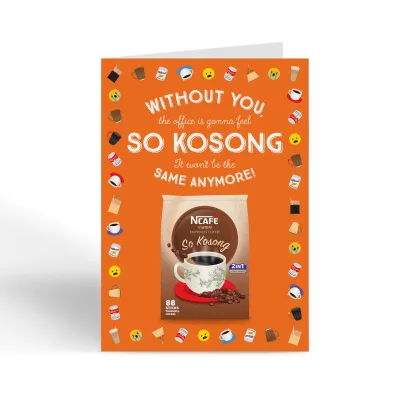
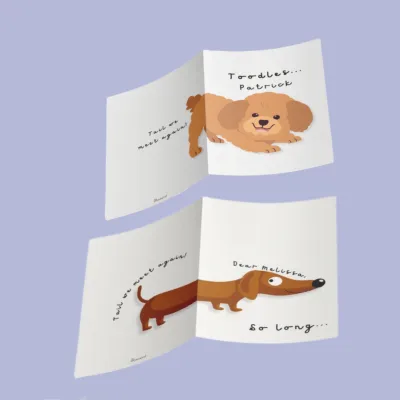
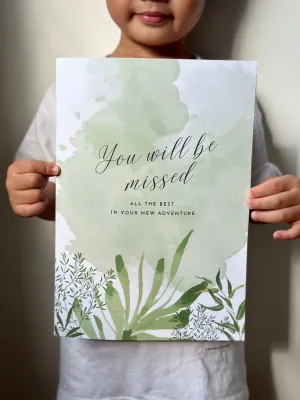
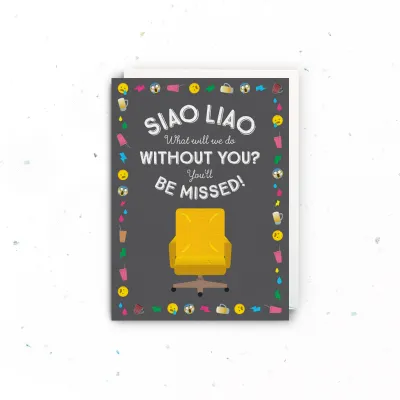
Prices are valid at publication and may change. Please refer to the product page for the latest price.
The physical layout of the card also dictates how easily it can be circulated around a Singapore office. A classic single-fold card is highly familiar and easy to display on a desk, but it can only be signed by one or two people at a time. For larger organizations where multiple departments need to contribute, alternative structures can streamline the process.
An accordion-fold (or Z-fold) card features multiple panels that fold out horizontally. This design allows the card to be stretched across a long table, enabling several colleagues to write their messages simultaneously without crowding around a single folder. Another option is the gatefold design, where two side panels fold inward to meet in the middle. This layout creates a sense of anticipation when opened and offers distinct sections that can be pre-allocated to different teams or project groups, keeping the overall presentation organized and visually balanced.
For hybrid workforces where team members split their time between home and the office, coordinating a physical card requires extra planning. You can designate specific “anchor days” when most staff are in the office to pass the card around. Alternatively, creating a digital sign-up sheet beforehand allows remote colleagues to draft their messages in advance, which a designated coordinator can then transcribe or print and paste onto the card, ensuring no one is left out of the farewell gesture.
Evaluating Paper Weight and Finish to Prevent Ink Bleed
The tactile quality of a jumbo card is determined by its paper weight, measured in grams per square meter (GSM). Standard office printer paper typically ranges from 70 GSM to 80 GSM, which is far too thin and flimsy for a large-format card. A proper jumbo farewell card should be constructed from heavy cardstock, ideally between 250 GSM and 350 GSM. This thickness ensures the card remains rigid, resists creasing during handling, and can stand upright on a desk or display shelf without bowing under its own weight.

Beyond structural integrity, the paper’s finish directly impacts how different writing instruments behave on its surface. Office environments are filled with a variety of pens, from standard ballpoints and gel pens to permanent markers and fountain pens. Choosing the wrong paper finish can lead to slow drying times, smudging, or ink bleeding through to the other side of the page.
Matte-coated cardstock is often the most reliable choice for group cards. It offers a smooth, professional appearance while retaining enough surface texture to absorb ink quickly. Gel pens and fine-liners dry rapidly on matte paper, minimizing the risk of accidental smudges as hands move across the card. Uncoated paper is another excellent option for writing, as it absorbs ink almost instantly, though it can sometimes cause highly liquid inks (like those in fountain pens or heavy markers) to feather or spread slightly along the paper fibers.
Glossy finishes, while visually striking for printed photographs or vibrant cover designs, are generally unsuitable for the interior signing areas of a farewell card. The slick, non-porous coating on glossy paper prevents water-based inks from penetrating the surface. Gel pens and rollerballs will pool and smear easily on glossy cardstock, and even standard ballpoint pens can leave faint, uneven lines. If you choose a card with a glossy exterior, ensure the interior pages are left uncoated or matte-finished to accommodate all types of handwriting.
Textured cardstock, such as linen or felt-finish paper, adds a premium, tactile dimension to the card, but it requires careful pen selection. Textured surfaces can cause fine-tip pens to skip or catch on the paper fibers, resulting in broken lines. If you opt for a textured finish, advise your team to use medium-point ballpoint pens or felt-tip markers, which glide more smoothly over the uneven surface.
When ordering custom-printed cards from local print shops in Singapore, it is wise to request a physical paper sample or a small test strip of the intended stock. You can use this sample to conduct a quick ink test using the exact pens your team plans to use. Write a few test words, wait five seconds, and run a finger over the ink to check for smudging. This simple step prevents the disappointment of a ruined card on the day of the farewell event.
Comparing Customization Options for a Personalized Touch
Personalization elevates a simple farewell card into a cherished keepsake that reflects the recipient’s time with the company. The level of customization you choose should depend on your timeline, budget, and the tools available. The simplest approach involves purchasing a pre-designed template with editable text fields. These templates allow you to insert the recipient’s name, their departure date, and their specific job title or department directly into the cover design, providing a polished look with minimal effort.
For a more bespoke tribute, fully custom cover printing allows you to design the card from scratch. You can incorporate company branding, team colors, or custom illustrations that reference internal jokes, memorable projects, or the recipient’s next destination. For example, if a colleague is relocating from Singapore to another country, the cover design could feature a creative blend of local landmarks alongside icons of their new home city.
The interior of the card also offers opportunities for creative customization. Instead of leaving the inside pages completely blank, you can print structured sections to guide your team’s contributions. This might include pre-printed farewell quotes, dedicated columns for different departments, or designated spaces for specific team photos. Integrating a small photo collage of team outings, office celebrations, or project milestones directly onto one of the panels adds immediate visual interest and prompts signers to write messages connected to those shared memories.
When designing a fully custom card, utilizing professional graphic design software or user-friendly online design platforms can help you achieve a polished layout. Many local print shops accept PDF files designed on these platforms. When setting up your design file, it is essential to include a 3mm bleed margin on all sides. This extra space ensures that when the card is printed and trimmed to its final jumbo size, there are no unsightly white borders along the edges of your custom background colors or images.
Before finalizing any custom print order with a Singapore-based printing service, always request and carefully review a digital proof. Check the alignment of all text, verify the spelling of names and dates, and ensure that high-resolution images are used to avoid pixelation when scaled up to jumbo sizes. Pay close attention to color accuracy, as colors on a backlit computer screen can appear brighter than they will on printed cardstock. Additionally, clarify the printer’s revision policy to understand how many design adjustments are permitted before extra fees are incurred.
Sourcing and Comparing Retailers for Oversized Cards
Finding the right jumbo farewell card in Singapore depends largely on your project timeline and how much customization you require. If you are on a tight schedule and need a card immediately, local stationery chains and specialty gift shops located in major commercial hubs offer convenient, off-the-shelf options. These physical stores allow you to assess the paper weight and finish in person before purchasing, ensuring you do not end up with a flimsy product. While off-the-shelf cards are convenient, their designs are generally generic, and they lack personalized text fields or custom layouts.
For teams with a lead time of a few days to a week, e-commerce platforms and local print-on-demand services offer a much wider selection of customizable designs. Online marketplaces host numerous independent creators who specialize in oversized greeting cards, allowing you to select unique themes and request specific text alterations. When sourcing from online platforms, it is crucial to verify the seller’s shipping location and estimated delivery windows. Opting for local Singapore-based sellers or print shops reduces transit times and minimizes the risk of the card being delayed in international customs.
For urgent custom orders, same-day or next-day courier services can deliver the finished card directly to your office building in major commercial districts like the Central Business District (CBD), One-North, or Jurong East. Many local print shops also offer a self-collection option at their physical outlets, which is often the safest way to avoid any transit delays and allows you to inspect the final print quality before taking it back to the office.
When evaluating online retailers or custom print shops, use a structured checklist to ensure reliability. First, check the seller’s return and refund policies regarding printing defects, shipping damage, or misprints. A reputable seller should offer clear recourse if the card arrives bent or with incorrect customization. Second, always opt for tracked local delivery services rather than standard, untracked mail. Tracked shipping provides real-time updates and ensures that this critical component of the farewell presentation arrives safely and on time for the scheduled office gathering.
Balancing Budget and Value for the Farewell Gift
The cost of a jumbo farewell card can vary significantly based on its size, paper quality, and the complexity of its customization. Understanding the primary cost drivers helps you allocate your team’s budget effectively. Premium paper grades, such as ultra-thick textured cardstock or specialty eco-friendly papers, naturally command higher prices. Similarly, complex printing techniques like metallic foil stamping, embossing, or custom die-cut shapes will increase the production cost, especially for one-off custom orders.
To achieve the best value, you must decide when to invest in premium features and when standard options are sufficient. For instance, while a metallic foil cover looks exceptionally professional, a standard high-quality matte print can look equally elegant if the graphic design is clean and modern. Instead of spending heavily on complex cover finishes, it is often more practical to invest in protective packaging. A sturdy, rigid cardboard mailer or a dedicated presentation box is essential for keeping a jumbo card pristine during transit and presentation, offering far more functional value than an expensive cover embellishment.
For teams working with a limited budget, printing a high-resolution digital design on a standard A3 cardstock at a local copy shop is often much more cost-effective than ordering from a specialized gift retailer. This approach allows you to maintain full control over the design and personalization while keeping production costs low, leaving more of the collected funds available for the main farewell gift.
Managing the financial aspect of an office farewell gift is easiest when you pool team contributions. When collecting funds for a colleague’s departure, designate a specific, modest portion of the total pool to cover the card and its packaging, leaving the remainder for a main farewell gift or a celebratory team lunch. By setting a clear budget for the card early in the planning process, you can narrow down your retail options and avoid overspending on unnecessary customization features, ensuring a thoughtful and well-coordinated send-off.
Frequently Asked Questions (FAQ)
How do I prevent ink from smudging when passing a large card around the office?
To keep a jumbo card clean as it circulates through the office, supply a few dedicated quick-dry gel pens or fine-tip permanent markers alongside the card. Avoid using slow-drying rollerball pens or heavy ink markers that tend to pool on the paper surface. It is highly effective to assign a single coordinator to manage the signing process, passing the card from desk to desk rather than leaving it unattended in a common area. Additionally, place a clean, loose sheet of scrap paper over the signed sections; this allows subsequent signers to rest their hands on the card without transferring natural skin oils or smudging fresh ink.
What is the best way to transport an oversized farewell card to the event?
Transporting an oversized card without causing creases or bent corners requires rigid protection. Use a hard-backed envelope or a dedicated cardboard mailer that matches the card’s dimensions to shield it from damage inside a bag or briefcase. If you must transport a very large card (such as an A2 size) without a large bag, ensure it is professionally scored along its fold lines during production. This allows the card to fold flat and compact, making it much easier to carry securely. Avoid rolling the card into a tube, as this can cause the paper fibers to curl permanently, making it difficult for the card to stand upright or lie flat during the presentation.
Community discussion
Share your experience or ask a question. Comments are reviewed before publication.