
Selecting the right crafting tools for your child’s school projects requires balancing safety, usability, and performance. For school-aged children, a cordless glue gun offers excellent mobility and eliminates the hazard of tripping over tangled cords in busy classrooms or home study spaces. However, because these tools rely on heat to melt adhesive, the ideal model varies significantly depending on whether your child is in lower primary, upper primary, or secondary school. Matching the tool’s specifications to your child’s developmental stage ensures a frustration-free crafting experience while keeping safety at the forefront.
Understanding Temperature Settings and Safety Features
Low-temperature models operate at a lower heat level, making them the standard recommendation for younger primary school students. While the adhesive is still hot enough to cause discomfort, the risk of severe skin burns is substantially lower than with high-temperature alternatives. These models are excellent for bonding lightweight school materials such as paper, thin cardboard, felt, and delicate craft foam.
In contrast, dual-temperature models provide greater versatility for older students, particularly those in upper primary or secondary school who tackle complex design and technology projects. These devices allow users to switch to a higher temperature setting to melt specialized adhesives required for bonding denser materials like wood, thick plastics, and metal. Because high-temperature settings carry a much greater risk of contact burns, they should be reserved for older children who have demonstrated mature safety awareness.
Products mentioned in this guide
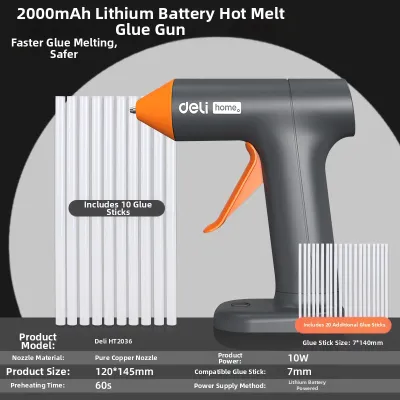
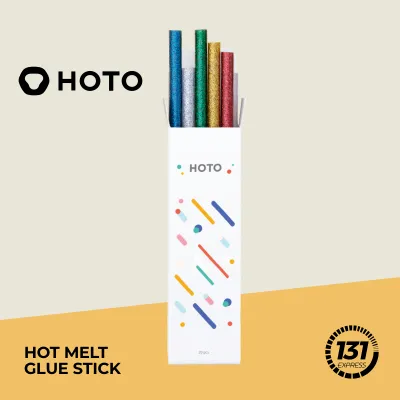
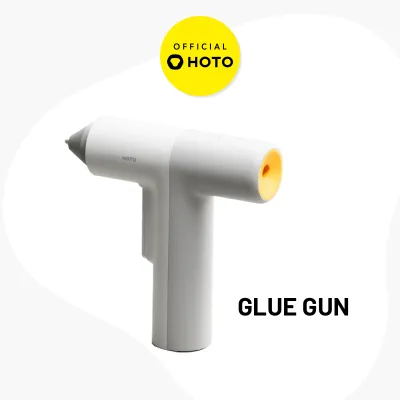
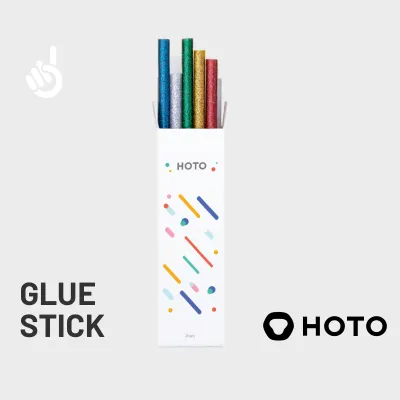
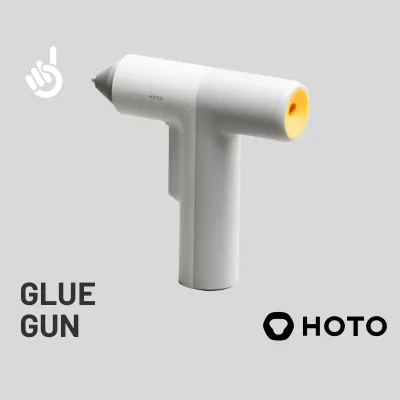
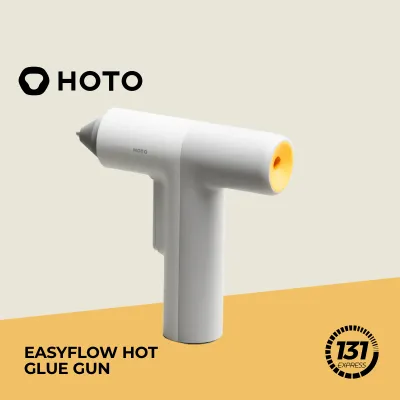
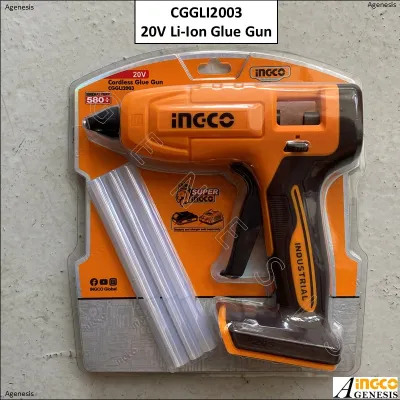
Prices are valid at publication and may change. Please refer to the product page for the latest price.
When evaluating cordless models, parents must look beyond temperature settings and verify specific built-in safety features on the product packaging. An anti-drip nozzle is essential to prevent hot adhesive from pooling unexpectedly on work surfaces or fingers. Additionally, look for models with a stable, integrated safety stand or a design that rests securely on its base without tipping over. Clear visual power indicators, such as bright LED lights that change color when the tool is heating, help children easily identify when the nozzle is hot.
Always establish a strict rule of checking the manufacturer’s recommended age grade and safety warnings before purchasing. Even if a cordless glue gun is marketed as a craft tool, many manufacturers specify a minimum age of 12 or 14 years for unsupervised use. For younger children, parental or teacher supervision remains necessary regardless of the tool’s safety features.
Matching Size, Weight, and Ergonomics to Grade Levels
The physical design of a cordless glue gun directly impacts how easily a child can control the flow of adhesive. Mini or compact models are specifically engineered for smaller hands and are highly recommended for lower primary students. These compact tools feature a shorter trigger pull distance, allowing children with limited grip strength to squeeze the trigger smoothly and apply consistent pressure without straining their hands.

For upper primary and secondary school students, standard-sized models are generally more appropriate. These larger tools accommodate a full-hand grip, providing better leverage and control when working on extensive classroom displays or structural models. A standard-sized tool also holds larger internal heating elements, which helps maintain a consistent flow of adhesive during continuous use on larger surfaces.
Ergonomics play a critical role in preventing hand fatigue during long crafting sessions. Look for models featuring a contoured, non-slip rubberized grip that prevents the tool from slipping out of sweaty hands. The overall weight of the device is equally important; because cordless models contain internal rechargeable batteries, they can be heavier than their corded counterparts. Opt for lightweight designs that balance the battery weight evenly within the handle or base to ensure the tool does not feel top-heavy.
Parents must also note that the physical size of the glue gun dictates the specific glue stick diameter required. Mini models typically use 7mm glue sticks, which melt quickly and are ideal for precise, low-volume application. Standard-sized models generally require 11mm glue sticks, which deliver a higher volume of adhesive for heavy-duty bonding. Always verify the required diameter in the product specifications, as using the wrong size will cause feeding issues or internal clogs.
Evaluating Battery Life and Portability for School Projects
The primary appeal of a cordless glue gun is its portability, but this convenience depends entirely on battery performance. When comparing models, look closely at the battery capacity and the manufacturer’s estimated continuous run time. For typical school craft activities, which often last between 30 to 45 minutes, a battery that offers at least one hour of continuous heating is ideal to prevent the tool from dying mid-project.
Charging mechanisms also vary and should align with your family’s daily routine. Many modern cordless glue guns utilize standard USB cables, making them highly convenient to charge using standard phone chargers, power banks, or school laptop ports. Other models come with proprietary charging docks that serve as both a stand and a charging base. While docks keep the workspace tidy, they are less portable for school use. If your child tends to prepare projects at the last minute, look for models that highlight a rapid heating time, which allows the tool to reach operating temperature within a few minutes of being turned on.
The cordless design is incredibly beneficial in a classroom setting, allowing students to move freely around large worktables, share tools easily, and work on vertical surfaces or floor displays without being restricted by wall outlets. However, before sending a battery-operated heating device to school, parents must check the specific school policies. Some schools have strict safety guidelines regarding student-owned electrical appliances, and prior teacher approval may be required.
Building Your Pre-Purchase Checklist
Before finalizing your purchase, go through a systematic checklist to ensure the selected cordless glue gun is fully compatible with your child’s school needs. First, verify the exact glue stick size, material type, and brand compatibility specified by the manufacturer. Using generic or mismatched glue sticks can lead to poor melting, nozzle blockages, or backflow, which can permanently damage the internal heating chamber.
Next, confirm whether the model features an automatic shut-off or standby mode. This is a critical safety feature for school-aged children, who may easily become distracted and leave the tool turned on and unattended on a desk. An automatic shut-off feature typically powers down the heating element after a set period of inactivity, preventing overheating, conserving battery life, and reducing the risk of accidental burns.
Additionally, remember that bonding strength, drying speed, and melting behavior depend heavily on the exact material combination your child is using. Before starting the actual school project, have your child perform an observable trial on scrap materials to verify that the adhesive bonds securely and dries within an acceptable timeframe.
Finalizing your decision also involves reviewing the manufacturer’s warranty terms, return policy, and the availability of replacement parts. Since school tools often experience rough handling in backpacks, choosing a brand with reliable customer support ensures the tool remains functional throughout the academic year. If possible, have your child hold the tool in a physical store first to verify that the grip and trigger tension feel comfortable before making the final purchase online.
Frequently Asked Questions (FAQ)
Can I use standard high-temperature glue sticks in a low-temp cordless glue gun?
No, you should avoid using standard high-temperature glue sticks in a low-temperature cordless glue gun. High-temperature glue sticks are formulated with polymers that require a much higher thermal threshold to melt completely and flow smoothly. If inserted into a low-temperature tool, the adhesive will not melt sufficiently, leading to a stiff, sluggish flow that requires excessive force on the trigger. This force can break the internal feeding mechanism or cause the semi-solid glue to backflow into the gun’s body, causing permanent damage. Always match the glue stick’s temperature rating to the specifications of your cordless device.
How should I store a cordless glue gun during school holidays?
Proper storage during school holidays is essential to preserve the lifespan of both the heating element and the internal lithium-ion battery. Before storing, allow the glue gun to cool down completely on a heat-resistant surface. Use a damp cloth to wipe away any residual glue from the exterior nozzle area while it is slightly warm, but never submerge the tool in water. For battery care, avoid storing the device completely empty or fully charged; lithium-ion batteries maintain their health best when stored at approximately 50% capacity. Store the tool in a cool, dry place away from direct sunlight and high humidity, and keep it out of reach of younger siblings.
Community discussion
Share your experience or ask a question. Comments are reviewed before publication.