
Starting your Chinese calligraphy journey in Singapore is both exciting and culturally enriching, but walking into an art supply shop can be overwhelming. The sheer variety of brushes, papers, and inks can leave beginners confused about where to start. To set yourself up for success, choosing the right ink and starter tools is critical, as low-quality materials can frustrate your practice and hinder your technique.
For most beginners in Singapore, bottled liquid Chinese calligraphy ink is the most practical and highly recommended choice over traditional dry ink sticks. When it comes to reliable brands, Yidege (一得阁) and Caosugong (曹素功) are excellent choices that balance traditional quality with modern convenience. For high-volume daily practice, affordable standard practice inks offer a cost-effective alternative. When choosing a beginner set, prioritizing a quality mixed-hair brush (兼毫) and semi-absorbent practice paper will make a significant difference in your learning progress.
Understanding Liquid Ink: What Beginners Should Look For
To make an informed purchase, you must first understand the fundamental differences in how calligraphy ink is produced and how it behaves on paper. Historically, calligraphers ground solid ink sticks against a stone reservoir filled with water to create fresh ink. While this ritualistic process offers unmatched control over ink density and is still favored by advanced artists, it requires significant time, patience, and technique. For beginners, high-quality bottled liquid ink is the modern standard because it eliminates the preparation time and provides a consistent viscosity straight out of the bottle, allowing you to focus entirely on brush control and stroke structure.
Products mentioned in this guide
![[SG STOCK] CHINESE INK Black Water Calligraphy Liquid Painting Writing Drawing Stationary Tool 书法墨汁水 -(25ml /60ml /250ml)](https://img.lazcdn.com/g/ff/kf/S46faaa2199fd4a12ab5ea38341c0b776O.jpg_400x400q80.jpg_.webp)
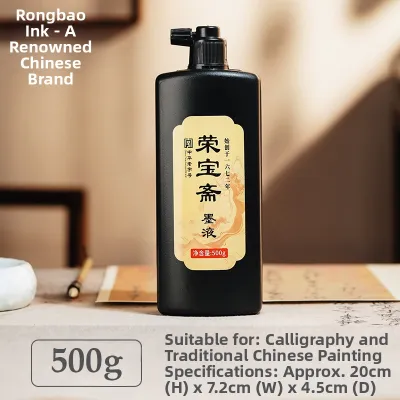
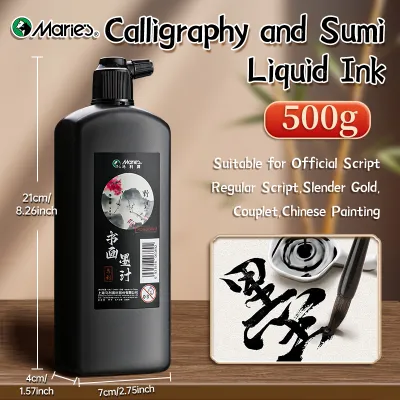
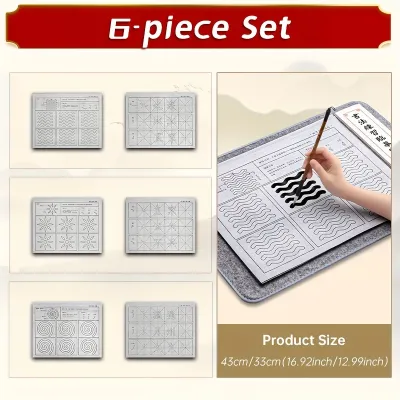
Prices are valid at publication and may change. Please refer to the product page for the latest price.
When evaluating bottled calligraphy inks, three key properties determine how the medium behaves on your brush and paper: concentration, carbon soot quality, and glue content. Concentration refers to the thickness of the liquid; highly concentrated ink produces rich, velvety blacks but can cause the brush to drag, while diluted ink flows easily but may appear grey or bleed excessively. The carbon black used in the ink—typically derived from oil soot or pine soot—determines the depth, warmth, or coolness of the black tone. Glue content, which consists of animal-derived gelatin, acts as the binder that holds the carbon particles together and adheres them to the paper fibers. An ink with too much glue will feel sticky and stiffen your brush, whereas too little glue will cause the ink to run and bleed uncontrollably when the paper is wet-mounted.
Paper compatibility is another crucial factor that dictates how your ink behaves. Beginners often start practicing on grid paper, such as Maobian paper or Mizige paper, which is semi-absorbent. This type of paper absorbs ink at a moderate rate, giving you enough time to execute strokes slowly while clearly showing the boundaries of your lines. In contrast, unsized Xuan paper is highly absorbent and behaves like a sponge. If your ink is too thin or your brush movement is too slow on raw Xuan paper, the ink will bleed rapidly into a blurry smudge. Understanding this relationship helps you adjust your ink’s viscosity with small drops of water to match the specific paper you are using for practice.
Established Ink Brands to Consider for Practice and Creation
When shopping for Chinese calligraphy ink in Singapore, you will encounter several historic brands that have maintained a reputation for quality over decades, or even centuries. Rather than viewing these brands as a rigid ranking, consider them as reliable options tailored to different stages of your calligraphy journey. It is always wise to check local availability and inspect the specific product lines offered by specialized retailers in Singapore.

Yidege (一得阁) for Deep Black and Creation
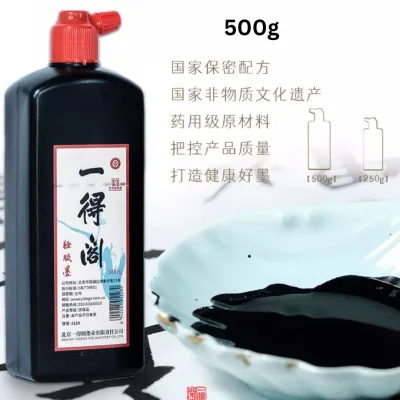
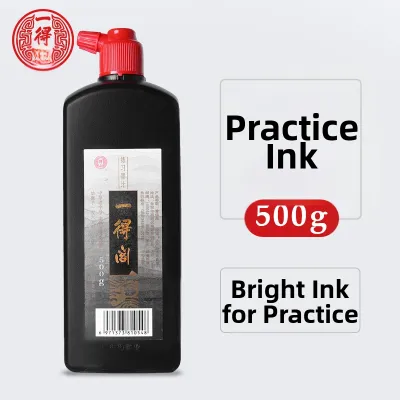
Yidege is arguably the most famous and recognizable brand of liquid Chinese calligraphy ink, originating in Beijing during the late Qing Dynasty. It is widely celebrated for its dense, glossy black finish and its traditional formulation process, which yields a highly stable ink that does not fade over time. The deep blackness of Yidege ink makes it the preferred choice for final creative works, exhibition pieces, and styles of calligraphy that require bold, commanding strokes.
The primary characteristic of Yidege ink is its relatively high glue content and thick viscosity. While this provides excellent line definition and prevents excessive bleeding on absorbent paper, it means the ink can feel heavy or sticky straight from the bottle. In Singapore’s air-conditioned environments, this thickness can cause the ink to dry quickly on your brush tip, leading to friction. To achieve smooth, fluid brush movements, you will often need to pour a small amount of Yidege ink into an ink dish and dilute it slightly with a few drops of water until it reaches the consistency of single cream.
Caosugong (曹素功) for Tonal Variation
Dating back to the Huizhou region during the Qing Dynasty, Caosugong is another legendary brand highly revered by both calligraphers and traditional ink painters. Unlike the intense, uniform blackness of Yidege, Caosugong is famous for its exceptional tonal variation. This quality allows artists to achieve the “five colors of ink”, ranging from deep, lustrous charcoal to delicate, transparent grey washes, depending on how much water is mixed into the brush.
This versatility makes Caosugong an outstanding option for intermediate practitioners and those interested in expressive scripts like semi-cursive or cursive, where the speed of the brush naturally creates varied ink densities. Additionally, traditional Caosugong ink formulations often incorporate subtle herbal ingredients and musk, giving the liquid a pleasant, soothing scent that masks the natural odor of animal glue. This aromatic quality creates a more enjoyable and authentic sensory experience during long practice sessions.
Standard Practice Inks for High-Volume Training
While premium brands like Yidege and Caosugong are excellent for creative projects, using them for daily, high-volume practice can quickly become expensive. For beginners who need to write hundreds of characters daily to build muscle memory, standard practice inks—such as Chung Hwa or local student-grade brands—are highly practical. These inks are formulated to prioritize high-volume production, smooth flow, and affordability over archival longevity.
Standard practice inks generally feature a lower viscosity and lower glue content, meaning they flow effortlessly from the brush without requiring precise dilution. This makes them incredibly easy to use on cheap Maobian paper for repetitive drills. The trade-off is that these inks may dry to a slightly dull, matte charcoal color rather than a deep, glossy black, and they may bleed more easily if used on professional Xuan paper. For daily training where the goal is stroke mastery rather than preservation, these cost-effective inks offer the best quality-to-price ratio.
Evaluating Beginner Calligraphy Sets: Essentials vs. Gimmicks
For many beginners, purchasing a pre-packaged calligraphy set seems like the easiest way to acquire all the necessary tools at once. However, the market is flooded with starter kits that prioritize aesthetic appeal over functional quality. To avoid frustration, you must learn to distinguish between well-curated sets that contain essential, high-quality tools and those packed with cheap, unusable gimmicks.
A functional and practical calligraphy starter set should focus on the core essentials: a reliable brush, a bottle of decent practice ink, a stack of semi-absorbent practice paper, and a simple ink dish or small stone. Many commercial sets try to attract buyers by including decorative items like carved plastic brush rests, miniature water droppers, or synthetic “water-writing” cloths that allow you to practice with water instead of ink. While water-writing cloths can be useful for quick, mess-free stroke practice, they do not teach you how to manage real ink flow, viscosity, or paper absorption, which are critical skills for a calligrapher.
The most critical component of any set is the brush, and this is where cheap sets usually fail. Beginners should look for a mixed-hair brush, which typically combines stiff weasel hair or rabbit hair in the inner core with soft goat hair on the outer layer. This combination is ideal because the stiff core provides the spring and resilience needed to help the brush tip return to its original shape after a stroke, while the soft outer layer holds a generous amount of ink. Pure goat hair brushes are often too soft and floppy for beginners to control, while pure weasel hair brushes can be too stiff and expensive.
When evaluating a pre-packaged set, look out for common red flags that indicate poor quality. Cheap sets often include purely synthetic nylon brushes that cannot hold a sharp point and dump ink onto the paper in large, uncontrollable pools. Another red flag is paper that is so thin and poorly sized that it tears under the weight of a wet brush or causes the ink to bleed instantly into illegible blobs. Finally, avoid sets that include unbranded, unlabeled ink bottles; these are often made with low-grade synthetic binders that can dry into a hard, plastic-like residue, permanently ruining the natural hairs of your brush.
Ultimately, you must weigh the convenience of a pre-packaged set against the quality of individual components. A well-made, branded starter set from a reputable manufacturer offers excellent convenience and makes for a wonderful gift. However, if you are serious about learning the art, assembling your own basic set is often the smarter financial and practical choice. By purchasing a single, high-quality mixed-hair brush, a reliable bottle of Yidege or Caosugong practice ink, a simple ceramic ink dish, and a pack of grid Maobian paper separately, you will spend roughly the same amount of money but secure tools that perform beautifully and last significantly longer.
Sourcing in Singapore: Where to Buy and What to Verify
Finding reliable Chinese calligraphy supplies in Singapore is relatively straightforward if you know where to look. For the most authentic and comprehensive selection, your best destination is the historic Bras Basah Complex, which has long served as Singapore’s hub for arts, crafts, and educational books. Within this complex, specialized Chinese art and stationery shops offer a wide array of brushes, Xuan paper rolls, and authentic branded inks imported directly from reputable manufacturers. Chinatown also hosts traditional craft and calligraphy shops where knowledgeable staff can guide you based on your skill level and budget.
For general convenience, large art supply chains like Art Friend or Overjoyed carry reliable starter brushes and basic calligraphy inks, making them highly accessible options. If you prefer shopping online via local e-commerce platforms, ensure you buy from reputable sellers with high ratings and positive customer reviews. When purchasing online, be cautious of prices that seem too good to be true, as counterfeit inks and low-quality imitation brushes are common on digital marketplaces.
Whether shopping in a physical store or receiving an online delivery, always perform a physical verification of your items before use. First, inspect the ink bottle’s cap and seal; the inner protective foil or plastic plug must be completely intact to ensure the ink has not dried out, leaked, or been exposed to air during transit. Second, inspect the brush head. Gently feel the dry brush tip; the hairs should feel cohesive and taper to a sharp, neat point. If you notice excessive loose hairs shedding from the ferrule before the brush has even been wet, it is a sign of poor construction. Lastly, give the ink a quick sniff if possible; high-quality traditional ink should have a mild, earthy, or herbal scent, whereas a strong, sour, or chemical odor suggests spoilage or low-grade synthetic ingredients.
Living in Singapore’s tropical climate presents unique challenges for maintaining calligraphy tools due to the high humidity, which regularly hovers around 80% or higher. This moisture-rich environment is highly conducive to mold growth, which can quickly ruin natural hair brushes and organic ink formulations. To protect your investment, never recap a wet brush with its plastic protective cap, as this traps moisture inside the hairs, leading to rot, shedding, and mildew. Instead, hang your brushes vertically on a brush hanger or from a shelf edge in a well-ventilated area to dry completely.
Similarly, proper ink storage is essential to prevent spoilage in Singapore’s heat. Always wipe the neck of the ink bottle clean before screwing the cap on tightly, as dried ink buildup can prevent a proper seal, leading to evaporation or mold contamination inside the bottle. Store your ink bottles and paper stocks in a cool, dry cupboard away from direct sunlight. If you use an ink stone or dish, wash it thoroughly with plain water immediately after your practice session; leaving wet ink to sit overnight in Singapore’s humid air can cause it to spoil, attract pests, or dry into a hard crust that is incredibly difficult to clean without damaging the stone.
Frequently Asked Questions (FAQ)
Can I use regular black drawing ink or sumi ink for Chinese calligraphy?
No, you should avoid using regular black drawing inks, such as India ink, for Chinese calligraphy. Drawing inks are typically formulated with acrylic binders, shellac, or waterproof agents designed to dry permanent and resist water. If these chemicals dry on a Chinese calligraphy brush, they will coat the delicate natural hairs, causing them to stiffen, clump, and break, effectively ruining the brush. Furthermore, drawing inks do not behave correctly on absorbent Xuan paper; they tend to sit on the surface or bleed in harsh, uncontrolled patterns without the soft, expressive edges characteristic of traditional calligraphy ink.
Sumi ink, which is used in Japanese calligraphy, is chemically closer to Chinese calligraphy ink as it also utilizes carbon soot and animal glue binders. While you can technically use high-quality sumi ink for practice, it is formulated slightly differently to suit Japanese writing styles and paper types. Sumi ink often has a lower viscosity and a different tonal range, which may make it slide too quickly on Chinese Xuan paper. For the best learning experience, stroke control, and brush preservation, it is always highly recommended to stick to dedicated Chinese calligraphy liquid ink.
How should I clean and store my brush in Singapore's humid climate?
Proper cleaning is vital to preserve the lifespan of your natural hair calligraphy brushes, especially in Singapore’s humid climate where trapped ink and moisture can lead to mold. Immediately after each practice session, rinse the brush head under a gentle stream of cool or lukewarm water. Gently massage the hairs with your fingers, working from the base of the brush head down to the tip to release the trapped ink. Never use hot water, as this can melt the adhesive holding the brush hairs inside the wooden or bamboo shaft, causing the brush to shed.
Continue rinsing until the water running off the brush is completely clear. Once clean, gently squeeze out the excess water using your thumb and forefinger, and carefully reshape the brush head into a sharp, tapered point. Hang the brush vertically by its hanging loop on a brush stand or tape it to the edge of a shelf in a well-ventilated room. Never store a damp brush flat on a table, in a drawer, or inside a plastic protective cap, as the lack of airflow in Singapore’s humid air will trap moisture, causing the natural hairs to rot and fall out.
Community discussion
Share your experience or ask a question. Comments are reviewed before publication.