
Selecting the right cash sales book for your daily business operations in Singapore involves more than just picking the first option on the shelf. Because paper performance depends on specific weight, coating, and ink compatibility, there is no single “best” brand or product for every business. Instead, finding the ideal cash sales book requires evaluating how different paper types handle your specific writing instruments, daily volume, and environmental conditions.
For businesses operating in fast-paced retail, food and beverage, or mobile services, the cash sales book serves as an immediate physical record of transactions. High-quality paper ensures that handwritten receipts remain legible, professional, and durable over time. By understanding the physical properties of paper and learning how to test them, you can select a book that prevents ink bleed-through, resists tearing, and fits your operational budget.
Key Factors That Determine Paper Quality in Cash Sales Books
Paper quality is not a subjective measure; it is determined by specific physical properties engineered during the manufacturing process. When comparing cash sales books, the first specification to look for is the paper weight, measured in grams per square meter (GSM). Standard cash sales books typically range from 50 GSM to 80 GSM. Heavier paper, such as 70 GSM or 80 GSM, offers greater structural integrity and is highly resistant to show-through, which is when ink on one side of the page is visible from the other. This is particularly important if you write on both sides of a sheet or require a premium feel for customer-facing receipts.
Products mentioned in this guide
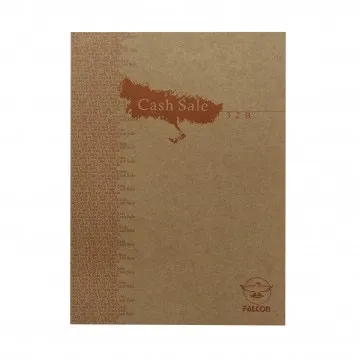
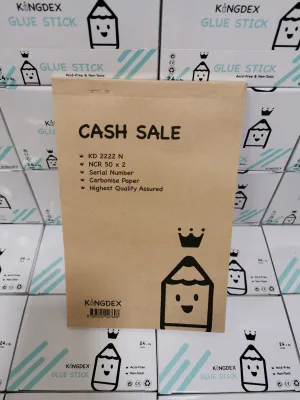
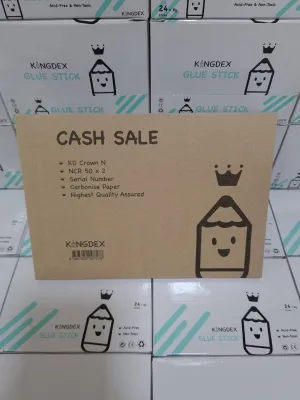
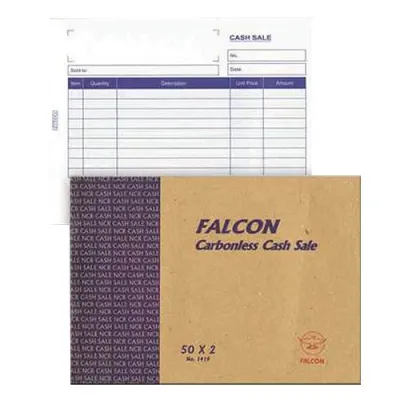
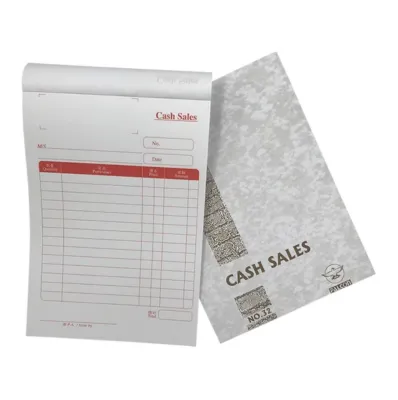
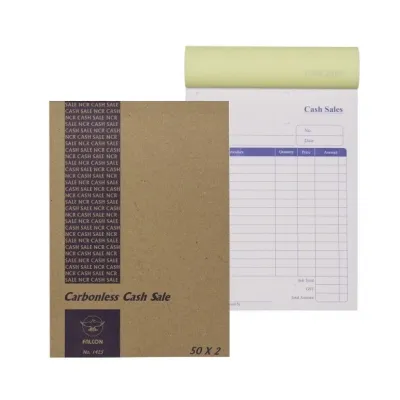
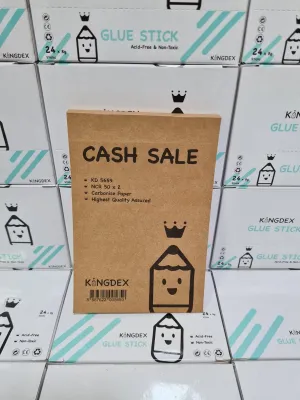
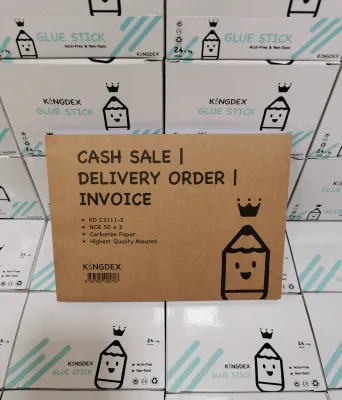
Prices are valid at publication and may change. Please refer to the product page for the latest price.
Another critical factor is surface sizing and coatings. Sizing refers to chemical agents added to paper during manufacturing to regulate its liquid absorbency. Without proper sizing, paper acts like a paper towel, causing ink to spread outward in a fuzzy pattern known as feathering, or soak straight through the sheet, known as bleed-through. High-quality cash sales books feature surface sizing that keeps ink crisp and localized on the page surface, ensuring that fine handwriting remains sharp and readable.
Brightness and opacity also play vital roles in legibility. Opacity is the measure of how much light is blocked from passing through the paper. High opacity is essential for preventing underlying text or carbon transfers from showing through to the active page. Brightness, on the other hand, refers to how much blue light the paper reflects. A balanced brightness level provides high contrast between the paper and your ink, reducing eye strain during long hours of bookkeeping and ensuring that scanned or photocopied receipts remain perfectly clear.
How to Evaluate Paper Performance for Daily Business Use
Before committing to a bulk purchase of cash sales books for your business, it is highly beneficial to perform a few simple, observable tests on a sample book. The most immediate test is the ink compatibility check. Using the exact pens your staff use daily—whether they are standard ballpoint pens, gel pens, or liquid ink rollerballs—write several lines of text with normal writing pressure. Observe the reverse side of the page for any signs of bleed-through or heavy show-through. If you notice ink pooling or spotting on the back, the paper lacks the necessary density or sizing for that specific pen type.

Durability and tear resistance are equally important in busy commercial environments. Test the perforation of the receipt pages by detaching several sheets in rapid succession. A high-quality cash sales book should feature clean, consistent perforations that allow you to tear out receipts smoothly with one hand, without ripping the customer’s copy or leaving jagged edges. Additionally, bend and flex the pages to see if they resist creasing or tearing under moderate handling, which is crucial for maintaining neat archives.
Finally, evaluate how the paper handles corrections. Use a standard pencil eraser or correction tape on a written line and observe the surface. Low-quality paper will often pill, thin out, or tear when subjected to the friction of an eraser, making corrections messy and unprofessional. High-quality paper maintains its surface integrity, allowing you to make neat corrections without compromising the sheet’s strength or causing subsequent ink applications to bleed.
Reading Product Specifications and Labels When Comparing Options
When browsing local stationery shops or online marketplaces in Singapore, learning to decode product labels will save you time and prevent purchasing errors. Always look for the explicit GSM rating on the packaging. If a product does not list its GSM, it is often a sign of lower-grade utility paper. For standard single-sheet cash sales books, aim for at least 70 GSM for reliable daily use. For multi-part carbonless (NCR) books, the paper is naturally thinner—often around 50 GSM to 55 GSM—to allow the physical pressure of your pen to transfer chemical dyes to the duplicate sheets below.
Do not judge a book solely by its thickness; instead, compare the listed page count against the physical thickness of the book. A very thick book with a low page count often indicates highly porous, low-density paper that may feather easily. Conversely, a compact, dense book indicates tightly compressed fibers that offer better ink resistance. Pay close attention to the binding method. Thread-sewn or wire-bound books are highly durable and allow the book to lay completely flat on a counter, making writing much easier compared to tightly glued bindings that constantly try to spring shut.
To balance your business budget, calculate the cost per page rather than comparing flat retail prices. Take the total price of the book or bulk pack in S$ and divide it by the number of usable receipt pages. For example, a pack of books costing S$12.00 containing a total of 600 usable sheets yields a cost of S$0.02 per page. This simple calculation allows you to compare premium options against budget alternatives objectively, ensuring you do not overpay for basic utility paper or compromise quality where a premium presentation is required.
Decision Framework: Matching Paper Quality to Your Business Needs
To choose the right cash sales book, you must align the paper specifications with your specific daily operational workflow and writing tools. If your business relies heavily on gel pens, rollerballs, or liquid ink signature pens, your primary concern is preventing bleed-through. For these tools, select single-sheet cash sales books with a minimum of 70 GSM to 80 GSM paper that features high surface sizing. This combination ensures that wet inks dry relatively quickly without soaking through to the pages underneath.
If your priority is lightweight portability and high page counts—such as for mobile vendors, delivery drivers, or outdoor market stalls in Singapore—standard 60 GSM to 70 GSM paper is often the most practical choice. In these scenarios, look for books with robust, weather-resistant covers and a stiff cardboard backing sheet. The backing sheet is crucial; it slides behind the active receipt page to prevent your writing pressure from transferring marks or carbon copies to the unused pages below, which is especially important in humid tropical climates where paper can soften slightly.
For businesses requiring instant duplicate or triplicate copies for accounting and customer records, carbonless (NCR) paper is the standard. When selecting carbonless books, verify that the chemical transfer coating is highly sensitive and does not require excessive writing pressure to create a clear copy. Test the duplicate sheet to ensure the transferred text is sharp, dark, and highly legible. For archival purposes, ensure the manufacturer specifies that the carbonless copies are fade-resistant, preserving your financial records for the required statutory periods.
Frequently Asked Questions (FAQ)
Does a higher GSM always guarantee no ink bleed-through?
No, a higher GSM does not automatically guarantee that ink will not bleed through the paper. While GSM measures the weight and thickness of the paper, bleed-through is heavily influenced by the paper’s density, fiber composition, and surface sizing. A thick 100 GSM paper with low sizing can absorb ink like a sponge, leading to significant bleeding and feathering. Conversely, a well-sized 70 GSM paper can resist wet inks beautifully. Always check for manufacturer notes regarding pen compatibility or perform a quick physical test with your preferred writing tools.
Are standard cash sales books suitable for fountain pens or heavy gel pens?
Most standard commercial cash sales books are optimized for ballpoint pens, which use thick, oil-based inks that require very little absorption control. Fountain pens and heavy gel pens use water-based or liquid inks that require specialized, highly sized paper to prevent feathering and bleed-through. If your daily business operations require the use of fountain pens or wet gel inks, standard utility cash sales books may not perform adequately. In such cases, you should test a sample book first or seek out premium stationery options specifically rated for liquid ink compatibility.
Community discussion
Share your experience or ask a question. Comments are reviewed before publication.