
Quick Answer: Do Glass Whiteboards Work With Magnetic Teaching Aids?
Yes, but with major caveats. Standard glass is completely non-magnetic. To use magnetic teaching aids, you must specifically select a whiteboard with glass that features an integrated steel or iron backing plate. Even then, standard lightweight plastic magnetic letters (which typically use weak ceramic or ferrite magnets) will usually slide right off the slick, thick glass surface.
For successful classroom instruction, you must pair a magnetic-backed glass board with high-strength neodymium (rare-earth) magnets. Before purchasing, educators must verify the board’s backing specifications and assess the magnet types used in their existing teaching tools.
How to Verify if a Glass Whiteboard is Magnetic
To understand why some glass boards hold magnets while others do not, it helps to look at the physical construction of the board. Glass itself has no magnetic properties. A magnetic glass whiteboard is actually a multi-layered panel consisting of a sheet of tempered safety glass bonded to a solid steel or iron backing plate. The magnetic pull must pass entirely through the front glass layer to reach the metal backing behind it.
Products mentioned in this guide
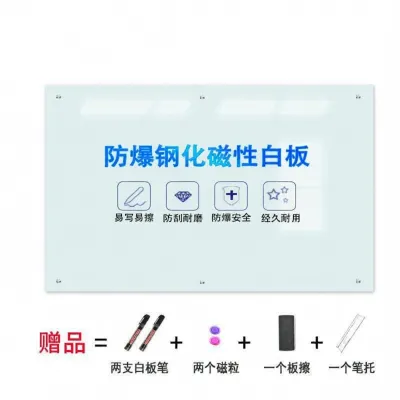
Prices are valid at publication and may change. Please refer to the product page for the latest price.

The thickness of the tempered glass layer plays a critical role in how well accessories stick to the surface. Most commercial glass boards feature glass that is 4mm to 6mm thick. This distance creates a significant physical gap between the magnet and the steel backing, drastically reducing the effective magnetic hold. If the glass is too thick or the backing plate is too thin, the magnetic force will be insufficient to hold even lightweight items.
When shopping for classroom equipment, you cannot assume a glass board is magnetic simply because it is sold for office or school use. You must carefully review the product specifications and look for explicit terms such as “magnetic glass,” “steel-backed glass,” or “compatible with rare-earth magnets.” Avoid boards labeled simply as “tempered glass whiteboard” or “frosted glass writing board” without any mention of a metal backing, as these are designed solely for writing and will not hold any magnetic accessories.
Another key specification to check is the type of backing material used. High-quality magnetic glass boards typically use a galvanized steel backing sheet that covers the entire rear surface of the glass. This ensures consistent magnetic pull across the entire board, preventing “dead zones” where teaching aids might slide off. Checking the manufacturer’s technical data sheet for the backing material and thickness is the most reliable way to verify compatibility before making a purchase.
Choosing Magnets That Actually Stick to Glass Surfaces
Standard educational magnets, such as the flexible black strip magnets found on the back of common plastic alphabet letters or lightweight cardboard flashcards, are made of ferrite or ceramic materials. These magnets are relatively weak and are designed for direct contact with bare steel surfaces, such as traditional porcelain or painted steel whiteboards. When placed on a glass whiteboard, the 4mm to 6mm barrier of glass weakens their grip so much that they almost instantly slide down to the tray or fall off entirely.
To overcome the thickness of the glass, you must use neodymium magnets, also known as rare-earth magnets. These magnets generate a much stronger magnetic field than standard ceramic magnets, allowing them to maintain a secure grip even through thick tempered glass. When purchasing magnetic teaching aids, look for products specifically labeled as “glass-board safe” or those that explicitly feature integrated neodymium magnets.
If you plan to use existing non-magnetic teaching aids, you can adapt them by adhering small neodymium disc magnets to their backs. To establish a reliable framework for checking weight capacity, you should perform a simple gravity test. Attach a single magnet to your teaching aid, place it on the glass board, and observe if it slides. If the aid slides or rotates, you will need to either upgrade to a thicker neodymium magnet or add multiple contact points to distribute the weight evenly.
While neodymium magnets are highly effective, they introduce important safety considerations in an educational environment, particularly in classrooms with young children. Strong rare-earth magnets can pose serious choking and internal injury hazards if swallowed. Therefore, any magnetic teaching aids used by students must have the magnets securely encased within the plastic or wood, rather than glued to the exterior where they could pop off.
To maintain a safe classroom, establish strict storage and handling protocols for all high-strength magnets. Keep spare neodymium magnets in a locked cabinet out of reach of students, and conduct a quick inventory at the end of each school day to ensure no small magnets have gone missing. For early childhood classrooms, it is often safer for the teacher to handle the magnetic glass board activities exclusively, or to stick to traditional steel whiteboards where weaker, child-safe ceramic magnets can be used without falling.
Installing and Maintaining Glass Boards in a Classroom
Installing a glass whiteboard in a classroom requires careful planning due to the substantial weight of the materials. A magnetic glass board is significantly heavier than a standard melamine or painted steel board because it combines thick tempered glass with a heavy steel backing plate. Standard drywall anchors are entirely insufficient for supporting this weight; the board must be mounted directly into wall studs or anchored securely into solid masonry walls using heavy-duty mounting hardware.
Before mounting, always verify that the wall structure can support the load and use the specific mounting brackets provided by the manufacturer. Many glass boards use a pass-through mounting system with metal standoffs that screw directly into the wall. Ensuring these standoffs are perfectly level and anchored into solid structural elements is critical to prevent the board from pulling away from the wall over time under the weight of daily classroom use.
Safety is paramount in any active learning environment, making the physical properties of the glass board a primary concern. Ensure the board is made of tempered safety glass, which is designed to resist impacts and, in the rare event of breakage, crumble into small, blunt pieces rather than sharp shards. Additionally, look for boards with rounded corners or protective edge framing to prevent accidental cuts or bumps as students and teachers move around the classroom.
Maintaining the writing surface of a glass board is relatively simple, but proper care is necessary to ensure long-term visibility and prevent ghosting. Glass is non-porous, meaning it resists ink penetration much better than traditional whiteboard materials, but it can still accumulate a film of dry-erase residue and oils from hands. Clean the surface regularly using a microfiber cloth and a dedicated glass cleaner or isopropyl alcohol solution to keep the board streak-free and highly visible.
Avoid using abrasive cleaning pads or harsh chemical scrubbers, as these can scratch the glass surface over time, creating microscopic grooves that trap ink and make future cleaning much more difficult. If you use the glass board as a projection screen, a clean, streak-free surface is even more critical to prevent glare and hot spots that can strain students’ eyes during lessons.
Frequently Asked Questions (FAQ)
Will standard magnetic letters stick to a glass whiteboard?
Standard magnetic letters, which typically use weak ceramic or flexible rubber magnets, will not stick to a glass whiteboard. The thickness of the glass prevents these weak magnets from reaching the metal backing with enough force to hold their own weight. To use magnetic letters on a glass board, you must purchase letters specifically designed with strong neodymium magnets, or manually attach small neodymium magnets to the back of your existing letters.
Are glass whiteboards safe for active classrooms?
Yes, provided they are manufactured from tempered safety glass and installed correctly. Tempered glass is highly durable and shatter-resistant, making it capable of withstanding typical classroom impacts. However, because these boards are extremely heavy, they must be professionally anchored into wall studs or solid masonry to prevent them from falling. Choosing boards with rounded corners or protective frames also helps minimize the risk of minor physical bumps.
Community discussion
Share your experience or ask a question. Comments are reviewed before publication.