
In Singapore’s fast-paced corporate and academic environments, selecting the right physical tool to manage your schedule is a deeply personal decision. The ideal organizational tool is not defined by a single premium label, but rather by how seamlessly its physical design matches your daily habits, writing instruments, and scheduling complexity. From managing back-to-back meetings in the Central Business District to documenting daily reflections in a quiet neighborhood café, your planning style dictates your structural needs.
To find the most effective system, you must evaluate the intersection of layout, paper specifications, and portability. While a busy project manager might require a highly structured, hourly time-blocking system, a creative journaler will prioritize heavy, ink-friendly paper that resists feathering. This guide analyzes the leading calendar and planner options available in Singapore, helping you identify the exact brand and format tailored to your specific lifestyle.
How to Identify Your Planning Style and Core Needs
Before browsing the stationery aisles, you must define your primary planning objective. Most users fall into one of three distinct categories: structured time-blocking, flexible memory-keeping, or semester-based academic tracking. Structured time-blocking is typical for professionals who must coordinate meetings, deadlines, and hourly commitments. Memory-keeping and journaling prioritize creative expression, long-form writing, and artistic layouts. Academic tracking focuses on modular assignment deadlines, exam preparation, and project phases that do not align with a standard calendar year.
Products mentioned in this guide
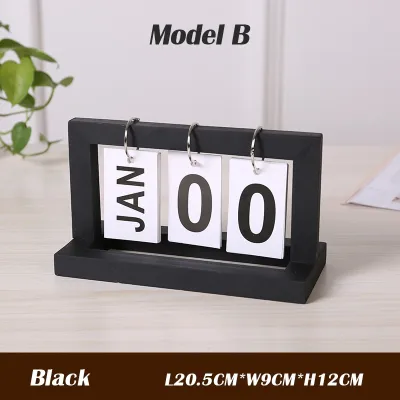
![🇸🇬 [In Stock]Magnetic Board Clear Acrylic Calendar Board Fridge Magnet Dry Erase Board Planner Daily Weekly Monthly Schedule](https://img.lazcdn.com/g/p/9825d932826324a771fc1554bdd6e9ec.jpg_400x400q80.jpg_.webp)
![[SG]Acrylic Magnetic Calendar Board Transparent Acrylic Board Planner Daily Weekly Schedule For Home School Office](https://img.lazcdn.com/g/p/f0e755b0d498c8c431756c5b5cc7dc63.jpg_400x400q80.jpg_.webp)
Prices are valid at publication and may change. Please refer to the product page for the latest price.
Once you understand your primary objective, you can evaluate the key physical dimensions of a paper planner:
- Paper Weight (GSM): Grams per Square Meter (GSM) determines the thickness and density of the paper. Standard office paper is typically 70 to 80 GSM, which is lightweight but prone to ink bleed-through. Creative planners often seek 120 to 160 GSM paper to handle heavy inks, markers, or light watercolor washes. Conversely, specialized ultra-thin paper (such as 52 GSM Tomoe River paper) offers incredible ink resistance without adding physical bulk to the book.
- Layout Format: Daily layouts allocate an entire page to a single day, providing ample space for detailed notes but resulting in a thicker book. Weekly layouts display seven days across a two-page spread, either vertically (ideal for hourly scheduling) or horizontally (ideal for task lists). Monthly layouts offer a bird's-eye view of major deadlines, making them excellent for high-level project coordination or wall calendars.
- Binding Type: Thread-bound planners lay completely flat when opened, making writing across the center fold seamless. Spiral or ring-bound planners allow you to fold the cover completely back to save desk space, though the central rings can sometimes obstruct your hand while writing. Modular or disc-bound systems allow you to add, remove, and rearrange pages as your needs evolve.
- Portability: Consider where you will use your planner. An A5-sized notebook (approximately 14.8 cm x 21 cm) offers the most popular balance between writing space and portability. A6 planners are pocket-sized and highly portable, while larger B5 or A4 options are best suited to remain permanently on an office desk.
Ultimately, the most successful planning system is one that aligns with your daily environment and pen preferences. A fountain pen user will require coated, slow-absorbing paper, whereas a gel pen user in Singapore’s humid climate will prefer fast-drying, slightly textured paper to prevent smudging.
Calendar and Planner Brands for Work Scheduling and Productivity
Essential Features for Professional Time Management
For corporate professionals, a planner must function as a reliable external brain. Effective professional planners incorporate specific structural elements designed to streamline task execution and meeting management. Hourly time slots are essential for professionals who practice time-blocking, allowing you to visualize open gaps in your schedule and prevent over-commitment. Look for layouts that cover at least 8:00 AM to 8:00 PM, though 24-hour timelines are highly beneficial for those working across international time zones.

Task prioritization sections, such as integrated Eisenhower matrices or dedicated daily goal boxes, help separate urgent tasks from administrative noise. The planner should also feature durable cover materials—such as thick book cloth, hard cardboard, or protective vinyl covers—to survive daily transit in a laptop bag or backpack.
When choosing a weekly layout, vertical columns are superior for visualizing chronological schedules, while horizontal layouts are better suited for professionals whose days are driven by long checklist items rather than back-to-back meetings. Finally, ensure the system includes quick-reference pages like yearly overviews, project tracking matrices, and blank note pages for capturing spontaneous meeting minutes.
Representative Brands and Systems for Work
Several globally recognized brands offer highly structured systems tailored specifically for professional productivity.
- Hobonichi Techo (Cousin): This Japanese brand is highly regarded for its use of 52 GSM Tomoe River paper, which is incredibly thin yet highly resistant to fountain pen bleed-through. The A5 Cousin size features a vertical weekly layout alongside dedicated daily pages, allowing you to time-block your week and take exhaustive daily meeting notes in a single, surprisingly compact volume. Prices generally range from S$50 to S$90 depending on the cover selection.
- Kokuyo Jibun Techo: Utilizing Kokuyo's proprietary "THIN paper," this modular three-in-one system includes "DIARY" (for daily/weekly scheduling), "LIFE" (for long-term goals), and "IDEA" (for grid-format note-taking). Its 24-hour vertical layout, weather-tracking icons, and structured habit trackers make it an exceptional tool for analytical professionals who love data-driven logging. Expect to spend between S$35 and S$65.
- Moleskine Professional: A classic choice featuring a clean, minimalist aesthetic with structured layouts specifically designed for project tracking and action items. While highly portable and widely available in local retail stores, the standard 70 GSM paper is best suited for ballpoint pens, as wet gel pens or fountain pens may cause noticeable feathering and ghosting. These typically retail from S$30 to S$55.
The primary trade-off with these premium dated systems is rigidity. A highly structured dated planner offers immediate, out-of-the-box usability, but skipped weeks can lead to a discouraging number of empty pages. Alternatively, modular refillable systems (such as using a leather cover with individual notebook inserts) offer complete customization but require a higher initial financial investment and setup time. Always verify local stock availability early in the fourth quarter, and confirm that the calendar grid aligns with the standard January–December business year.
Planner Brands for Journaling and Creative Tracking
Paper Quality and Layouts for Mixed Media
Creative planning, bullet journaling, and memory keeping require a completely different set of physical specifications than corporate scheduling. Here, the paper itself is the most critical component. If you enjoy using wet media—such as fountain pens, heavy ink brush pens, water-based markers, or light watercolor washes—standard notebook paper will quickly saturate, leading to severe bleed-through and feathering.
It is important to understand that “no bleed-through” is a relative claim. High-GSM paper (such as 160 GSM) physically blocks ink from penetrating due to its sheer thickness, but this makes the notebook heavy and limits the page count. Conversely, lighter papers (around 52 to 80 GSM) can be treated with specialized sizing coatings that resist ink penetration chemically, allowing the paper to remain thin. However, thin coated papers will still exhibit “ghosting,” where the shadow of your writing is visible on the reverse side of the page. Before committing to a full creative spread, always check the manufacturer’s GSM specifications and perform a small test in an inconspicuous corner or back page with your preferred pens and inks.
The layout of the page also dictates your creative freedom. Lined pages are ideal for structured, long-form writing but restrict drawing. Blank pages offer absolute freedom but can make keeping text straight difficult. Dot grid layouts (typically with 5mm spacing) offer the perfect compromise, providing subtle visual guidelines for drawing boxes, writing straight, or pasting ephemera without cluttering the page.
Representative Brands for Bullet Journaling and Memory Keeping
For those prioritizing creative expression and personal tracking, several brand categories stand out in the Singapore market:
- Traveler's Notebook: This modular system consists of a durable, raw leather cover that holds multiple slim, customizable paper refills using an elastic band system. You can combine weekly calendar inserts with blank sketch paper, dot-grid sheets, or watercolor paper. This flexibility makes it the premier choice for memory keepers who like to paste photos, movie tickets, and travel ephemera into their books. Starter kits generally cost S$60 to S$90, while individual refills cost S$6 to S$12.
- Leuchtturm1917 (Bullet Journal Edition): Designed specifically in collaboration with the founder of the Bullet Journal method, these notebooks feature 120 GSM paper that significantly reduces ghosting compared to their standard 80 GSM line. With pre-printed index pages, numbered pages, and three ribbon markers, it provides an excellent structured canvas for bullet journalers. These are priced between S$35 and S$55.
- Archer & Olive: Renowned for their ultra-thick, crisp white 160 GSM paper, these notebooks are designed to handle heavy acrylic paint pens, gouache, and watercolor without any ghosting or bleeding. They are ideal for highly artistic planners who treat their layouts as canvases. However, the thick paper means the notebooks are heavier, contain fewer pages (typically 160 pages), and retail at a premium of S$45 to S$70.
When choosing a creative planner, consider the trade-off between paper thickness and portability. If you intend to carry your journal daily, a heavy 160 GSM notebook may become a burden. Additionally, look for undated formats; creative journaling can be sporadic, and an undated book ensures you do not waste valuable paper during weeks when you do not have time to create layouts.
Calendars and Planners for Students and Academic Use
Academic Calendars and Assignment Tracking
Students operate on a completely different timeline than the corporate world. While standard planners run from January to December, academic life in Singapore is structured around semesters. For students in local universities (such as NUS, NTU, or SMU), polytechnics, or international schools, the academic year typically begins mid-year, around July or August. Purchasing a standard calendar-year planner in January means your scheduling tool will split across two different academic years, disrupting your tracking.
An effective student planner must prioritize academic-specific layouts. Look for dedicated assignment trackers, exam revision timetables, and project planning matrices that allow you to map out multi-week research papers. Portability is also paramount; students must carry their planners across campus daily alongside laptops and textbooks, making lightweight designs essential.
Before purchasing, carefully cross-reference the start month of the planner with your specific academic calendar. An 18-month planner starting in July is often the most seamless option for students, as it covers a full academic year and the subsequent transition period.
Representative Brands for Campus and Study Planning
Students require highly functional, durable, and budget-friendly options that can survive being constantly stuffed into crowded backpacks.
- Muji (Academic/Standard Planners): Muji offers some of the most practical and affordable planners in Singapore, ranging from S$5 to S$18. Their minimalist monthly/weekly planners utilize high-quality, smooth recycled paper that resists gel pen feathering remarkably well. They are incredibly thin, lightweight, and feature flexible plastic or cardboard covers, making them ideal for campus life.
- Kokuyo Campus / Smart Ring: This innovative hybrid system functions as an ultra-slim, ring-bound binder. It allows you to open the rings to insert calendar pages, blank grid sheets, or syllabus handouts, and then fold the cover completely back like a spiral notebook. It is highly durable and customizable, allowing you to carry only the pages you need for the current semester. Prices range from S$8 to S$20.
- Midori MD Notebook (Light): For students who prefer a minimalist aesthetic with premium paper, the MD Light series offers slim, thread-bound notebooks sold in packs of three. These are highly portable and allow you to dedicate one thin booklet to each semester or specific subject, preventing you from carrying unnecessary bulk. These packs typically cost S$12 to S$22.
When evaluating student options, pay close attention to the binding. Glued bindings can crack under heavy use, causing pages to fall out mid-semester. Thread-bound or ring-bound systems offer much higher durability. Additionally, opt for plastic protective covers to shield your planner from accidental water bottle spills in your bag.
Where to Buy and What to Verify Before Purchasing in Singapore
To find the widest selection of international and local planner brands, Singapore offers several excellent physical and digital retail options. For a hands-on experience where you can physically feel the paper texture and test the binding, visit major bookstores like Kinokuniya (especially their flagship store at Ngee Ann City, which carries an extensive range of Japanese imports) or larger Popular Bookstore outlets. Specialty stationery retailers such as Hands (formerly Tokyu Hands), Overjoyed at The Cathay, and NBC Stationery & Gifts also offer curated selections of premium planners and accessories.
If you prefer shopping online, official brand flagship stores on major ecommerce platforms or dedicated local stationery e-tailers provide convenient delivery. However, online shopping requires extra vigilance. Before checking out, always verify the exact calendar year and start month of the product. Because planners are highly time-sensitive, some online sellers offer steep discounts on older stock or regional editions (such as Japanese academic calendars that start in April, or US editions with Sunday-start weekly layouts when you might prefer a Monday-start).
Additionally, read the product descriptions carefully to ensure you are buying the correct size (e.g., confusing A5 with A6) and binding type. Check the seller’s return policy specifically regarding manufacturing defects, such as misaligned printing, upside-down pages, or damaged spiral bindings, so you can easily secure a replacement if your planner arrives damaged.
Frequently Asked Questions (FAQ)
What is the difference between a calendar and a planner?
A calendar is primarily a visual display of dates, weeks, and months, typically designed for wall mounting or desk placement to provide quick, shared reference for schedules and deadlines. A planner is a highly detailed, portable book or binder system that includes daily or weekly layouts, task lists, and note-taking sections designed for personal time management and productivity.
How do I prevent ink bleed-through in my planner?
Ink bleed-through occurs when wet ink saturates the paper fibers and leaks to the other side. To prevent this, use pens with dry-writing inks, such as standard ballpoints or gel pens with fine nib sizes (0.38mm or 0.5mm). Additionally, place a thick sheet of paper or a dedicated plastic pencil board (shitajiki) underneath your active page to act as a blotter, and always test new pens on a back index page before writing.
Should I choose a dated or undated planner?
Choose a dated planner if you thrive on immediate structure, plan to use your planner daily, and are starting at the beginning of a standard calendar or academic year. Opt for an undated planner if you want the flexibility to start planning at any point in the year, or if your planning habits are sporadic, as this prevents empty, wasted pages during weeks you do not use it.
Community discussion
Share your experience or ask a question. Comments are reviewed before publication.