
A C6 envelope is a highly popular, standardised paper sleeve measuring exactly 114 mm by 162 mm. Designed specifically to house A6-sized inserts flat, it is the go-to choice for mailing greeting cards, postcards, and folded correspondence. Whether you are sending wedding invitations across Singapore or mailing folded documents for business, understanding what fits inside a C6 envelope ensures your post arrives safely and complies with local mailing standards.
Using the correct envelope size prevents your contents from shifting excessively or getting damaged during transit. By matching your paper sizes to the correct envelope classification, you also avoid paying unnecessary postage surcharges. This guide breaks down the exact physical specifications of the C6 format and details how to prepare common document sizes for a perfect fit.
Exact Dimensions of a Standard C6 Envelope
To plan your mailings accurately, you must look at the exact technical specifications. A standard C6 envelope measures 114 mm by 162 mm (approximately 4.5 inches by 6.4 inches). This size is part of the international ISO 269 standard, which defines envelope sizes designed to match the ISO 216 “A” series paper sizes.
Products mentioned in this guide
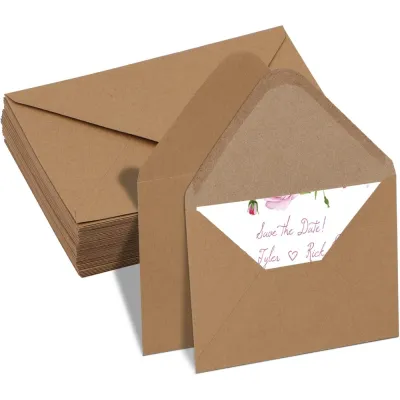
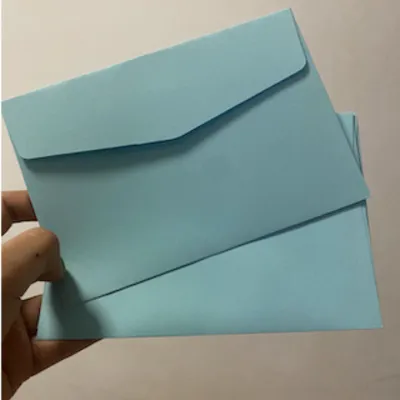
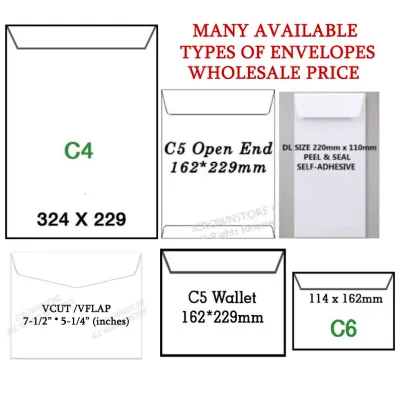
Prices are valid at publication and may change. Please refer to the product page for the latest price.
The engineering logic behind the C-series is elegant: a C-series envelope is the geometric mean of the corresponding A-series and B-series sheets. This means a C6 envelope is specifically scaled to hold an A6 sheet of paper without folding, or larger A-series sheets folded down to A6 dimensions. Because the envelope is slightly larger than the paper it is meant to contain, the sheets slide in smoothly without bending at the corners.
Keep in mind that 114 x 162 mm represents the external dimensions of the envelope. The internal usable space is always slightly smaller due to the paper seams, side folds, and bottom flap construction. Typically, you should subtract 2 mm to 3 mm from each side to determine the maximum safe size for a flat insert.
What Documents and Items Fit Inside a C6 Envelope?
The primary design purpose of a C6 envelope is to hold A6-sized items perfectly flat. However, its utility extends far beyond standard paper sheets. By understanding how different paper sizes scale down, you can use these envelopes for a wide variety of personal and professional correspondence.

When choosing inserts, always aim for a small clearance margin around the edges. Leaving a buffer of 2 mm to 5 mm prevents the insert from catching on the envelope seams during insertion, reduces the risk of tearing the paper edges, and ensures the envelope seals flat without buckling.
Flat Inserts: A6 Cards, Photos, and Postcards
An A6 sheet of paper measures 105 mm by 148 mm. Because this is smaller than the 114 mm by 162 mm envelope dimensions, an A6 card slides in smoothly with an ideal clearance of 9 mm on the width and 14 mm on the length. This makes C6 envelopes the standard pairing for RSVP cards, small flyers, and standard postcards.
Photographs also fit exceptionally well inside these envelopes. A standard 4R photograph, which measures 4 inches by 6 inches (approximately 102 mm by 152 mm), fits snugly inside a C6 envelope. This makes it an excellent choice for sharing family photos or physical prints.
If you are mailing rigid items, such as thick cardstock invitations or modern acrylic wedding cards, you must exercise caution. Thick materials reduce the available lateral space inside the envelope. A 3 mm thick acrylic card, for instance, will pull the sides of the envelope inward, meaning a standard 105 x 148 mm acrylic sheet may stretch the paper seams to their breaking point. For rigid or dimensional inserts, always test a sample before purchasing envelopes in bulk.
Folded Inserts: A5 and A4 Sheets
You do not need to limit yourself to A6-sized stationery when using C6 envelopes. Larger, more common paper sizes can easily be folded to fit. An A5 sheet of paper, which measures 148 mm by 210 mm, becomes exactly A6 size (105 mm by 148 mm) when folded in half once across its longest side.
Similarly, standard A4 printer paper (210 mm by 297 mm) can be folded to fit a C6 envelope. To do this, fold the A4 sheet in half once to create an A5 size, and then fold it in half once more to reach A6 dimensions. This quarter-fold method is highly practical for sending letters, invoices, or short forms printed on standard office paper.
To ensure your folded inserts look professional and fit without excessive bulk, use a bone folder or a clean plastic edge to press down on the creases. Sharp, crisp folds reduce the springiness of the paper, allowing the envelope to lay flatter. Be mindful that folding multiple A4 sheets together increases the thickness exponentially, which can make the envelope bulge awkwardly.
Practical Fit Constraints: Thickness, Bulk, and Paper Weight
When preparing mail, 2D dimensions are only half the story; physical thickness and paper weight play a massive role in whether your envelope will seal successfully. Paper weight is measured in grams per square metre (gsm). A standard office sheet is typically 80 gsm, while premium greeting cards range from 250 gsm to 350 gsm.
If you are mailing multiple sheets of paper, the cumulative bulk can quickly overwhelm the envelope. While a single folded A4 sheet of 80 gsm paper fits effortlessly, inserting three or four folded sheets creates a thick stack that can burst the side seams of a standard paper envelope.
The structural style of the envelope also dictates its capacity. Pocket-style envelopes (which open on the shorter side) often offer a tighter fit, whereas wallet-style envelopes (which open on the longer side with a wider flap) are generally easier to stuff with thicker inserts. Additionally, peel-and-seal closures provide a stronger, more reliable bond than standard gummed flaps when dealing with slightly bulky contents. Overstuffing not only risks tearing during transit but can also lead to standard mail rejection or unexpected surcharge fees from postal carriers.
Common Mailing Uses for C6 Envelopes in Singapore
In Singapore, C6 envelopes are incredibly popular for social stationery and seasonal celebrations. They are widely used to distribute wedding invitations, RSVP cards, and festive greeting cards for major holidays such as Chinese New Year, Hari Raya Aidilfitri, Deepavali, and Christmas.
When sending mail through Singapore Post (SingPost), the C6 envelope is highly advantageous. Because its dimensions (114 x 162 mm) fall well within SingPost’s Standard Regular mail limit (which allows dimensions up to 240 x 162 x 6 mm), your C6 mailer will qualify for the lowest local postage rates, provided it remains under 6 mm in thickness and meets the weight tier limits.
To ensure your mail survives the automated sorting machines used by SingPost, select envelopes with a sturdy paper weight, ideally between 100 gsm and 120 gsm. This range provides a premium feel for invitations while offering the structural durability needed to prevent punctures and tears as your mail travels across the island.
Frequently Asked Questions (FAQ)
Is a C6 envelope the same size as A6 paper?
No, they are not the same size. A C6 envelope measures 114 x 162 mm, while A6 paper measures 105 x 148 mm. The C6 envelope is intentionally designed to be slightly larger than A6 paper so that the paper can slide inside easily without folding or bending.
Will an A5 card fit inside a C6 envelope without folding?
No, an A5 card will not fit inside a C6 envelope without folding. An A5 card measures 148 x 210 mm, which exceeds both the width and length of a C6 envelope (114 x 162 mm). To fit an A5 item flat, you must use a larger C5 envelope, or you must fold the A5 card in half to reduce it to A6 size.
Community discussion
Share your experience or ask a question. Comments are reviewed before publication.