
To choose the right bubble wrap for packing, you must match the bubble diameter to your item’s fragility and size, while selecting a film thickness that corresponds to the item’s weight and sharpness. Small bubbles (6mm to 10mm) excel at preventing surface scratches on lightweight items, whereas large bubbles (12mm to 25mm) provide the deep impact absorption needed for heavy or highly fragile goods. For standard household goods, single-layer wrap is usually sufficient, but shipping heavy, sharp, or high-value items requires heavy-duty double-layer or specialized anti-static wrap. Matching these specifications to your specific packing scenario prevents damage, saves space, and keeps shipping costs manageable.
Decoding Bubble Wrap Specs: What Size and Thickness Actually Mean
Understanding bubble wrap specifications is the first step toward securing your items for transit or storage. Bubble diameter, which refers to the physical width of the individual air pockets, typically ranges from 6mm (small) to 25mm (large). This dimension dictates the type of protection the wrap offers. Small bubbles create a dense, flat cushioning plane that prevents surface abrasions, whereas large bubbles contain a higher volume of trapped air, acting as miniature shock absorbers that compress under force to disperse impact energy.
Material thickness, on the other hand, determines the wrap’s structural integrity and puncture resistance. Thickness is often measured in micrometres (microns) or mils (one-thousandth of an inch), though retail packaging in Singapore more commonly categorizes products by layer count, such as single-layer or double-layer (laminated) wrap. A thicker film prevents sharp corners, heavy weights, or rough handling from popping the bubbles, ensuring the protective air pockets remain intact throughout the journey.
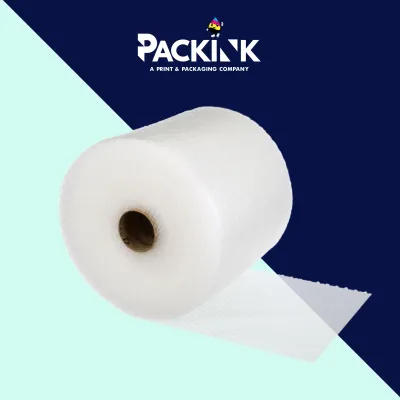
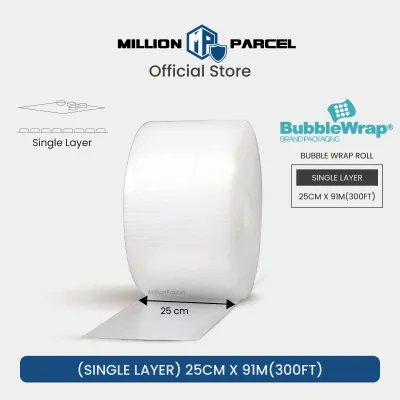
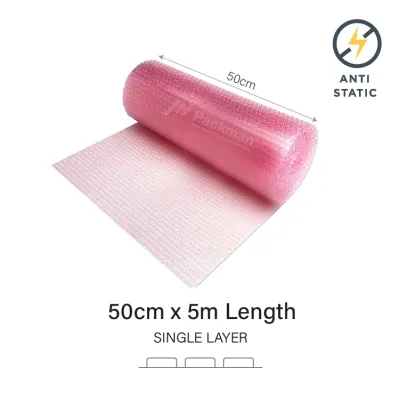
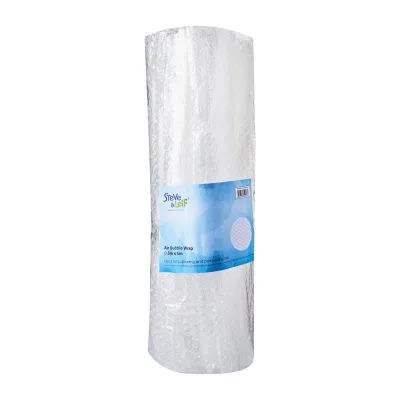
Products mentioned in this guide
![91m/20m/10m BubbLest™ [FREE PENKNIFE] Bubble Packaging Material Direct Singapore Manufacturer | Clingwrap | Plasticwrap | Cling Wrap | Plastic Wrap | Bubble Roll |](https://img.lazcdn.com/g/p/118908581c7285d2410f3d4422311ca0.png_400x400q80.png_.webp)
Prices are valid at publication and may change. Please refer to the product page for the latest price.
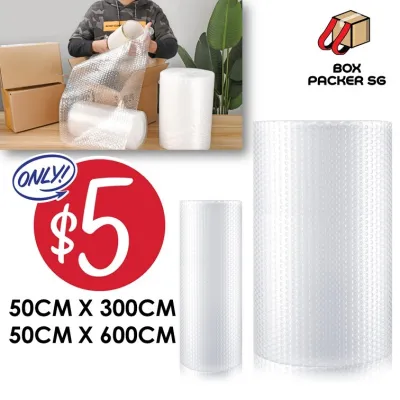
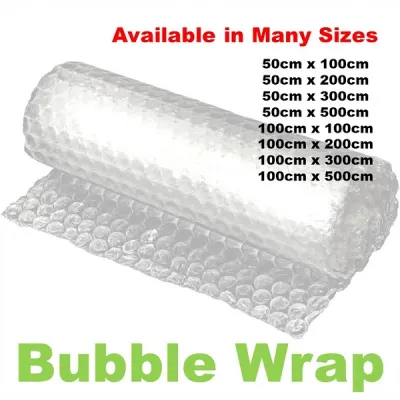
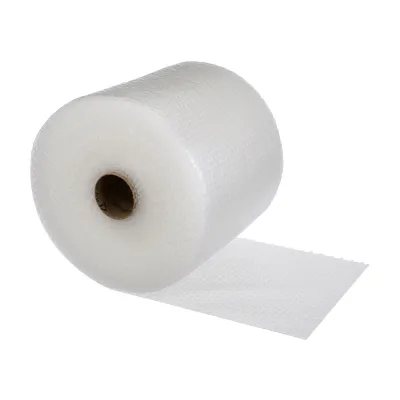
When reading product labels, you will also notice variations in roll width and length. Standard rolls are typically sold in widths of 30cm, 50cm, or 100cm. Choosing the correct width reduces the need for excessive cutting or overlapping, which can make packages unnecessarily bulky.
Your packing scenario determines which specifications matter most. For a general household move, versatility is key, making a mix of standard single-layer rolls in small and medium bubble sizes highly practical. Conversely, e-commerce shipping requires precise specifications to minimize package weight and dimensional weight charges while providing targeted protection for specific product shapes and weights.
Choosing the Right Bubble Diameter for Surface and Impact Protection
Selecting the correct bubble diameter is crucial because using the wrong size can lead to broken valuables or overly bulky packages. The air volume within each bubble determines how much shock it can absorb before bottoming out.

Small Bubbles (e.g., 1/4" to 3/8" / 6-10mm)
Small bubbles are tightly packed together, creating a highly flexible sheet that easily contours around tight corners and complex shapes. Because of the high density of small air pockets, they distribute pressure evenly across flat surfaces. This makes them the premier choice for protecting delicate finishes, such as glass tabletops, polished wooden picture frames, tablet screens, and lightweight cosmetic bottles.
But small bubbles have limited vertical compression space. If a heavy box is dropped from a height, the thin air pockets will quickly compress completely, transferring the impact force directly to the enclosed item. They are also highly inefficient for filling large empty spaces inside a box, as you would need to use excessively long sheets, increasing both waste and packing time.
Medium to Large Bubbles (e.g., 1/2" to 1" / 12-25mm)
Medium (12mm) and large (25mm) bubbles are designed to absorb significant kinetic energy. The larger volume of trapped air acts as a robust cushion against the drops, vibrations, and rough handling typical of international shipping or local courier transits. This size is essential for highly fragile, heavy, or irregularly shaped items, including ceramic tableware, porcelain vases, heavy electronics, and delicate glassware.
Beyond direct wrapping, large bubbles serve as an excellent “void fill” material. When packing items in oversized cardboard boxes, empty spaces allow the contents to shift, which is a leading cause of transit damage. Placing crumpled sheets of large-bubble wrap in these voids locks the wrapped items securely in place, absorbing external shocks before they ever reach the product.
Selecting Thickness and Layers for Weight and Puncture Resistance
While bubble diameter determines cushioning depth, film thickness determines whether those bubbles will survive the journey. Matching the film’s structural strength to the weight and shape of your items prevents premature popping.
- Standard Single-Layer: This option features a single sheet of plastic shaped into bubbles, leaving the flat back exposed. It is highly flexible, cost-effective, and perfectly suited for lightweight household items, soft toys, clothing accessories, and short-distance residential moves where boxes are stacked carefully and handled manually.
- Heavy-Duty and Double-Layer: Double-layer bubble wrap sandwiches the air bubbles between two flat sheets of plastic, sealing the air more securely and preventing easy popping. This heavy-duty construction is necessary for heavy metal tools, dense books, or items with sharp edges like metal photo frames. The reinforced plastic resists punctures, ensuring the protective air pockets remain intact even under high pressure.
- Anti-Static Variants: Standard plastic wrap easily generates static electricity through friction during handling. For sensitive electronic components like computer graphics cards, motherboards, or hard drives, standard wrap can cause catastrophic electrostatic discharge (ESD) damage. Anti-static bubble wrap—instantly recognizable by its pink colour—is treated with an antistatic agent to prevent static charge buildup, making it a critical safety specification for tech packaging.
Maximizing Protection: Wrapping Direction and Box Clearance
Even the highest-quality bubble wrap will fail if applied incorrectly. Proper packing techniques ensure the chosen bubble wrap specifications perform as intended during transit.
- Bubble Orientation: The general rule is to wrap with the bubbles facing inward, directly against the item. The individual bubbles contour around the object's shape, providing targeted cushioning and preventing the item from sliding within the wrap. Facing the bubbles outward is acceptable only when wrapping highly textured, abrasive, or sharp items that could puncture the bubbles from the inside, or when wrapping an item already protected by an inner layer of soft packing paper.
- Securing the Wrap: Use high-quality packaging tape to seal the bubble wrap, but never apply adhesive tape directly to the item's surface. Tape adhesive can leave stubborn residue or strip away paint, varnish, and delicate finishes upon removal. Instead, wrap the item completely, overlap the bubble wrap layers, and tape the plastic to itself.
- Box Sizing and Clearance: Bubble wrap cannot compensate for a poorly sized box. When selecting a shipping box, ensure there is at least 2 inches (approximately 5 cm) of clearance on all sides between the wrapped item and the inner box walls. Fill this clearance space entirely with bubble wrap or other cushioning materials so the item cannot migrate to the edge of the box, where it would be vulnerable to external impacts.
Frequently Asked Questions (FAQ)
Should the bubbles face inward or outward when wrapping fragile items?
For almost all fragile and smooth-surfaced items, wrap with the bubbles facing inward. This places the cushioning pockets directly against the object, allowing the plastic to grip the surface and absorb localized shocks. Wrap with bubbles facing outward only if the item has sharp, abrasive protrusions that might pop the bubbles, or if you have already wrapped the item in a protective layer of tissue paper.
Can bubble wrap damage polished wood or painted surfaces?
Yes, prolonged contact with plastic bubble wrap can damage sensitive finishes. In Singapore’s warm, highly humid climate, trapped moisture and the migration of plasticizers (chemicals that make plastic flexible) from the bubble wrap can react with fresh paint, lacquer, or polished wood varnishes. This reaction can leave permanent, cloudy imprints on the surface. To prevent this, always wrap polished wood, leather, or painted items in a barrier layer of acid-free tissue paper or plain kraft paper before applying the bubble wrap.
Community discussion
Share your experience or ask a question. Comments are reviewed before publication.