
Selecting the correct protective packaging is the difference between a successful delivery and a costly return. When preparing items for transit or storage, understanding how bubble wrap packing specifications impact performance ensures that your valuables remain undamaged. Many buyers assume all bubble wrap performs identically, but subtle variations in bubble diameter and film thickness dramatically alter how well a wrap absorbs shock, resists punctures, and supports weight.
By matching these physical specifications to the specific weight, fragility, and shape of your items, you can optimize your packaging strategy. This guide breaks down the science of bubble sizes, film thicknesses, and specialty features so you can make an informed purchasing decision.
Decoding Bubble Size: Choosing the Right Bubble Wrap Packing Diameter
Bubble diameter is the primary factor determining how much space the wrap occupies and how it distributes impact forces. Manufacturers typically categorize bubble sizes by their height and diameter, with the most common options being 3/16-inch (small), 1/2-inch (medium), and 1-inch (large) bubbles. In metric-focused markets like Singapore, these are frequently labeled by their approximate millimeter equivalents, such as 10 mm for small bubbles and 25 mm for large bubbles.
Products mentioned in this guide
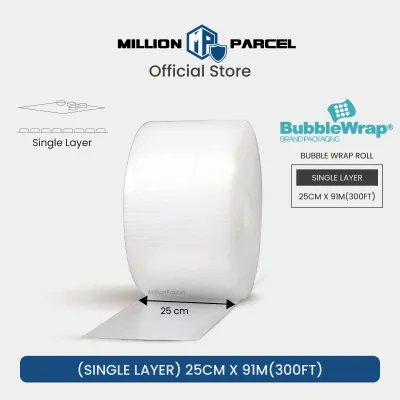
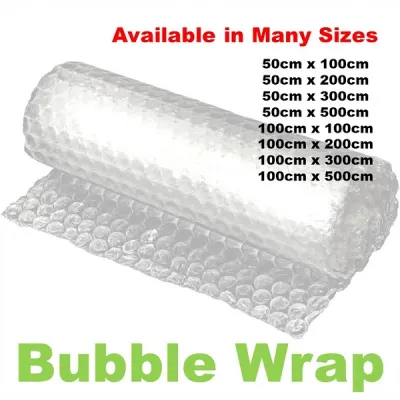
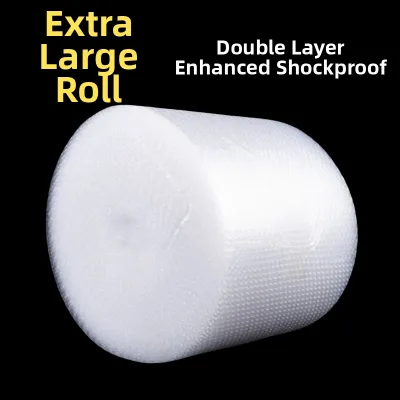
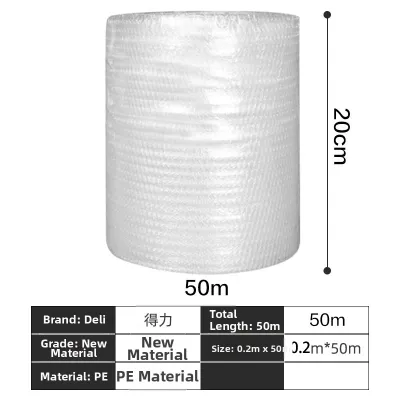
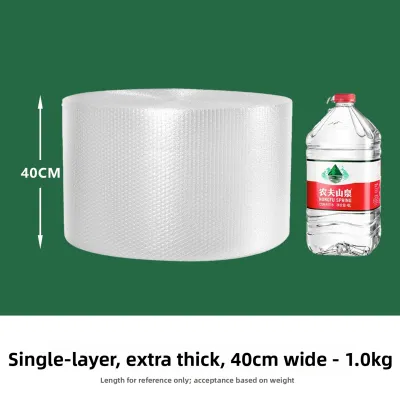
![91m/20m/10m BubbLest™ [FREE PENKNIFE] Bubble Packaging Material Direct Singapore Manufacturer | Clingwrap | Plasticwrap | Cling Wrap | Plastic Wrap | Bubble Roll |](https://img.lazcdn.com/g/p/118908581c7285d2410f3d4422311ca0.png_400x400q80.png_.webp)
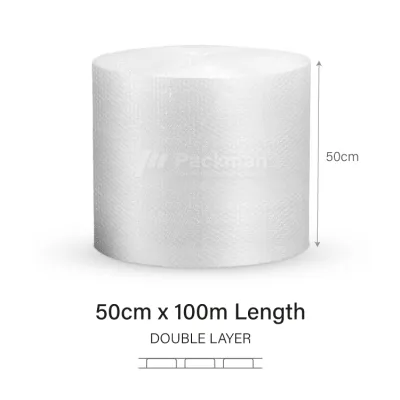
Prices are valid at publication and may change. Please refer to the product page for the latest price.
Small bubbles (3/16-inch or 10 mm) provide dense, highly uniform surface coverage. Because the air pockets are closely packed, they excel at preventing surface scratches, abrasions, and minor impacts. This makes them the ideal choice for wrapping lightweight, delicate items such as cosmetics, small glassware, and ceramic ornaments. The tight spacing ensures that almost every square centimeter of the item’s surface is in direct contact with a protective cushion of air.
Larger bubbles (1/2-inch to 1-inch, or 25 mm) are designed for heavy-duty shock absorption. The larger volume of air inside each bubble allows the plastic to deflect deep, high-energy impacts, such as those experienced when a heavy box is dropped onto a hard floor. Consequently, large bubble wrap is the standard choice for cushioning bulky items, heavy electronics, and filling empty spaces (void fill) inside shipping boxes to prevent items from shifting.
A common packing mistake is assuming that larger bubbles always offer superior protection. Using large bubble wrap on small, intricate, or highly fragile items can actually increase the risk of damage. The wide gaps between large bubbles leave small protrusions or delicate handles completely unsupported. If the box is compressed, these unsupported areas bear the brunt of the force, leading to localized breakage that a denser, small-bubble wrap would have prevented.
Understanding Thickness Ratings: Mil, Layers, and Puncture Resistance
While bubble diameter dictates the cushioning volume, the thickness of the plastic film determines the wrap’s durability and weight-bearing capacity. Film thickness is measured in “mils” (one-thousandth of an inch) or “microns” (micrometers, where 1 mil equals approximately 25.4 microns). In Singapore retail and industrial packaging markets, specifications are almost exclusively listed in microns, typically ranging from 40 microns for light-duty wraps to over 100 microns for heavy-duty industrial applications.

The structural construction of the bubble wrap also plays a critical role in its performance.
- Single-layer bubble wrap: This is the most common variety. It consists of a flat plastic backing sheet heat-sealed to a shaped plastic sheet containing the bubbles. The bubbles are exposed on one side, making this wrap highly flexible but more susceptible to popping under direct friction.
- Double-layer bubble wrap: This style sandwiches the bubble layer between two flat sheets of plastic. This co-extruded design seals the air inside more securely, significantly improving puncture resistance and preventing the bubbles from deflating under long-term stacking pressure.
Thicker films directly translate to better air retention and puncture resistance. When shipping heavy items with sharp edges, such as metal tools, picture frames, or wooden furniture, a thin 40-micron film will easily puncture, deflating the bubbles and leaving the item exposed. Opting for a heavy-duty 80-micron or 100-micron wrap ensures the plastic remains intact even under intense friction and pressure.
However, there is a practical trade-off when selecting ultra-thick materials. As film thickness increases, the plastic becomes significantly stiffer and less pliable. Wrapping a small, irregularly shaped item in a stiff 100-micron double-layer wrap is incredibly difficult; the plastic resists bending, springs back easily, and requires excessive amounts of packing tape to secure. For complex shapes, a thinner, more flexible wrap applied in multiple layers is often much easier to manage.
Matching Specifications to Your Items: A Practical Selection Matrix
To streamline your packaging process, you must align the weight and fragility of your items with the correct bubble size and film thickness. The following matrix provides a starting point for matching common item categories with their ideal specifications.
| Item Category | Typical Weight | Recommended Bubble Diameter | Recommended Film Thickness | Primary Protection Duty |
|---|---|---|---|---|
| Glassware & Ceramics | Lightweight (<1 kg) | 3/16 inch (10 mm) | 40–50 microns (1.5–2.0 mil) | Scratch prevention & close-fit cushioning |
| Laptops & Electronics | Medium (1–5 kg) | 3/16 inch or 1/2 inch | 60–80 microns (2.4–3.1 mil) | Shock deflection & electrostatic safety |
| Framed Artwork & Mirrors | Medium to Heavy | 1/2 inch (12.7 mm) | 80–100 microns (3.1–4.0 mil) | Corner protection & puncture resistance |
| Heavy Machinery & Furniture | Heavy (>5 kg) | 1/2 inch or 1 inch (25 mm) | 100+ microns (4.0+ mil) | High-impact absorption & stacking support |
Your wrapping technique acts as a multiplier for these specifications. For instance, wrapping an item three times with a standard 40-micron wrap does not perfectly replicate the puncture resistance of a single 120-micron wrap, but it does significantly increase the overall shock absorption. When packing, always ensure the bubbles face inward toward the item. This allows the individual air pockets to grip the item’s contours, preventing it from sliding within the packaging, while leaving a smooth outer surface that is easy to tape and label.
In many scenarios, a hybrid wrapping strategy yields the best results. For highly valuable or complex items like a desktop computer tower, wrap the item first in a layer of small-bubble wrap to protect the delicate ports and polished surfaces. Follow this with an outer layer of large-bubble wrap to provide a thick shock-absorbing barrier against rough handling during transit.
Beyond the Bubbles: Secondary Features That Influence Packing Success
Selecting the right size and thickness is crucial, but secondary material properties can also make or break your packing outcomes. Standard plastic film easily generates static electricity through friction during transport, which can instantly destroy sensitive internal circuits in computers, phones, or gaming consoles. To prevent this, look for anti-static bubble wrap, which is treated with a chemical additive—typically dyed pink—that safely dissipates electrostatic charges.
You should also consider how the bubble wrap adheres to your items.
- Cohesive bubble wrap: This material features a specialized coating that sticks only to itself, not to the item you are wrapping. It is highly recommended for surface-sensitive items like polished wooden furniture, leather goods, or glossy metals, as it leaves zero adhesive residue behind.
- Adhesive bubble wrap: This type has a low-tack adhesive on one side, allowing it to stick directly to the item's surface. While useful for preventing the wrap from shifting on glass or plastic sheets, always check the manufacturer’s instructions to ensure it will not damage delicate varnishes or painted finishes.
Finally, pay attention to bubble shape variations on product labels. While traditional round bubbles are standard, some manufacturers offer hexagonal or continuous-channel designs. These specialized shapes are engineered to distribute air pressure more evenly when compressed, improving flexibility and reducing the likelihood of single-bubble failures during long journeys.
Frequently Asked Questions (FAQ)
Can I use large bubble wrap for small, highly fragile items?
Using large bubble wrap for small, highly detailed, or very fragile items is generally not recommended. The large gaps between the 1-inch or 25 mm bubbles can leave delicate features, such as handles or thin porcelain edges, completely unsupported. For optimal protection, use small-bubble wrap (3/16-inch or 10 mm) as the inner layer to ensure uniform surface contact, and only use large bubble wrap as an outer layer for general shock absorption.
What is the difference between mil and microns when buying bubble wrap?
Mil and microns are two different units used to measure the thickness of the plastic film. A mil is an imperial unit representing one-thousandth of an inch, whereas a micron (micrometer) is a metric unit. To convert them, remember that 1 mil is equal to approximately 25.4 microns. When buying bubble wrap packing materials online or in retail stores, always check the specific unit listed on the label to avoid confusing a 40-micron light-duty wrap with a much thicker 40-mil industrial barrier.
Does the color of the bubble wrap indicate its protection level?
No, the color of the bubble wrap does not indicate its physical strength or cushioning capability. Standard clear or white bubble wrap is designed for general physical protection. Other colors denote specific functional additives: pink indicates anti-static properties for electronics, while green or blue often indicates recycled material content. Always check the micron rating and bubble size on the product label to determine the actual level of physical protection, rather than relying on color.
Community discussion
Share your experience or ask a question. Comments are reviewed before publication.