
For businesses and individual sellers in Singapore, choosing the right packaging material is a balancing act. The rise of e-commerce has made bubble wrap—often referred to as bub packaging—an essential stationery item for protecting goods during transit. However, selecting the ideal option is not as simple as picking the cheapest roll on an online marketplace.
A cheaper roll of bubble wrap might save you money upfront, but if the bubbles deflate quickly or the film punctures easily, you risk high product return rates and damaged customer relationships. Conversely, over-protecting lightweight, non-fragile items with premium, heavy-duty wrap unnecessarily inflates your shipping weight, leading to higher courier fees from local delivery services. Navigating the diverse options available in Singapore requires understanding how material specifications translate to real-world protection and unit economics.
This guide provides a structured framework to help you compare bubble wrap options objectively. By examining protection quality metrics, cost-efficiency calculations, and physical dimensions, you can make an informed decision that matches your specific shipping volume and product vulnerability without relying on arbitrary brand rankings.
Products mentioned in this guide
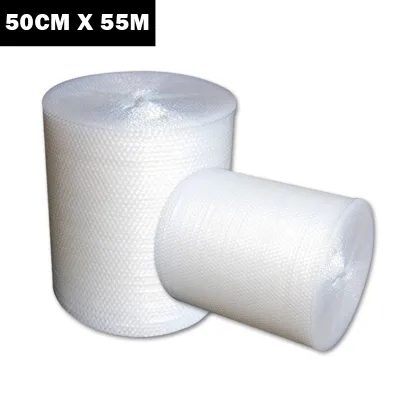
Prices are valid at publication and may change. Please refer to the product page for the latest price.
How to Assess Protection Quality of Bub Packaging
To evaluate any bubble wrap brand or supplier in Singapore, you must look past marketing claims and focus on physical specifications. The protective capability of bubble wrap relies on three core technical metrics: bubble height, bubble density, and film thickness. Understanding these parameters allows you to verify product quality before committing to a bulk purchase.
Bubble height determines the cushioning depth available to absorb shocks during transit. Standard small bubbles typically measure around 4 millimeters in height, providing a low-profile barrier suitable for light scratch protection. Large bubbles, which can range from 10 to 12 millimeters or more, offer a deeper cushion that absorbs heavier impacts. When assessing a roll, measure the bubble height to ensure it meets your expectations, as under-inflated bubbles offer significantly less shock absorption.
Bubble density and air retention are equally critical. High-quality bubble wrap uses co-extruded barrier layers that prevent air from escaping under pressure. If a brand uses single-layer polyethylene without an air-retention barrier, the bubbles will slowly deflate under the weight of stacked boxes. To test this, perform a gentle “pop test” on a sample. Press down on a cluster of bubbles with your thumb; they should resist compression and require a deliberate, firm force to rupture. If the bubbles pop with minimal pressure or feel soft and deflated, the material lacks the structural integrity needed for multi-day shipping transits.
Film thickness is measured in microns (µm). Standard bubble wrap typically ranges from 30 to 50 microns, which is sufficient for general-purpose packing. Heavy-duty options can exceed 70 to 100 microns, offering superior puncture resistance. When comparing products, always check the micron rating. If a supplier does not list the thickness, it is highly likely a thinner, lower-grade film that may tear easily when wrapped around sharp corners or irregular shapes.
The raw material used in manufacturing also dictates quality. Virgin Low-Density Polyethylene (LDPE) is the industry standard for high-performance bubble wrap. It is highly transparent, odorless, and offers consistent tensile strength and elasticity. Recycled LDPE, on the other hand, is an eco-friendly alternative but often exhibits a greyish or greenish tint. While recycled wrap is excellent for reducing environmental impact, it can sometimes have slightly lower puncture resistance and less consistent bubble inflation. Inspect the clarity and texture of the roll: a hazy, stiff, or highly textured film usually indicates a higher percentage of recycled content, which may require you to use extra layers to achieve the same protective performance as virgin plastic.
Analyzing Price and Cost Efficiency
When sourcing bubble wrap in Singapore, the lowest price per roll is often a misleading metric. To find the true value, you must calculate the unit cost and consider how the material affects your overall shipping expenses. A systematic approach to pricing prevents hidden costs from eroding your profit margins.

The first step is to calculate the price per meter rather than comparing roll prices directly. A roll priced at S$10 might seem cheaper than one at S$15, but if the first is 50 meters long and the second is 100 meters, the latter is far more cost-effective. Divide the total roll cost by its length in meters to find the unit cost. For example, a S$12 roll that is 100 meters long costs S$0.12 per meter, whereas an S$8 roll that is 50 meters long costs S$0.16 per meter.
Another critical factor is the width of the roll. Standard widths in Singapore include 30 centimeters, 50 centimeters, and 100 centimeters. If you buy a wide roll and cut it down manually, you must factor in the labor time and potential cutting waste. Conversely, buying a roll that is too narrow might force you to wrap an item multiple times horizontally and vertically, doubling your material usage. Select a width that closely matches the dimensions of your most common shipping boxes to minimize waste and preparation time.
Shipping weight is a major contributor to the total landed cost of your packaged product. In Singapore, local couriers and postal services charge based on either actual weight or volumetric weight, whichever is higher. Standard bubble wrap is lightweight and rarely adds significant actual weight, but heavy-duty, thick-gauge bubble wrap can add up to 50 to 100 grams per package. If you are shipping hundreds of items a day, this additional weight can push your parcels into higher postage tiers, significantly increasing your monthly courier bills. Therefore, the “best price” is not just the cost of the plastic, but the combined cost of the material and the subsequent shipping fees.
Finally, consider your shipping volume. High-volume e-commerce merchants should look for suppliers offering bulk tier discounts or wholesale pricing. Purchasing a pallet of bubble wrap rolls significantly reduces the cost per meter compared to buying individual rolls as needed. However, bulk purchasing requires ample storage space. For occasional shippers or home-based businesses with limited space, paying a slight premium for smaller, single rolls is often more practical than cluttering living areas with massive industrial rolls.
Key Comparison Dimensions
To make a structured comparison between different bubble wrap options, you must categorize them by their physical characteristics and intended applications. This allows you to match the material’s properties directly to your product catalog.
Bubble Size and Application Suitability
The size of the bubbles is the most visible differentiator and dictates what types of items the wrap can protect. Small bubbles, typically around 10 millimeters in diameter, are designed for surface protection and light cushioning. They are ideal for wrapping small, lightweight, or non-fragile items such as books, cosmetics, small plastic household goods, and accessories. Because small bubbles are flexible, they conform easily to tight curves and intricate shapes, ensuring complete coverage without adding bulk.
Large bubbles, usually around 30 millimeters in diameter, provide heavy-duty shock absorption. They are designed to fill empty spaces inside shipping boxes (void fill) and protect heavy, fragile, or high-value items. If you are shipping electronics, glassware, ceramics, or heavy metal components, large bubbles act as a robust buffer against drops and rough handling. However, because large bubbles are bulky, they require larger shipping boxes, which can increase your volumetric shipping costs.
Thickness and Durability
The thickness of the polyethylene film directly influences how well the bubble wrap resists tearing and puncturing. Standard-grade bubble wrap (around 30 to 50 microns) is highly flexible and cost-effective, making it the default choice for most e-commerce shipments. It provides adequate protection against scratches and minor impacts but can fail if subjected to sharp edges, such as the corners of book covers or metal frames.
Heavy-duty bubble wrap (60 microns and above) is engineered for industrial use or highly sensitive shipments. The thicker film prevents the bubbles from popping when compressed by heavy objects and resists tearing when pulled tightly around sharp corners. While more expensive, heavy-duty wrap is essential for heavy machinery parts, sharp-edged home decor, and valuable collectibles where a single puncture could lead to catastrophic damage.
Roll Dimensions and Storage
Selecting the right roll dimensions is crucial for operational efficiency. Bubble wrap rolls are sold in various widths and lengths, and your choice should align with your packing station setup.
- 30cm Width: Excellent for small items, cosmetics, and jewelry boxes. Easy to handle on small packing desks and requires minimal cutting.
- 50cm Width: The most versatile size for general e-commerce. It fits medium-sized shipping boxes and can wrap a wide variety of household items, electronics, and toys.
- 100cm Width: Best for large items like furniture, large appliances, or bulk packing. It requires a dedicated dispensing stand and significant storage space.
Before purchasing large rolls, measure your storage area. A full-sized industrial roll of bubble wrap can be over 1.5 meters in diameter, which can easily overwhelm a small home office or a compact packing room in Singapore’s typical high-density commercial spaces.
Decision Framework: Matching Protection to Budget
Choosing the right bubble wrap requires a systematic evaluation of your product’s vulnerability, your shipping volume, and your budget constraints. Use the following conditional framework to determine which specification is most appropriate for your operations.
First, evaluate the fragility and value of the item. If you are shipping fragile electronics, glassware, or high-value items where the replacement cost is high, you should prioritize protection over material cost. In this scenario, choose high-density, thick-gauge bubble wrap (50 to 70+ microns) with large bubbles. The extra cost of premium packaging is a fraction of the cost of replacing a damaged item and managing a frustrated customer.
Second, if you are shipping lightweight, sturdy, or non-fragile goods such as clothing, soft toys, books, or cosmetics, cost-efficiency should be your primary driver. Standard-grade, thin bubble wrap (30 to 40 microns) with small bubbles is more than sufficient. This material provides scratch protection and basic dust resistance without adding unnecessary weight or volume to your packages, helping you maintain low shipping rates.
Third, consider environmental goals and budget constraints. If your brand prioritizes sustainability and your items are relatively sturdy, look for bubble wrap made from recycled LDPE. While it may have a slightly lower tensile strength and a less uniform appearance, it is highly functional for general cushioning and appeals to eco-conscious consumers in Singapore. However, if you choose recycled materials, verify the thickness to ensure it still provides adequate puncture resistance for your specific items.
Finally, always check the supplier’s quality guarantee and return policy. Because bubble wrap is a high-volume, low-margin product, manufacturing defects such as flat bubbles, poor sealing, or inconsistent thickness can occasionally occur. Sourcing from a reputable local supplier in Singapore who offers a clear return policy ensures that you can exchange any defective rolls without incurring extra costs or delaying your shipping schedule.
Storage and Handling Best Practices
Once you have purchased your bubble wrap, proper storage and handling are essential to preserve its protective qualities. Plastic materials are sensitive to environmental conditions, and improper storage can degrade the film before it even leaves your warehouse.
Singapore’s tropical climate, characterized by high temperatures and humidity, poses specific challenges. Prolonged exposure to heat causes the air inside the bubbles to expand, which can weaken seals or cause bubbles to pop prematurely under pressure. Conversely, storing rolls in extremely cold, air-conditioned rooms for extended periods can make low-grade plastics brittle and prone to tearing.
To maintain optimal material integrity, store your bubble wrap rolls in a cool, dry place away from direct sunlight. Ultraviolet (UV) radiation from sunlight accelerates the degradation of polyethylene, causing it to become yellow, brittle, and lose its elasticity over time. Keep the rolls wrapped in their protective outer plastic bags until they are ready for use to prevent dust accumulation, which can interfere with adhesive tape adhesion during the packing process.
Additionally, handle the rolls with care during transport and storage. Dropping or stacking heavy items on top of stored bubble wrap rolls will pop the bubbles, rendering those sections useless for cushioning. Regularly inspect your rolls upon receipt and before packing to ensure the bubbles remain fully inflated and ready to protect your shipments.
Frequently Asked Questions (FAQ)
What is the difference between anti-static and regular bubble wrap?
Anti-static bubble wrap is specifically treated to prevent the buildup of static electricity, which can damage sensitive electronic components such as computer processors, graphics cards, and circuit boards. It is easily identifiable by its distinctive pink color. Regular bubble wrap, which is typically clear, can generate static charges through friction during transit, posing a risk to electronic devices. While both types offer identical physical cushioning and shock absorption, anti-static wrap is essential for electronic logistics, whereas regular wrap is suitable for non-electronic items like glassware, ceramics, and books.
How do I calculate how much bubble wrap I need for a shipment?
To estimate the amount of bubble wrap required, start by calculating the surface area of the item you plan to wrap. For a rectangular item, use the formula: Surface Area = 2 (length width + length height + width height). To ensure adequate protection, you should plan to wrap the item at least two to three times. Multiply the calculated surface area by the number of layers you intend to use. Finally, divide this total area by the width of the bubble wrap roll you are purchasing to determine the total linear meters required. Always add an extra 10% to 15% to your estimate to account for overlapping, cutting errors, and wrapping around irregular corners.
Is thicker bubble wrap always better for shipping?
While thicker bubble wrap offers superior puncture resistance and durability, it is not always the best choice for every shipping scenario. Thicker films (60+ microns) add physical weight and bulk to your packages, which can increase your volumetric and actual shipping weights. For lightweight, non-fragile items, standard-thickness wrap (30 to 50 microns) is more cost-effective because it provides sufficient protection without inflating your courier fees. The optimal packaging strategy balances the minimum thickness required to protect the item with the weight limits of your shipping carrier to keep overall logistics costs as low as possible.
Community discussion
Share your experience or ask a question. Comments are reviewed before publication.