
Quick Answer: Finding Your Ideal Name Sticker Maker
Choosing the right name sticker label maker for school, home organization, or office use depends on your specific environment and durability needs. There is no single machine that excels at every task; instead, the ideal brand aligns with whether you prioritize long-term resistance to moisture, quick physical typing on the go, or creative design options via a mobile app.
While the hardware determines how you design and print your labels, the actual longevity, water resistance, and fade resistance of your name stickers depend heavily on the specific tape cartridge you select. Before purchasing, it is essential to match the tape material to your intended surface, whether it is a school water bottle, a plastic food container, or a fabric uniform.
Key Comparison Dimensions for Name Stickers
To find a label maker that produces reliable name stickers, you must look beyond the physical design of the device. Evaluating how the machine prints and what materials it supports will prevent issues like peeling, fading, or smudging after a few weeks of use.
Products mentioned in this guide
![[SG Stock] Iron on Clothing labels Daycare labels Kids name stickers Name labels](https://img.lazcdn.com/g/ff/kf/S0c6bc16b579647c99d8ee477aaf77ddf8.jpg_400x400q80.jpg_.webp)
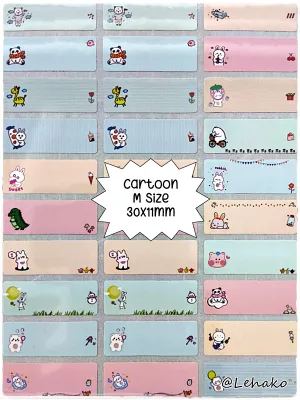
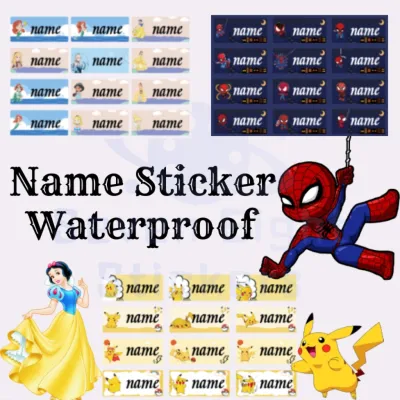
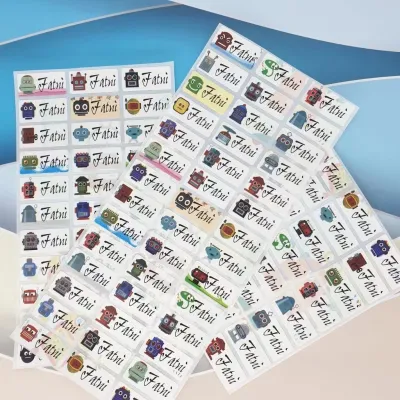
Prices are valid at publication and may change. Please refer to the product page for the latest price.

The primary factors to evaluate include the underlying print technology, the variety of compatible label materials, and the user interface. By understanding these dimensions, you can select an ecosystem that fits both your creative preferences and practical durability requirements.
Print Technology and Durability
Label makers generally utilize one of two primary printing methods: thermal transfer or direct thermal printing. Thermal transfer technology uses a heated print head to melt a carbon ribbon onto the label material, often creating a highly durable, laminated finish. This method is highly resistant to external factors, making it suitable for items that undergo frequent washing or exposure to sunlight.
Direct thermal printing, on the other hand, applies heat directly to heat-sensitive paper or synthetic tape. While this eliminates the need for ink or ribbons, direct thermal labels are inherently more sensitive to environmental conditions. In Singapore’s hot and humid climate, direct thermal name stickers may darken or fade over time if exposed to direct sunlight, high temperatures, or constant friction inside a school bag.
When shopping, always check the manufacturer’s specifications on the tape packaging for UV, water, and abrasion resistance. If you plan to label items that will be washed regularly in hot water or placed in a microwave, verifying these environmental ratings is crucial for ensuring the text remains legible.
Label Materials and Adhesive Quality
The adhesive backing and face material of your name sticker label determine how well it adheres to different surfaces. Standard paper labels are highly susceptible to tearing and water damage, making them unsuitable for items like water bottles or lunch boxes. For these applications, look for synthetic materials such as vinyl, polyester, or laminated plastic.
Surface compatibility is another critical factor to verify before printing. Smooth, flat plastic and glass surfaces accept most standard adhesives easily, but curved water bottles, textured plastic folders, or flexible silicone surfaces require specialized high-tack adhesives. If you apply a standard label to a highly curved or textured surface, the edges may lift and peel over time.
For clothing and school uniforms, standard adhesive labels will not survive a laundry cycle. Instead, verify if the brand offers specialized iron-on fabric tapes. Always consult the tape packaging for specific application instructions, including recommended surface preparation, curing times, and temperature limits to ensure a secure bond.
Brand-by-Breakdown
Each of the three major brands—Brother, Dymo, and Phomemo—approaches label making with a distinct design philosophy. Their ecosystems cater to different user workflows, ranging from traditional standalone devices with physical keyboards to modern, app-driven smart printers.
Understanding these brand identities helps narrow down your choices based on where and how you plan to design your labels. Whether you need a rugged desktop workhorse or a pocket-sized creative tool, each brand offers a unique set of features and consumable options.
Brother: Reliable and Heavy-Duty
Brother is widely recognized for its robust, industrial-leaning approach to labeling, centered around its proprietary laminated tape technology. These tapes sandwich the printed text between two protective layers of polyester, creating a highly durable barrier against water, abrasion, and chemical exposure. This makes Brother labels highly suitable for items that face harsh daily wear, such as outdoor gear, sports equipment, and school items subjected to frequent washing.
The brand offers a diverse hardware lineup, including standalone models with physical QWERTY keyboards and desktop units that connect to computers or mobile devices via Bluetooth. This flexibility allows you to choose between quick, offline typing and advanced desktop design software.
While Brother devices and their laminated cartridges tend to have a larger physical footprint, they provide a highly stable ecosystem for users who prioritize long-term durability. If your primary goal is to create name stickers that survive years of school terms and dishwashers, verifying Brother’s laminated tape options is an excellent starting point.
Dymo: Portable and User-Friendly
Dymo focuses on simplicity, portability, and straightforward operation, making it a popular choice for quick home and office organization. The brand is well-known for its handheld, ergonomic designs that often feature physical keyboards or classic manual embossing wheels, allowing you to print basic labels instantly without any digital distractions.
Most portable Dymo models utilize direct thermal printing or mechanical embossing. While these methods are incredibly convenient for labeling dry, indoor items like storage bins, files, and bookshelves, they may not offer the same level of environmental resistance as laminated alternatives.
If you choose non-laminated direct thermal tapes for name stickers, be aware that they may fade or peel when exposed to moisture or frequent handling. Dymo is best suited for users who want a reliable, standalone device for quick, everyday labeling tasks where extreme water or heat resistance is not a primary requirement.
Phomemo: Smart and Customizable
Phomemo caters to a modern, design-conscious audience by focusing entirely on smart, app-driven label makers. These compact, pocket-sized devices connect to your smartphone via Bluetooth, shifting the entire design workflow to a dedicated mobile application filled with custom fonts, borders, icons, and pre-designed templates.
This app-centric approach makes Phomemo highly popular for creating aesthetic, highly customized name stickers for journals, planners, and indoor storage. The devices are lightweight and highly portable, easily fitting into a school bag or desk drawer.
However, because Phomemo primarily utilizes direct thermal printing on paper or thin synthetic labels, durability is a key consideration. While they offer water-resistant synthetic tapes, these labels can still be sensitive to high heat and prolonged friction. Phomemo is an ideal choice for short-to-medium-term labeling where visual customization and creative layouts are your main priorities.
Cost of Ownership: Devices and Consumables
When choosing a label maker, the initial price of the device is only part of the financial equation. The long-term cost of ownership is heavily driven by the ongoing purchase of tape cartridges, making it essential to calculate the cost per label before committing to an ecosystem.
To estimate your running costs, divide the retail price of a compatible tape cartridge in S$ by the total length of the roll (usually measured in meters). Keep in mind that different tape widths and specialized materials—such as iron-on fabric tapes or extra-strength adhesives—will carry different price points.
Another factor to consider is the availability of consumables. While official brand cartridges offer guaranteed compatibility and print quality, some users look for third-party compatible tapes to reduce costs. Before purchasing a specific model, check local e-commerce platforms and stationery suppliers in Singapore to ensure that both official and alternative tape options are readily available and fit your budget.
Decision Framework: Which One Should You Choose?
To finalize your decision, match your primary labeling tasks to the strengths of each brand’s ecosystem.
- Choose Brother if you require maximum durability for items that will be washed frequently, exposed to the elements, or subjected to heavy daily wear. Their laminated tapes are ideal for long-lasting school water bottles and outdoor gear.
- Choose Dymo if you prefer a simple, tactile, and standalone labeling experience without the need for a smartphone app or computer connection. It is excellent for quick, dry, indoor organization.
- Choose Phomemo if you want highly customized, creative name stickers with unique fonts, icons, and borders, and you enjoy designing labels directly on your smartphone.
- Verify first if you have specialized needs, such as labeling clothing or highly curved surfaces. Ensure the specific model you choose supports iron-on fabric tapes or high-tack flexible nylon before buying.
Before making your final purchase, use this quick checklist:
- Confirm the device's power source (batteries, rechargeable internal battery, or AC adapter).
- Check the availability and S$ pricing of replacement tape cartridges at your preferred local stationery retailers.
- Download the brand's mobile app (if applicable) to ensure it is compatible with your smartphone's operating system.
Frequently Asked Questions (FAQ)
Can I use regular paper labels for water bottles?
Standard paper labels are not suitable for water bottles or other items exposed to moisture. When paper labels come into contact with water or condensation, the paper fibers quickly absorb the liquid, causing the label to tear, smudge, and peel away. For water bottles, always verify that the tape packaging specifies waterproof synthetic materials, such as vinyl or laminated polyester, which can withstand regular washing.
Do I need a smartphone to use these label makers?
Whether you need a smartphone depends entirely on the specific model and brand you select. Many Phomemo models are completely app-dependent and do not feature physical keyboards, requiring a Bluetooth connection to a smartphone or tablet to design and print. In contrast, both Brother and Dymo offer standalone models equipped with built-in physical keyboards and small LCD screens, allowing you to create and print labels completely offline without any external devices.

Community discussion
Share your experience or ask a question. Comments are reviewed before publication.