
Selecting the right box wrapping film in Singapore requires looking past generic brand promises and focusing on objective, measurable performance metrics. Because high stretch capacity often compromises puncture resistance, there is no single brand that serves as a universal solution for every packaging scenario. The optimal choice depends entirely on your specific load type, requiring a careful balance between durability and stretch yield.
To make an informed decision, you must evaluate manufacturer specifications—such as micron thickness and stretch percentage—rather than relying solely on marketing claims. A condition-based approach is highly recommended: prioritize puncture-resistant, thicker films for irregular loads with sharp edges, and high-stretch, high-yield films for uniform, lightweight boxes. By matching these material properties to your specific shipping demands, you can optimize containment security while minimizing material waste.
Key Specifications to Compare Across Brands
When comparing different wrapping film brands at local stationery suppliers or online marketplaces, the film thickness is your primary indicator of durability. Thickness is measured in microns (or gauge), typically ranging from 12 to 23 microns for manual hand-wrapping applications. Thicker films, such as those measuring 20 microns or more, provide the robust tear resistance needed to secure heavy or sharp-edged items. Conversely, thinner films in the 12 to 15-micron range offer excellent flexibility and cost savings but are more susceptible to puncturing when stretched over sharp corners.
Products mentioned in this guide
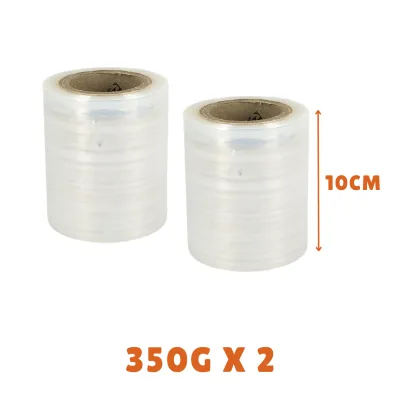
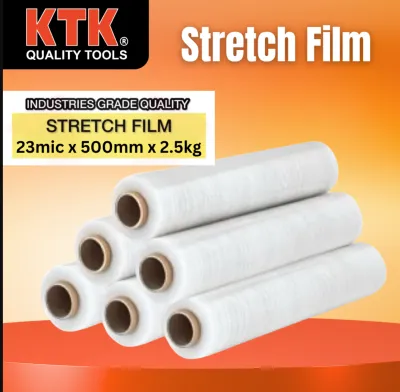
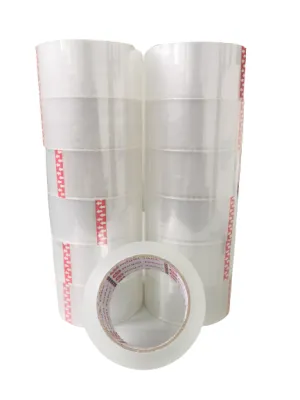
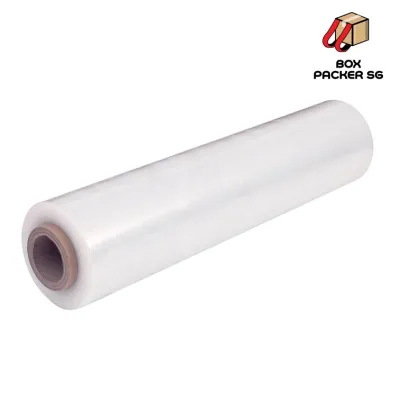
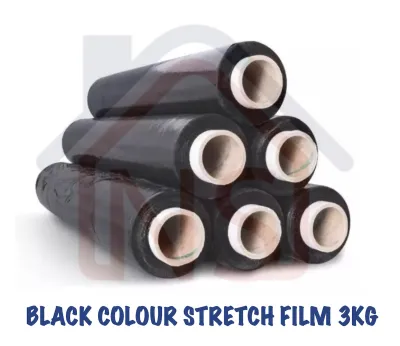
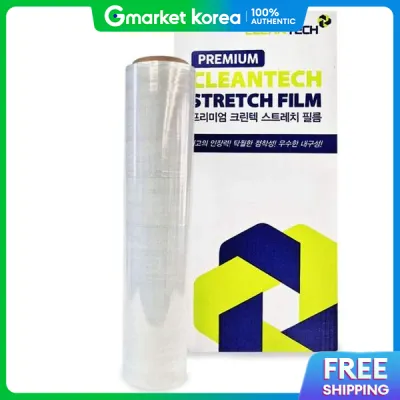
Prices are valid at publication and may change. Please refer to the product page for the latest price.
The manufacturing process of the film also dictates its physical behavior, dividing most commercial options into cast or blown stretch wrap. Cast film is produced by extruding molten polymer through a flat die onto cooling rollers, resulting in a highly transparent film with excellent gloss. This clarity is highly beneficial for scanning barcodes on wrapped boxes. Additionally, cast film unwinds quietly, which is a significant advantage in busy, enclosed Singaporean warehouses where constant high-decibel noise can impact worker comfort. However, cast film generally offers lower tear resistance once a puncture occurs.
Blown film is manufactured by blowing molten polymer upward into a large bubble, cooling it slowly in the air. This process gives blown film superior puncture resistance and exceptional stretch memory, meaning the film constantly tries to shrink back to its original size, holding loads incredibly tight. The trade-offs are a hazy appearance, a very loud unwind noise during application, and typically a higher price point. Understanding these material differences allows you to filter brands based on your operational environment rather than brand names alone.
Finally, always look closely at the roll dimensions, core size, and net film weight. Many suppliers sell rolls based on gross weight, which includes the heavy cardboard core. A thick, heavy core can make a roll seem like a better deal than it actually is. To find the true value, compare the net weight of the plastic film itself and ensure the core diameter (typically 2-inch or 3-inch) is fully compatible with your existing hand dispensers.
Evaluating Durability and Stretch Performance Trade-offs
To choose the right film, it helps to understand how stretch performance and durability interact. Stretch performance refers to both the yield—how far the film can stretch beyond its original length—and its elastic memory. Standard films often feature a stretch yield of 150% to 300%. High-stretch films allow you to wrap more boxes with less material, directly lowering your packaging cost per unit. The elastic memory ensures that once the film is applied under tension, it continues to pull inward, securing shifting loads tightly during transit across local roads or international shipping routes.

Durability, on the other hand, is defined by puncture and tear resistance. Puncture resistance prevents sharp objects, such as the rigid corners of heavy cardboard boxes or wooden pallet edges, from piercing the plastic barrier. Tear resistance ensures that if a small puncture does occur, the film will not instantly unzip or split across the entire width of the roll. In packaging setups where wrapping film is used alongside shock-absorbing materials like bubble wrap or foam corner protectors, a highly durable outer film is essential to keep these protective layers compressed and functional.
Pre-stretched films represent a unique category where the film is mechanically stretched during manufacturing, often up to 90% of its maximum limit, before being wound onto the roll. These rolls are lightweight and require significantly less physical effort to apply, making them excellent for reducing worker fatigue in high-volume packing environments. However, because the film has already been stretched, it has very little remaining stretch memory. This means it relies entirely on manual tensioning to secure the load, and its durability profile differs significantly from standard rolls, making it less suitable for heavy, unstable loads.
Decision Framework: Matching Film Properties to Your Packaging Needs
To simplify your selection process, categorize your typical shipping loads into specific profiles. If your business frequently handles heavy, irregular, or sharp-edged boxes—such as industrial parts, metal hardware, or wooden crates—prioritize high-durability options. In this scenario, a thicker blown film structure (20 microns or higher) is the most reliable choice. The superior puncture resistance ensures that sharp protrusions do not break the containment seal, preventing costly damage and shifting during transit.
If your operations primarily involve uniform, lightweight cartons, such as standard e-commerce shipments, office stationery supplies, or flat-packed paper goods, prioritize high-stretch, high-yield options. A thinner cast film (12 to 17 microns) will allow you to maximize your packaging yield. This approach ensures you get the maximum number of wrapped boxes per S$ spent, keeping your operational costs low while still providing adequate dust, moisture, and scratch protection.
Environmental factors in Singapore should also influence your decision. The local high humidity and warm climate can affect the cling properties of certain films. Ensure the brand you select specifies high-quality cling additives that remain effective in humid storage conditions, preventing the wrap from unraveling over time. If your wrapped goods will be staged outdoors or exposed to direct sunlight near warehouse windows, verify if the film requires UV-resistant properties to prevent the plastic from degrading and becoming brittle.
Practical Verification Before Bulk Purchasing
Before committing to a large inventory order from any local supplier, always conduct physical verification. Request sample rolls of the specific film models you are considering. Run these samples through your actual packaging workflow, wrapping your standard box configurations under normal operating speeds. This hands-on trial will quickly reveal how the film handles real-world tension and whether it is prone to premature tearing on your specific box types.
To verify the true cost-efficiency of a brand, perform a simple net weight calculation. Weigh a brand-new roll on a digital scale to record its gross weight. Once the roll is completely used, weigh the empty cardboard core. Subtracting the core weight from the gross weight gives you the exact net weight of the usable plastic film. Comparing this net weight across different brands at similar price points will reveal which supplier is offering the best material value rather than charging you for heavy cardboard packaging.
Finally, test the film’s compatibility with your manual application tools. Fit the sample rolls onto your standard hand dispensers to evaluate ergonomic effort, tension control, and edge consistency. A film that unwinds unevenly or requires excessive physical force to stretch will slow down your packing staff and increase the likelihood of wrapping errors. Ensuring the film operates smoothly with your existing equipment is key to maintaining a fast, safe, and efficient packaging line.
Frequently Asked Questions (FAQ)
Does a higher price always guarantee better stretch and durability?
No, a higher price point does not automatically guarantee superior film performance. In the local packaging market, pricing is often influenced by brand positioning, import logistics, and the physical weight of the cardboard core rather than the quality of the polymer itself. To ensure you are getting high-quality material, always compare the net film weight, micron thickness, and material type (cast versus blown) rather than relying on the retail price as a proxy for quality.
Can I use standard box wrapping film for heavy or palletized loads?
Standard light-duty box wrapping film, which typically measures under 15 microns, is designed primarily for individual cartons or light bundles. Using these thin films for heavy, palletized loads carries a high risk of film snapping, load shifting, and inadequate containment force. For heavy or palletized shipments, you should upgrade to heavy-duty blown films of 20 microns or more, or utilize dedicated machine-grade stretch wrap designed to withstand high-tension containment requirements.
Community discussion
Share your experience or ask a question. Comments are reviewed before publication.