
Quick Answer: Which Binder Paper Suits Your Writing Style?
The ideal binder notebook paper is not defined by a single premium brand, but rather by how well its technical properties match your primary writing instrument and daily note-taking volume. For fountain pens, liquid rollerballs, and heavy gel pens, choosing a premium, heavily sized loose-leaf paper is essential to prevent messy ink spreading and bleed-through. Conversely, if you rely on standard ballpoint pens or graphite pencils for high-volume lecture notes or temporary drafts, a standard, lighter-weight paper offers superior value and better physical traction.
Many writers mistakenly assume that a higher paper weight, measured in grams per square meter (GSM), automatically guarantees a smoother writing experience. In reality, surface coatings, fiber composition, and chemical sizing treatments are the true drivers of pen glide and ink resistance. To find the best value for your setup, you must balance your preferred pen’s ink flow with the paper’s surface characteristics, keeping in mind how different paper grades perform under daily handling and environmental conditions.
Key Paper Metrics to Check on Binder Notebook Packaging
Navigating the stationery aisle or browsing online listings requires a clear understanding of the technical specifications printed on binder notebook packaging. These metrics dictate how a sheet of paper feels under your pen tip and how well it preserves your writing over time.
Products mentioned in this guide
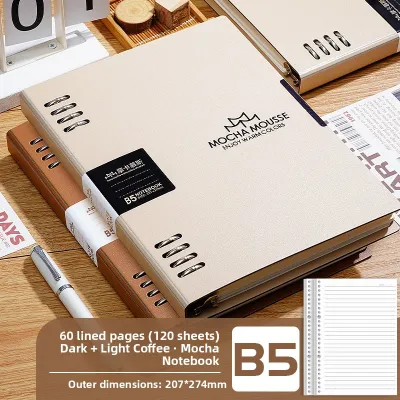
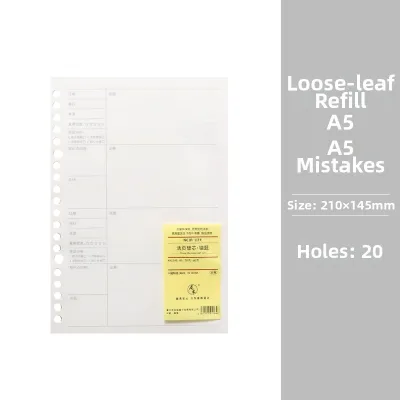
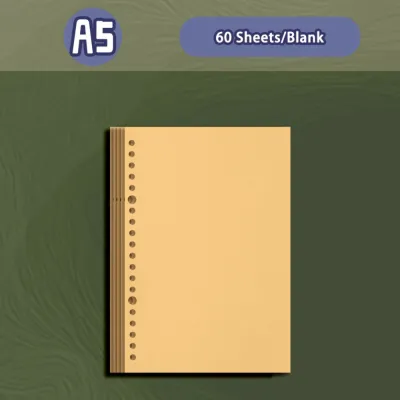
Prices are valid at publication and may change. Please refer to the product page for the latest price.

GSM (Grams per Square Meter) GSM is the standard metric used globally to measure paper density and weight. It is calculated by weighing a single sheet of paper measuring one square meter. In the context of binder notebooks:
- 70–80 GSM: This is the standard range for everyday office and school refills. The paper is relatively thin and lightweight, allowing you to fit a higher volume of sheets inside a single binder ring mechanism. However, it is more prone to ink show-through.
- 90–100+ GSM: This range represents premium, heavyweight paper. These sheets feel substantial, stiff, and luxurious. They offer excellent opacity, making them ideal for double-sided writing, though they will quickly fill up smaller binder rings, reducing your notebook's overall page capacity.
Smoothness and Sizing Smoothness refers to the physical texture of the paper surface. Highly calendered papers—those pressed between heavy rollers during manufacturing—have an ultra-smooth, glass-like finish that allows fine-tip pens to glide effortlessly. Sizing, on the other hand, is a chemical treatment applied internally or to the paper’s surface (often using starch or synthetic compounds) to regulate liquid absorption. Without proper sizing, paper acts like a paper towel, rapidly drinking up ink and causing lines to blur. Well-sized paper holds ink on the surface, preserving sharp lines and vibrant colors.
Ink Bleed vs. Feathering While often conflated, bleed-through and feathering are distinct paper failures:
- Ink Bleed (Bleed-Through): This occurs when ink penetrates entirely through the paper fibers to the reverse side of the sheet, making the back unusable. It is primarily caused by low paper density, lack of sizing, or excessively wet ink flow.
- Feathering: This is the lateral spreading of ink along the paper's wood fibers, resulting in fuzzy, spiderweb-like edges around your letters. It occurs when the paper's surface sizing is insufficient to resist the liquid ink, regardless of whether the ink actually bleeds through to the other side.
Opacity and Ghosting Opacity measures how much light can pass through a sheet of paper. High opacity prevents “ghosting” (also known as show-through), which is the visible shadow of writing on the reverse side of a page. Some degree of ghosting is common even in high-quality, thin papers that have excellent ink resistance. If you prefer to write on both sides of a page without visual distraction, look for higher GSM ratings or papers explicitly labeled as high-opacity.
Comparing Paper Traits Across Common Binder Notebook Tiers
Binder notebook refills generally fall into distinct market tiers, each catering to different writing preferences and budgets. Understanding the general characteristics of these tiers helps you identify where to spend your money.
Premium Japanese and Specialty Refills
Premium Japanese and specialty refills, widely available in specialized stationery boutiques and major department stores in Singapore, are highly regarded for their meticulous engineering. These papers are designed to accommodate a wide variety of writing instruments, including wet fountain pens and liquid ink rollerballs.
- Observable Characteristics: These papers typically feature a highly consistent, ultra-smooth surface finish that minimizes resistance. They are heavily sized, allowing wet inks to sit on top of the paper to dry, which highlights ink shading and sheen.
- Structural Integrity: Premium refills often feature precise, clean-cut hole punches. For standard Japanese formats like B5 (26 holes) or A5 (20 holes), the margin around the holes is carefully calculated, and some premium brands reinforce this edge to prevent the sheets from tearing loose when flipped frequently.
- Product Line Variations: It is important to note that major premium brands often offer multiple paper grades under the same overarching brand name. For example, you may find one line optimized for an ultra-smooth glide ("Sarasara" style) and another designed to provide a bit more feedback and control ("Shikkari" style). Always read the packaging labels carefully to match the paper grade to your specific writing preference.
Standard Everyday and Budget Refills
Standard everyday and budget refills represent the workhorse category of the stationery world. These are typically sold in bulk packs at local bookstores, office supply outlets, and supermarkets, making them the default choice for students and high-volume note-takers.
- Observable Characteristics: Typically falling within the 70–80 GSM range, these papers have a more noticeable texture, often referred to as "tooth." This texture provides excellent tactile feedback, which is highly beneficial for keeping control of ballpoint pens and graphite pencils.
- Performance Trade-offs: Because these papers contain less chemical sizing and have lower density, they are highly absorbent. When paired with wet gel pens, rollerballs, or fountain pens, they are highly susceptible to feathering and bleed-through. Additionally, their lower opacity means that writing on the reverse side is often highly visible, effectively turning a 100-pack of loose-leaf paper into a 50-page notebook if you write only on one side to maintain legibility.
- In-Store Verification: To find the best budget refills, inspect the packaging for the exact GSM rating. If the paper is visible, rub a sheet between your fingers to check for a uniform thickness and a relatively smooth finish. Avoid packs where the hole punches have frayed edges or paper debris still attached, as these are prone to tearing out of your binder rings.
Matching Ink Types to Paper Sizing and Texture
The secret to an exceptional writing experience lies in the compatibility between your pen’s ink formula and the paper’s surface treatment.
Fountain Pens and Wet Inks Fountain pen inks are water-based and flow heavily from the nib. To prevent this liquid from soaking through the page, you need a paper with robust surface sizing and a relatively high density (typically 80 to 100 GSM). The sizing acts as a barrier, slowing down absorption and allowing the ink to dry via evaporation on the surface. This preservation of the ink line prevents feathering and allows specialty fountain pen inks to display their unique properties, such as dual-shading or metallic sheen.
Gel and Rollerball Pens Gel pens use a water-based gel suspension, while rollerballs use liquid ink. Both deposit a significant amount of moisture onto the page. If you write on an ultra-smooth, highly sized premium paper, these inks can take a long time to dry, leading to accidental smudges as your hand moves across the page. This is a particularly critical consideration for left-handed writers. For these pens, a semi-sized paper that strikes a balance between moderate absorption and smooth texture is ideal, ensuring quick dry times without excessive feathering.
Ballpoint and Pencils Oil-based ballpoint inks and graphite pencils require physical friction to function correctly. A ballpoint pen relies on the friction of the paper to roll the tiny metal ball in its tip, releasing the thick ink. Pencils require a textured surface to physically shave off micro-particles of graphite. If the paper is too slick or heavily coated, a ballpoint pen may skip or feel greasy, while a pencil will produce faint, slippery lines. Standard, slightly textured 70–80 GSM paper provides the perfect amount of tooth for these everyday tools.
DIY Compatibility Testing Before committing to a bulk purchase of binder refills, you can perform a simple, reversible compatibility test on a single sheet of paper using your favorite pens:
- The Line Test: Draw a series of rapid, parallel lines to check for skipping and dry time. Run your finger over the lines at 5-second intervals to determine how quickly the ink sets.
- The Slow-Dwell Test: Write slowly and hold the pen tip in place for a full second at the end of a stroke. This simulates heavy writing pressure and slow hand movements, revealing whether the paper will feather under localized ink pooling.
- The Ink Pool Test: Color in a small 5mm square completely with your wettest pen. Let it dry completely, then flip the page over. Inspect the reverse side for bleed-through and ghosting. If the ink pools but does not bleed through, the paper has excellent sizing.
Evaluating Value: Cost Per Sheet vs. Writing Experience
When stocking up on binder notebook refills, evaluating value requires looking beyond the initial purchase price of a package. Calculating the “cost per sheet” provides a much more accurate picture of long-term utility.
For example, a budget pack of 100 sheets of standard paper might cost S$2.50, resulting in a cost of S$0.025 per sheet. A premium pack of 50 sheets of high-grade Japanese paper might cost S$6.00, resulting in a cost of S$0.12 per sheet—nearly five times more expensive. To determine if this premium is justified, consider your specific writing scenarios:
- When to Pay a Premium: Investing in high-quality paper is highly justified for archival study notes, professional business meetings, journal entries, or any document where you intend to write on both sides of the page. The lack of ghosting and bleed-through means you can comfortably use 100% of the paper surface, which partially offsets the higher cost per sheet.
- When to Stick to Standard: Standard budget paper offers superior value for rough drafts, mathematical calculations, brainstorming sessions, temporary to-do lists, or lecture note-taking where speed is prioritized over presentation. If the pages are destined to be discarded or digitized immediately, paying a premium for paper quality is unnecessary.
The Binder Factor You must also factor in the physical compatibility between your paper and your binder mechanism. Premium, heavyweight papers (90–100+ GSM) are significantly heavier than standard sheets. If you load a cheap binder featuring a flimsy plastic ring mechanism with 100 sheets of heavyweight paper, the weight and resistance when turning pages can cause the plastic rings to warp, gap, or snap. Conversely, standard lightweight paper is easier on delicate mechanisms but can tear easily at the punched holes if flipped aggressively. For heavier, premium papers, ensure your binder features a sturdy metal or high-grade polycarbonate ring system that can handle the weight and maintain precise alignment over time.
Final Decision Framework: Choosing Your Binder Refills
To select the ideal binder notebook refills for your daily routine, use this simple, conditional framework based on your writing tools, volume, and budget.
Choose Premium/High-GSM Paper If:
- Your primary writing instruments are fountain pens, wet rollerballs, or broad gel pens.
- You write on both sides of the page and demand minimal ghosting for clean legibility.
- You are compiling permanent, archival notes, professional documents, or personal journals.
- Your binder features a sturdy, high-quality metal ring mechanism capable of carrying heavier paper loads.
Choose Standard/Everyday Paper If:
- You write almost exclusively with oil-based ballpoint pens, fine gel pens, or wooden/mechanical pencils.
- You take high-volume notes, complete daily math exercises, or generate temporary drafts that are frequently discarded.
- You prioritize a lightweight binder that is easy to carry in a backpack all day.
- You are working within a strict budget where a low cost-per-sheet is the primary consideration.
Verify Before Buying in Bulk If you are planning a large purchase from an online marketplace or stationery supplier, avoid buying bulk cartons immediately. Always purchase a single pack first. This allows you to test the paper’s performance with your specific pens, writing pressure, and local environmental conditions—such as Singapore’s high relative humidity, which can naturally introduce moisture into stored paper and alter its ink resistance over time.
Ultimately, the perfect writing experience is a personal harmony between your hand’s pressure, your chosen ink, and the surface texture of the page. Taking the time to match these elements ensures your binder notebook remains a reliable, pleasant tool for your thoughts and work.
Community discussion
Share your experience or ask a question. Comments are reviewed before publication.