
Choosing the right school organizer depends heavily on your child’s academic stage, daily subject load, and the physical size of their school bag. The Besta All Pass 6, with its six-compartment expanding design, offers a structured middle ground that can work exceptionally well for specific grade levels, but it requires careful evaluation before purchase. Whether it is the ideal fit for your child depends on whether their daily paperwork matches the physical capacity and pocket count of this specific organizer.
Primary vs. Secondary School: How Organization Needs Change
In Singapore, the transition from primary to secondary school brings a dramatic shift in academic workload and organizational complexity. Primary school students typically manage fewer core subjects, such as English, Mathematics, Science, and Mother Tongue. Their daily materials consist largely of thin worksheets, activity books, and standard-sized exercise books.
Secondary school students, by contrast, face a much broader curriculum. They often juggle eight or more subjects, including specialized sciences, humanities, and literature. The volume of paper increases exponentially, with thick exam preparation packets, lecture notes, and foolscap writing pads becoming the daily norm.
Products mentioned in this guide
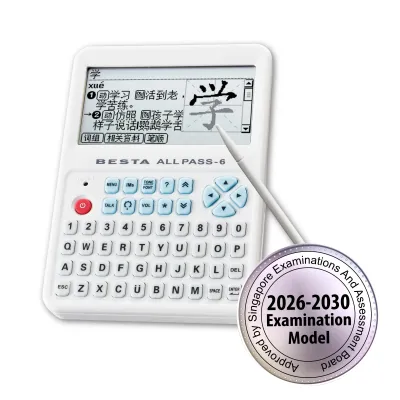
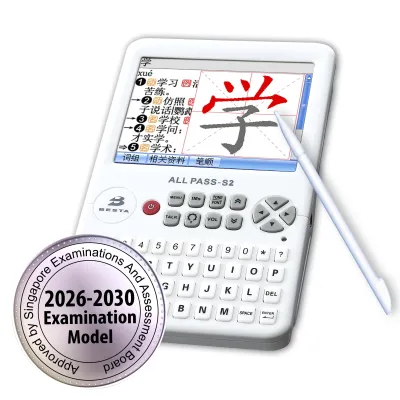
Prices are valid at publication and may change. Please refer to the product page for the latest price.
Paper sizes also evolve. While primary school worksheets are frequently standard A4, secondary schools make extensive use of longer Foolscap paper and bulky multi-page test papers. Carrying these materials requires an organizer that can accommodate larger dimensions without bending the corners of the pages.
Physical weight and carrying comfort are critical considerations for younger students. A heavy, overstuffed organizer can add unnecessary strain to a primary schooler’s back. Secondary students, while physically more capable of carrying heavier loads, still require an efficient system that fits neatly into their backpacks without adding excessive bulk during long daily commutes.
Evaluating the Besta All Pass 6 for Primary School Students
For primary school students, a six-compartment organizer like the Besta All Pass 6 can be an excellent tool for introducing basic organizational skills. Since primary students typically have fewer than six core subjects, the extra pockets can be allocated creatively.

Instead of leaving pockets empty, parents can help their children designate specific compartments for different types of documents. For example, one pocket can be reserved exclusively for parent consent forms and administrative letters, another for homework due the next day, and the remaining four for core subjects. This prevents the organizer from feeling underutilized while teaching children to categorize their paperwork.
However, the physical size of the organizer must be checked against the child’s school bag. Many primary school backpacks, especially ergonomic models designed for lower primary levels, have structured, compact compartments. It is essential to measure the internal space of the backpack to ensure the organizer can be inserted and removed smoothly without catching on the zippers.
Ease of use is another vital factor for younger hands. Parents should inspect the closure mechanism of the organizer. If the fastening system requires precise coordination or significant physical strength, a younger child might leave the organizer open inside their bag, leading to crumpled papers and lost worksheets. A simple, accessible closure ensures the child can independently manage their files during short lesson transitions.
Evaluating the Besta All Pass 6 for Secondary School Demands
As students enter secondary school, a six-compartment organizer faces much tougher demands. With subject counts often exceeding six, students must develop strategies to group related subjects together if they want to use a single Besta All Pass 6.
For instance, a student might group Physics, Chemistry, and Biology into a single “Science” compartment, or combine Geography and History under “Humanities.” While this consolidation keeps the physical file count down, it requires disciplined internal sorting to prevent papers from becoming a disorganized jumble within each pocket.
Pocket depth and expansion capacity are critical when dealing with secondary school workloads. Multi-page exam papers, practice booklets, and thick stacks of foolscap paper can quickly exhaust the expansion limits of a standard six-pocket file. Parents and students should verify how much each pocket can expand when fully loaded, as forcing too many documents into a single compartment will stretch the plastic and damage the contents.
Structural durability is paramount for secondary students who constantly retrieve and pack away their files throughout a busy school day. The seams, pocket dividers, and outer shell must withstand frequent friction against other textbooks and the interior of a heavy backpack. Checking the thickness of the plastic and the reinforcement along the edges can help determine if the organizer is built for such high-frequency use.
How to Verify the Besta All Pass 6 Fits Your Child's Daily Routine
Before purchasing the Besta All Pass 6, a practical verification process can save you from buying an incompatible product. Start by measuring the external dimensions of the organizer and comparing them directly to the main compartment of your child’s current school bag. Ensure there is at least a two-centimeter clearance on all sides to allow for easy retrieval, especially when the bag is packed with other textbooks and water bottles.
Next, inspect the closure mechanism in person or review detailed product specifications. Look for a secure fastening system, such as a sturdy elastic band, a snap button, or a zipper. A reliable closure is essential to prevent loose sheets of paper from sliding out during active commutes on public transport or school buses.
Finally, examine the manufacturer’s product label or official specifications for material details. Look for terms like “heavy-duty polypropylene” or specific thickness measurements (often denoted in microns). A thicker outer cover provides better structural support, preventing the organizer from bending or warping under the weight of heavy textbooks inside the backpack.
When to Consider Alternative Filing Solutions
While a six-pocket organizer is highly versatile, there are clear signs when your child might need to transition to a different filing system. If you notice the seams of the organizer beginning to split, the closure failing to latch, or the pockets bulging excessively, the file is overstuffed and no longer serving its purpose.
During intensive exam preparation periods, the sheer volume of revision papers usually outgrows a single six-pocket file. In these scenarios, transitioning to a heavy-duty ring binder with plastic sleeves or a multi-tier expanding file with 12 or 24 pockets may be necessary to archive completed topics at home.
Alternatively, you can split the storage load by using multiple smaller, color-coded organizers. For example, your child could use one six-pocket file for morning subjects and another for afternoon subjects, or divide them by school terms. This approach keeps the daily carrying weight manageable while maintaining a clear, structured system for all academic materials.
Frequently Asked Questions (FAQ)
How to check if the Besta All Pass 6 fits A4 or Foolscap papers?
To verify if the Besta All Pass 6 can accommodate standard A4 or the slightly longer Foolscap papers used in Singapore schools, you must check the manufacturer’s stated internal pocket dimensions on the product label. Standard A4 paper measures 210 mm by 297 mm, while Foolscap paper is typically larger, measuring approximately 203 mm by 330 mm. Compare these measurements against the organizer’s specifications, ensuring the internal width and height of the pockets provide sufficient clearance so that the edges of Foolscap sheets do not bend or snag when the organizer is closed.
Community discussion
Share your experience or ask a question. Comments are reviewed before publication.