
To select the best watercolour set as a beginner, choose a student-grade half-pan set containing 12 to 24 colours from a heritage brand such as Winsor & Newton, Royal Talens, or Sakura. These curated sets offer high-quality pigments, reliable binding agents like gum arabic, and excellent mixing capabilities at an accessible price. Opting for a pan set rather than tubes ensures ease of control, portability, and minimal waste for beginners.
How to Choose the Right Watercolour Set as a Beginner
Pigment Quality
When shopping for your first watercolour set, understanding pigment quality is essential. Art manufacturers divide their paints into two main categories: student-grade and professional-grade. Student-grade paints are formulated to be highly affordable and forgiving for those who are still learning the medium.
These student lines typically substitute expensive natural pigments with synthetic alternatives, known as “hues.” They also incorporate a higher proportion of binders and fillers, such as dextrin or chalk. While this keeps costs low, it means the colours may be slightly less intense and require more layering to achieve deep values.
Products mentioned in this guide
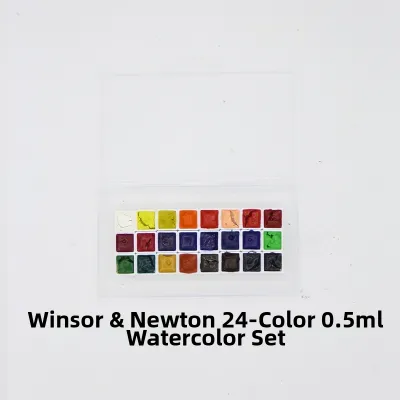
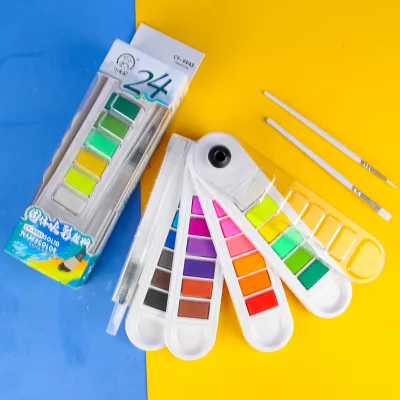
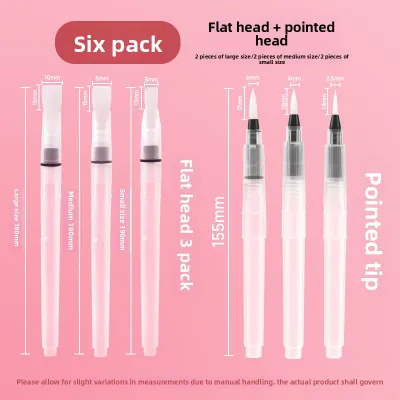
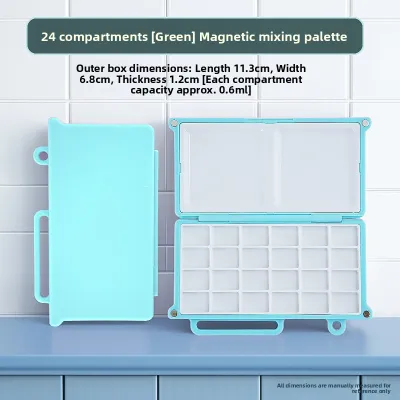
Prices are valid at publication and may change. Please refer to the product page for the latest price.
Professional-grade paints, by contrast, feature a maximum concentration of pure pigments bound with high-quality gum arabic. They offer exceptional vibrancy and lightfastness, meaning they resist fading when exposed to light. For beginners, student-grade sets from reputable brands strike the perfect balance between cost and performance.
Format
Watercolours are primarily sold in two formats: solid pans or liquid tubes. Pans are dry, concentrated blocks of paint housed in small plastic cups that activate instantly when touched with a wet brush. They are highly favored by beginners because they are clean, portable, and prevent the accidental waste of squeezing out too much paint.
Tubes contain wet, paste-like paint that can be squeezed directly onto a palette. While tubes make it easier to mix large volumes of paint quickly for background washes, they can easily dry out and become difficult to manage if you are not yet accustomed to controlling water-to-paint ratios.
For most beginners, a pan set is the most practical choice. It allows you to build a disciplined workflow, easily keep your colours separated, and pack your supplies away quickly without waiting for large wells of wet paint to dry.
Colour Selection
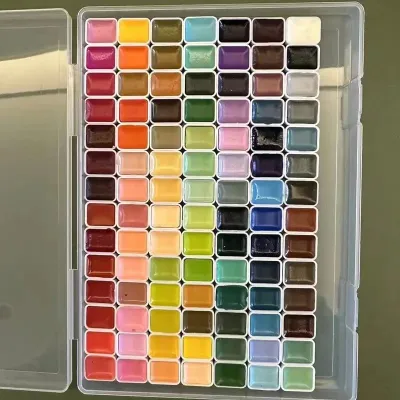
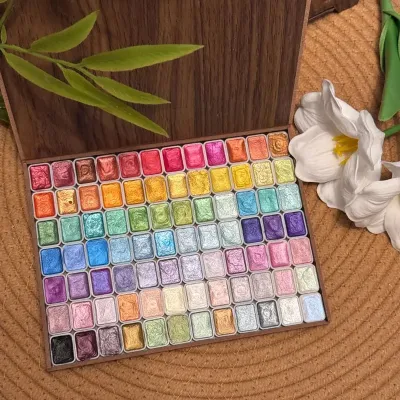
It can be tempting to buy a massive paint set featuring 48 or more pre-mixed colours, but a limited palette of 12 to 24 colours is actually far better for your artistic development. Working with a smaller selection forces you to learn the fundamentals of colour theory and mixing.
A well-curated beginner set typically includes warm and cool versions of each primary colour (red, blue, and yellow), along with a few essential earth tones like Burnt Sienna and Yellow Ochre. This foundational palette teaches you how to mix clean secondary and tertiary shades without creating muddy results.
Relying too heavily on pre-mixed convenience colours can stunt your progress. By mastering a limited palette first, you gain a deep understanding of how different pigments interact on the paper, which is a crucial skill for any watercolour artist.
Included Accessories
Many beginner watercolour sets come packaged with extra accessories, such as travel brushes, water brushes, sponges, and built-in mixing wells. While these additions add value, it is important to evaluate their quality realistically.
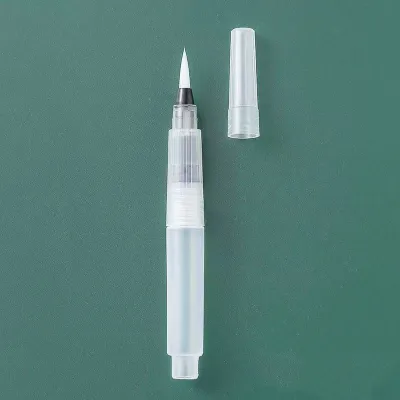
The tiny brushes included in standard paint sets are often stiff and hold very little water, which can lead to patchy washes and frustration. On the other hand, refillable water brushes—which feature a water reservoir in the handle—are incredibly convenient for quick sketching but offer less control over water flow than traditional brushes.
The most valuable accessory in any beginner set is a well-designed mixing area. Look for cases where the lid folds out completely flat and features deep, separate compartments to prevent your mixed washes from running into one another.
Top Watercolour Sets for Beginners From Trusted Brands
Best for Comprehensive Learning and Studio Use
For structured practice and dedicated home studio learning, the Winsor & Newton Cotman Watercolour Half-Pan Studio Set is a highly reliable option. Winsor & Newton is a historic art supply brand, and its Cotman line is widely regarded as an industry benchmark for student-grade watercolours.

This set features finely ground pigments that offer clean mixing and reliable lightfastness. The colours behave predictably, closely mimicking the characteristics of professional-grade paints. This predictability is crucial for beginners, as it ensures that the techniques you practice will translate smoothly if you choose to upgrade later.
The standard 12 or 24 half-pan sets provide a beautifully balanced colour range. However, keep in mind that the included brush is quite basic, and you will need to purchase dedicated watercolour paper separately to get the best results from these paints.
Pre-purchase checks: Before making your purchase, verify the specific edition of the set. Ensure that the plastic casing opens flat and that the mixing wells are deep enough to hold wet washes without leaking into the paint pans.
Best for Travel, Sketching, and Plein Air
If you plan to paint outdoors, practice urban sketching, or carry your art supplies around, the Sakura Koi Water Colors Pocket Field Sketch Box is an excellent choice. This compact, durable plastic set is specifically designed for artists on the go.
The Sakura Koi set typically includes a refillable water brush, a dabbing sponge, and a folding palette that can be attached to the left or right side of the box. The bottom of the case features a secure finger ring, allowing you to hold the entire palette comfortably in one hand while sketching.
While the set is highly portable, the trade-off is that the mixing wells are relatively small, making it difficult to prepare large washes of colour. Additionally, the paint formulation is slightly more opaque than traditional European pans, but this allows for immediate, vibrant colour payoff on the page.
Pre-purchase checks: Before buying, check the physical dimensions of the pocket box to ensure it fits comfortably in your sketching pouch. Verify that the water brush barrel screws together securely to prevent any leaks during transit.
Best Budget-Friendly Option Without Compromising Safety
For those seeking an affordable entry point into watercolour painting without sacrificing safety or quality, the Royal Talens Van Gogh Watercolour Pocket Box is a stellar choice. Royal Talens is a respected brand known for producing reliable, student-friendly art supplies.
Unlike cheap, unbranded paint sets found in toy stores, the Van Gogh line carries recognized non-toxic certifications, such as the AP seal. This ensures the paints are free from harmful heavy metals, making them safe for artists of all ages during long painting sessions.
In terms of performance, these paints are highly vibrant and dissolve easily with a wet brush. While they may require slightly more layers to achieve the intense depth of professional paints, they mix cleanly and avoid the chalky, washed-out finish characteristic of budget toy paints.
Pre-purchase checks: When shopping, ensure the product packaging explicitly states “student grade” or “artist quality.” Avoid generic “washable” or “poster” paint sets, as these lack the pigment concentration required to practice proper watercolour techniques.
Student-Grade vs. Professional Watercolours: What to Expect
As you progress in your watercolour journey, you will eventually face the decision of whether to upgrade to professional-grade paints. Understanding the physical differences between these tiers can help you manage your expectations and prevent premature frustration.
The primary difference lies in the formulation. Student-grade paints use more fillers, such as dextrin or starch, to stretch the pigment. This can sometimes make the paint feel slightly sticky or cause it to dry with a matte, slightly chalky appearance. Professional paints use a higher concentration of pure pigment and premium gum arabic, resulting in luminous, transparent washes.
This formulation difference directly impacts key watercolour techniques. Professional paints flow more dynamically across wet paper, allow for easier lifting of dry paint, and exhibit beautiful granulation—where heavy pigment particles settle into the texture of the paper to create organic patterns.
You do not need to buy a full professional set immediately. A practical approach is to start with a high-quality student set and replace your most frequently used colours with professional-grade tubes or pans individually as they run out. This allows you to experience the difference gradually without a significant upfront investment.
Essential Tools to Pair With Your First Watercolour Set
While choosing a high-quality watercolour set is important, your success with the medium depends heavily on the tools you pair with it. Watercolour is a system where the paint, paper, and brush must work in harmony.
- Paper: The most critical tool is watercolour paper. Regular drawing paper lacks the thickness and sizing needed to handle water, causing it to warp, buckle, and tear. Always choose paper with a minimum weight of 300 gsm (140 lb). For the best experience, invest in 100% cotton paper, which absorbs water evenly and allows you to practice advanced wet-on-wet techniques.
- Brushes: You should also upgrade your brushes. The tiny brush included in most paint sets is rarely sufficient for learning. Invest in two or three synthetic round brushes, such as a size 4 for details and a size 8 or 10 for general washes. Synthetic brushes are durable, hold their shape well, and provide excellent spring.
- Water and Palette Setup: Finally, set up your workspace with two jars of water. Use one jar exclusively for rinsing dark paint off your brush and the second jar of clean water for mixing new colours or wetting your paper. This simple setup keeps your mixtures clean and prevents muddy washes.
How to Test and Maintain Your New Watercolour Set
Once you receive your new watercolour set, taking the time to test and properly maintain it will ensure you get the best performance and longevity from your supplies.
Testing
Begin by painting a swatch chart on a scrap piece of watercolour paper. For each colour, paint a solid square of concentrated paint and gradually dilute it with water to create a smooth gradient. This chart serves as a visual reference, as watercolours naturally dry lighter and less vibrant than they appear when wet.
Maintenance
In warm and highly humid climates like Singapore, proper maintenance is essential to prevent mould growth. Never close your palette lid while the paint pans are still wet. Leave the palette open in a well-ventilated room to dry completely before storing it in a drawer or bag.
Reviving and Cleaning
If your paint pans become dry or cracked over time, do not worry; simply mist them with clean water from a spray bottle a few minutes before painting to reactivate them. To clean a stained plastic mixing palette, wipe the wells gently with a damp microfiber cloth and a drop of mild soap, avoiding abrasive scrubbers that can scratch the plastic.
Frequently Asked Questions (FAQ)
Can I use regular drawing paper for watercolour painting?
No, regular drawing paper is not suitable for watercolour painting. It is too thin and lacks sizing, which is the chemical treatment that controls water absorption. Applying water to standard paper causes it to warp, buckle, and pill, making it impossible to blend colours or apply smooth washes. Always use paper rated at least 300 gsm.
Do watercolour paints expire or go bad?
Watercolour pans can last almost indefinitely if kept dry and clean. Even if they become dry and cracked, they can be easily reactivated with water. However, in humid environments, damp palettes can grow mould if closed before drying. Tube paints can dry out or separate over several years, but the dried paste can still be used like pan paint.
Is it better to buy a large set with many colours or a small set?
It is highly recommended to start with a smaller set of 12 to 18 colours. A limited palette encourages you to learn the principles of colour mixing and prevents you from relying on pre-mixed convenience shades. It is also more cost-effective, portable, and helps you avoid creating muddy mixtures.
Community discussion
Share your experience or ask a question. Comments are reviewed before publication.