
When tackling heavy-duty sewing projects in Singapore—such as restoring outdoor balcony cushions, tailoring thick denim, or crafting custom leather goods—using standard all-purpose thread will inevitably lead to broken seams and machine frustration. The secret to structural longevity lies in selecting a high-quality thick sewing thread engineered to withstand high tension and abrasive wear. Choosing the correct heavy-duty thread requires understanding material compositions, decoding complex sizing systems, and matching the thread to your sewing machine’s capabilities.
In Singapore’s humid tropical climate, material selection becomes even more critical. High humidity and intense UV exposure can rapidly degrade low-quality threads, leading to premature seam failure. Whether you are shopping at traditional textile hubs in Chinatown or browsing specialized online haberdasheries, understanding how to evaluate thread specifications ensures your hard work survives both the sewing process and the elements.
How to Read Thick Sewing Thread Specifications and Weights
Navigating the world of heavy-duty thread can be confusing due to the multiple, often contradictory, numbering systems used by manufacturers. Unlike standard sewing threads, which are typically sold under generic “all-purpose” labels, heavy-duty threads are marked with precise technical specifications. Understanding these numbers is essential to avoid purchasing thread that is either too weak for your project or too thick for your sewing machine to handle.
Products mentioned in this guide
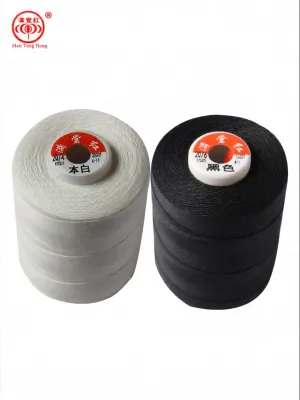
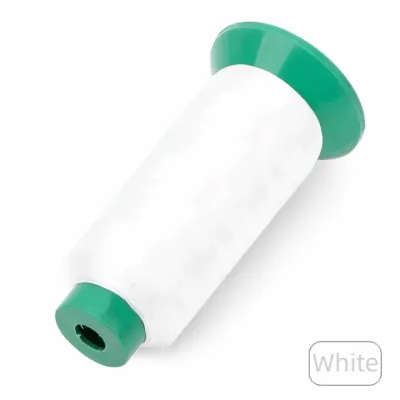
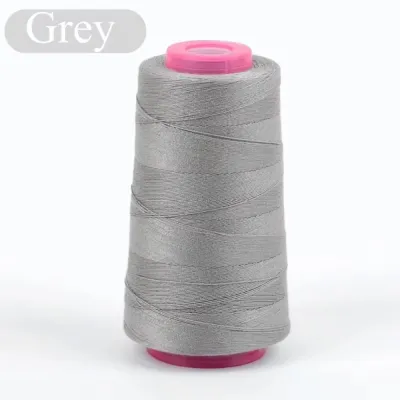
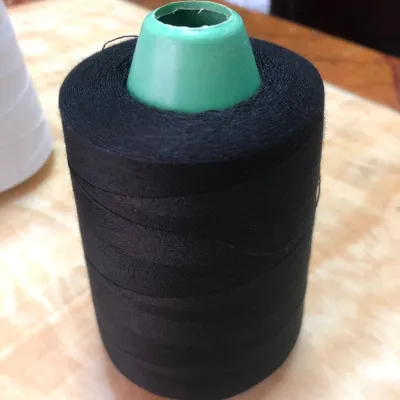
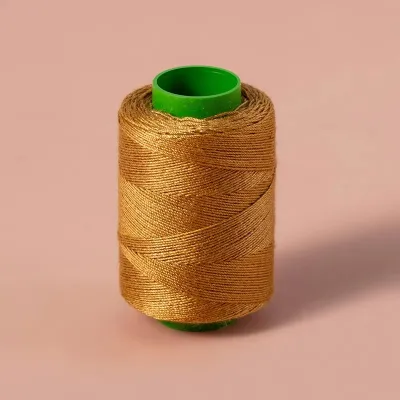
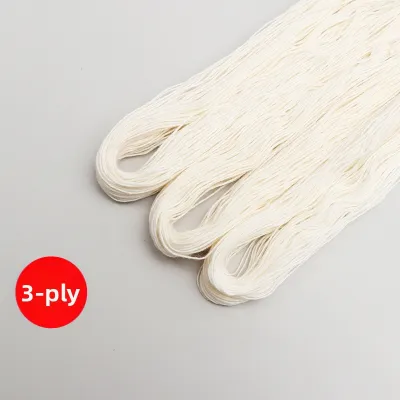
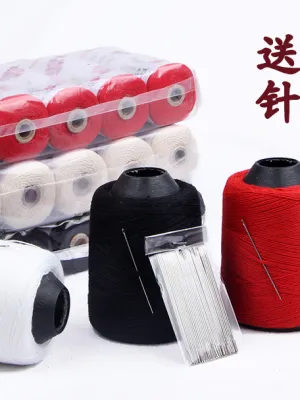
Prices are valid at publication and may change. Please refer to the product page for the latest price.
The most reliable and standardized system is the Tex system. Tex is a direct mass-measuring system, representing the weight in grams of 1,000 meters of thread. Because it is a direct system, a higher Tex number always indicates a thicker, heavier thread. For instance, standard garment thread is usually around Tex 25 to Tex 35, whereas a robust thick sewing thread suitable for heavy-duty applications will typically range from Tex 70 to Tex 105 or higher.
Conversely, the Weight (wt) system is an indirect system commonly used for cotton and topstitching threads. In this system, the number represents the length of thread required to reach a specific weight. Because it is indirect, the scale is inverted: lower numbers indicate thicker threads. A 12wt or 30wt thread is significantly thicker and stronger than a standard 50wt thread. When purchasing, always double-check whether the label refers to Tex or Weight to avoid costly mistakes.
For heavy synthetic threads, particularly nylon and polyester used in upholstery, you will often encounter V-size (commercial size) or Denier. V-sizes like V-69, V-92, and V-138 are widely used in commercial applications. Similar to Tex, higher V-size numbers indicate thicker threads. V-69 (approximately Tex 70) is generally the maximum thickness a heavy-duty domestic sewing machine can handle, while V-92 (approximately Tex 90) and V-138 are reserved for industrial machines.
Beyond the primary thickness metric, pay attention to the ply count, which indicates how many individual strands are twisted together to form the final thread (e.g., 3-ply or 4-ply). A higher ply count generally offers greater tensile strength and a rounder profile, which improves stitch definition. Always check the manufacturer’s spool label for recommended needle sizes and fabric pairings. If a thread spool lacks these standardized markings and only features vague descriptions like “extra strong,” it is best to treat it with caution for critical structural seams.
Recommended Thread Materials for Specific Heavy-Duty Projects
Different heavy-duty projects present unique mechanical and environmental challenges. A thread that excels on heavy denim may fail miserably on outdoor canvas or marine vinyl. To achieve professional, long-lasting results, you must match the thread’s material properties to the specific demands of your project.

Upholstery, Canvas, and Outdoor Gear
For projects exposed to the elements or subjected to constant physical stress—such as outdoor patio cushions, canvas sails, awnings, or heavy backpacks—bonded nylon and heavy-duty polyester are the premier choices. These synthetic fibers offer exceptional tensile strength, minimal stretch, and excellent abrasion resistance.
Bonded nylon is highly favored for indoor upholstery and gear because of its extreme strength-to-size ratio. The “bonded” designation means the thread has undergone a chemical treatment that coats the fibers, gluing the plies together. This bonding finish prevents the thread from untwisting, fraying, or shredding when subjected to the high-speed friction of a sewing machine needle passing through dense layers of canvas.
However, for outdoor applications in Singapore’s intense tropical sun, heavy-duty polyester is the superior choice. While nylon is incredibly strong, it degrades relatively quickly under prolonged ultraviolet (UV) radiation. Polyester possesses natural UV resistance and retains its strength far better when exposed to sunlight and moisture. When selecting a polyester thread for outdoor gear, always verify on the product label that it has been specifically treated for UV and mildew resistance, as untreated polyester can still degrade over time.
Denim, Heavy Cotton, and Topstitching
When sewing heavy woven natural fabrics like denim, canvas workwear, or thick linen, the aesthetic of the seam is often just as important as its strength. For these applications, heavy-duty cotton-wrapped polyester (often called core-spun thread) or dedicated topstitching threads are highly recommended.
Core-spun thread features a high-strength polyester core wrapped in a sheath of natural cotton. This hybrid construction provides the best of both worlds: the inner polyester core delivers the high tensile strength needed to hold heavy seams together, while the outer cotton wrapping provides a soft, matte finish. This matte appearance blends seamlessly with the texture of woven cotton fabrics, avoiding the unnatural, highly reflective sheen characteristic of pure synthetic threads.
For decorative, visible seams—such as the classic gold or orange contrast stitching on jeans—use a dedicated topstitching thread (typically 12wt to 30wt). These threads are designed to sit prominently on top of the fabric, creating bold, defined stitches. When working with denim or heavy cotton garments that will be laundered frequently, always check the spool label for colorfastness ratings to ensure the dye will not bleed onto the surrounding fabric during washing.
Leather, Vinyl, and Synthetic Webbing
Sewing dense, non-woven materials like leather, vinyl, and heavy synthetic webbing requires a thread that can withstand extreme friction without compromising the integrity of the material or the thread itself.
For these demanding materials, bonded nylon or specialized waxed threads are the industry standards. The dense, puncture-resistant nature of leather and vinyl creates intense friction as the needle penetrates the material. Standard, untreated cotton threads will quickly shred or snap under this friction. Furthermore, natural cotton fibers should never be used on genuine leather; the residual tanning chemicals and natural acids present in leather can chemically degrade natural fibers over time, causing the seams to rot and fail prematurely.
Waxed threads, which are typically used for hand-stitching leather but are also available in machine-compatible formulations, feature a light wax coating that acts as a lubricant. This coating helps the thread glide smoothly through the punched holes. When selecting a thread for leather or vinyl, always test the thread’s flexibility on a small scrap piece of your project material. Ensure that when the sewn joint is bent or flexed, the thread does not cut into the material or crack under tension.
Matching Needles and Machine Settings to Thick Threads
Using a thick sewing thread requires more than just swapping out the spool; you must also adjust your hardware and machine settings to accommodate the increased physical dimensions of the thread. Attempting to sew with thick thread using standard machine settings is a primary cause of skipped stitches, bird-nesting, and needle breakage.
The most critical adjustment is selecting the correct needle size and type. Standard universal needles (sizes 70/10 to 90/14) have eyes that are far too small for heavy-duty threads. If the thread cannot pass freely through the needle’s eye, it will experience extreme friction, leading to rapid shredding and snapping. For thick threads (Tex 70 / V-69 and above), you must use larger needles, typically in sizes 100/16 to 110/18.
In addition to size, choose a needle point designed for your specific fabric:
- Denim/Jeans needles feature a sharp, reinforced point to penetrate dense woven fabrics without deflecting.
- Leather needles have a cutting wedge point that slices a tiny hole in the leather, allowing the thick thread to pass through easily.
- Topstitching needles feature an extra-large eye and a deeper groove specifically designed to accommodate thick decorative threads.
Another highly effective technique for domestic sewing machines is using a thinner thread in the bobbin. Many home sewing machines struggle to form balanced stitches when a thick thread is used in both the needle and the bobbin, as the bobbin tension system is rarely designed for high-caliber threads. By winding your bobbin with a standard all-purpose thread (such as Tex 30 polyester) while keeping the thick heavy-duty thread in the needle, you dramatically reduce the risk of bobbin jams and bird-nesting while maintaining a strong, professional top stitch.
Before starting your project, you will likely need to increase your upper thread tension dial to balance the heavier pull of the thick thread. Always consult your specific sewing machine manual to verify its maximum thread thickness limits, as forcing overly thick thread through a delicate domestic machine can strain the motor or damage the tension discs. Finally, always perform a mandatory test stitch on a multi-layer scrap of your actual project fabric to fine-tune the stitch length (which should be lengthened to 3.0mm–4.0mm for heavy fabrics) and verify tension balance.
How to Source and Verify Heavy-Duty Threads in Singapore
Finding specialized heavy-duty threads in Singapore requires knowing where to look, as standard neighborhood convenience stores and small craft shops typically only stock light-to-medium all-purpose threads. Fortunately, Singapore has several dedicated textile hubs and reliable sourcing avenues where you can physically inspect and verify thread quality.
For a hands-on shopping experience, traditional textile districts are your best starting point. The fabric shops located within People’s Park Complex in Chinatown and the historic textile merchants along Arab Street host several well-established haberdashery shops. These retailers cater to both hobbyists and professional tailors, stocking a variety of heavy-duty polyester, bonded nylon, and topstitching threads. Shopping in person allows you to physically feel the thread, inspect its ply structure, and verify the specifications printed on the spool.
When shopping at physical retailers, use this verification checklist to ensure you are purchasing a genuine heavy-duty thread:
- Material Composition: Confirm the spool is labeled as 100% polyester, bonded nylon, or cotton-wrapped polyester, depending on your project needs.
- Size Specifications: Look for explicit Tex numbers (Tex 70+), V-sizes (V-69+), or weight ratings (12wt to 30wt) rather than generic terms.
- Recommended Needle Size: Ensure the spool lists a compatible needle size (such as 100/16 or larger).
- Spool Integrity: Avoid buying unlabelled, dusty, or unspooled threads from discount bins. Over time, exposure to dust and light in open bins can weaken fibers, making them prone to snapping.
If you cannot find a specific specialty thread locally, online marketplaces and international haberdashery brand websites offer a vast selection. However, when purchasing online, you must exercise extra caution. Verify the seller’s authenticity and check the shipping origin to avoid counterfeit or low-grade polyester masquerading as high-tensile bonded nylon. Stick to reputable online storefronts or official brand distributors that provide complete technical data sheets for their products.
Frequently Asked Questions (FAQ)
Can I use thick upholstery thread in a standard home sewing machine?
Yes, most standard domestic sewing machines can handle moderate thick threads up to Tex 70 (V-69) in the needle, provided you use a large enough needle (size 100/16 or 110/18). However, extremely thick industrial threads (such as V-92 or V-138) may exceed your machine’s mechanical limits, straining the motor and causing tension failures. Always refer to your machine’s manual and perform a test on scrap fabric first.
What is the difference between bonded and non-bonded nylon thread?
Bonded nylon thread is treated with a special liquid resin coating that glues the individual plies together, preventing them from untwisting or fraying under the intense friction of high-speed sewing. Non-bonded (or soft) nylon lacks this protective coating; while it is softer and more flexible, it is significantly more prone to shredding and splitting when sewing dense, abrasive materials like leather or heavy canvas.
How do I prevent thick thread from shredding while sewing?
Thread shredding is almost always caused by using a needle with an eye that is too small, which pinches and abrades the thread. To resolve this, switch to a larger needle (size 100/16 or 110/18) specifically designed for topstitching or denim. Additionally, check your upper thread tension to ensure it is not excessively tight, and inspect your sewing machine’s needle plate and hook area for any sharp burrs that could snag the thread.
Community discussion
Share your experience or ask a question. Comments are reviewed before publication.