
Finding the perfect Snoopy notebook is often a balancing act between aesthetic appeal and practical performance. While a vibrant cover featuring Charlie Brown, Snoopy, or Woodstock instantly brightens your desk, the actual utility of the notebook depends entirely on what lies beneath the cover. Choosing a notebook with subpar paper can lead to frustrating feathering, ink bleed-through, or torn pages, transforming a delightful stationery purchase into an unused keepsake. To select the best notebook snoopy options for your specific needs, you must evaluate the paper’s weight, texture, and chemical composition against your preferred writing or drawing instruments.
By aligning the paper specifications with your creative goals, you can ensure that your journaling, sketching, or daily note-taking remains a seamless and enjoyable experience. Whether you are a fountain pen enthusiast, a dedicated planner decorator, or a casual doodler, understanding how paper behaves under different media is the key to finding a notebook that is both beautiful and functional.
Understanding Paper Quality in Snoopy Notebooks
When browsing licensed Peanuts merchandise, it is easy to assume that all notebooks are created equal, with the only differences being the cover art and the price tag. However, licensed stationery spans a vast spectrum of quality, ranging from budget-friendly promotional items to premium, high-end collaborations with legendary stationery manufacturers. To make an informed decision, you must learn how to read the technical specifications of paper, which are often printed on the back cover, the belly band, or the online product description.
Products mentioned in this guide
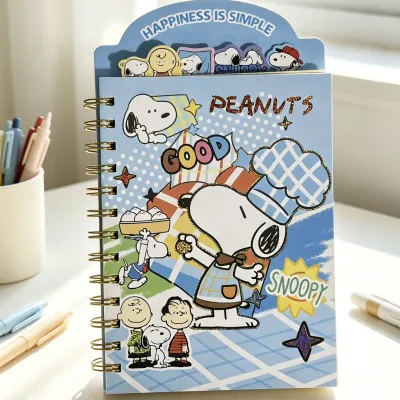
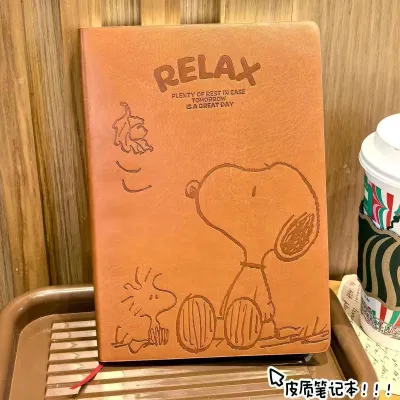
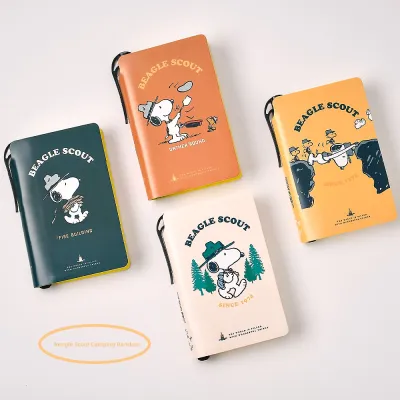
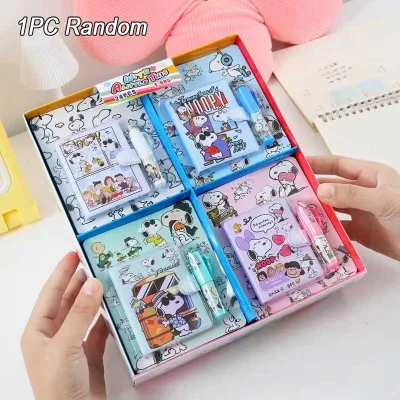
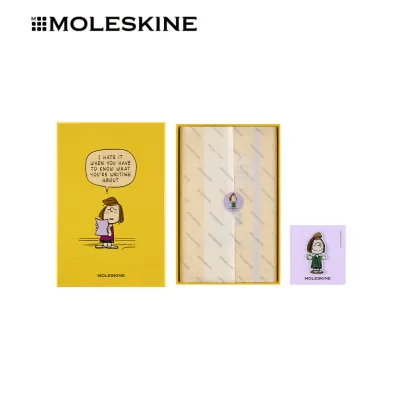
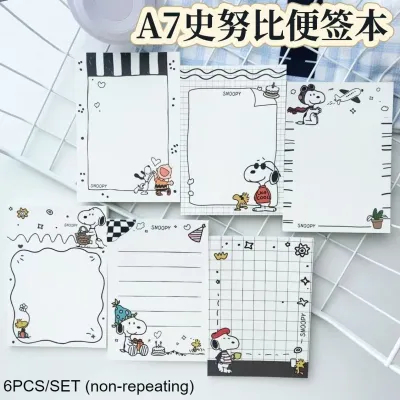
Prices are valid at publication and may change. Please refer to the product page for the latest price.
Evaluating these specifications allows you to look past the charming illustrations and assess how the notebook will perform in daily use. By understanding the fundamentals of paper manufacturing, you can predict how your favorite pens and pencils will interact with the page before you ever make a purchase.
Decoding Paper Weight and Thickness
Paper weight is one of the most reliable indicators of quality and is almost always measured in GSM, which stands for grams per square meter. In some regions, you may also see paper weight designated in pounds (lb), but GSM remains the global standard for stationery. When evaluating a Snoopy notebook, look for this number on the product’s packaging, adhesive labels, or the manufacturer’s official spec sheet. If a notebook does not list its GSM, it is highly likely to be standard, lightweight utility paper, which is generally around 70 to 80 GSM.
The relationship between paper thickness and performance is straightforward: thicker paper contains more fibers, which increases its capacity to absorb liquid without allowing it to pass through to the other side. Lightweight paper (70 to 80 GSM) is highly susceptible to “ghosting”—where the writing on one page is visible as a shadow on the reverse side—and complete “bleed-through,” where the ink physically punctures the paper fibers. For a premium writing experience that allows you to use both sides of a page comfortably, you should seek out notebooks with a paper weight of at least 90 to 100 GSM, or even higher if you plan to use wet media.
Evaluating Paper Finish and Texture
The finish of the paper refers to its surface texture and treatment, which can dramatically alter how a pen glides or a pencil grips the page. Standard, mass-produced notebooks often feature heavily calendered, smooth, or even slightly coated finishes designed to make cheap paper feel smoother to the touch. However, these coatings can sometimes create a barrier that prevents liquid inks from drying quickly, leading to smearing, or prevents dry pigments from adhering to the page. Uncoated paper, which retains a more natural fiber texture, is often preferred for a wider variety of writing and drawing tools.
Another critical factor to consider is the “tooth” of the page, which is the microscopic roughness of the paper surface. You can identify the level of tooth by looking for terms like “vellum,” “rough,” “smooth,” or “satin” in the product description, or by reading user reviews that discuss the tactile feel of the paper. For long-term archiving, journaling, and preserving your creative work, it is also essential to verify that the paper is acid-free (often labeled as pH-neutral). Acid-free paper does not degrade, turn yellow, or become brittle over time, ensuring that your thoughts and drawings remain pristine for decades.
Choosing the Right Paper for Everyday Writing
For many stationery lovers, a Snoopy notebook is a daily companion used for jotting down to-do lists, taking meeting notes, or drafting daily reflections. Because these tasks require speed and comfort, your notebook must accommodate your everyday writing tools without causing hand strain or messy smudges. Matching your pen type to the correct paper finish is the easiest way to elevate your daily writing routine.

Accommodating Fountain Pens and Liquid Ink
Fountain pens and liquid ink rollerballs deposit a significant volume of liquid onto the page, making them highly demanding of paper quality. Standard promotional notebook paper is notorious for failing when paired with fountain pens, resulting in severe “feathering,” where the ink spreads outward along the paper fibers like tiny spiderwebs. This occurs because cheap paper is highly porous and lacks the necessary sizing—a chemical treatment applied during manufacturing to regulate water absorption.
To prevent this messy outcome, fountain pen users should actively look for Snoopy notebooks that are explicitly labeled as “fountain pen friendly” or “ink-resistant.” These premium papers often feature specialized surface sizing or light coatings that keep the liquid ink on the surface of the page, allowing it to dry slowly and maintain sharp, crisp lines. While high-GSM indicators (typically 100 GSM and above) are a good starting point, some thinner papers, such as specialized Japanese papers, are engineered specifically to handle fountain pens beautifully despite their lightweight profile, proving that surface treatment is just as important as thickness.
Optimizing for Ballpoint, Rollerball, and Gel Pens
If your primary writing instruments are standard ballpoint, rollerball, or gel pens, your paper requirements are much more flexible, but still highly impactful on your writing comfort. For these tools, an ultra-smooth paper finish is ideal because it minimizes friction, allowing the pen tip to glide effortlessly across the page and reducing hand fatigue during long writing sessions. Gel pens, which use water-based gel inks, perform exceptionally well on smooth, uncoated paper that absorbs the ink quickly enough to prevent smudging but slowly enough to maintain a vibrant, solid line.
When choosing a notebook for everyday writing with standard pens, you can also pay closer attention to the page layout options—such as ruled, dotted, or plain grids—to complement your note-taking style. Because standard ballpoint and gel inks are less prone to bleeding than fountain pen inks, standard-weight paper (around 80 to 90 GSM) is usually more than sufficient. This allows you to prioritize other appealing features of the notebook, such as a flexible softcover, a lay-flat binding, or a specific Peanuts cover design that brings you joy.
Finding the Best Paper for Journaling and Planners
Journaling and planning are deeply personal practices that often go beyond simple writing, incorporating visual elements, color-coding, and decorative layouts. If you use your Snoopy notebook as a creative journal or a bullet planner, the paper must be robust enough to handle a diverse array of decorative tools and adhesives without buckling or tearing.
Handling Stickers, Washi Tape, and Adhesives
A major joy of keeping a Peanuts-themed journal is decorating the pages with colorful stickers, washi tape, and other adhesive elements to match the playful aesthetic of the cover. However, this decorative process requires a sturdy paper base; thin, fragile paper will easily tear or crease if you need to peel up and reposition a piece of tape or a sticker. To avoid this frustration, look for notebooks featuring thicker, more robust paper (typically 100 GSM or higher) that can withstand the physical stress of adhesives.
Furthermore, you should avoid notebooks with overly glossy or heavily coated pages, as these slick surfaces significantly reduce adhesive grip, causing your favorite stickers and washi tapes to curl and peel off over time. The structural design of the notebook is also crucial for decorating: a lay-flat binding, such as a thread-sewn or Swiss-bound spine, is highly recommended. This feature allows the notebook to open completely flat, making it incredibly easy to apply stickers and draw layouts across the center gutter without fighting a stiff spine.
Preventing Bleed-Through from Markers and Highlighters
Color-coding and artistic lettering are common in planners and journals, but they require tools like mild liners, brush pens, and water-based markers. These markers deposit a dense layer of wet pigment that easily saturates standard paper, leading to unsightly ghosting or bleed-through that ruins the layout on the next page. This limitation can quickly discourage you from using your journal to its full potential.
To keep your pages clean, legible, and visually appealing, seek out premium or thick-paper editions of Snoopy notebooks that are specifically marketed for planners, bullet journaling, or mixed-media use. When reviewing product specifications, look for “high opacity” or “heavyweight” labels, which indicate that the paper is dense enough to block light and pigment from showing through. A paper weight of 120 GSM to 160 GSM is the sweet spot for marker-heavy journaling, ensuring that you can use vibrant colors on both sides of every sheet with absolute confidence.
Picking Snoopy Notebooks for Sketching and Doodling
For artists, students, and casual doodlers, a Snoopy notebook serves as a portable canvas for capturing ideas, character sketches, and quick illustrations. Because drawing relies on completely different techniques than writing, the paper’s physical texture and the notebook’s physical structure must support your artistic medium.
The Importance of Paper Tooth for Dry Media
When drawing with dry media—such as graphite pencils, colored pencils, or charcoal—the texture of the paper is the single most important factor governing your results. Overly smooth, slick, or coated paper, which is common in low-cost licensed merchandise, is highly unsuitable for sketching because it lacks “tooth.” Without this microscopic roughness, the paper cannot shave off and hold the dry pigment from your pencil, resulting in faint, slippery lines and a frustrating lack of depth.
To achieve rich shading and vibrant colors, you should look for “sketch” or “drawing” specific editions within the Snoopy stationery range, which feature uncoated paper with a noticeable tooth. This texture allows you to build up layers of graphite or colored pencil easily. Additionally, high-quality sketch paper must have excellent erasability; it should be strong enough to withstand repeated erasing with vinyl or kneaded erasers without pilling, thinning, or tearing the surface fibers.
Binding and Lay-Flat Features for Artists
For any artist, there are few things more frustrating than trying to draw a continuous line only to have your hand obstructed by a stiff, bulky spine, or having your pencil slip as you approach the curved inner margin of a tightly bound book. Thread-sewn bindings, lay-flat bindings, or spiral-bound formats are highly superior for sketching because they allow the notebook to lie completely flat on a desk or lap. This gives you unrestricted access to the entire page, from edge to edge.
If you enjoy sketching on the go, consider selecting a Snoopy notebook with a rigid hardcover or a thick, heavy-duty backboard. This built-in support acts as a portable desk, allowing you to draw comfortably while sitting in a park, riding public transit, or waiting at a cafe. Finally, prioritize unruled or completely blank page formats; while dotted grids can be helpful for some geometric doodles, blank pages offer the ultimate creative freedom for illustrations, free-form sketches, and character studies.
Quick Guide: Matching Paper Types to Your Tools
To help you quickly identify the best notebook structure and paper type for your creative setup, refer to the comparison table below. This guide organizes paper types into stable, general categories based on their performance characteristics and ideal applications.
| Paper Category | Ideal Use Case | Recommended Tools | Key Features to Check on the Label |
|---|---|---|---|
| Standard Writing Paper (70 – 90 GSM) | Quick note-taking, daily lists, and school lectures | Ballpoint pens, standard gel pens, graphite pencils | Smooth finish, ruled or grid layouts, flexible binding |
| Premium Ink-Resistant Paper (90 – 120 GSM) | Journaling, fountain pen writing, heavy note-taking | Fountain pens, rollerballs, fine-liner markers | "Fountain pen friendly" label, acid-free, high opacity |
| Mixed-Media / Heavyweight Paper (120 – 160 GSM) | Bullet journaling, scrapbooking, decorative planning | Highlighters, brush pens, washi tape, stickers | Lay-flat binding, high GSM, uncoated surface |
| Sketch-Grade Textured Paper (100 – 150 GSM) | Doodling, sketching, colored pencil drawing | Graphite pencils, colored pencils, charcoal | Medium tooth, erasability rating, blank/unruled pages |
By identifying your primary writing or drawing tool in the table above, you can narrow down the exact paper specifications to look for when shopping, ensuring your new Snoopy notebook performs exactly as you need it to.
Where to Find and Verify Authentic Snoopy Notebooks in Singapore
Because Peanuts is a globally beloved franchise, the market is filled with both high-quality licensed stationery and low-quality counterfeits or unauthorized merchandise. Purchasing a counterfeit notebook almost guarantees that you will end up with thin, low-grade paper that bleeds, feathers, and degrades quickly. To ensure you are investing in a genuine product with reliable paper quality, you should purchase from authorized stationery retailers, official brand stores, and reputable bookstores in Singapore.
In Singapore, physical retail environments offer the distinct advantage of allowing you to feel the paper texture and inspect the binding firsthand before buying. Premium bookstores such as Books Kinokuniya (especially the flagship store at Ngee Ann City) and Popular Bookstore frequently stock high-quality, licensed Peanuts stationery collaborations. Specialized Japanese lifestyle and stationery retailers like Hands (formerly Tokyu Hands) and NBC Stationery & Gifts are also excellent sources for authentic, high-grade Snoopy notebooks imported directly from Japan, where paper standards are exceptionally high.
When shopping, always verify the product’s authenticity by looking for official licensing marks. Genuine Peanuts merchandise will always feature a clear copyright notice—such as “© Peanuts Worldwide LLC” or “© [Year] Peanuts”—printed clearly on the back cover, the inside title page, or the product tag. Be highly cautious of listings on unverified third-party online marketplaces or ecommerce platforms that offer Snoopy-themed notebooks at suspiciously low prices (such as under S$3). These items are often unauthorized reproductions that use cheap, non-archival wood-pulp paper that is highly prone to yellowing and deterioration.
This environmental degradation is a particularly pressing concern in Singapore’s tropical climate, where relative humidity levels frequently exceed 80%. High humidity accelerates the breakdown of acidic, low-quality paper, causing it to absorb moisture from the air, warp, and develop yellow spots (known as foxing). Investing in authentic, acid-free, high-GSM Snoopy notebooks from reputable retailers protects your hard work from the elements. To further safeguard your journals and sketches, store your completed notebooks in a dry, well-ventilated space, and consider placing a small silica gel pack in your storage drawers to absorb excess moisture. When shopping online, read the product descriptions carefully, looking for explicit mentions of paper weight, layout, and licensing to guarantee a delightful and durable stationery experience.
Community discussion
Share your experience or ask a question. Comments are reviewed before publication.