
To start embroidery in Singapore, finding the right sewing kit depends on your immediate learning goals rather than a single dominant brand. For absolute beginners, the ideal starter kit is one that balances comprehensive, high-quality components with clear, accessible instructions. While premium, established craft brands offer exceptional material consistency, generic beginner sets available locally or online provide an excellent, low-risk entry point to test your interest before investing heavily in specialized supplies.
A practical beginner embroidery kit should include a few non-negotiable items: a sturdy, adjustable embroidery hoop (typically 15 to 20 centimeters in diameter), multi-strand cotton embroidery floss, specialized embroidery needles with elongated eyes, and a pre-printed fabric canvas. These components ensure you can practice basic stitches without the immediate frustration of sourcing individual materials.
Your purchasing decision should follow a clear framework. If you are committed to developing a long-term hobby and want materials that endure, choosing established heritage brands ensures reliable color matching and durable hardware. Conversely, if you want to try the craft as a weekend project, a budget-friendly generic kit allows you to learn foundational stitches without a significant financial commitment.
Products mentioned in this guide
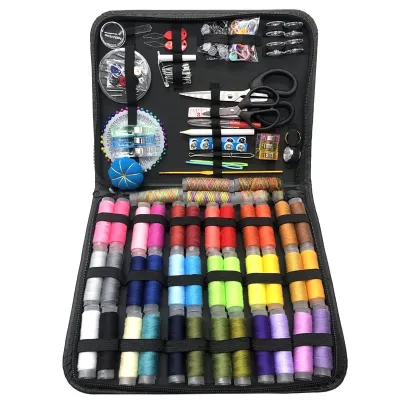
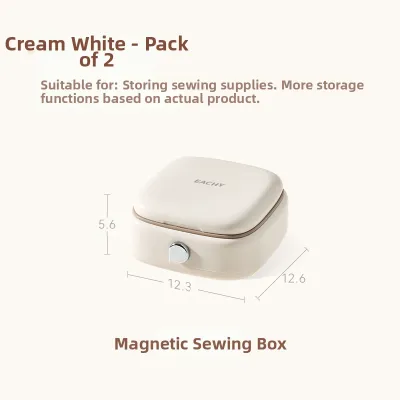
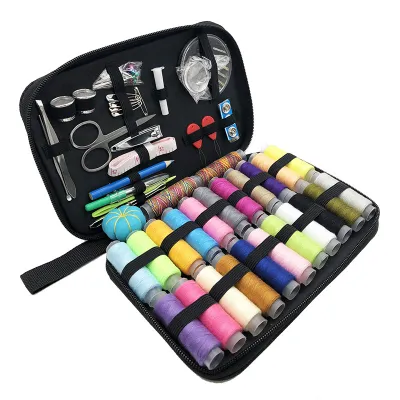
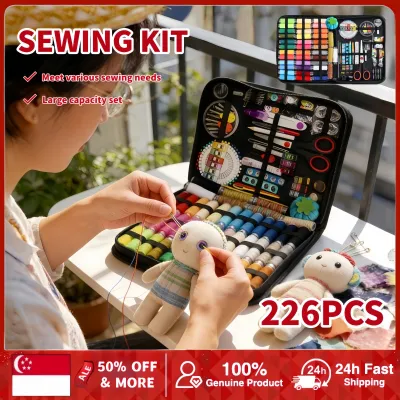
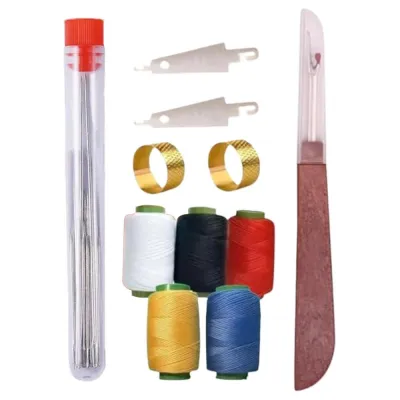
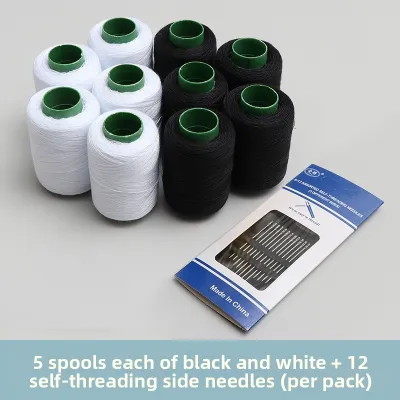
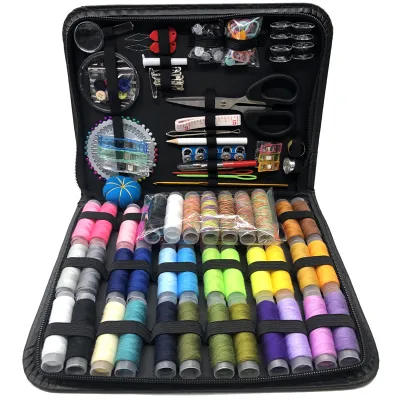
Prices are valid at publication and may change. Please refer to the product page for the latest price.
In Singapore, availability varies between physical craft specialty stores and online marketplaces. Because shipping times, local stock levels, and return policies differ across platforms, verifying these factors before purchasing will ensure a smooth start to your needlework journey.
Key Selection Criteria for an Embroidery Sewing Kit
Evaluating a beginner sewing kit designed for embroidery requires looking closely at the individual components. The quality of these tools directly affects your learning curve. A poorly constructed hoop or low-grade thread can cause fabric slippage and frequent knotting, which often discourages beginners before they complete their first project.
Hoop Size, Material, and Tension Control
The embroidery hoop is the foundation of your work, holding the fabric taut as you stitch. Beginners generally find hoops measuring 15 to 20 centimeters (6 to 8 inches) easiest to handle, as they fit comfortably in the hand and accommodate most starter patterns. In Singapore’s compact HDB flats, selecting a kit that is easy to store and resistant to humidity is highly practical.
Wooden and Bamboo Hoops: Traditional wooden or bamboo hoops provide a classic aesthetic and a firm grip on natural fabrics. However, in Singapore’s highly humid climate, cheap wooden hoops can warp over time or develop mold if stored in damp areas. Look for finely sanded wood with a robust brass or steel adjustment screw that tightens smoothly without stripping the threads.
Plastic Hoops: High-quality plastic hoops often feature a molded lip or groove on the inner ring that locks the fabric securely in place, preventing slippage. They are entirely unaffected by humidity and are easy to clean, making them a highly practical choice for local crafters.
Needle Specifications and Threading Ease
Embroidery needles, often called crewel needles, differ significantly from standard hand-sewing needles. They feature medium-length shafts and elongated eyes designed to accommodate multiple strands of embroidery floss.
Eye Size: The needle eye must be large enough to thread three to six strands of floss easily without fraying the cotton. If a kit only includes small-eyed sewing needles, threading will become a frustrating chore.
Needle Point: Unlike blunt tapestry needles used for cross-stitch on open-weave Aida cloth, embroidery needles must be sharp enough to pierce closely woven fabrics like linen or cotton calico smoothly. Verify that the kit contains a range of needle sizes (typically sizes 3 to 9) to accommodate different thread thicknesses.
Floss Material and Colorfastness
The thread included in your kit determines the texture and longevity of your finished piece.
Fiber Content: Look for kits containing 100% long-staple cotton floss. Cotton offers a soft, matte finish, drapes beautifully, and is less prone to static-induced tangling than polyester or synthetic blends.
Colorfastness: In Singapore’s warm climate, perspiration from your hands can transfer to the thread during long stitching sessions. Furthermore, if you plan to wash away pre-printed pattern lines after finishing, the thread must be colorfast. To verify colorfastness without manufacturer specifications, perform an observable trial: wet a small piece of the floss and press it firmly against a scrap piece of white cotton fabric. If any dye transfers, the thread is not colorfast, and you should avoid washing the finished piece.
Included Tools and Utility Accessories
A complete beginner kit should minimize the need for external purchases. Essential accessories include a small pair of sharp embroidery scissors (often shaped like storks) for clean thread cuts, a needle threader to assist with multi-strand threading, and a water-soluble or heat-erasable fabric pen for transferring custom designs. Avoid kits packed with excessive, low-quality plastic accessories that you are unlikely to use, as these inflate the price without adding real value to your learning experience.
Analyzing Brand Categories and Kit Quality
When shopping for embroidery kits in Singapore, the market is broadly divided into three categories: established heritage craft brands, general stationery or budget brands, and generic beginner sets. Understanding these categories helps you align your purchase with your budget and expectations.

Established Heritage Craft Brands
Brands such as DMC (France) and Anchor (UK) are globally recognized standards in needlework. While they rarely sell all-in-one beginner kits containing hoops and scissors under a single cheap package, they offer curated project kits or highly reliable individual components.
Color Standardization: These brands use a standardized numbering system for their thread colors. If you run out of a specific shade mid-project, you can easily purchase an identical replacement skein at any local craft shop using the color code.
Material Consistency: Their cotton floss is double-mercerized, giving it a subtle sheen, exceptional strength, and high resistance to fraying. The hoops and needles provided in their official kits are manufactured to precise standards, ensuring smooth tension and easy stitching.
Best For: Beginners who are confident they want to pursue embroidery as a long-term hobby and are willing to pay a premium for materials that yield professional-grade results.
General Stationery and Local Craft Brands
Many local stationery retailers and general craft suppliers in Singapore offer house-brand or mid-tier embroidery sets. These kits are highly accessible and provide a balanced compromise between cost and quality.
Accessibility: You can easily find these kits on retail shelves across Singapore, allowing you to examine the packaging and component quality in person before buying.
Project Complexity: These kits are typically designed for simple, low-stakes projects, making them excellent for casual hobbyists, school art classes, or weekend activities.
Best For: Crafters who prefer physical shopping, want to start immediately, and desire a reliable, mid-range product without paying import premiums.
Generic Beginner Sets
Widely available on online platforms, these kits are usually unbranded or sold under various white-label names. They typically feature a pre-printed pattern on fabric, a plastic or basic bamboo hoop, a set of colorful threads, and basic needles.
Cost-Effectiveness: These sets offer the lowest barrier to entry, often costing a fraction of the price of heritage brand kits while providing all necessary tools.
Quality Variability: Thread quality can vary, with some kits utilizing polyester blends that tangle easily or suffer from uneven dyeing. The instructions may also be machine-translated, requiring you to look up stitch tutorials online.
Best For: Absolute beginners who want to test their hand coordination and interest in embroidery with minimal financial risk.
Decision Matrix for Beginners
To choose the right path, consider your commitment level and budget:
High Commitment, Flexible Budget: Purchase a premium kit from a heritage brand or assemble your own kit using high-quality individual components (a German-made wooden hoop, DMC floss, and John James needles).
Moderate Commitment, Mid-Range Budget: Opt for a curated kit from a reputable local craft store that offers clear English instructions and verified cotton threads.
Exploratory Phase, Low Budget: Choose a generic, all-inclusive beginner kit online to practice basic stitches. If you enjoy the process, you can upgrade your tools and threads for your next project.
Sourcing and Verifying Embroidery Kits in Singapore
Finding the right embroidery starter kit in Singapore involves navigating both physical retail stores and digital marketplaces. Each channel offers distinct advantages and trade-offs regarding product inspection, pricing, and convenience.
Physical Craft and Specialty Shops
Shopping in person allows you to touch and inspect the materials, which is highly beneficial for beginners who want to assess hoop sturdiness and fabric weight.
Specialty Retailers: Legacy craft shops in Singapore, such as Golden Dragon in People’s Park Centre, offer a wealth of knowledge alongside physical products. The staff can guide you toward appropriate needle sizes and thread types. Other major craft retailers like Spotlight (located in Plaza Singapura and Westgate) and Art Friend (with branches in Bras Basah Complex, Clementi, and Plaza Singapura) stock a wide range of embroidery hoops, fabric, and threads.
Pros and Cons: Physical shopping allows you to verify that wooden hoops are splinter-free and that the fabric is of a suitable weight. However, retail prices in Singapore brick-and-mortar stores can be higher due to operating overheads, and selection may be limited to specific brands.
Online Marketplaces and Ecommerce Platforms
Online platforms offer an unparalleled variety of designs, ranging from minimalist botanical patterns to complex landscapes, often at highly competitive prices.
Verification Strategies: When purchasing online, you cannot physically inspect the kit. To avoid receiving low-quality items, check the seller’s rating and filter reviews to read recent feedback. Look specifically for customer complaints regarding missing needles, snapped adjustment screws, or thread colors that do not match the product photos.
Image Inspection: Examine customer-uploaded photos in the review section rather than relying solely on polished promotional images. Verify that the fabric has a clear, well-aligned pre-printed pattern and that the hoop appears sturdy.
Instruction Quality: Ensure the product description explicitly states that English instructions are included. Many generic kits rely on visual diagrams, which can be difficult to interpret without accompanying text. If the kit uses a digital tutorial, verify that the link or QR code is active and accessible.
Pricing and Currency Considerations
Prices for beginner embroidery kits in Singapore generally range from S$5 for basic generic sets on online marketplaces to S$30 or more for premium curated kits at specialty retailers. When comparing prices online, factor in shipping costs and delivery times. Local sellers may offer faster delivery within two to three days, which is highly advantageous if you want to start your project quickly, whereas international shipping may take a week or more.
Your Step-by-Step Selection Checklist
Before finalizing your purchase of an embroidery kit, use this practical checklist to verify that the product meets your needs and will provide a smooth learning experience.
1. Inspect the Hoop Quality
- Confirm that the hoop is smooth and free of splinters or sharp edges that could snag your fabric.
- Check that the adjustment screw is made of sturdy metal (such as brass or stainless steel) and tightens securely without slipping.
- If choosing a plastic hoop, verify that it has an inner lip or ridge to prevent fabric slippage under tension.
2. Evaluate the Needles
- Ensure the kit includes specialized embroidery needles with elongated eyes, rather than standard, small-eyed sewing needles.
- Confirm there are at least two or three needles included, as beginners frequently misplace them or require different sizes for varying thread thicknesses.
3. Check the Floss and Fabric
- Look for labels indicating 100% cotton floss to minimize tangling and ensure a smooth, matte finish.
- Verify that the fabric is a medium-weight natural fiber, such as cotton calico or linen. Avoid thin, synthetic fabrics that pucker easily when stitched.
- If the kit features a pre-printed design, ensure the ink is water-soluble so it can be easily washed away once your embroidery is complete.
4. Assess the Instructions
- Confirm that step-by-step written instructions or clear, high-resolution diagrams are included.
- Check if the kit identifies the specific stitches required for each part of the pattern (e.g., satin stitch, backstitch, French knots).
5. The “Try Before You Commit” Alternative If you are hesitant to buy an all-in-one kit, consider assembling a minimal starter setup. Purchase a single 15-centimeter wooden hoop, one pack of size 7 embroidery needles, two skeins of high-quality cotton floss in your favorite colors, and a half-meter of plain cotton calico fabric. This basic setup allows you to practice foundational stitches at a very low cost, giving you a clear sense of the craft’s tactile feel before you commit to a larger, pattern-based project.
By systematically verifying these components, you can avoid the common pitfalls of weak hoops, fragile threads, and confusing guides, ensuring your introduction to embroidery is both enjoyable and successful.
Frequently Asked Questions (FAQ)
Can I use a regular sewing kit for embroidery?
Standard sewing kits typically contain sharp, small-eyed needles and thin polyester thread designed for garment repair or construction. These materials are unsuitable for embroidery, as the thin thread lacks the thickness needed to fill patterns, and the small needle eyes make it nearly impossible to thread multi-strand embroidery floss. For embroidery, you require specialized crewel needles with elongated eyes and thicker cotton floss to achieve proper stitch definition and prevent fabric damage.
How do I know if the embroidery floss is good quality?
High-quality embroidery floss is typically made of 100% long-staple cotton, which feels smooth and has a consistent thickness throughout the strand. To assess quality, perform a simple tactile test: pull a short length of floss and twist it between your fingers. It should hold its structure without fraying immediately, shedding excessive lint, or breaking easily. The colors should also be vibrant and uniform, with no visible dye bleeding when exposed to moisture.
Are expensive embroidery kits worth it for beginners?
Expensive kits from heritage brands are worth the investment if you value material consistency, smooth tension, and reliable color matching for long-term projects. However, for absolute beginners who are still testing their interest, a mid-range or budget-friendly kit is highly recommended. Starting with a cost-effective kit allows you to master basic stitches and understand the craft’s mechanics before committing to premium tools.
Community discussion
Share your experience or ask a question. Comments are reviewed before publication.