
Finding a postcard that balances exceptional print quality with compelling design is essential when sending a piece of Singapore to friends, family, or fellow collectors. Whether you are looking to mail a slice of local heritage across the globe or seeking to archive a miniature work of art, understanding the nuances of postcard production ensures your message arrives intact and looking pristine. By evaluating paper specifications, ink compatibility, and print finishes, you can select cards that serve as both durable mailers and beautiful keepsakes.
How to Evaluate Postcard Quality and Design Variety
Selecting a high-quality postcard requires looking beyond the visual design on the front to examine the physical characteristics of the cardstock. The foundation of any premium postcard is its paper weight, measured in Grams per Square Meter (GSM). For standard postal mailing, look for postcards printed on cardstock between 300 GSM and 350 GSM. Paper stocks below 250 GSM are generally too flimsy to survive the high-speed sorting machines of postal networks, often resulting in bent corners, warping under Singapore’s high humidity, or tearing during transit.
The finish of the paper plays a critical role in both the visual presentation and the writing experience. Matte finishes offer a classic, non-reflective surface that accepts a wide variety of writing instruments—including fountain pens, gel pens, and standard ballpoints—with minimal risk of smudging. Glossy finishes, on the other hand, are exceptional for showcasing vibrant photographic details and high-contrast illustrations, but they must be limited to the front of the card. The reverse side should always remain uncoated or matte-finished to allow ink to bind properly to the paper fibers. Highly textured papers, such as felt-marked or linen-textured stocks, provide a luxurious tactile experience but require careful pen selection, as their irregular surfaces can cause liquid inks to feather or bleed. Because smoothness, bleed resistance, and drying speed depend on the exact combination of paper fibers and ink chemistry, it is highly recommended to perform a small scratch or dot test in an inconspicuous corner of the card before writing your main message.
Products mentioned in this guide
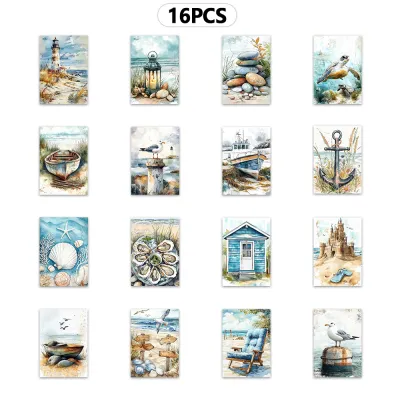
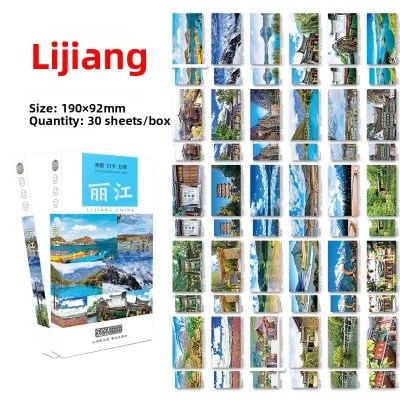

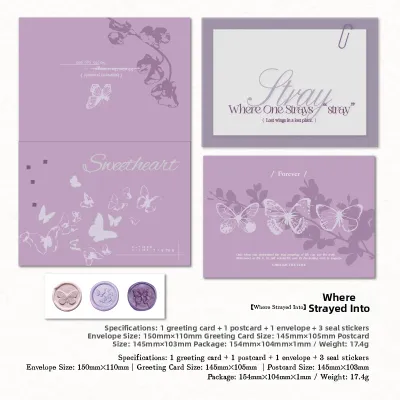
Prices are valid at publication and may change. Please refer to the product page for the latest price.
Environmental sustainability is another key consideration when evaluating paper quality. Many premium stationery brands now utilize Forest Stewardship Council (FSC) certified paper stocks, which guarantee that the wood pulp is sourced from responsibly managed forests. Recycled paper stocks are also increasingly popular, offering a unique, slightly off-white tone and a natural texture. However, recycled fibers can sometimes be more absorbent than virgin fibers, which may cause certain fountain pen inks to spread or feather more easily, making a quick pen test even more valuable.
Evaluating print quality requires a close inspection of fine details and color accuracy. Premium postcards exhibit sharp, clean lines and smooth color gradients without visible halftone dot patterns, which are often a sign of low-resolution digital printing. Check the edges of the card to ensure the printing is consistent and extends fully to the margins without leaving accidental white slivers or uneven borders. Accurate registration—where different ink layers align perfectly—is also crucial; any slight misalignment can cause images to appear blurry or out of focus.
Different printing technologies also impart distinct characteristics to the finished postcard. Offset lithography is the gold standard for large-scale commercial printing, offering unmatched color depth, sharp vector lines, and consistent reproduction of fine art. Digital printing is highly efficient for smaller, boutique runs, though lower-end digital presses can sometimes leave a slightly raised, glossy toner layer that resists certain ink types on the writing side. Risograph printing, a niche stencil-based duplicator process favored by independent artists, uses soy-based inks to produce a distinct, grainy texture with charmingly imperfect alignment, making each card a unique piece of art.
Matching the design theme of a postcard to your intended recipient or occasion enhances the personal connection of your message. Minimalist typography and clean, modern layouts are highly suited for professional correspondence or formal greetings. Whimsical hand-drawn illustrations and watercolor designs carry an organic warmth that makes them ideal for close friends and family members. For international recipients, high-resolution architectural or landscape photography provides an authentic, visually rich window into local culture and landmarks.
Top Postcard Brand Categories Available in Singapore
Museum and Cultural Institution Labels
Museum gift shops and cultural institutions in Singapore produce some of the most refined postcards available in the local market. These exclusive labels feature high-fidelity reproductions of historical artifacts, classical Southeast Asian paintings, and contemporary artworks. For instance, cards sourced from the National Gallery Singapore or the National Museum of Singapore often showcase works by pioneer local artists, detailed botanical studies from historical archives, or vintage photographs of early Singapore.

These postcards are highly prized by art enthusiasts, serious collectors, and those sending formal correspondence. Because they are designed to represent prestigious cultural institutions, they utilize premium, heavy-weight paper stocks (often 350 GSM archival-grade cardstock) with precise color calibration to match the original artworks. The printing process is carefully monitored to ensure that subtle brushstrokes, canvas textures, and delicate color gradients are faithfully preserved on the paper.
When purchasing these cards, it is wise to check current exhibition catalogs or visit the physical museum stores. Many of these designs are tied to specific, temporary exhibitions, meaning they are produced in limited runs and rotate out once the exhibition concludes. This exclusivity makes them highly collectible, but it also means that if you find a design you love, you should secure it immediately before the exhibition run ends.
Independent Local Illustrators and Stationery Studios
Singapore’s independent stationery scene is rich with local illustrators who capture the unique pulse of everyday life. These indie studios specialize in whimsical hand-drawn illustrations, colloquial typography featuring local slang, and detailed depictions of iconic culinary delights like laksa, Hainanese chicken rice, and traditional Peranakan kueh. By focusing on these culturally resonant themes, indie brands offer postcards that feel deeply personal and uniquely Singaporean.
To elevate the tactile experience, these independent brands frequently print on premium, FSC-certified textured papers, such as Tintoretto Gesso or felt-marked cardstock. These papers have a light, hammered surface that adds physical depth to watercolor or colored-pencil illustrations. This organic texture stands out dramatically from mass-produced, slick tourist postcards, making the act of receiving the card feel like opening a small, curated gift.
However, when using these highly textured or uncoated artisan papers, you must verify paper compatibility with your writing instruments. The fibrous nature of uncoated paper can absorb ink rapidly, leading to feathering or bleeding if you use broad-nib fountain pens or highly liquid water-based inks. Opt for fine-liner gel pens, archival pigment liners, or reliable ballpoints to ensure your message remains crisp and legible on the textured surface.
Heritage and Architectural Photography Brands
For those who want to showcase Singapore’s striking contrast between heritage charm and futuristic architecture, photographic postcard brands are the ideal choice. These cards capture high-resolution images of conserved shophouses in Joo Chiat, the intricate pastel facades of Koon Seng Road, the lush greenery of the Singapore Botanic Gardens, and the iconic modern skyline of the Marina Bay district. They serve as a visual testament to the city’s rapid evolution and architectural diversity.
Photographic postcards are highly popular for international mailing and travel souvenirs, as they offer a realistic, vivid window into the city-state’s landscape. The visual impact of these cards relies heavily on the quality of the print finish. High-quality photographic brands use advanced printing techniques to ensure that details in both the bright highlights of the tropical sky and the deep shadows of architectural alcoves are clearly defined without muddying.
When selecting photographic cards, look for brands that apply a protective UV gloss or semi-gloss laminate on the front image side. This coating makes the colors pop, enhances contrast, and protects the photograph from scratches and scuffs during transit. Crucially, ensure the reverse writing side remains completely uncoated or features a clean matte finish. This design choice guarantees that you can write easily with standard ballpoint or gel pens without experiencing frustrating ink smearing.
Where to Find and Buy Quality Postcards in Singapore
Physical Stationery Boutiques and Lifestyle Stores
Visiting physical boutiques in creative neighborhoods like Tiong Bahru, Bras Basah, or Haji Lane allows you to evaluate postcards firsthand. In these curated spaces, you can physically feel the exact paper weight, inspect the clean shear of the cut edges, and observe how the paper handles light reflections. This tactile inspection is invaluable for ensuring you purchase cards that meet your high standards for thickness, texture, and overall craftsmanship.
Museum Gift Shops and Cultural Centers
The gift shops attached to major cultural institutions remain the premier destinations for exclusive, art-focused postcard labels. These shops, such as the Gallery Store at the National Gallery Singapore, curate their inventory to reflect local history, fine art, and heritage. They offer high-quality prints and limited-edition exhibition cards that you cannot find in standard retail outlets, making them perfect for sourcing unique designs.
Major Bookstore Chains
Large bookstore chains, such as Books Kinokuniya at Ngee Ann City, carry a wide selection of heritage, travel, and photography postcard brands. These are typically located in dedicated local interest or stationery sections, making it convenient to browse a diverse range of local landscapes and cultural illustrations in a single visit. Bookstore chains often stock both widely distributed commercial brands and a selection of curated local indie labels.
Official Brand Websites and General Online Marketplaces
If you are looking to purchase postcards in bulk or are searching for specific, out-of-stock designs from independent illustrators, visiting their official websites or curated online marketplaces is highly effective. Buying directly from an artist’s website often supports them more directly and may grant access to exclusive web-only designs. When buying online, always check seller ratings and read customer reviews regarding packaging. Ensure the seller uses rigid cardboard mailers or stiff envelopes to prevent the postcards from bending or sustaining corner damage during transit through the postal system.
Practical Tips for Mailing and Preserving Postcards
Mailing Requirements
To ensure your postcard reaches its destination without delay, you must adhere to standard mailing guidelines. SingPost, the national postal service, has specific size and thickness limits for standard mail. A typical standard postcard should fall within the dimensions of 140mm to 240mm in length and 90mm to 162mm in width, with a thickness between 0.23mm and 2mm. Always place the postage stamp in the top-right corner of the message side, write the recipient’s address clearly on the right half, and verify the current local or international postage rates before dropping your card into a posting box.
Protection During Transit
If you are sending a particularly delicate, premium, or highly textured art postcard, consider mailing it inside a rigid cardboard envelope or a protective plastic sleeve. This extra layer of protection shields the card from the mechanical rollers of postal sorting machines, preventing unsightly scuffs, tears, or water damage during transit. While mailing a postcard in an envelope slightly alters the traditional postcard experience, it guarantees that pristine, collector-grade cards arrive in flawless condition.
Storage for Collectors
For those who collect postcards, preserving them against Singapore’s high relative humidity—which frequently exceeds 80%—is critical. Store your collection in acid-free, archival-safe polypropylene sleeves or specialized postcard albums to prevent chemical degradation, yellowing, and ink transfer. Keep storage boxes flat, store them in a cool, dry place away from external walls (which can harbor moisture), and protect them from direct sunlight to prevent the colors from fading over time. Adding a few rechargeable silica gel desiccant packs to your storage container is an excellent way to maintain a stable, low-humidity microclimate.
Frequently Asked Questions (FAQ)
What is the standard postcard size for mailing in Singapore?
Under SingPost guidelines, the standard postcard size typically corresponds to the international A6 format, which measures approximately 148mm by 105mm. To qualify for standard postage rates rather than higher parcel rates, ensure your postcard is rectangular, falls within the minimum limits of 140mm x 90mm, does not exceed the maximum limits of 240mm x 162mm, and maintains a consistent thickness of under 2mm.
Can I write on the glossy side of a photographic postcard?
Writing on a highly glossy surface with standard water-based gel pens or fountain pens is not recommended, as the ink cannot penetrate the protective laminate and will inevitably smear. If you must write on a glossy surface, use a specialized permanent fine-tip marker or an alcohol-based pen, and allow several minutes for the ink to dry completely. For a hassle-free writing experience, always select postcards that feature a raw, uncoated, or matte-finish reverse side.
Community discussion
Share your experience or ask a question. Comments are reviewed before publication.