
When shipping fragile items within or from Singapore, relying on standard household plastic cling wrap is a recipe for damaged goods. True shock protection during transit requires a deliberate combination of high-performance bubble wrap to absorb impact and industrial-grade stretch film to secure the load. While many shippers use the term “plastic wrap” interchangeably, understanding the distinction between securing films and cushioning wraps is the first step to ensuring your packages survive the rigors of modern courier networks.
To achieve the best shock protection, you must match the physical characteristics of your item with the correct material specifications. Premium brands like Sealed Air offer patented air-retention technologies that prevent cushioning from collapsing under pressure, while industrial suppliers like Pregis provide specialized heavy-duty solutions. For casual shippers and local e-commerce businesses, high-quality generic options from local Singaporean packaging distributors can also deliver outstanding protection, provided you know how to inspect their physical properties before buying.
Understanding Plastic Wrap vs. Bubble Wrap for Shock Protection
Confusion often arises in shipping when operators refer to “plastic wrap” without specifying the material class. Standard plastic wrap, legally and commercially known as stretch film or stretch wrap, is made from linear low-density polyethylene (LLDPE). Its primary engineering purpose is to hold items tightly together, unitize pallets, and protect surfaces from dust, moisture, and minor abrasions. Because stretch film is highly elastic and thin—typically ranging from 15 to 23 microns—it possesses virtually no cushioning depth and cannot absorb the kinetic energy of a drop or sudden impact.
Products mentioned in this guide
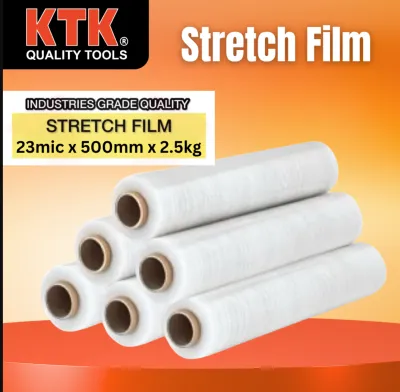
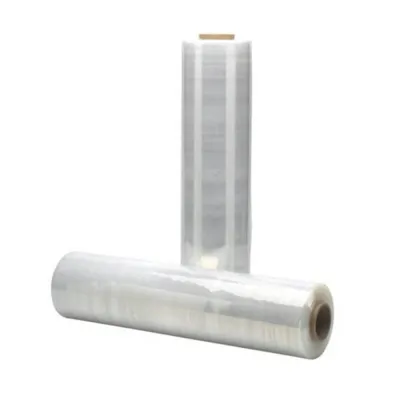
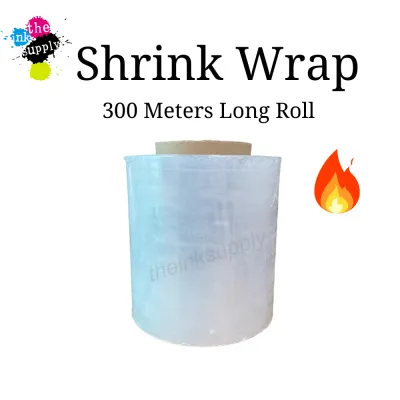
![🏅[CHEAPEST] Stretch Film/ Shrink Wrap / Cling Wrap /Pallet wrapping /Moving Supplies/pallet Wrap/Pallet wrapping](https://img.lazcdn.com/g/p/c69357eb04f4e35ac9ee2d124f108fda.jpg_400x400q80.jpg_.webp)
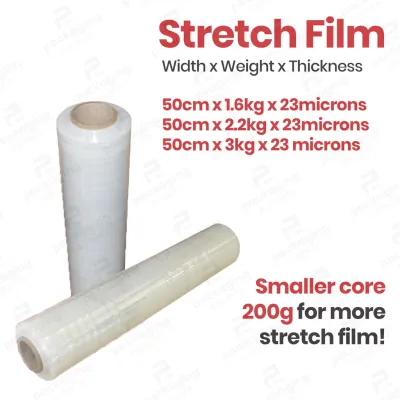
Prices are valid at publication and may change. Please refer to the product page for the latest price.
For actual shock absorption, you must look to bubble wrap or foam wrap. Bubble wrap utilizes sealed air pockets trapped between layers of low-density polyethylene (LDPE) to act as a miniature air mattress. When a package experiences a sudden deceleration—such as when a courier drops a box onto a concrete sorting floor—these air pockets compress. This compression extends the deceleration time of the fragile item inside, dramatically reducing the peak G-force transmitted to the product.
In a professional packaging system, these two materials are not competitors; they are partners. The bubble wrap or foam wrap is applied first as the primary cushioning layer, directly enveloping the fragile object to absorb external shocks. The standard plastic stretch wrap is then applied over the cushioning layer to bind it tightly to the item, preventing the bubbles from shifting, sliding, or unraveling during handling. This dual-layer system ensures that the shock-absorbing air pockets remain exactly where they are needed most throughout the delivery journey.
Key Specifications for Evaluating Cushioning Wraps
Evaluating packaging wraps requires looking past brand marketing to focus on objective, measurable specifications. Understanding these technical details allows you to verify whether a specific roll of wrap can withstand the physical demands of your shipping route.

Bubble Size and Geometry
The height and diameter of the bubbles dictate the type of protection the wrap provides. You must select the bubble size based on the weight and dimensions of your fragile item:
- Small Bubbles (approx. 10mm diameter, 4mm height): These are designed for surface protection, scratch prevention, and wrapping lightweight items such as cosmetics, small electronics, or delicate glassware. They conform easily to tight curves and complex shapes.
- Large Bubbles (approx. 25mm to 32mm diameter, 12.7mm height): These are engineered for heavy-duty cushioning, wrapping larger or heavier objects like ceramic pots, framed art, and industrial components. They also serve as excellent void fill to prevent items from shifting inside a half-empty shipping carton.
Film Thickness and Layers
The thickness of the plastic film forming the bubbles is measured in microns (µm) or mils (where 1 mil equals 25.4 microns). Standard retail-grade bubble wraps often use thin films around 30 to 40 microns, which are prone to popping under moderate loads. Industrial-grade wraps utilize films of 50 to 80 microns or more. Furthermore, premium wraps are co-extruded, meaning they consist of multiple layers of plastic fused together. This multi-layer construction significantly increases puncture resistance and prevents sharp corners on your items from piercing the air pockets.
Air Retention Technology
The primary failure point of cheap bubble wrap is “creep”—the slow diffusion of air through the plastic film when subjected to continuous pressure. Standard low-density polyethylene is naturally porous to air over time. Premium brands solve this by co-extruding a thin barrier layer of nylon or ethylene vinyl alcohol (EVOH) between the polyethylene layers. This barrier layer keeps the bubbles fully inflated even when stacked under heavy boxes in a warehouse for weeks, ensuring the shock protection does not degrade before the package reaches its destination.
Specialty Features
Depending on your product line, you may require specialized wrap features to prevent damage:
- Anti-Static Properties: Typically colored pink, these wraps contain additives that prevent the buildup of electrostatic discharge (ESD), which can destroy sensitive microchips and electronic components during friction-heavy transit.
- Perforated Rolls: Rolls pre-cut with tear lines every 300mm or 500mm dramatically increase packing speed and eliminate the need for dangerous cutting tools in high-volume packing environments.
Recommended Brands and Suppliers for Fragile Item Shipping
Finding the right balance between cost and performance depends on your shipping volume and the value of the items you are protecting. Several reputable brands and local sourcing strategies cater to the Singapore market.
Sealed Air (The Original Bubble Wrap)
As the inventor of the original Bubble Wrap brand, Sealed Air remains the global benchmark for high-performance cushioning. Their proprietary AirCap technology utilizes a co-extruded nylon barrier layer that retains air up to 100 times longer than standard non-barrier polyethylene wraps. This exceptional air retention makes Sealed Air the preferred choice for high-value fragile goods, long-distance international shipping, and items that will experience prolonged storage.
Sealed Air produces specialized product lines, including pink anti-static bubble wrap for electronics and heavy-duty grades with reinforced backing materials for sharp or heavy industrial components. Because of their premium construction, these wraps maintain their structural integrity under extreme compression, allowing you to use fewer layers to achieve the same level of protection. To ensure you are receiving genuine Sealed Air products rather than generic imitations, source your rolls through authorized packaging distributors in Singapore who can provide manufacturer specifications.
Uline and Pregis (Industrial-Grade Protection)
For e-commerce businesses and high-volume shippers who require standardized, commercial-grade packing materials, brands like Uline and Pregis offer unmatched consistency. Pregis is highly regarded for its Astro-Bubble and BubbleMask lines, which feature excellent puncture resistance and uniform bubble inflation across the entire roll. Uline provides an extensive range of bubble sizes, film thicknesses, and roll widths, making it easy to find a precise match for specific product dimensions.
When sourcing these brands in Singapore, you must factor in regional logistics. While Uline is a North American giant, many local commercial supply houses and freight forwarders import their products to meet local demand. You should verify regional shipping availability, potential import duties, and lead times when ordering. If direct importing is cost-prohibitive for your margins, look for local industrial packaging suppliers who stock regional equivalents manufactured to the same rigorous ASTM international testing standards for tensile strength and impact resistance.
Local Singapore Packaging Distributors and Generic Options
For small businesses, home-based sellers, and casual shippers, purchasing premium imported brands in bulk may not always be practical or cost-effective. Singapore has a robust ecosystem of local packaging distributors located in industrial hubs like Ubi, Jurong, Kallang, and Woodlands. These suppliers offer generic, house-brand bubble wraps and stretch films at highly competitive prices, often with same-day local delivery or self-collection options.
While generic wraps can offer excellent value, quality control can vary. You should use the following checklist to inspect unbranded rolls before committing to a large purchase:
- Bubble Firmness: Squeeze several bubbles firmly between your thumb and forefinger. They should resist popping and feel pressurized, rather than soft, squishy, or half-empty.
- Seam Integrity: Gently attempt to peel the flat backing sheet away from the bubble layer. The heat-sealed seams around each bubble should remain perfectly intact without delaminating.
- Clarity and Odor: High-quality virgin LDPE is crystal clear and virtually odorless. Avoid rolls that have a strong chemical smell or a cloudy, yellowish tint, as these are signs of poorly processed recycled plastics that may be brittle and prone to premature popping.
- Thickness Verification: If purchasing in commercial volumes, ask the distributor to verify the micron rating of the film. A standard local bubble wrap should ideally be at least 40 to 50 microns thick for general use.
Buying in bulk from local industrial distributors (typically in 100-meter rolls) is significantly more cost-effective than purchasing small, pre-cut retail sheets from stationery or hardware stores. A single bulk roll from a distributor in Ubi might cost between S$15 and S$30 depending on the width, whereas retail outlets often charge a premium for convenience packaging.
Matching Wrap Types to Specific Fragile Items
Different fragile items fail under different physical stresses. To prevent damage, you must match your choice of wrap to the specific vulnerability of the product you are shipping.
Glassware and Ceramics
Glass and ceramic items are highly susceptible to point-impact shattering and compression forces. For these items, you should use large-bubble wrap (12.7mm height) to create a thick, forgiving buffer zone around the object. Each piece must be wrapped individually to prevent glass-on-glass contact. For nested items like plates or bowls, place a layer of foam wrap or small-bubble wrap between each item, then wrap the entire stack in large-bubble wrap. For high-value glassware, combine the bubble wrap with rigid cardboard edge protectors inside the shipping box to absorb corner impacts.
Electronics and Screens
Electronics are vulnerable to physical shocks, micro-scratches, and electrostatic discharge. You must use pink anti-static small-bubble wrap for these shipments. The anti-static additive prevents the friction of transit from generating static charges that could fry sensitive internal circuitry. For screens on laptops, tablets, or monitors, wrap the device first in a layer of non-abrasive polyethylene foam wrap to protect the delicate display glass from micro-scratches, then apply the anti-static bubble wrap as the outer shock-absorbing layer.
Flat, Framed, or Oddly Shaped Items
Flat items like paintings, mirrors, or photo frames are highly vulnerable to bending forces and corner crushing. Oddly shaped items, such as metal sculptures or mechanical parts, have protruding points that can easily puncture standard packaging. For these scenarios, combine bubble wrap with rigid structural elements. Wrap the item in multiple layers of small-bubble wrap to conform to its irregular shape, then sandwich the wrapped item between two sheets of rigid double-wall corrugated cardboard or foam board. Secure the entire assembly tightly with plastic stretch wrap to prevent any internal movement.
Step-by-Step Wrapping Techniques for Maximum Shock Absorption
Even the highest-quality brand of bubble wrap will fail to protect your items if applied incorrectly. Proper wrapping technique is just as critical as the material specifications you select.
1. Orient the Bubbles Inward
There is a common debate regarding whether the bubbles should face inward toward the product or outward toward the box. For maximum shock absorption, always wrap with the bubbles facing inward. Having the air pockets contact the item directly allows them to contour around the object’s unique shape, distributing physical loads evenly across a wider surface area. The smooth, flat backing film of the wrap should face outward, providing a clean, uniform surface that resists snagging and allows you to apply packaging tape securely.
2. Apply Layering and Secure Seams
Wrap the item completely, ensuring a minimum of two full layers of bubble wrap for standard fragile items, and three to four layers for highly delicate or heavy objects. Overlap the edges of the wrap by at least 50mm to eliminate any gaps where shock could penetrate. Secure all seams with high-quality, high-tack packaging tape. When taping, apply enough tension to hold the wrap in place, but do not pull the tape so tight that you compress and flatten the air bubbles, as this destroys their ability to absorb shock.
3. Apply the Final Secure Layer
Once the cushioning layer is taped, wrap the entire bundle in industrial plastic stretch wrap (stretch film). This outer layer performs several vital functions:
- It compresses the bubble wrap layers slightly (without flattening them), locking them into a tight, cohesive protective sleeve that cannot slide off the item.
- It seals out moisture, dust, and humidity—an essential consideration in Singapore's tropical climate, where high relative humidity can soften cardboard boxes during transit.
- It prevents the tape on the bubble wrap from peeling off if the package is exposed to heat in delivery vans.
4. Provide Box Void Fill
A perfectly wrapped item can still break if it is allowed to shift, slide, or slam against the interior walls of the shipping carton. Place a layer of cushioning at the bottom of the box before inserting your wrapped item. Once the item is centered, tightly pack all remaining empty spaces with extra bubble wrap, crumpled kraft paper, or air pillows. Perform a “shake test” before sealing the box: close the flaps and gently shake the carton. If you feel or hear any movement inside, open the box and add more void fill until the contents are completely immobilized.
Frequently Asked Questions (FAQ)
Can I use standard kitchen plastic wrap for shipping fragile items?
No, you should never use kitchen plastic wrap (cling wrap) for shock protection. Kitchen wrap is engineered to be extremely thin—typically under 10 microns—and is designed solely to cling to food containers and seal in moisture. It lacks the structural thickness, tensile strength, and air-filled cushioning pockets required to absorb physical impacts. Using it on fragile items will not prevent shattering and may leave a sticky, hard-to-remove adhesive residue on your products when exposed to the warm temperatures of transit vehicles in Singapore.
How many layers of bubble wrap do I need for glass items?
For lightweight glassware, such as wine glasses or small bottles, you should apply a minimum of two complete layers of small-bubble wrap (10mm diameter). For heavier glass items, such as large vases, thick bowls, or glass tabletop panels, you should use at least two to three layers of large-bubble wrap (25mm to 32mm diameter). Always ensure that the bottom and corners of the items—which are the most common impact points—have extra reinforcement, and verify that the wrapped item cannot move inside its shipping box.
Is there an eco-friendly alternative to plastic bubble wrap?
Yes, there are several sustainable packaging alternatives available in Singapore. The most popular is honeycomb paper wrap (often sold under brand names like Geami), which expands into a three-dimensional interlocking paper web that provides excellent scratch protection and light cushioning. Other options include shredded corrugated cardboard inserts and biodegradable packing peanuts made from starch. While these paper-based alternatives are excellent for reducing plastic waste and work well for light to medium-weight items, traditional plastic bubble wrap remains the industry standard for high-moisture environments and maximum shock absorption for heavy, highly fragile goods.
Community discussion
Share your experience or ask a question. Comments are reviewed before publication.