
Selecting the ideal pencil sharpener for a primary school student in Singapore requires matching the device to your child’s physical development, classroom rules, and the specific pencils they use daily. For lower primary students (Primary 1 to 3), the best option is a compact, handheld manual sharpener equipped with a secure shavings catcher, or a small desktop suction-cup model that minimizes the coordination needed to twist a pencil. For upper primary students (Primary 4 to 6) who handle a higher volume of writing and preparation for major exams, a heavy-duty hand-crank desktop sharpener for home study and a reliable dual-hole manual sharpener for the classroom offer the best balance of speed, durability, and precision.
Starting primary school is a major transition, and the contents of a child’s pencil case play a surprisingly large role in their daily confidence. A sharpener that is difficult to use or prone to spilling can cause unnecessary stress during a lesson. By understanding the physical demands of different sharpener designs, parents can select tools that foster independence and keep school bags clean.
How to Choose the Right Pencil Sharpener for Your Child's School Needs
Fine motor skills develop rapidly during the primary school years, directly affecting how a child interacts with stationery. A seven-year-old in Primary 1 often struggles with the simultaneous dual-axis motion required by standard manual sharpeners—holding the sharpener steady with one hand while rotating a pencil with the other. This action requires wrist stability and bilateral coordination that is still maturing. By Primary 4, students generally possess the grip strength and wrist rotation necessary to operate manual tools effortlessly, meaning they can transition to more precise or mechanically complex devices.
Products mentioned in this guide
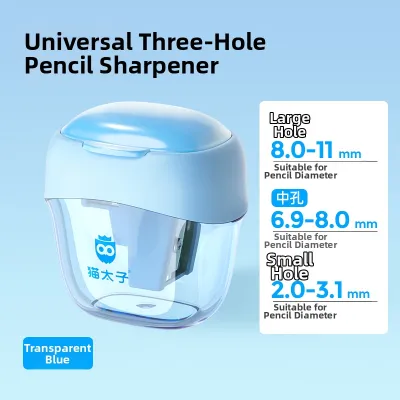
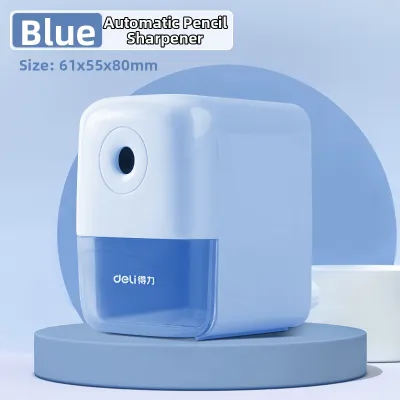

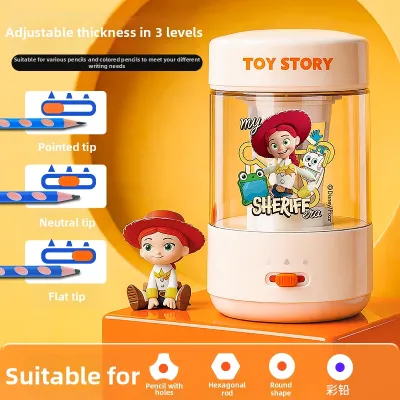
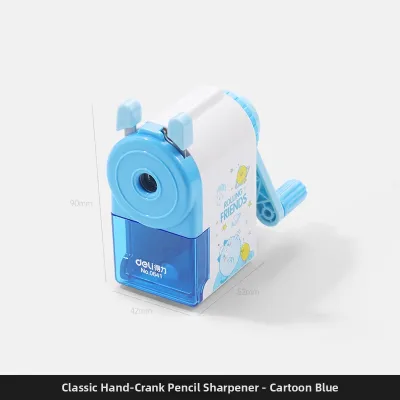
Prices are valid at publication and may change. Please refer to the product page for the latest price.
Classroom cleanliness is highly prioritized in Singapore schools. Students are expected to keep their desks and floor areas clean, making a secure shavings catcher an absolute necessity. Loose shavings can easily scatter, creating a mess and potentially staining school uniforms with graphite dust. Furthermore, classroom environments require quiet study conditions. Noisy electric or battery-operated sharpeners can disrupt lessons, and many schools explicitly restrict them in the classroom. Power outlets are also rarely accessible to students at their desks, rendering plug-in models impractical for school bag use.
The physical characteristics of the pencils themselves change across grade levels. Lower primary classrooms frequently recommend jumbo or triangular-grip wooden pencils. These thicker designs help young children establish a proper tripod grip and reduce hand fatigue. However, standard sharpeners cannot accommodate these wider diameters. As students enter upper primary, they transition to standard hexagonal or round wooden pencils, such as the 2B pencils required for optical answer sheets in examinations. Your choice of sharpener must directly align with these shifting pencil dimensions.
Best Pencil Sharpener Types for Lower Primary (Primary 1–3)
Handheld Manual Sharpeners with Shavings Catchers
For younger children, portability and simplicity are key. A handheld manual sharpener fits easily into a standard pencil case and is lightweight enough for daily transport. Ergonomic designs featuring curved, rubberized, or textured outer casings are highly beneficial. These shapes allow small hands to maintain a firm grip, reducing the likelihood of the sharpener slipping during use.

The shavings compartment must feature a reliable locking mechanism. Look for lids that snap shut firmly or slide into a locked position. If a compartment opens too easily, it can accidentally spill inside a school bag, coating textbooks and stationery in stubborn graphite powder. Retractable or covered blade openings are also vital safety features, ensuring that curious fingers cannot make direct contact with the cutting edge when searching through a pencil case.
Small Desktop or Suction-Cup Models
If your child struggles with the physical coordination of twisting a pencil while holding a tiny sharpener, a small desktop model with a suction-cup base offers an excellent alternative for home study. These devices adhere to a flat surface, allowing the child to focus entirely on inserting and turning the pencil with one hand, or turning a small crank handle with the other. This separation of tasks builds confidence and reduces frustration.
Before buying a suction-cup model, check the texture of the desk surface where it will be used. Many modern school desks and home study tables feature textured, matte, or slightly porous finishes designed to resist scratches. Suction cups require a completely smooth, non-porous surface, such as glass, polished wood, or smooth laminate, to create a vacuum seal. If the surface is textured, the suction cup will constantly lose grip, causing the sharpener to slide and defeating its primary purpose.
Best Pencil Sharpener Types for Upper Primary (Primary 4–6)
Desktop Crank (Hand-Cranked) Sharpeners
As students progress to upper primary, their writing volume increases significantly. Homework loads grow, and preparation for exams like the Primary School Leaving Examination (PSLE) demands constant pencil readiness. A hand-cranked desktop sharpener is the workhorse of home study. It utilizes a rotary helical blade assembly rather than a flat blade, which shaves the wood casing far more evenly and efficiently.
The mechanical advantage provided by the crank handle allows students to sharpen multiple pencils in seconds with minimal physical effort. Many high-quality crank models feature adjustable point settings, allowing the user to choose between a needle-sharp point for fine writing or a blunter point for shading optical answer sheets. These models also feature large shavings drawers, reducing the frequency of emptying, and are robust enough to last for years on a home study desk.
Electric and Battery-Operated Sharpeners
Electric and battery-operated sharpeners provide unmatched speed, making them highly appealing for busy upper primary students. They are particularly useful for children who do a lot of sketching, art projects, or technical drawing, where a sharp point is constantly required. Some battery-operated models are compact enough to fit in a school bag, while heavy-duty electric models plug directly into wall outlets.
However, parents must exercise caution regarding school policies. The motor noise of an electric sharpener can be highly distracting during quiet study periods or exams. Many schools in Singapore do not permit these devices in the classroom. If you decide to purchase an electric or battery-operated model, it is generally best kept as a dedicated home study tool. This keeps the classroom pencil case light and ensures compliance with school regulations.
Key Specifications to Check Before You Buy
When selecting a pencil sharpener, looking beyond the exterior design to evaluate specific technical features will ensure long-term usability and value.
Hole Diameter
A versatile sharpener should accommodate the specific tools your child uses. Standard pencils have a diameter of approximately 7mm to 8mm, while jumbo and triangular pencils can measure up to 10mm or even 12mm. Opting for a dual-hole sharpener ensures that both standard and oversized pencils can be maintained with a single tool. Ensure the entry holes are clearly defined and do not require excessive force to insert the pencil.
Blade Material
Singapore’s tropical climate is characterized by high relative humidity, which can accelerate the rusting of low-quality metal components. Look for sharpeners that utilize high-carbon steel or stainless steel blades. These materials maintain their sharp edge longer and resist corrosion. A rusted or dull blade will tear the wood casing of a pencil rather than cutting it cleanly, leading to frequent lead breakage and wasted pencils.
Shavings Container Seal
Examine the construction of the shavings reservoir. The best models feature a secure click-lock lid, a threaded screw-on cap, or a silicone-gasket seal. Avoid models where the cover simply slides off with minimal friction, as these can easily separate when jostled inside a packed school bag. A tight seal prevents fine graphite dust from escaping, keeping school bags and uniforms clean.
Base and Grip
For desktop models, a heavy base lined with non-slip rubber or silicone is essential to prevent sliding during operation. For handheld models, look for textured outer surfaces, such as ribbed plastic or rubberized side grips. These tactile features provide a secure hold, even if the child’s hands are damp or sweaty after physical education class or recess.
How to Maintain and Safely Use Pencil Sharpeners
To maintain optimal cutting performance, the shavings catcher must be emptied regularly. Allowing the reservoir to overfill forces compacted shavings back into the blade assembly. This can jam the cutting mechanism, dull the blade prematurely, and cause the pencil lead to snap inside the sharpener. Instruct your child to empty the container once it reaches about two-thirds full.
Broken pencil tips frequently get lodged between the blade and the guide cone. To clear these blockages safely, never allow your child to use their fingers, scissors, or metal pins near the blade, as this can damage the cutting edge or cause injury. Instead, gently tap the sharpener upside down over a waste bin. If the lead remains stuck, use a small, stiff-bristled brush, a toothpick, or a wooden cotton swab to gently dislodge the fragment.
Over time, all sharpener blades will dull. You can recognize a worn blade when the sharpener begins to tear or splinter the wood casing of the pencil instead of shaving off smooth, continuous spirals. Another common sign is when the graphite core repeatedly breaks during the sharpening process despite applying gentle pressure. When this occurs, it is time to replace the sharpener or, if using a high-end desktop model, install a replacement blade cartridge.
Frequently Asked Questions (FAQ)
Can my child bring an electric pencil sharpener to school in Singapore?
While policies vary slightly between institutions, most primary schools in Singapore do not permit battery-operated or electric pencil sharpeners in the classroom. The noise generated by the motor can disrupt lessons, and classroom desks lack individual power outlets. It is highly recommended to keep electric models at home for homework sessions and equip your child’s school pencil case with a quiet, compact manual sharpener.
How do I sharpen triangular or jumbo pencils without breaking the lead?
To sharpen oversized or uniquely shaped pencils successfully, always use a sharpener with a dedicated wide-diameter hole (typically 10mm to 12mm) designed specifically for jumbo pencils. When sharpening, hold the pencil firmly and apply gentle, even pressure. Rotate the pencil slowly rather than twisting the sharpener itself. This technique ensures even contact with the blade, reduces torsional stress on the thick graphite core, and prevents the lead from snapping inside the casing.
Community discussion
Share your experience or ask a question. Comments are reviewed before publication.