
When embarking on a home improvement project in Singapore, selecting the right paint brushes for wall painting is just as critical as choosing the paint color itself. A high-quality brush not only ensures a smooth, professional finish but also saves time by holding more paint and minimizing unsightly brush marks. Whether you are refreshing a single accent wall in a 4-room HDB flat or repainting an entire condominium, understanding the nuances of brush design, bristle composition, and size will help you achieve flawless results.
For most interior wall painting projects in Singapore, the ideal setup consists of a combination of two primary brush types: a high-quality angled sash brush for precise edge work and a wide flat brush for broader coverage in tight spaces. While paint rollers handle the vast majority of large, flat wall surfaces, brushes are indispensable for “cutting in” along ceilings, skirting boards, and corners. Investing in the correct brush profiles ensures clean lines and prevents paint from bleeding onto adjacent surfaces.
Key Factors for Choosing Paint Brushes for Wall Projects
Selecting the perfect paint brush requires looking beyond the price tag and evaluating the tool’s physical characteristics. The shape of the brush head dictates how much control you have over the paint flow. Angled brushes, often referred to as sash brushes, feature bristles cut at a slant, which aligns naturally with the angle of your hand when drawing a line. This design provides exceptional precision for cutting in along borders. Flat brushes, on the other hand, have a square-cut tip designed to hold a large volume of paint and apply it evenly over flat, open surfaces where a roller might be too cumbersome.
Products mentioned in this guide
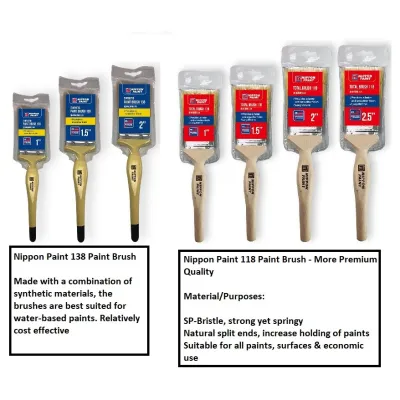
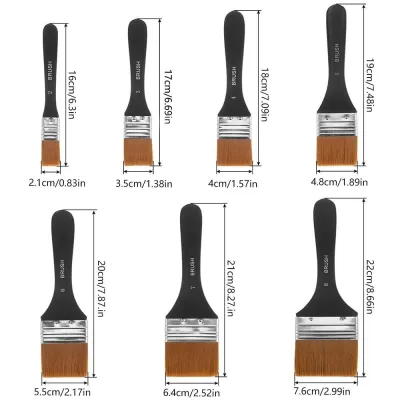
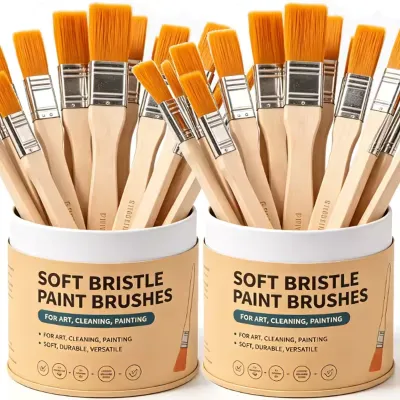
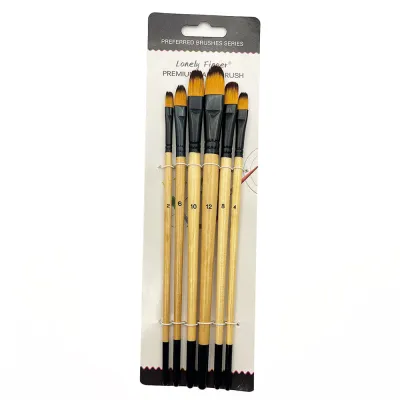
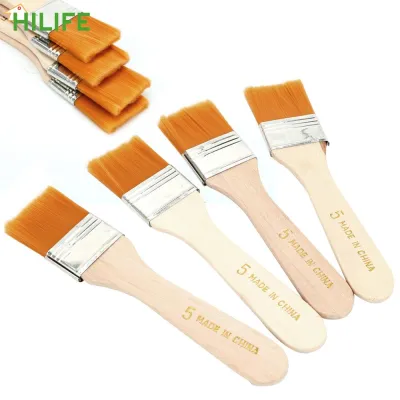
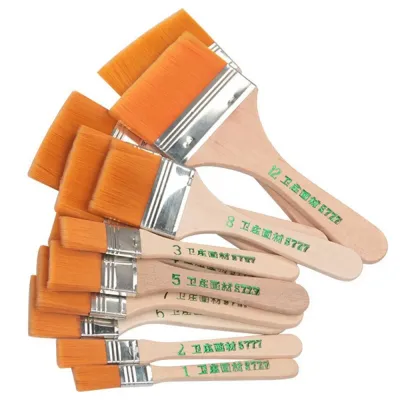
Prices are valid at publication and may change. Please refer to the product page for the latest price.
Brush size is another critical dimension that directly impacts your painting efficiency and comfort. For general wall painting, brushes ranging from 2 inches to 4 inches in width are the standard. While a 4-inch brush covers more surface area quickly, it can become incredibly heavy and difficult to control when fully loaded with paint, especially for beginners. A 2-inch or 2.5-inch brush offers the most balanced weight-to-control ratio, making it the preferred choice for detailed edge work and smaller wall sections.
Ergonomics play a vital role in preventing hand fatigue during extended painting sessions. Look for handles designed to fit comfortably in your hand over several hours. Beaver tail handles are thick and rounded, fitting snugly in the palm for pushing paint over broad areas. Pencil handles are thin and round, allowing you to hold the brush like a pen for delicate, high-precision work. Rattail handles are long and slender, providing excellent balance for steadying your hand during long, continuous strokes along ceilings.
Before purchasing any brush at your local neighborhood hardware store or home improvement center, always check the product packaging for its intended use. Manufacturers explicitly label brushes for “interior” or “exterior” applications, as well as the compatible paint types, such as “water-based,” “acrylic,” or “oil-based.” Matching the brush design to your specific paint formula prevents premature wear of the bristles and ensures the paint releases smoothly onto the wall.
Top Paint Brush Recommendations for Wall Painting
To help you navigate the vast array of options available in Singapore’s hardware shops and online marketplaces, we have curated the top paint brush profiles based on specific painting tasks and user requirements. Focusing on these profiles will ensure you select a tool engineered for your exact project needs.

Best Angled Brush Profile for Cutting In and Edges
For painting straight lines along ceilings, baseboards, and corners, nothing outperforms a 2-inch or 2.5-inch angled sash brush. The slanted bristle design allows you to guide the tip of the brush precisely along a pencil line or masking tape, creating a sharp, clean boundary. This profile is essential for the “cutting in” phase of painting, which must be completed before rolling the main wall sections.
When evaluating an angled sash brush, look for synthetic bristles with tapered tips. Tapered filaments are thicker at the base and thinner at the point, allowing the brush to hold its shape under pressure while releasing paint in a controlled, uniform stream. This prevents the paint from pooling or dripping as you navigate tight corners.
Before purchasing a brush in-store, perform a quick flexibility and spring-back test. Press the bristles gently against a flat surface or the palm of your hand to bend them slightly, then release. A high-quality brush will bend smoothly without splaying and immediately spring back to its original, tight shape. If the bristles remain bent or spread apart, the brush lacks the structural integrity needed for precise edge work.
Best Wide Flat Brush for Large Wall Areas
When you need to paint smaller wall sections, alcoves, or areas behind permanent fixtures where a paint roller cannot fit, a 3-inch or 4-inch wide flat wall brush is the ideal tool. This profile features a thick, square-cut bristle head designed to hold a substantial volume of paint, allowing you to cover flat areas efficiently with fewer trips to the paint tray.
For these larger applications, prioritize brushes made with high-capacity synthetic filaments. These filaments are engineered with microscopic textures or hollow cores that cling to the paint, preventing drips while ensuring a consistent release across the wall. High-quality synthetic blends also resist shedding, ensuring you do not have to pick loose bristles out of your wet paint.
To achieve a seamless finish with a wide flat brush, it is crucial to maintain a “wet edge.” This technique involves always brushing from dry areas back into the freshly applied, wet paint. In Singapore’s warm climate, paint can dry rapidly on the surface; maintaining a wet edge prevents visible lap marks and ensures the paint film cures into a single, uniform layer.
Best Value Brush for Quick Touch-Ups and Minor Repairs
For homeowners looking to fix minor scuffs, cover small patches after repairing drywall, or touch up paint in rental HDB flats, a budget-friendly utility brush is a practical choice. These brushes are highly accessible and offer decent performance for small, non-critical tasks without a significant financial investment.
A good value brush typically features basic synthetic bristles secured by a standard stainless steel ferrule, attached to a simple wooden or plastic handle. While they may not offer the ultra-smooth finish of premium models, they provide adequate paint pickup and coverage for quick repairs. Look for budget options that still boast decent bristle retention to avoid excessive shedding.
The primary trade-offs of budget brushes compared to premium alternatives include a slightly higher tendency to leave visible brush marks and a shorter overall lifespan. The bristles may lose their shape or begin to splay after a few uses and washes. However, for a one-off touch-up project, these trade-offs are often acceptable.
You can easily find these value brushes in almost any neighborhood hardware shop in Singapore, often located in the heartlands of estates like Ang Mo Kio, Toa Payoh, or Bedok. They are also widely available in multi-packs on local ecommerce platforms, making them an affordable addition to any household tool kit.
Best High-Density Brush for Smooth, Professional Finishes
If your goal is to achieve a flawless, near-spray-like finish on your walls, doors, or decorative trims, investing in a premium high-density brush is essential. These professional-grade tools are engineered to eliminate visible brush strokes, leaving behind a perfectly smooth, uniform paint film that elevates the overall look of your home.
The secret to a professional finish lies in the use of high-density, ultra-fine synthetic filaments. These bristles are packed tightly within the ferrule, allowing the brush to hold a massive amount of paint while applying it with minimal friction. The softness of the tips ensures that the paint flows together seamlessly as it is laid down, self-leveling before it dries.
When shopping for a premium brush, look for labels indicating “professional grade” and inspect the bristle tips closely. High-quality brushes feature “flagged” or split ends, where each individual filament is split into multiple fine tips. This design increases the surface area of the brush head, allowing it to hold more paint and release it with unparalleled smoothness.
While premium brushes carry a higher upfront cost, they represent an excellent long-term investment. When properly cleaned and maintained, a professional-grade brush can last for dozens of projects over several years, maintaining its shape, flexibility, and performance far better than any budget alternative.
Brush Bristle Materials: Matching the Brush to Your Paint
Understanding the relationship between brush bristle materials and the type of paint you are using is crucial for a successful paint job. Using the wrong combination can ruin your brush, make paint application incredibly difficult, and result in a poor, uneven finish on your walls.
Synthetic bristles, typically made from nylon, polyester, or a blend of both, are mandatory for water-based and latex paints. Water-based acrylic emulsions are the standard for almost all interior walls in Singapore due to their low odor, quick drying times, and ease of cleanup. Synthetic filaments do not absorb water, meaning they maintain their stiffness, shape, and flexibility throughout the painting process, ensuring consistent paint delivery.
- Nylon Filaments: Extremely durable and exceptionally smooth, making them excellent for achieving a stroke-free finish. However, pure nylon can soften in very warm or humid conditions, which can slightly reduce control.
- Polyester Filaments: Stiffer than nylon, polyester maintains its structural integrity and shape even in high humidity or warm temperatures. It does not absorb water, ensuring the brush remains firm.
- Nylon-Polyester Blends: The gold standard for interior wall painting. This blend combines the durability and smoothness of nylon with the stiffness and shape retention of polyester, offering the perfect balance for Singapore's tropical climate.
Natural bristles, usually crafted from animal hair such as hog bristle, should be reserved strictly for oil-based paints, varnishes, lacquers, and polyurethane coatings. Natural bristles possess a unique structure with microscopic pores that hold oil-based paints beautifully. However, they must never be used with water-based paints. Because natural hair is highly absorbent, it will soak up the water from the paint, causing the bristles to swell, become limp, and lose all structural shape, rendering the brush useless.
To ensure a successful project, use this quick checklist to verify compatibility before you begin painting:
- Step 1: Check the paint can label to determine if the formula is water-based (acrylic, emulsion, latex) or solvent-based (oil-based, alkyd).
- Step 2: Read the brush packaging to confirm the bristle material (synthetic nylon/polyester vs. natural hog bristle).
- Step 3: Match the brush to the paint—use synthetic brushes for water-based wall paints, and natural brushes for oil-based wood or metal trims.
Cleaning and Maintaining Your Paint Brushes
Proper cleaning and maintenance are essential to protect your investment and ensure your paint brushes remain in peak condition for future projects. Failing to clean a brush thoroughly allows paint to dry near the ferrule, which permanently splays the bristles and ruins the brush’s shape.
For water-based paints, which are the most common for Singapore interior walls, follow this step-by-step cleaning process immediately after you finish painting:
- Scrape Excess Paint: Wipe as much excess paint as possible from the brush onto the rim of the paint can, then paint a scrap piece of cardboard until the brush is relatively dry.
- Rinse in Lukewarm Water: Hold the brush under running lukewarm water, massaging the bristles gently with your fingers to work the paint out. Avoid using hot water, as it can soften the glue inside the ferrule.
- Apply Mild Soap: Apply a small amount of mild dish soap or specialized brush cleaner to the bristles. Work the soap into a lather, paying close attention to the "heel" of the brush near the metal ferrule where paint tends to accumulate.
- Rinse Thoroughly: Rinse the brush under running water until the water runs completely clear and no soap residue remains.
- Comb and Reshape: Use a metal brush comb to gently straighten the bristles and remove any stubborn paint flecks. Shake the brush vigorously to remove excess water, then reshape the bristles into their original profile using your fingers.
Once cleaned, proper drying and storage are critical, especially in Singapore’s highly humid climate. High humidity can trap moisture within the brush head, leading to mold growth on wooden handles and natural bristles, or causing the metal ferrule to rust.
Always dry your brushes by laying them flat on a clean towel or hanging them upside down by the hole in the handle. Never dry a brush standing upright on its bristles; water will run down into the ferrule, dissolving the adhesive that holds the bristles in place and causing the wooden handle to swell and rot. Once completely dry, store the brush in its original cardboard keeper (shuck) or wrap it in heavy paper to keep the bristles straight and dust-free.
If you are dealing with unknown paint residues or oil-based paints, always check the paint manufacturer’s instructions on the can for the specific solvent required for cleanup, such as mineral spirits or turpentine. Always handle solvents in a well-ventilated area and dispose of them according to local environmental regulations.
Frequently Asked Questions (FAQ)
Can I use the same brush for walls and trim?
While you can technically use a single mid-sized brush, such as a 2.5-inch angled sash brush, for both walls and trim, it represents a compromise in efficiency and finish quality. A 2.5-inch angled brush is versatile enough to handle detailed trim work and cut in along wall edges, but it is too small to paint larger wall sections efficiently. For the best results, use a dedicated 1.5-inch or 2-inch angled brush for precise trim work, and a larger flat brush or roller for the main wall surfaces.
How do I prevent brush marks on my walls?
To minimize visible brush marks, start by choosing a high-quality brush with high-density, flagged synthetic bristles. Avoid overloading the brush with paint; dip only the bottom third of the bristles into the paint can and tap off the excess. Apply the paint in smooth, even strokes, maintaining a wet edge to prevent overlapping dry areas. If the paint is drying too quickly in Singapore’s warm climate, consult the paint manufacturer’s instructions regarding the use of a compatible paint conditioner to improve flow and self-leveling.
Where can I buy quality paint brushes in Singapore?
Quality paint brushes are widely available across Singapore through several reliable channels. For immediate purchases and expert advice, visit local neighborhood hardware shops or dedicated paint dealer stores representing major brands. Large home improvement centers offer a broad selection of both DIY and professional-grade tools. If you are looking for specific premium imported brands, general online marketplaces are excellent options; always verify seller ratings, customer reviews, and product authenticity before purchasing.
Community discussion
Share your experience or ask a question. Comments are reviewed before publication.