
Finding the perfect note pad for your writing instruments is a balancing act between ink chemistry and paper engineering. If you write with fountain pens or gel pens, there is no single brand that fits every scenario. Instead, the ideal choice depends entirely on your specific writing habits, drying-speed preferences, and the visual effects you want to achieve from your ink. In Singapore, where high relative humidity can significantly slow down drying times, selecting a compatible paper is even more critical to avoid smudged notes and ruined pages.
To guide your decision, we can divide the stationery landscape into a simple framework based on paper treatment and construction:
- Choose highly sized or coated papers (such as Clairefontaine or Rhodia) if you want to eliminate feathering and showcase vibrant ink shading or sheen, and do not mind waiting longer for the ink to dry.
- Choose specialty or high-density uncoated papers (such as Midori MD or Tomoe River) if you prefer a tactile, toothy feel and need a balance that accommodates quick-drying gel pens alongside fountain pens.
- Avoid standard low-GSM uncoated notepads (such as basic Moleskine or standard recycled pads) if you use heavy, wet inks or broad gel pens, as they are highly prone to bleed-through and feathering.
Understanding Paper Traits: Bleed-Through, Feathering, and Ghosting
To choose the right paper, you must first understand how ink behaves when it meets paper fibers. Three main phenomena dictate this interaction: bleed-through, feathering, and ghosting. Bleed-through occurs when ink penetrates entirely through the sheet, showing up as wet spots on the reverse side and rendering the back of the page unusable. Feathering happens when ink spreads horizontally along the paper fibers like a spiderweb, turning crisp lines into fuzzy, illegible marks. Ghosting, or show-through, is when a shadow of the writing is visible on the back of the page, even though the ink has not physically broken through the paper surface.
Products mentioned in this guide
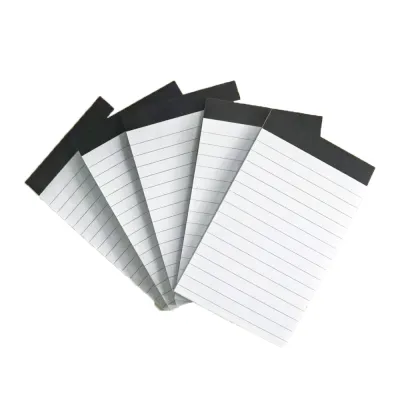
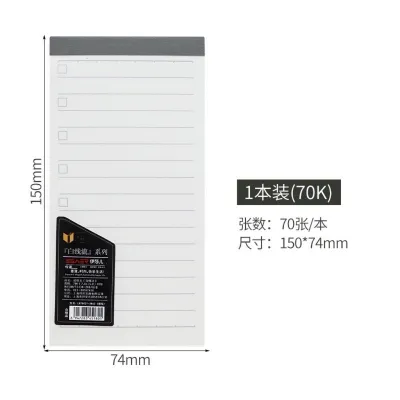
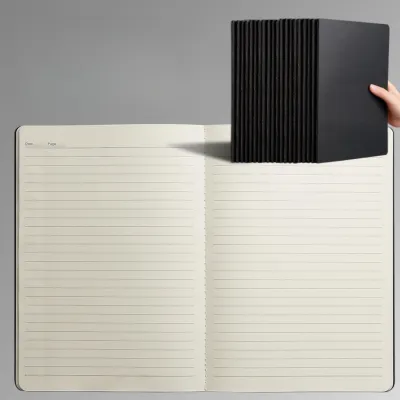
Prices are valid at publication and may change. Please refer to the product page for the latest price.
The primary defense against bleed-through and feathering is “sizing.” Sizing refers to chemical treatments applied either during the papermaking process (internal sizing) or onto the finished surface (surface sizing). Sizing controls the paper’s absorbency. Unsized paper, like blotting paper or cheap newsprint, acts like a sponge, pulling ink in every direction. Highly sized paper resists liquid, forcing the ink to sit on top of the page and dry via evaporation rather than absorption. This surface pool allows the ink to dry in its purest form, preserving the crispness of your writing.
There is a common misconception that heavier paper weight, measured in grams per square meter (GSM), automatically guarantees high performance. While a thick 120 GSM page is less likely to show ghosting, it can still feather terribly if it lacks proper surface sizing. Conversely, thin specialty papers like Tomoe River (often 52 GSM or 68 GSM) can handle incredibly wet fountain pen inks without a single speck of bleed-through because of their dense fiber structure and specialized surface coatings. Therefore, when evaluating a note pad, paper density and treatment are far more important than sheer thickness.
Gel pen inks present a unique challenge. Unlike highly fluid, water-based fountain pen inks, gel inks use a water-based suspension of pigments or dyes within a gelled polymer. They flow smoothly from a rollerball tip (typically ranging from 0.3mm to 1.0mm) but require a delicate balance of absorption and surface smoothness. If a paper is too coated, the gel ink will pool and smudge easily under your hand; if it is too porous, the line will widen and lose its sharp edge. Understanding these physical dynamics helps you select a brand that matches your specific writing tools.
Comparing Popular Notepad Brands by Paper Type
When evaluating different brands, it is helpful to look past marketing labels and categorize them by their physical paper treatments. Different brands employ distinct manufacturing techniques, and even within a single brand, paper specifications can vary across product lines. Understanding these categories allows you to predict how your favorite pen will perform before you even touch the nib to the page.

Highly Sized and Coated Papers (e.g., Clairefontaine, Rhodia)
French manufacturers Clairefontaine and Rhodia (which uses Clairefontaine paper) are famous for their ultra-smooth, satin-finish papers, typically ranging from 80 GSM to 90 GSM. These papers undergo heavy surface sizing, creating a barrier that prevents ink from penetrating the fibers. When you write on these surfaces, the ink pools slightly before drying, which brings out the natural shading (color variations) and sheen (metallic reflections) of premium fountain pen inks. The nib glides effortlessly across the page, providing a luxurious, low-friction writing experience.
However, this resistance to absorption comes with a significant trade-off: drying time. Because the ink must dry primarily through evaporation, wet fountain pen inks and high-flow gel pens can take up to a minute or more to dry completely. In Singapore’s humid climate, this drying time can extend even further, making these papers highly susceptible to accidental smudging. If you are a left-handed writer who overwrites, or if you need to close your notebook quickly after taking rapid notes, this slippery, slow-drying surface can be frustrating.
Ultimately, these highly sized papers are best suited for fine to broad nib fountain pens, calligraphy practice, and writers who prioritize ink aesthetics and smooth, feedback-free gliding over fast-paced note-taking. They are widely available in various binding styles, including staple-bound pads, wirebound notebooks, and hardcovers, making them highly versatile for desk use.
Specialty and High-GSM Uncoated Papers (e.g., Midori MD, Tomoe River)
Japanese stationery brands have mastered the art of creating papers that offer exceptional ink resistance while maintaining a distinct tactile feel. Midori MD paper is famous for its slight “tooth” or feedback, giving you the sensation of the pen touching the page without feeling scratchy. It handles both gel pens and fountain pens beautifully, offering a faster-drying experience while remaining highly resistant to feathering and bleed-through. The paper has a warm, cream tone that is easy on the eyes during long writing sessions.
Tomoe River paper represents another peak of paper engineering. Despite being incredibly thin and lightweight, it uses highly refined synthetic and wood pulp fibers that are densely packed and coated. This allows the paper to show off spectacular ink sheen and shading without bleeding, though it does result in significant ghosting. You will easily see the shadow of your writing on the other side of a Tomoe River page, which some writers find charmingly classic, while others find it distracting.
The main trade-offs for these premium Japanese papers are their premium price tag—often costing between S$15 and S$40 depending on the binding and size—and the noticeable ghosting on thinner variants. They are best for dedicated journalers, fountain pen enthusiasts who appreciate feedback, and those who use a mix of fountain pens and quick-drying gel pens.
Standard Uncoated and Recycled Papers (e.g., Moleskine, Leuchtturm1917, Kraft papers)
Many widely available, mass-market notebooks fall into the standard uncoated category. Brands like Moleskine and Leuchtturm1917 are highly popular for their classic designs, durable bindings, and convenient layouts. However, their standard paper stock (typically 70 GSM to 80 GSM) is designed primarily for ballpoint pens and dry gel pens. Because these papers have minimal surface sizing, they are highly absorbent and have a noticeable tooth.
If you use a wet fountain pen or a broad gel pen (such as a 0.7mm or 1.0mm tip) on standard Moleskine paper, you will likely experience severe feathering and bleed-through. Leuchtturm1917 performs slightly better due to its “ink-proof” treatment, but it still struggles with very wet ink formulations, showing significant ghosting and occasional bleed. The benefit of these absorbent papers is their incredibly fast drying time, which is highly convenient for quick, on-the-go jotting.
If you love these brands’ designs, check if they offer specialized lines. For instance, Leuchtturm1917 offers a 120 GSM edition specifically designed to handle wetter inks. Otherwise, standard uncoated and recycled papers are best reserved for dry fountain pens (such as Japanese extra-fine nibs), standard ballpoints, or light, fine-tipped gel pens.
How to Test and Choose the Right Note Pad for Your Pens
Selecting the perfect note pad requires matching your specific pen and ink combination to the paper’s properties. While manufacturer terms like “fountain pen friendly” or “ink proof” are helpful indicators, they are not universal guarantees. An ink that behaves perfectly in a fine nib might bleed through the same page when used in a broad, wet stub nib.
To avoid ruining an expensive notebook, develop a systematic testing routine when trying a new brand. Start by purchasing a smaller memo pad or an A6 pocket notepad from the brand to test the paper before investing in a larger, premium journal. Once you have the paper, dedicate the very last page to a comprehensive ink swatch test:
- Draw a grid of small squares using your various writing instruments, labeling each with the specific pen model, nib size, and ink brand.
- Write a short sentence with each pen to test the tactile feedback and check for immediate feathering.
- Draw a small, saturated ink swab or a thick crosshatch pattern to test how the paper handles heavy, pooled ink.
- Note the drying time by gently touching the ink at 5-second intervals.
- Leave the page open to dry completely, and inspect the reverse side after 24 hours to evaluate ghosting and bleed-through.
Remember that ink formulation plays a massive role in performance. Heavily saturated inks, shimmering inks, and slow-drying pigment-based gel inks will challenge even the highest quality papers. If you experience minor feathering, you do not always need to discard your notepad; sometimes, simply switching to a drier ink or a finer pen tip can completely resolve the issue.
If you are using your stationery in Singapore, keep your notebooks stored away from high-humidity areas, as excess moisture in the air can slowly penetrate the paper fibers over time, increasing its absorbency and making it more prone to feathering. Storing your active notebooks in a drawer with a small silica gel packet can help maintain the paper’s original sizing and performance characteristics.
Frequently Asked Questions (FAQ)
Does higher GSM always mean better paper for fountain pens?
No. GSM (grams per square meter) measures only the weight and thickness of the paper, not its ink resistance. A thick, unsized 120 GSM sketch paper can feather and bleed worse than a highly sized, dense 52 GSM Tomoe River paper. Sizing, fiber density, and surface coatings are the critical factors that prevent ink from penetrating the sheet.
Why do my gel pens smudge on premium fountain pen notepads?
Premium fountain pen papers are heavily sized or coated to keep ink on the surface, which enhances shading and prevents bleeding. Because gel ink is water-based and thicker than fountain pen ink, it cannot penetrate this coated barrier easily. The ink is forced to dry purely through evaporation, which significantly extends drying times and leads to smudging.
Can I use both fountain pens and gel pens in the same notepad?
Yes, but you should look for a balanced, mid-weight paper. Uncoated Japanese papers like Midori MD or slightly toothier premium sheets offer the ideal compromise. They provide enough surface resistance to prevent fountain pen ink from feathering, while maintaining enough natural absorbency to let gel pen inks dry quickly without excessive smudging.
Community discussion
Share your experience or ask a question. Comments are reviewed before publication.