
Finding the ideal notebook for everyday note taking is a highly personal journey that depends heavily on the tools you use and your physical writing environment. In Singapore’s tropical climate, ambient humidity can quietly influence how paper behaves, as cellulose fibers naturally absorb moisture from the air, softening the paper structure and slowing down ink drying times. Consequently, a notebook that performs flawlessly in a dry climate might feather or smudge when used locally.
There is no single, universally “best” paper for every writer. The ideal choice depends entirely on your preferred pen type, ink formulation, and note-taking style. For instance, smooth, coated papers are typically best for fountain pens because they resist ink absorption and prevent feathering. Conversely, slightly textured, uncoated papers excel with pencils and gel pens by providing tactile feedback and speeding up drying times. For those who use heavy markers, highlighters, or artistic media, ultra-thick papers (120+ GSM) are necessary to prevent ink from bleeding through to the next page.
This guide provides a conditional framework to help you evaluate paper specifications and identify the exact notebook brand that aligns with your daily note-taking habits.
Products mentioned in this guide
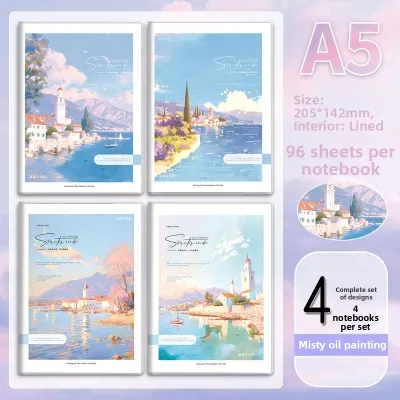
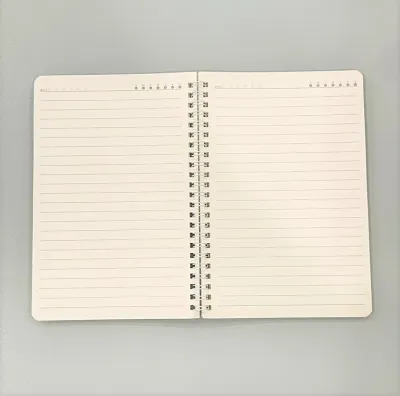
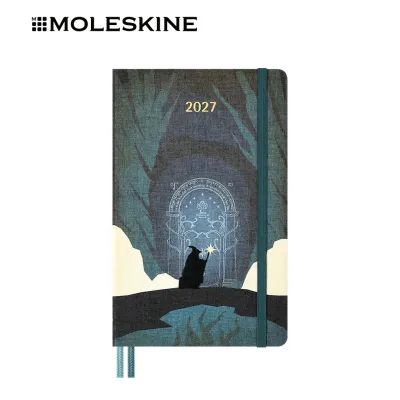
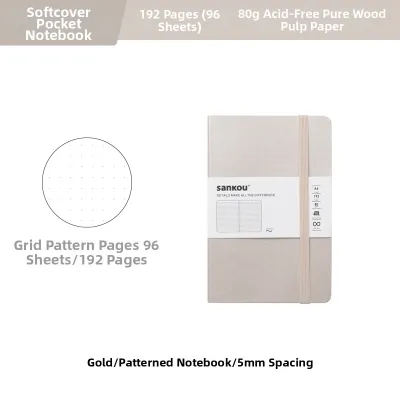
Prices are valid at publication and may change. Please refer to the product page for the latest price.
Key Dimensions for Evaluating Notebook Paper Quality
Understanding the technical specifications of paper allows you to predict how a notebook will perform before your pen ever touches the page. Rather than relying on vague marketing terms, you can look for specific structural characteristics on product labels or manufacturer specifications.
Paper Weight (GSM)
Grams per Square Meter, or GSM, measures the weight and thickness of the paper. Standard office copy paper typically ranges from 70 to 80 GSM, which is functional for basic ballpoint pens but prone to ghosting and bleed-through with wetter inks. Premium notebook paper generally starts at 80 GSM and can go up to 160 GSM or more. While higher GSM reduces “ghosting” (the shadow of writing visible on the reverse side of a page) and “bleed-through” (ink fully penetrating the paper fibers), it also makes the notebook heavier and bulkier.
Coating and Sizing
Sizing refers to chemical treatments applied during manufacturing to regulate how paper absorbs liquid. Internal sizing is mixed directly into the paper pulp, while external sizing is applied to the dried surface. Heavily sized or clay-coated papers, such as those with a satin finish, keep ink on the surface rather than letting it soak in. This prevents “feathering,” where ink spreads out along the paper fibers like a spiderweb. Unsized or lightly sized papers absorb liquid rapidly, which speeds up drying times but can cause lines to look fuzzy and bleed through the sheet.
Tooth and Texture
The micro-texture of a paper’s surface is known as its “tooth.” Paper with a high amount of tooth feels slightly rough or textured to the touch. This texture provides physical resistance, giving you more control over your pen or pencil stroke. Ultra-smooth, low-tooth papers feel incredibly slick, allowing pens to glide effortlessly across the surface. However, some writers find ultra-smooth paper slippery, which can lead to hand fatigue if you have to grip your pen tighter to maintain control.
Paper Color
Notebook paper generally comes in three main shades: bright white, off-white, and cream. Bright white paper provides high contrast, making dark inks and vibrant colors pop off the page. However, bright white can reflect a significant amount of light, leading to eye strain during long note-taking sessions under bright office or study lights. Cream and off-white tones are much gentler on the eyes, though they can slightly alter the appearance of colored inks, turning bright blues into subtle teal shades.
Archival Quality
If you intend to preserve your notes for years, check the product specifications for “acid-free” or “pH-neutral” labels. Standard wood-pulp paper naturally contains lignin, an organic polymer that produces acid as it breaks down, causing the paper to turn yellow, brittle, and degrade over time. Acid-free paper is chemically treated to neutralize these acids, ensuring your written records remain intact and legible for decades.
Popular Notebook Brands for Everyday Note Taking Compared
Selecting the right notebook requires balancing paper performance with structural design and local availability. Below is an analysis of how major notebook brands compare in their paper characteristics and daily usability.

Moleskine
Moleskine is one of the most widely recognized notebook brands globally, famous for its classic aesthetic, rounded corners, elastic closure band, and expandable inner pocket. Its standard notebooks feature ivory-colored paper that is highly portable and aesthetically pleasing. However, the standard paper is relatively thin, typically measuring around 70 GSM.
This thinness makes standard Moleskine paper prone to significant ghosting and bleed-through when used with wet writing instruments, such as fountain pens, rollerballs, or heavy gel pens. If you primarily write with dry ballpoint pens or light graphite pencils, the standard paper is perfectly adequate. For those who prefer liquid inks, it is highly recommended to look for Moleskine’s specialized “Art Collection” or thicker paper variants, and to always verify the GSM on the specific product packaging before purchasing.
Leuchtturm1917
Leuchtturm1917 has built a strong reputation among students and professionals for its highly structured design, which includes numbered pages, a blank table of contents, and dual page markers. Its standard notebooks feature 80 GSM, slightly textured, cream-colored paper that offers a balanced writing experience.
The paper handles most everyday gel pens, fine-liners, and rollerballs exceptionally well. While it is generally considered fountain-pen friendly because the sizing prevents ink from feathering, the 80 GSM weight does allow for moderate ghosting on the reverse side of the page. If you dislike seeing the shadow of your previous notes, Leuchtturm1917 offers a “120g Edition” that features thicker 120 GSM paper, combining their classic structured layout with superior opacity. Always verify the specific product line, as paper formulations can vary between their hardcovers, softcovers, and specialized editions.
Rhodia and Clairefontaine
Rhodia and Clairefontaine are sister brands manufactured in France, renowned for producing some of the smoothest paper in the stationery world. Clairefontaine actually manufactures the paper used in both brands, typically featuring 80 GSM or 90 GSM brushed vellum (vélouté) paper.
This paper is highly coated and exceptionally smooth, making it the gold standard for fountain pen users. The specialized surface coating prevents ink from soaking into the fibers, which completely eliminates feathering and bleed-through while allowing fountain pen inks to display their unique shading and sheen properties. However, this slick surface lacks “tooth,” making it less ideal for pencil users who need friction to transfer graphite. Additionally, because the ink must dry via evaporation rather than absorption, drying times are noticeably longer, which can lead to smudging in high-humidity environments.
Midori MD
Midori MD notebooks embrace a minimalist Japanese aesthetic, focusing entirely on the quality of the paper itself. These notebooks are often sold without a heavy cover, featuring an exposed, thread-stitched spine wrapped in a simple cheesecloth mesh that allows the notebook to lie completely flat (180 degrees) on any writing surface.
The paper is uncoated but highly compressed and treated, resulting in a distinct, cream-colored surface with a pleasant tactile “tooth.” It provides excellent feedback for pencils, fountain pens, and gel pens alike, giving the writer a highly sensory and controlled writing experience. Midori MD paper is exceptionally resistant to feathering and bleed-through, even with wet inks, despite not being overly thick. It is optimized for the physical feel of writing rather than extreme thickness, making it a favorite for those who appreciate the craft of handwriting.
Thick-Paper and Bullet Journal Brands (e.g., Archer & Olive, Dingbats)
The rise of bullet journaling has popularized a category of notebooks featuring ultra-thick paper, ranging from 120 GSM (such as Dingbats) to 160 GSM (such as Archer & Olive). These notebooks are specifically designed to handle heavy creative layouts, mixed media, and artistic note-taking.
The primary benefit of 120 to 160+ GSM paper is its near-total opacity. You can write with heavy water-based markers, brush pens, highlighters, and even light watercolor washes without experiencing any ghosting or bleed-through on the other side of the page. The trade-off for this performance is practical portability: these notebooks are significantly heavier, bulkier, and contain fewer pages (often 112 to 160 pages) compared to standard notebooks of the same spine thickness. Furthermore, the thick paper puts physical stress on the binding over time, so it is crucial to check for high-quality, thread-bound construction to ensure the pages do not detach with heavy use.
How to Match Notebook Paper to Your Pen and Note-Taking Style
To avoid frustrating smudges, bleeding, or hand fatigue, you should match your notebook’s paper characteristics directly to your preferred writing tools.
Fountain Pens
Fountain pens deposit a relatively large volume of liquid, water-based ink onto the page. To prevent this ink from spreading out (feathering) or soaking through to the next page (bleeding), you require heavily sized, coated paper. Ultra-smooth surfaces, like those found in Rhodia and Clairefontaine notebooks, are ideal because they allow the metal nib of the pen to glide effortlessly without catching on loose paper fibers.
Gel and Rollerball Pens
Gel and rollerball pens use liquid or gel-based inks that flow quickly but dry slower than oil-based ballpoint inks. For fast note-taking, you need paper that offers a balance of sizing and absorbency. Slightly textured or uncoated papers, such as Leuchtturm1917 or Midori MD, are excellent choices because they absorb the ink quickly enough to prevent smudging when you turn the page or close your notebook, while still maintaining clean, crisp lines.
Ballpoint Pens
Ballpoint pens use highly viscous, oil-based inks that sit on top of the paper fibers and dry almost instantly. Because ballpoint ink rarely bleeds or ghosts, you can write on virtually any paper weight or type. However, because ballpoint pens require physical downward pressure to roll the ball in the tip, writing on smoother, higher-quality paper can significantly reduce drag, lowering hand fatigue during long writing sessions.
Pencils
Writing with a pencil relies on physical friction to abrade the graphite core and deposit fine particles onto the page. If you use highly coated, ultra-smooth paper, the pencil will slide across the surface without grabbing enough graphite, resulting in faint, barely legible lines that smudge easily. Pencils require paper with a noticeable “tooth” or texture, such as Midori MD, to physically shave the graphite and hold it securely within the paper’s surface.
Note-Taking Formats
Your preferred page layout—whether ruled, dot grid, grid, or blank—also interacts with paper quality. High-quality notebook brands print these guide lines using subtle, light grey or pale blue inks that do not interfere with your writing. When selecting a notebook, verify that the printed lines are dark enough to guide your handwriting but light enough that they do not show through to the reverse side of the page or distract from your notes.
Decision Framework: Which Notebook Should You Buy?
To make your final decision, align your primary writing instrument and note-taking style with the corresponding paper characteristics:
- Choose coated, ultra-smooth paper (such as Rhodia or Clairefontaine) if your primary writing tool is a fountain pen and you want to showcase ink properties like shading and sheen without any feathering or bleed-through.
- Choose textured, uncoated paper (such as Midori MD) if you prefer tactile feedback, write with pencils or gel pens, and appreciate a minimalist, flat-laying design.
- Choose ultra-thick paper (120 to 160+ GSM, such as Archer & Olive) if you use heavy markers, brush pens, or highlighters and want to write or draw on both sides of every page with absolutely zero ghosting.
- Choose standard premium paper (such as Leuchtturm1917) if you use a variety of everyday gel, rollerball, and ballpoint pens and prefer a highly structured notebook with numbered pages and index layouts.
Before purchasing notebooks in bulk for corporate, academic, or personal projects, always buy a single test unit first. Conduct a brief “pen test” on the very back pages using your exact pen and ink combination to evaluate real-world drying times, ghosting, and line crispness under your unique writing pressure.
Frequently Asked Questions (FAQ)
Does higher GSM always mean better paper quality?
No. Grams per Square Meter (GSM) only measures the weight and thickness of the paper, not the quality of the raw fibers, surface coating, or sizing. A poorly manufactured 120 GSM paper can still experience feathering and bleed-through if it lacks proper sizing, whereas a highly engineered, coated 80 GSM paper can handle wet fountain pen inks flawlessly. Choose your notebook based on surface treatment and fiber quality rather than relying solely on paper weight.
How can I test a notebook's paper before buying in bulk?
To test a notebook’s paper quality, visit a physical stationery retailer and look for open display samples. Bring your favorite daily writing instruments and perform a quick test on the very last page or a designated test sheet. Write at your normal speed, then check for drying time, line feathering, and flip the page to inspect for ghosting or bleed-through. If physical testing is not possible, purchase a single notebook to test at home before committing to a bulk order.
Community discussion
Share your experience or ask a question. Comments are reviewed before publication.