
Quick Answer: Which Notebook Brand Should You Choose?
The ideal notebook brand for financial record-keeping depends entirely on your writing tools, formatting needs, and archival requirements. There is no single absolute winner, as different professional workflows demand different paper characteristics.
Choose Japanese stationery brands if you primary write with fine-tip gel pens, rollerballs, or fountain pens. These brands prioritize exceptional paper smoothness and ink resistance, allowing for highly precise, scratch-free number entry in tight spaces.
Choose premium European brands if you require thick, heavy-weight paper and robust hardcovers. These notebooks are built for durability and long-term archival storage, making them excellent for permanent financial logs that will be referenced for years.
Products mentioned in this guide
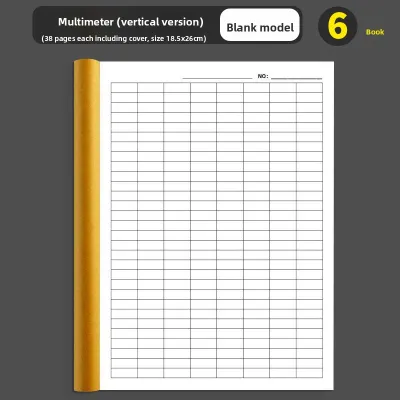
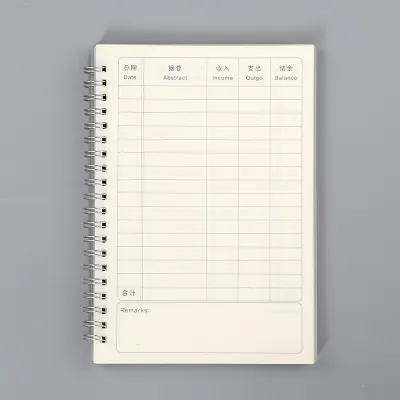
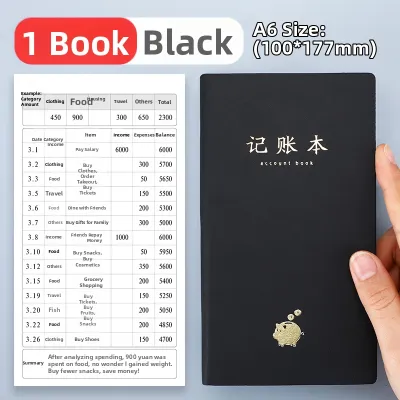
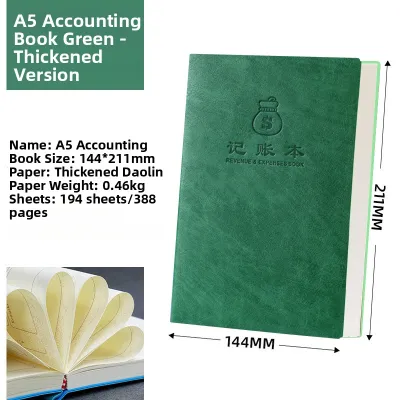
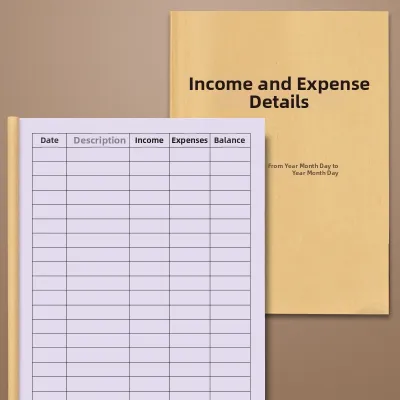
Prices are valid at publication and may change. Please refer to the product page for the latest price.
Choose dedicated ledger books if your workflow relies on traditional double-entry bookkeeping. These specialized books provide pre-printed columns, debit/credit structures, and high-opacity paper optimized for standard ballpoint pens, offering maximum functional utility without the need for manual ruling.
What Makes Paper Quality in an Accounting Book Ideal for Financial Tasks?
Accounting work demands significantly higher paper standards than casual note-taking. When recording financial data, a single illegible digit or a misplaced decimal point can lead to severe calculation errors. To prevent these mistakes, several physical characteristics of the paper must be carefully evaluated.

Paper weight, measured in Grams per Square Meter (GSM), is the foundation of paper quality. Standard office paper typically ranges from 70 GSM to 80 GSM, which is often too thin for professional ledger work. For a reliable accounting book, a paper weight between 80 GSM and 120 GSM is highly recommended. Heavier paper provides the structural integrity needed to withstand heavy use and prevents writing from pressing through to the next page.
Ink resistance is directly tied to paper weight and surface treatment. High-quality paper must resist both feathering—where ink spreads sideways along the paper fibers—and bleed-through, where ink penetrates completely to the reverse side. It must also minimize ghosting, which is the visible shadow of writing on the back of the page. In financial ledgers, clean, crisp lines are non-negotiable to ensure that figures remain perfectly distinct.
Surface texture, often referred to as the paper’s “tooth,” represents the balance between smoothness and resistance. If paper is too smooth, pen tips can slip, leading to sloppy numbers and alignment errors. If the paper has too much tooth, fine-point pens may scratch or skip, disrupting the flow of rapid data entry. The ideal accounting paper offers a satin-like finish that guides the pen with subtle, controlled feedback.
Opacity is another critical factor for double-sided record-keeping. High opacity ensures that figures written on one side of a page do not interfere with the readability of entries on the other side. This is particularly important when working under bright office lighting, where transparent paper can cause visual confusion.
Singapore’s tropical climate adds an extra layer of difficulty to paper selection. High relative humidity can soften paper fibers over time, making low-quality sheets limp and highly susceptible to ink feathering. Selecting paper with high-quality sizing—the chemical treatment applied during manufacturing to resist liquid absorption—is essential to maintain sharp writing in humid environments.
Comparing Popular Notebook Categories for Accounting
To help you navigate the options available in specialty stationery shops and online marketplaces, notebooks can be grouped into three distinct categories. Each category offers a unique combination of paper traits, binding styles, and structural layouts tailored to specific bookkeeping habits.
Japanese Stationery Brands: Smoothness and Ink Handling
Japanese manufacturers are globally renowned for their advanced paper engineering. Brands in this category focus heavily on creating ultra-smooth surfaces that accommodate fine-point writing instruments, such as 0.38mm or 0.5mm gel pens.
This extreme smoothness allows you to write incredibly small, clear numbers within narrow ledger lines. The paper is treated with specialized sizing that prevents water-based inks from spreading, ensuring that even the finest decimal points remain sharp and legible without any feathering.
However, many standard Japanese notebooks utilize lighter paper weights, often around 70 GSM to 80 GSM, to keep the books slim and portable. While highly engineered to resist bleed-through despite the thinness, they may still exhibit some ghosting under bright light. For professional accounting work, it is best to seek out their premium or high-grade paper series, which offer heavier weights of 90 GSM and above to ensure maximum opacity.
Premium European Notebooks: Thickness and Durability
European notebook brands focus heavily on robust construction, archival longevity, and a substantial tactile feel. These notebooks frequently feature paper weights ranging from 80 GSM to 120 GSM, paired with durable hardcovers.
The primary advantage of this category is archival durability. The thick, acid-free paper is designed to resist yellowing and degradation over decades, ensuring that your financial records remain intact for future audits. The sturdy thread-bound spines can withstand constant opening and closing without losing pages.
The main trade-off with heavily coated European paper is ink drying time. In Singapore’s humid environment, the protective surface coating can slow down the evaporation of liquid inks. If you write quickly with gel pens or rollerballs, you may experience smudging if you close the book too soon. To prevent this, pair these notebooks with fast-drying ballpoint pens or specialized quick-dry gel inks.
Dedicated Ledger Books: Pre-Printed Formats and Utility
Traditional ledger books are designed solely for functional utility. Produced by commercial office supply manufacturers, these books bypass aesthetic luxury in favor of structural efficiency and standardized formatting.
The defining feature of a dedicated accounting book is its pre-printed internal layout. These books come with pre-ruled columns for dates, transaction descriptions, debits, credits, and running balances. This eliminates the tedious task of hand-ruling your own columns, saving significant time during daily entry.
The paper used in these books is typically matte, uncoated, and highly opaque, with a weight of 80 GSM to 100 GSM. This texture is optimized for standard ballpoint pens and pencils, providing excellent tooth that ensures immediate ink drying and zero smudging. While the paper may feel less silky than premium stationery brands, its high opacity and practical layout make it the most efficient tool for manual bookkeeping.
Ruling and Binding: Crucial Factors for Ledger Maintenance
While paper quality is paramount, the physical format of the pages and the construction of the binding are equally critical for successful ledger maintenance. These structural elements directly affect how easily you can organize data and how well the book survives daily wear.
Page ruling dictates how you align your financial columns. Standard lined paper is suitable for chronological narratives, but it lacks the vertical structure needed to align decimal points and multi-digit numbers. Plain paper is generally unsuitable for accounting, as writing tends to drift, leading to misaligned columns and reading errors.
Grid ruling, typically featuring 5mm squares, is highly favored by professionals who prefer to customize their ledger layouts. The vertical and horizontal grid lines provide a built-in guide for keeping columns perfectly straight and digits neatly stacked. For standard bookkeeping, narrow-ruled paper (around 6mm spacing) with pre-printed vertical margin lines offers the best balance of writing space and structural guidance.
Binding construction determines the physical usability of the notebook. For accounting work, a true lay-flat binding is an absolute necessity. This is achieved through section-sewn binding, where groups of pages are stitched together and glued to a flexible spine, allowing the book to open to a completely flat 180 degrees.
A lay-flat spine ensures that you can write comfortably across the entire page, right up to the center gutter, without having to fight a curling page. Cheaply bound notebooks use stiff adhesive spines that force the book to spring shut. Forcing these books flat will eventually crack the glue, causing pages to fall out and risking the loss of critical financial records.
How to Test and Verify Paper Quality Before Buying
When shopping for an accounting book in physical stationery stores, packaging labels can sometimes be misleading. Terms like “ink-proof” or “premium quality” are subjective marketing claims. To verify that a notebook will perform well under daily use, perform these practical checks:
- Verify the GSM and Archival Labels: Check the product band or cover label for a weight of at least 80 GSM to 100 GSM. Look for terms like "acid-free," "active-history," or "ISO 9706 compliant," which indicate that the paper is chemically stabilized to prevent yellowing and deterioration over long-term storage.
- Test the Binding's Flexibility: Open the notebook to several different sections, including the very beginning, middle, and end. Place it on a flat surface and let go. A high-quality lay-flat notebook should remain open on its own without the pages curling upward or the spine lifting off the table.
- Perform a Pen and Dry-Time Test: If the store provides sample sheets or tester notebooks, bring your preferred accounting pen. Write a series of numbers and immediately run your finger across them after three seconds. This will reveal how the paper's coating interacts with your ink in local humidity, helping you avoid smudging issues.
- Check for Ghosting Against Light: Hold a written tester page up to the store's overhead lights. Inspect the reverse side of the sheet. If you can clearly read the numbers through the paper, the opacity is too low, which will cause visual clutter when you begin writing on both sides of the page.
Frequently Asked Questions (FAQ)
Can I use standard office notebooks for accounting ledgers?
Standard office notebooks are generally not recommended for official accounting ledgers. These notebooks typically use lightweight paper (60 GSM to 70 GSM) that is highly susceptible to ink bleed-through, feathering, and ghosting, especially when using gel pens. Writing columns of numbers on both sides of thin paper quickly becomes illegible, which increases the risk of calculation errors during audits. Furthermore, standard notebooks often feature spiral or cheaply glued bindings that do not lay flat, making it difficult to write near the margins and causing pages to tear out easily over time. While acceptable for temporary calculations or rough drafts, official financial records require the opacity, durability, and lay-flat structure of a dedicated accounting book.
What pen types work best with high-GSM accounting paper?
The best pen depends on the paper’s surface treatment and your writing speed. For heavily coated, high-GSM European paper, fast-drying ballpoint pens or specialized quick-dry gel pens (with 0.4mm or 0.5mm tips) are ideal because they prevent smudging in Singapore’s humid climate. If you prefer using liquid ink or fountain pens, they pair best with uncoated, high-opacity paper that absorbs ink quickly. When using fountain pens on premium paper, select extra-fine or fine nibs paired with water-resistant archival ink to ensure your financial entries remain sharp, permanent, and completely legible over time.
Community discussion
Share your experience or ask a question. Comments are reviewed before publication.