
Choosing your first model painting setup can feel overwhelming given the sheer variety of paints, compressors, and aerosol options available. For beginners stepping into the world of scale models or Gunpla (Gundam plastic models), GSI Creos—under the brand name Mr. Hobby—is widely considered a reliable standard. The brand offers two distinct pathways for achieving a clean, professional finish: portable aerosol spray cans and advanced airbrush compressor systems.
If you are searching for a reliable mr hobby spray system, understanding the differences between their aerosol line and airbrush compressors is key. For those looking to dive deeper into the hobby with precise control, a starter kit featuring a Mr. Linear Compressor paired with a dual-action airbrush offers the best long-term path. However, if you want the fastest entry point with minimal setup and no equipment maintenance, starting with a curated selection of aerosol cans alongside a high-quality primer and topcoat is the most practical choice.
Airbrush Kits vs. Mr. Hobby Spray: Which is Right for You?
Understanding the fundamental trade-offs between airbrush systems and aerosol spray cans is the first step in establishing your model painting workspace. Aerosol cans, such as the Mr. Color Spray line, are highly pressurized, self-contained units that require no external power source or specialized equipment. They are exceptionally convenient for applying rapid, uniform base coats, primers, and protective topcoats without any prep work or cleanup. For beginners who want to complete a few projects a year without a significant upfront financial commitment, aerosol cans provide an accessible, low-barrier entry point.
Products mentioned in this guide
Prices are valid at publication and may change. Please refer to the product page for the latest price.
Despite their convenience, aerosol spray cans carry several long-term limitations that often prompt serious hobbyists to transition to an airbrush. Because you cannot control the pressure or flow rate of a spray can, you are forced to work with a relatively wide, high-volume spray pattern. This makes fine detail work, subtle shading, and painting small, intricate parts incredibly difficult without wasting a substantial amount of paint. Additionally, you are limited strictly to the pre-mixed colors available in the aerosol line, completely ruling out custom color mixing.
An airbrush system, by contrast, offers exceptional precision by allowing you to independently adjust both air pressure and paint volume. This level of control enables advanced techniques such as pre-shading, highlighting, and painting ultra-thin lines that are simply impossible with a spray can. While the initial investment for an airbrush and compressor is significantly higher than a few cans of spray paint, the ongoing cost of paint is dramatically lower. A standard 10ml bottle of Mr. Color lacquer paint, when properly thinned for airbrushing, can cover a comparable surface area to a full aerosol can at a fraction of the price.
Your physical workspace is often the deciding factor between these two methods, particularly in high-density urban environments like Singapore. Aerosol propellants are highly volatile and release a large volume of solvent mist into the air instantly, requiring aggressive ventilation or outdoor spraying. If you live in a typical HDB apartment without an open balcony or a dedicated workshop, managing the overspray and fumes from a spray can can be highly challenging. An airbrush operates at much lower pressures and volumes, making it far easier to vent safely indoors using a compact, desktop spray booth.
What to Look for in a Beginner Mr. Hobby Airbrush Set
If you decide that an airbrush system is the right path for your modeling goals, selecting the right combination of compressor and airbrush is critical to avoid early frustration. The compressor serves as the heart of your setup, converting electrical power into a steady stream of compressed air to atomize your paint. For hobbyists, compressors generally fall into two categories: diaphragm and piston-driven systems. While diaphragm compressors are highly portable and budget-friendly, piston compressors are generally preferred for their durability and ability to maintain stable operating pressures over long painting sessions.

When evaluating a compressor, prioritizing a model equipped with an integrated air tank is highly beneficial for several reasons. A tankless compressor must run constantly while you paint, which can lead to minor fluctuations in air pressure—known as pulsing—that disrupt your spray pattern. An air tank acts as a pressure reservoir, allowing the compressor motor to fill the tank and shut off while you draw smooth, unpulsed air directly from the storage volume. This setup not only ensures a perfectly consistent spray but also reduces noise and extends the lifespan of the compressor motor by preventing continuous operation.
Before mixing any paints or thinners, check the applied product’s label and the treated item’s manufacturer instructions to verify compatibility and recommended dilution ratios. The airbrush itself is your primary tool of expression, and gravity-feed models are the undisputed standard for scale modeling. Gravity-feed airbrushes feature a paint cup mounted directly on top of the body, allowing gravity to draw the paint down into the atomization chamber. This design requires significantly less air pressure to operate than siphon-feed models, which must pull paint upward from a bottle attached below. Lower operating pressure translates to finer control, less overspray, and the ability to paint close-to-surface details without blowing wet paint across your model.
For a beginner, a nozzle size of 0.3mm represents the absolute sweet spot for versatility and ease of use. A 0.3mm nozzle is wide enough to spray primers, base coats, and metallic paints without constantly clogging, yet fine enough to handle basic detail work and shading. While professional modelers often use 0.2mm nozzles for ultra-fine lines and 0.5mm nozzles for large surface coverage, a 0.3mm airbrush can comfortably handle ninety percent of all model painting tasks.
Finally, you must pay close attention to the included accessories, particularly when setting up a workspace in a humid tropical climate like Singapore. High atmospheric humidity means that moisture will naturally condense inside your air hose as the compressed air cools down. Without a high-quality moisture trap installed between the compressor and the airbrush, this condensed water will travel up the line and spit out of your nozzle, instantly ruining your fresh paint job with water spots. Ensure your starter kit includes a dedicated pressure regulator and a moisture trap to maintain dry, consistent airflow.
Recommended Mr. Hobby Airbrush Starter Configurations
Mr. Hobby offers several pre-configured airbrush and compressor sets designed to match different budgets, space constraints, and commitment levels. Understanding the strengths and limitations of each tier will help you make an informed decision that aligns with your specific modeling environment.
Compact Diaphragm Compressor Kits
For beginners who are operating under strict space limitations or simply want to test the waters of airbrushing without a massive financial outlay, compact diaphragm compressor kits are an attractive starting point. These kits typically feature a small, tankless linear diaphragm compressor—such as the entry-level models in the Mr. Linear Compressor series—paired with a basic single-action or dual-action airbrush. Because of their small physical footprint, these units can easily be stored in a drawer or set up on a small desk, making them ideal for casual hobbyists who do not have a permanent workshop space.
While these compact systems are highly convenient, they do come with specific operational trade-offs that you must manage during use. Because they lack an air tank, the compressor motor runs continuously while you spray, which can generate noticeable vibration and a moderate level of consistent noise. Additionally, these smaller motors generate heat quickly during extended painting sessions, requiring you to take frequent cooldown breaks to prevent overheating and premature wear. The lack of a tank also means you must monitor your spray technique closely to compensate for minor airflow pulsing as the diaphragm cycles.
Before purchasing any imported compact compressor kit, it is absolutely essential to verify the electrical specifications on the product label. Many hobby kits are manufactured for international markets with different electrical standards. Ensure the unit is rated for Singapore’s standard voltage of 230V and frequency of 50Hz, and check that it features a compatible Type G plug. Operating a compressor with incorrect voltage parameters without a proper transformer can permanently damage the motor and present a serious electrical safety hazard.
Piston Compressor Kits with Air Tanks
For hobbyists who are committed to model building as a long-term pursuit, investing in a mid-range piston compressor kit equipped with an air tank is the most cost-effective choice over time. These premium starter configurations often pair a robust, oil-less piston compressor with a high-quality dual-action airbrush, such as the highly regarded Mr. Procon Boy WA 0.3mm. This setup provides professional-grade pressure stability, allowing you to spray thick primers, heavy acrylics, and fine lacquers with equal ease and absolute consistency.
The primary advantage of a piston compressor with an integrated air tank is the complete elimination of airflow pulsing. Because the airbrush draws directly from the pressurized tank, your airflow remains perfectly steady regardless of how hard the compressor motor is working. Furthermore, because the motor only runs when the tank pressure drops below a specific threshold, the system operates much more quietly than tankless models. This quiet, intermittent operation is a massive benefit for late-night painting sessions in shared living spaces or apartment buildings where loud machinery is not acceptable.
The trade-offs for this level of performance are a larger physical footprint and a higher initial purchase price. These systems require a dedicated, stable surface in your workspace and are not as easily packed away as compact diaphragm models. However, the durability, ease of maintenance, and room for skill growth make this configuration the standard choice for serious modelers. With proper care, a high-quality piston compressor and dual-action airbrush set can easily serve as your primary painting setup for many years without ever needing an upgrade.
Building a Starter Spray Can Collection for Quick Projects
If you decide that the simplicity of aerosol spray cans fits your current lifestyle and budget better than an airbrush, building a smart, highly functional starter palette is key to achieving professional results. Rather than buying a massive variety of colored paints immediately, you should focus your initial investment on the essential preparation and finishing layers that form the foundation of every successful model paint job.
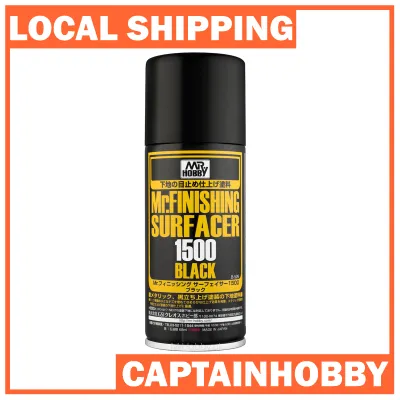
Before applying any paint or primer to your model, always check the applied product’s label and the treated item’s manufacturer instructions to ensure material compatibility, as certain solvents can weaken or dissolve specific plastics if applied too heavily. Your spray can collection should always begin with a high-quality primer, which is crucial for paint adhesion and identifying surface imperfections. Mr. Hobby’s Mr. Surfacer series is highly regarded in the modeling community for its exceptional leveling properties. For beginners, stocking a can of gray Mr. Surfacer 1000 and white Mr. Surfacer 1200 or 1500 provides the perfect foundation. The gray primer is excellent for highlighting scratches and seams on bare plastic, while the white primer is essential for laying down a bright, neutral base before applying vibrant colors like red, yellow, or white.
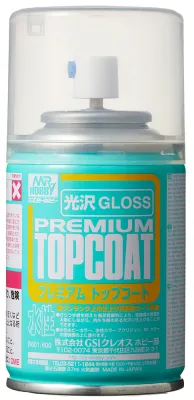
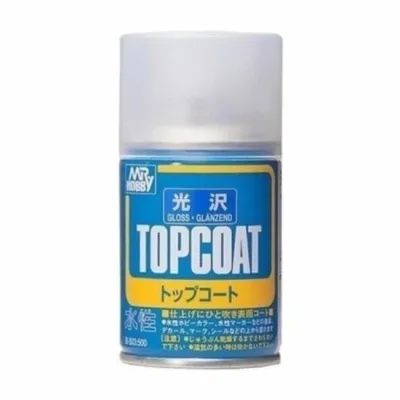
Following your primer, you will need a selection of basic base colors and, most importantly, high-quality topcoats to protect your work. A standard starter palette should include a flat (matte) topcoat and a gloss topcoat, such as Mr. Super Clear or Mr. Premium Topcoat. A gloss coat is essential before applying decals and panel line washes, as it creates a perfectly smooth surface that prevents silvering and allows washes to flow smoothly into panel lines. Once your detailing is complete, a final spray of flat topcoat will eliminate the plastic sheen of the model, giving it a realistic, scale-appropriate finish.
When using Mr. Hobby aerosol cans, always check the nozzle type and instructions printed on the product label before spraying. Some cans feature wide-angle nozzles designed for broad, even coverage on large vehicle hulls, while others are equipped with finer nozzles for smaller, delicate parts. Aerosol propellants are highly sensitive to ambient temperature and humidity; spraying in extremely humid conditions can cause the paint to dry with a cloudy, textured finish known as blushing. To prevent this, avoid spraying outdoors on rainy days, and always shake the can vigorously for at least two minutes to ensure the propellant and pigment are thoroughly mixed.
Essential Safety Gear and Maintenance Tools
Regardless of whether you choose an airbrush system or aerosol spray cans, safety and proper tool maintenance must never be overlooked. Many Mr. Hobby paints—particularly the highly popular Mr. Color line—are lacquer-based and utilize strong organic solvents that can pose serious health risks if inhaled or handled improperly. Protecting yourself and maintaining your equipment ensures that your hobby remains safe, enjoyable, and productive.
The single most important piece of safety equipment you must purchase is a properly fitted respirator mask equipped with cartridges rated for organic vapors. A standard paper dust mask or surgical mask provides absolutely zero protection against the harmful chemical vapors released by solvent-based paints and thinners. Ensure the respirator fits snugly against your face without any air gaps, and replace the organic vapor cartridges regularly according to the manufacturer’s instructions.
In addition to personal respiratory protection, you must establish adequate ventilation in your workspace to prevent the buildup of solvent fumes in your home. If you are painting indoors, using a dedicated desktop spray booth with a flexible exhaust duct vented out of an open window is highly recommended. For those without a spray booth, working outdoors on a covered balcony or in a highly ventilated garage is a viable alternative, provided you take steps to protect your wet model from airborne dust and debris. Always read the safety data sheets (SDS) and product labels for proper solvent handling, storage, and local disposal regulations.
To keep your airbrush functioning perfectly and prevent frustrating clogs, a basic maintenance and cleaning kit is an absolute necessity. Your cleaning kit should include a heavy-duty glass cleaning pot (which doubles as an airbrush stand), micro-cleaning brushes, nozzle cleaning needles, and a high-quality solvent cleaner such as Mr. Tool Cleaner. After every painting session, perform a thorough flush of your airbrush by spraying clean thinner through the system, and carefully wipe down the needle to prevent dried paint from tearing the internal seals. Taking five minutes to clean your equipment after each use will ensure it performs flawlessly the next time you sit down to paint.
Frequently Asked Questions (FAQ)
Do I need an airbrush to paint Gunpla or scale models?
An airbrush is not strictly mandatory to achieve beautiful, high-quality results on Gunpla or scale models. Many highly skilled modelers successfully paint entire kits using a combination of hand-brushing for fine details and aerosol spray cans for large base coats and topcoats. Hand-painting with modern, water-based acrylic paints is an excellent, low-cost way to learn color theory and brush control without investing in expensive machinery. You should choose the painting method that best aligns with your current budget, available workspace, and the specific level of detail you want to achieve on your models.
Can I use Mr. Hobby airbrushes with third-party compressors?
Yes, Mr. Hobby airbrushes are highly compatible with third-party compressors, as the industry has largely standardized on specific thread sizes. Most Mr. Hobby airbrushes utilize a standard 1/8-inch BSP (British Standard Pipe) threaded fitting, which matches the output on the vast majority of hobbyist compressors available on the market. Before purchasing, always verify the exact thread specifications on both your airbrush and your compressor to ensure a perfect match. If the thread sizes do differ, inexpensive brass adapters are widely available at local hobby shops and online marketplaces to bridge the connection securely. Note that when using a third-party compressor, you must carefully regulate the operating pressure to avoid exceeding the maximum limits specified in your airbrush manual, as excessive pressure can damage internal seals and potentially void your warranty.
Community discussion
Share your experience or ask a question. Comments are reviewed before publication.