
Selecting the right educational tools can significantly impact a child’s cognitive development, fine motor skills, and enthusiasm for learning. Among these tools, a high-quality magnetic board for wall mounting serves as a versatile hub for interactive lessons, creative play, and organized study. Whether you are a teacher designing an engaging classroom environment or a parent setting up a dedicated home tutoring corner, choosing the correct board requires balancing several practical and technical factors. The ideal board must not only hold magnetic letters and educational manipulatives securely but also withstand constant drawing, erasing, and physical handling.
By evaluating key characteristics such as surface material, magnetic pull, and safety features, you can select a board that perfectly aligns with your teaching goals and physical space. This guide explores the essential selection criteria, classroom configurations, small-space solutions, and safety protocols to help you make an informed decision for your educational environment.
Core Criteria: What Makes a Great Magnetic Board for Children?
To choose an effective magnetic board for wall installation, you must first understand the fundamental construction and material properties that dictate its performance. Children’s educational activities place unique demands on writing surfaces, requiring a balance of robust magnetic attraction, scratch resistance, and physical safety.
Products mentioned in this guide
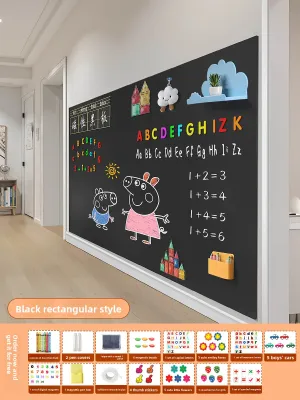
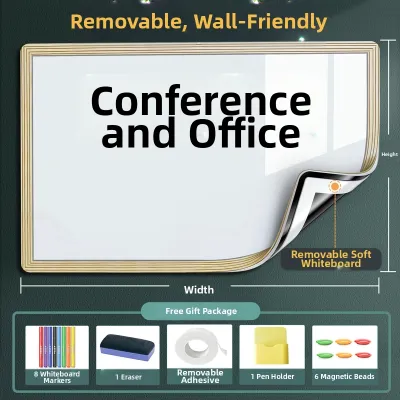
![[120*200cm] magnetic board for wall sticker thickness1.5mm magnetic whiteboard sheet wall paste on wall white board magnetic sticker magnetic wall board whiteboard wall sticker magnetic blackboard static whiteboard](https://img.lazcdn.com/g/p/a88cebe0405001a3950c73a9a1af8742.png_400x400q80.png_.webp)
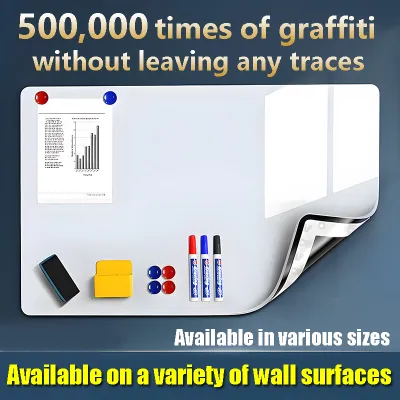
![[Ready Stock] A4 Magnetic Whiteboard | Daily Stationery](https://img.lazcdn.com/g/p/41ddbcafdec28f2fc79533e05c704295.jpg_400x400q80.jpg_.webp)
Prices are valid at publication and may change. Please refer to the product page for the latest price.
Magnetic Strength and Core Material
To ensure that magnetic letters, numbers, and heavier educational tiles remain firmly in place, you must verify the underlying technology of the board. True magnetic boards feature a solid steel core or a thick ferrous substrate behind the writing surface. This construction provides a strong, reliable pull that prevents lightweight plastic magnets from sliding down the board during a lesson.
In contrast, boards that rely on thin magnetic paint or low-grade magnetic coatings often exhibit weak magnetic attraction, causing accessories to slip or fall. To verify the magnetic strength of a board before purchasing, check if the manufacturer specifies a steel-backed or porcelain-on-steel construction, as these materials offer the most robust magnetic reception.
Surface Durability and Material Types
The longevity of a magnetic board depends heavily on its outer surface material. The three most common options are melamine, painted steel, and porcelain (ceramic) steel:
- Melamine: This is an affordable, lightweight plastic formulation that works well for occasional home use. However, it is highly porous and prone to staining, ghosting, and scratching over time.
- Painted Steel: This offers better durability and a stronger magnetic pull, making it a reliable mid-range option for home study areas.
- Porcelain-on-Steel: This is the gold standard for high-traffic educational environments. Its non-porous ceramic surface resists scratching, denting, and dry-erase marker stains, ensuring a clean writing surface even after years of daily classroom use.
Sizing and Ergonomic Proportion
Matching the dimensions of the board to a child’s developmental stage and physical reach is essential for an ergonomic learning experience. For toddlers and preschoolers, a lower, wider landscape board allows them to manipulate letters and draw comfortably while standing or sitting on the floor.
Older children who practice sentence structure or complex math problems benefit from taller boards that accommodate multiple lines of writing. When planning your installation, measure the child’s maximum comfortable reach height and ensure the active writing area of the board falls within this zone to prevent physical strain.
Safety and Build Quality
Active learning environments require robust safety features to protect children from accidental injury. Look for magnetic boards designed with rounded corners, protective plastic caps, or smooth wooden frames rather than sharp, exposed metal edges.
The backing material should be shatterproof and securely bonded to the steel sheet to prevent warping or delamination. Additionally, ensure that the frame is constructed from non-toxic materials and that any included mounting hardware is heavy-duty and designed to distribute the board’s weight evenly across the wall.
Selecting the Best Large Magnetic Board for Wall Mounting in Classrooms
Classroom environments require heavy-duty equipment that can accommodate group learning, maintain high visibility, and withstand the rigorous daily use of multiple students and teachers.

Large-Format Dimensions and Visibility
In a classroom setting, visibility is paramount to keeping students engaged. Large-format boards, typically measuring 120×90 cm or 180×120 cm, provide ample space for teachers to display large-print words, sentence strips, and illustrative diagrams.
These dimensions ensure that students sitting at the back of the room can clearly read the content without straining their eyes. When selecting a large board, consider the aspect ratio; a wider landscape layout is generally preferred for classroom walls as it mimics the natural left-to-right reading pattern and allows multiple children to work side-by-side during group activities.
Heavy-Duty Magnetic Pull for Visual Aids
Classroom instruction often involves heavy or bulky teaching aids, such as large magnetic demonstration clocks, heavy-duty pocket charts, and thick cardboard sentence strips with adhesive magnetic backing. To support these items without slippage, the board must feature a high-gauge steel core that offers maximum magnetic flux.
Standard residential boards may fail under the weight of these specialized classroom tools. Teachers should look for commercial-grade magnetic whiteboards specifically rated for heavy-duty educational use, ensuring that valuable visual aids remain securely anchored throughout the school day.
Framed vs. Frameless Designs
Choosing between framed and frameless magnetic boards involves balancing aesthetic preferences with practical durability. Framed boards, typically constructed with anodized aluminum or solid hardwood frames, offer superior structural rigidity and protect the delicate edges of the steel sheet from impacts, bumps, and rough handling by students.
Frameless boards, on the other hand, offer a sleek, continuous writing surface that can be tiled together to create expansive learning walls. However, frameless designs are more vulnerable to edge chipping and require precise installation to ensure the corners do not present a safety hazard in high-traffic classroom walkways.
Mounting Considerations and Wall Types
Installing a large magnetic board in a classroom requires careful planning and adherence to safety protocols. Because steel-backed boards are heavy, they must be anchored securely to the wall structure.
For drywall installations, locate the wooden or metal studs and use heavy-duty wood screws or toggle bolts to mount the board’s brackets. If mounting onto concrete, brick, or cinder block walls, use high-quality masonry anchors and a hammer drill to create secure pilot holes. Always follow the manufacturer’s specified weight limits and installation instructions, and consider hiring a professional installer for exceptionally large or heavy boards to guarantee student safety.
Space-Saving Magnetic Board for Wall Solutions in Home Tutoring
For families living in Singapore, where residential spaces such as HDB flats and condominiums require efficient layout planning, compact and versatile magnetic boards are highly practical.
Compact and Medium-Sized Boards
Sizes ranging from 60×45 cm to 90×60 cm are ideal for mounting in bedrooms, dedicated study corners, or directly above a child’s desk. These dimensions provide sufficient space for daily spelling practice, math drills, and displaying weekly schedules without overwhelming the room’s decor or taking up valuable wall space that could be used for shelving. They are light enough to be mounted securely on standard residential walls without requiring professional-grade anchoring systems.
Adhesive and Peel-and-Stick Options
If you are renting your home or prefer not to drill holes into your walls, flexible adhesive magnetic sheets or rolls offer an excellent, lightweight alternative to rigid boards. These products can be applied directly to smooth walls, doors, or cabinet surfaces.
However, because these flexible sheets are made of rubber-steel composite materials rather than solid sheet metal, their magnetic pull is naturally weaker than that of traditional boards. When using peel-and-stick options, select lightweight magnetic letters and avoid heavy plastic manipulatives to ensure they stay in place. Additionally, ensure the wall surface is clean, dry, and free of dust before application to prevent the adhesive from peeling over time due to high indoor humidity.
Dual-Sided and Multi-Functional Boards
To maximize utility in small spaces, consider multi-functional magnetic boards that combine different interactive surfaces. Popular configurations include dual-sided boards with a magnetic dry-erase whiteboard on one side and a traditional chalkboard or a natural corkboard on the reverse.
These versatile options allow parents to switch easily between writing practice, creative drawing, and pinning up paper worksheets or art projects. Some models are designed to rotate within a desktop stand, while others can be easily flipped and re-hung using quick-release wall brackets.
Portability and Storage
If you do not have dedicated wall space for a permanent installation, portable magnetic boards offer a flexible solution. Look for lightweight, framed boards equipped with carrying handles, or compact folding easels that can be set up on a dining table for a tutoring session and folded flat for storage afterward. These portable models can be easily tucked away behind a wardrobe, under a bed, or inside a closet when not in use, keeping your living areas clean and clutter-free while still providing a high-quality learning tool when needed.
Optimized Board Surfaces for Phonics and Handwriting Practice
Specialized surface designs can directly support early literacy, letter tracing, and foundational mathematical concepts, making them excellent choices for early childhood education.
Pre-Printed Guidelines for Literacy
Early literacy instruction, particularly phonics and handwriting, is highly dependent on visual structure. Magnetic boards featuring pre-printed solid and dotted guidelines (resembling primary school writing paper) are invaluable tools for young learners.
These lines help children understand letter height, proper spacing, and the correct placement of ascenders and descenders (such as the stems of ‘b’, ‘d’, ‘p’, and ‘q’). By using magnetic letters alongside dry-erase markers on a guided surface, children can physically place a letter on the line and then trace or copy it directly underneath, reinforcing muscle memory and letter recognition.
Grid and Graph Surfaces for Mathematics
For mathematics, spatial reasoning, and early STEM activities, magnetic boards with pre-printed grid or graph patterns are highly effective. A square grid surface (typically in 1-inch or 2-centimeter increments) helps children align magnetic numbers, practice skip counting, build array models for multiplication, and explore basic coordinate graphing. The visual grid lines act as a guide, preventing numbers and equations from drifting diagonally across the board and helping children organize their mathematical thinking clearly.
Contrast and Glare Reduction
The optical properties of a board surface can significantly impact a child’s comfort and focus during long study sessions. Standard high-gloss whiteboards can reflect bright overhead LED lights or sunlight from nearby windows, creating harsh glare that causes eye strain and fatigue.
To mitigate this issue, look for boards featuring a matte or low-glare finish. These specialized surfaces diffuse light evenly, ensuring that the writing and magnetic elements remain clearly visible from all viewing angles, which is especially important in brightly lit classrooms or study rooms with direct natural light.
Compatibility and Sizing Checks
Before purchasing a guided or gridded magnetic board, it is crucial to perform a compatibility check with your existing educational manipulatives. Measure the height and width of your magnetic letters, numbers, and tiles to ensure they fit proportionally within the pre-printed lines or grid squares.
If the lines are too narrow, the magnetic letters will overlap the boundaries, defeating the purpose of the visual guides. Ideally, the spacing between the solid lines should be at least 1.5 times the height of your largest magnetic letters to allow comfortable writing and placement.
Installation, Safety, and Care for Kids' Magnetic Boards
Proper setup, usage boundaries, and maintenance are essential to protect children from injury and prolong the lifespan of your magnetic board.
Secure Mounting Protocols
Ensuring the physical safety of children is the most critical aspect of installing a wall-mounted magnetic board. Because steel-backed boards are heavy and subject to constant pulling forces as children remove magnets, standard adhesive strips or small nails are insufficient.
Always use the mounting hardware supplied by the manufacturer, and verify that the wall anchors are rated for the total weight of the board plus the downward pressure exerted during active use. For added safety, install bottom-corner brackets in addition to the top hangers to prevent the board from swinging, tilting, or lifting off the wall when a child pulls on a strong magnet.
Choking Hazard Management
While magnetic boards are excellent educational tools, the accessories used with them can present serious safety risks for younger children. Small magnetic letters, numbers, and high-strength neodymium magnets pose severe choking and ingestion hazards.
For toddlers and children under the age of three, always select large, single-piece magnetic toys that exceed standard choking hazard test dimensions. Inspect magnetic accessories regularly to ensure that the individual magnets are securely embedded or encapsulated within the plastic housing and cannot pop out if dropped or chewed.
Surface Cleaning Routines
To maintain the erasability and smooth writing experience of your magnetic board, establish a regular cleaning routine. Over time, dry-erase marker residue, skin oils, and dust can accumulate on the surface, leading to “ghosting” (faint, permanent marks left behind by old ink).
To clean the board safely, wipe it daily with a dry microfiber cloth or a dedicated felt eraser. For deeper cleaning, use a mild, low-odor whiteboard cleaning spray or a soft cloth dampened with water and a tiny drop of mild dish soap, checking the manufacturer’s care instructions first. Avoid using abrasive scrubbing pads, window cleaners, or harsh chemical solvents, as these can strip away the protective dry-erase coating and permanently ruin the board’s surface.
How to Test Surface Performance
To verify the erasability and drying speed of dry-erase markers on a specific board surface, perform a localized test. Draw a small line with a fresh low-odor marker, wait exactly two minutes for the solvent to evaporate completely, and attempt to wipe it away with a dry microfiber cloth.
A high-quality surface will release the pigment cleanly without leaving a faint grey shadow or ‘ghost’ mark. If the ink smears or resists dry erasing, the surface may require specialized cleaners or have a high-porosity finish that is unsuitable for daily classroom use. Always ensure the markers and cleaning solvents used are certified non-toxic and low-VOC (complying with safety standards such as ASTM D-4236) to prevent harmful exposure during prolonged body contact.
Community discussion
Share your experience or ask a question. Comments are reviewed before publication.