
For anyone stepping into the world of fiber arts, the initial choice of tools can feel overwhelming. The single most effective purchase a complete beginner can make is a pair of medium-sized bamboo circular knitting needles, specifically in a 4.5mm or 5.0mm diameter, paired with a matching worsted-weight yarn. This setup offers the optimal balance of surface grip, visual clarity, and ergonomic comfort, directly addressing the physical challenges that novices face. By selecting tools that work with you rather than against you, you can focus entirely on mastering the basic knit and purl stitches without the frustration of dropped loops or hand fatigue.
Core Criteria for Choosing Your First Knitting Needles
When selecting your very first pair of knitting needles, it is helpful to look past aesthetic appeal and focus on how the tool interacts with both your hands and the yarn. A successful learning experience relies on three foundational pillars: surface friction, versatility, and gauge compatibility. Surface friction determines how easily your stitches slide along the shaft; too much slide leads to dropped stitches, while too little makes knitting slow and laborious. Versatility ensures that your initial investment can be used for multiple projects as your skills grow. Gauge compatibility ensures that the physical size of your needle matches the thickness of your yarn, producing a balanced fabric that is easy to read as you work.
As a beginner, your primary goal is to establish muscle memory and stitch control. Experienced knitters often prioritize speed, which leads them to highly polished, slippery tools. For a novice, however, speed is the enemy of accuracy. Prioritizing ease of handling and ergonomic comfort over advanced features or high-speed materials will drastically reduce your frustration. The right tool acts as a steady partner, holding your stitches securely in place while you learn to coordinate your fingers, ultimately accelerating your learning curve and keeping you motivated to finish your first project.
Products mentioned in this guide
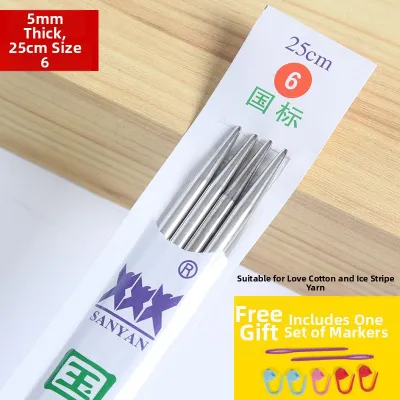
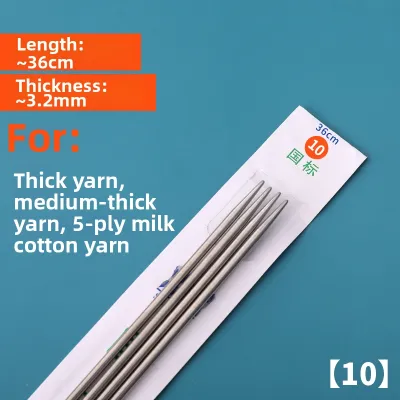
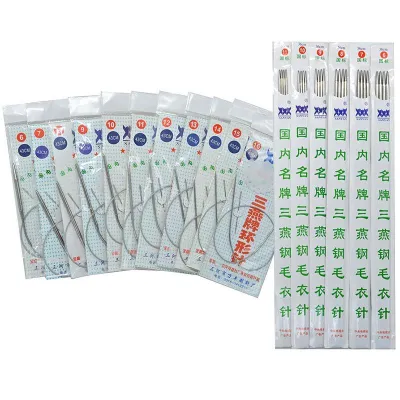
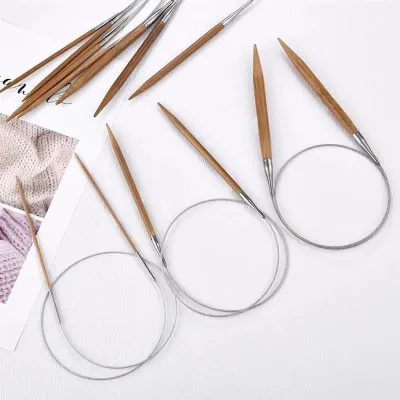
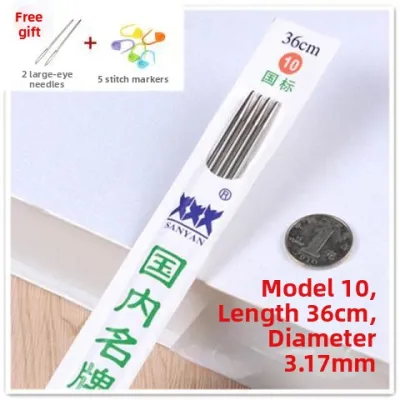
Prices are valid at publication and may change. Please refer to the product page for the latest price.
Best Needle Materials: Why Bamboo and Wood Are Ideal
The material of your knitting needles dictates the physical friction between the tool and the yarn. Bamboo and wood are widely considered the ideal choices for beginners because of their natural texture. On a microscopic level, organic fibers like bamboo possess a slight grain that provides gentle resistance. This surface friction acts as a safety net, preventing your stitches from accidentally sliding off the needle tips when you set your work down or adjust your grip. For someone still learning how to maintain consistent tension, this added control is invaluable.

In contrast, metal needles—typically made of stainless steel, brass, or aluminum—are exceptionally slick. While metal is excellent for rapid, seamless knitting once your muscle memory is fully developed, it can be highly frustrating for a beginner. A single moment of lost focus can cause an entire row of loose stitches to slide off a metal tip, creating a complicated mess that is difficult for a novice to repair. On the other end of the spectrum, plastic and acrylic needles can sometimes feel sticky or squeaky, especially when paired with synthetic yarns. They also lack the structural durability of natural materials and can warp or bend over time when exposed to the warmth of your hands.
Beyond stitch control, wood and bamboo offer superior tactile comfort. They are natural insulators, meaning they quickly warm up to your body temperature. In air-conditioned indoor spaces, which are common in tropical climates like Singapore, metal needles can feel cold, stiff, and unforgiving in your hands. Bamboo is also incredibly lightweight, reducing the strain on your fingers and wrists during long practice sessions. Furthermore, the quiet, gentle clicking sound of wood or bamboo is highly soothing, unlike the sharp, metallic clatter of steel or aluminum needles, making your practice sessions much more peaceful.
Best Needle Types: The Case for Circular Needles
Knitting needles generally come in three configurations: straight (single-pointed) needles, double-pointed needles (DPNs), and circular needles. While traditional depictions of knitting almost always feature a pair of long, straight needles tucked under the arms, modern knitting instructors overwhelmingly recommend circular needles for beginners. A circular needle consists of two short, rigid needle tips connected by a flexible plastic or nylon cable. This design is highly versatile and addresses several physical and ergonomic challenges that straight needles present.
The primary advantage of circular needles lies in their superior ergonomics. When you knit a flat project like a scarf on long straight needles, the entire weight of the growing fabric hangs off the far ends of the needles. This creates a lever effect, putting significant downward pressure on your wrists and hands, which quickly leads to cramping and fatigue. With circular needles, the weight of the fabric slides down onto the flexible cable and rests comfortably in your lap. This simple shift in weight distribution neutralizes wrist strain, allowing you to practice for longer periods without physical discomfort.
Additionally, circular needles offer unmatched versatility. Despite their name, they are not reserved solely for knitting seamless tubes like hats or sleeves. You can easily knit flat projects back and forth on circular needles simply by turning your work at the end of each row, just as you would with straight needles. This means a single pair of circular needles can handle scarves, blankets, cowls, and hats, making them a highly cost-effective first purchase. They are also much easier to pack and travel with, as the flexible cable allows you to fold your project neatly into a small bag without the risk of long, rigid needles poking through your fabric or luggage.
Ideal Needle Sizes for Beginner-Friendly Projects
Choosing the right needle size is critical because it dictates the scale of your stitches and the speed of your progress. For complete beginners, medium-sized needles ranging from 4.0mm to 5.0mm (equivalent to US sizes 6 to 8) represent the absolute sweet spot. This range is large enough to hold comfortably in your hands without requiring the hyper-fine motor skills needed for tiny lace needles, yet small enough to avoid the bulkiness of jumbo tools.
This medium size range pairs perfectly with worsted-weight or aran-weight yarns. When working within this size bracket, each stitch is large and distinct, allowing you to clearly see the anatomy of your knitting. You will easily be able to distinguish a knit stitch from a purl stitch, identify where a stitch might have been dropped, and understand how the yarn loops together. The yarn itself is thick enough to handle without splitting, yet thin enough to slide smoothly over the needle tips, providing a clean and highly visual learning experience.
It is highly advisable to avoid starting your knitting journey at either extreme of the size spectrum. Very fine needles, such as those under 3.0mm, require thin, delicate yarn that is difficult to see and easy to split with your needle tips. This can lead to eye strain and intense frustration. Conversely, extremely bulky needles (8.0mm and above) require thick, heavy yarns. While these giant needles knit up projects rapidly, they are heavy and awkward to maneuver, especially for hands that have not yet developed the specific muscles used in knitting. Starting with jumbo tools often leads to rapid hand fatigue and uneven, sloppy tension.
Recommended Knitting Needle Specifications to Buy
To make your first purchase as straightforward as possible, look for a specific starter combination: a 4.5mm (US 7) bamboo circular needle with a 60cm (24-inch) cable. This exact specification is highly versatile. A 60cm cable length is long enough to comfortably accommodate flat projects like dishcloths and scarves, yet short enough to prevent the cable from coiling, twisting, or tangling while you work. It strikes the perfect balance for almost any standard beginner pattern.
Before finalizing your purchase, there are several critical quality checkpoints to verify to ensure your needles do not cause unnecessary frustration:
- The Join: This is the transition point where the wooden needle tip meets the flexible plastic cable. Run your fingernail gently over this connection. It should feel completely smooth and seamless. If there is a noticeable ridge, lip, or gap, your yarn will snag on every single stitch, forcing you to manually push the yarn over the barrier and potentially fraying your fibers.
- The Tip Taper: Examine the shape of the needle tips. They should feature a moderate, gradual taper. If the tips are too sharp (often labeled as lace tips), you will frequently split the plies of your yarn and poke your fingertips. If they are too blunt, you will struggle to insert the needle into your stitches, tight stitches will become difficult to work, and your hands will tire quickly.
- Cable Flexibility: The plastic cable should be flexible and cooperative. High-quality cables resist "memory," meaning they relax easily rather than remaining tightly coiled in the shape of their packaging.
When shopping, look for widely recognized, high-quality series such as Clover Takumi (known for premium Japanese bamboo and exceptionally smooth joins) or KnitPro Basix Birch (which offers sturdy, polished birchwood options). These brands serve as excellent benchmarks for quality. You can verify current availability, exact specifications, and product labels at local craft stores in Singapore, such as Spotlight, or through specialized local yarn boutiques and authorized online retailers. Expect to pay between S$8 and S$18 for a high-quality, fixed circular needle. While budget multi-packs on online marketplaces may seem tempting, they often feature rough wood surfaces and snaggy joins that can ruin your yarn and your enthusiasm.
How to Match Your Needles to Yarn Weight Labels
As you prepare to start your first project, learning to match your knitting needles to the correct yarn is a fundamental skill. Every commercial skein of yarn comes wrapped in a paper banderol (yarn label) that contains essential technical specifications. To find the recommended needle size, look for the small graphic icon of two crossed knitting needles. Next to or inside this icon, the manufacturer will list the suggested needle size in both millimeters (metric) and US sizes.
While the label provides an excellent starting point, understanding how different yarn weights correspond to typical needle sizes will help you make informed decisions when shopping. Below is a reference table mapping standard beginner-friendly yarn weights to their typical needle size ranges:
| Yarn Weight Category | Typical Metric Needle Size | Typical US Needle Size |
|---|---|---|
| DK (Double Knitting) | 3.75mm – 4.5mm | 5 – 7 |
| Worsted / Aran | 4.5mm – 5.5mm | 7 – 9 |
| Chunky / Bulky | 5.5mm – 8.0mm | 9 – 11 |
It is important to remember that the needle size printed on a yarn label is a recommendation, not a strict rule. The final fabric is highly dependent on your personal knitting tension, also known as gauge. Some knitters naturally hold the yarn very tightly, which produces dense, stiff fabric; these knitters often need to increase their needle size by 0.5mm to achieve a soft, flexible drape. Other knitters work very loosely and may need to decrease their needle size to prevent the fabric from looking floppy or structurally weak. As you gain experience, you will learn to adjust your needle size based on how tightly or loosely you naturally knit.
Common Beginner Mistakes to Avoid When Buying Needles
One of the most common pitfalls for new knitters is purchasing an excessively long cable. While a 100cm or 120cm circular needle is excellent for advanced techniques like the “Magic Loop” or for knitting large blankets, it is highly impractical for a beginner’s first scarf or dishcloth. The excess cable will flop around, twist into loops, and get in your way, making it incredibly difficult to manage your stitches and maintain a steady rhythm.
Another frequent mistake is choosing needles with extremely sharp metal tips. Many beginners are drawn to the sleek look of professional lace needles, but these sharp points are specifically designed to manipulate ultra-fine lace weight yarns. When used with standard worsted or aran weight yarn, these needle tips will constantly pierce through the middle of the yarn strands, splitting the plies and weakening the structure of your fabric. They can also cause physical discomfort or minor skin irritation if you have a habit of pushing the needle tip with your index finger.
Finally, resist the temptation to buy cheap, unbranded needle sets from discount online platforms. These budget options are frequently manufactured with poor quality control, resulting in rough wood surfaces that catch and tear delicate yarn fibers, or plastic cables that remain stiffly coiled and refuse to straighten. Investing a few extra dollars in a single, high-quality needle from a reputable brand will save you hours of frustration and ensure that your first knitting experience is smooth, enjoyable, and successful.
Frequently Asked Questions (FAQ)
Are interchangeable knitting needle sets worth it for beginners?
Interchangeable knitting needle sets, which feature detachable needle tips that screw or click onto cables of varying lengths, offer outstanding long-term value and versatility for dedicated knitters. However, they require a significant upfront financial investment, often ranging from S$80 to over S$150. For a complete beginner, purchasing a full set immediately is rarely recommended.
Instead, it is highly beneficial to start by purchasing one or two individual, fixed circular needles in the specific sizes required for your first few projects. This low-cost approach allows you to test different brands, materials (such as bamboo versus birchwood), and cable styles to discover your personal preferences. Once you are certain that you enjoy the hobby and have identified which needle materials and brands feel most comfortable in your hands, you can make a confident, well-informed investment in a high-quality interchangeable set that will last for years.
Community discussion
Share your experience or ask a question. Comments are reviewed before publication.