
The best index card brands for student flashcards depend on your study method, writing tools, and volume requirements. For traditional handwritten, color-coded cards, Oxford offers the most reliable balance of thickness and organizational variety. For students who prefer typing and printing their cards, Avery provides superior heavy-duty, printable templates with clean edges. If you need to produce hundreds of flashcards for high-volume memorisation on a budget, bulk options from Hammermill or reputable office store brands deliver cost-effective utility, provided you pair them with the right writing instruments.
What Makes an Index Card Ideal for Flashcards?
To create flashcards that survive a rigorous exam preparation cycle, you must look beyond basic dimensions. A card that tears, smudges, or allows ink to bleed through to the other side quickly becomes a distraction rather than a study aid. Evaluating index cards requires analyzing four technical dimensions: cardstock weight, paper finish, structural durability, and ruling layout.
Cardstock Weight and Thickness
The weight of the paper determines how rigid the card remains after hundreds of flips. Standard printer paper typically ranges from 70 to 80 grams per square meter (gsm), which is far too flimsy for active recall study. High-quality index cards utilize cardstock, typically categorized by weight index (such as 90 lb or 110 lb index) or metric weight, ranging from 150 gsm to over 200 gsm.
Products mentioned in this guide
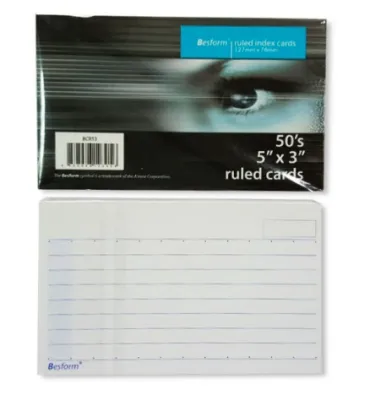
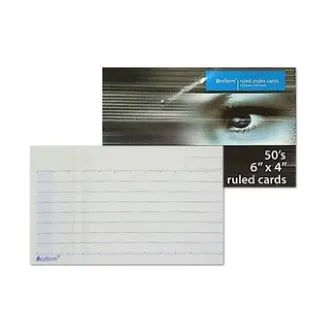
![[SG] Azone Ruled Index Card 50s/ pkt [Evergreen Stationery]](https://img.lazcdn.com/g/p/5dd00b1202fe1644cc678634b404491c.jpg_400x400q80.jpg_.webp)
![[SG Seller]Colorful Blank Index Flash Cards with Metal Binder Ring Kraft Paper Memo Note Cards for Study Vocabulary](https://img.lazcdn.com/g/p/febf48b170dd79e725eefeb3e66dcdd2.jpg_400x400q80.jpg_.webp)
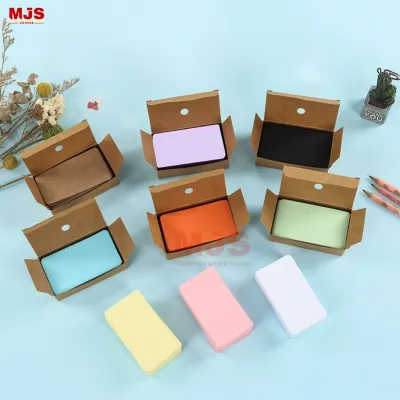
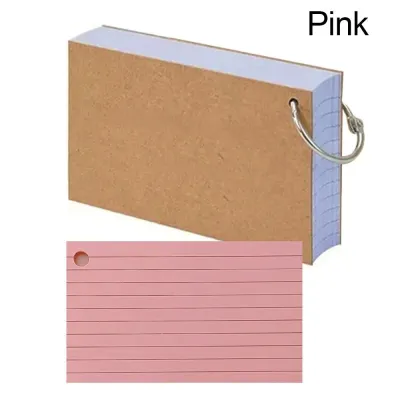
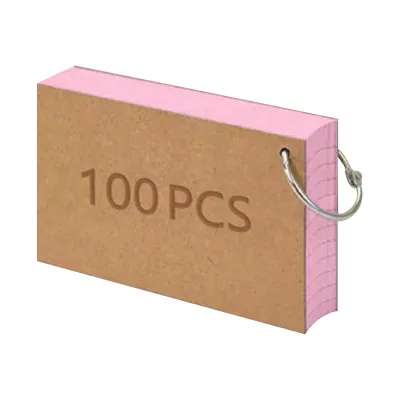
Prices are valid at publication and may change. Please refer to the product page for the latest price.
Heavier cardstock prevents “show-through” or ghosting, where the answer written on the back of the card is visible from the front. If you plan to use heavy-inking pens, such as liquid gel pens, rollerballs, or water-based highlighters, look for cards explicitly labeled as “heavyweight” or check the packaging for a gsm rating of at least 160 gsm. Thinner options (around 140 gsm) are acceptable for dry media like ballpoint pens or pencils, but they will bend and warp more easily under heavy handling.
Paper Finish and Writeability
The surface texture, or finish, of an index card dictates how ink behaves when it contacts the paper fibers. Most traditional index cards feature a matte or slightly toothy finish. This untreated surface is highly absorbent, allowing water-based gel inks and fountain pen inks to dry relatively quickly without pooling. However, if the paper fibers are too loose or of low quality, highly liquid inks will “feather,” spreading outward along the fibers and making fine text illegible.
Conversely, some premium or printable cards feature a smooth, semi-gloss, or coated finish. While coated surfaces offer excellent contrast and crisp lines, they significantly increase drying times. Writing on a semi-gloss card with a gel pen often results in immediate smudging when you flip the card. Understanding the interaction between your preferred writing instrument and the card’s surface finish is essential to avoid ruined notes.
Durability and Edge Fraying
A flashcard’s lifespan is determined by its fiber density and the precision of its cut. Low-grade cards are often rotary-cut in bulk, leaving slightly frayed edges even before use. As you shuffle, slide, and flip these cards, the corners will quickly split, delaminate, or curl.
High-density cardstock with clean, die-cut edges resists this physical degradation. This structural integrity is particularly crucial if you carry your cards in a backpack or pencil case without a protective container. When evaluating a brand, look for clean, sharp edges and a stiff snap when you flex the card; a card that feels soft or spongy will fray rapidly under daily study pressure.
Ruling and Layout
The visual organization of your cards should match the nature of the material you are memorizing:
- Ruled (Lined): Ideal for text-heavy subjects, foreign language vocabulary, historical timelines, and long-form definitions. The lines keep your handwriting neat and consistent.
- Grid (Graph): Perfect for mathematics, physics, chemistry, and engineering. The grid structure helps you draw precise molecular diagrams, coordinate planes, and structured formulas.
- Blank (Unruled): Best for highly visual learners, organic chemistry structures, anatomy sketches, or mind maps. Blank cards force you to use spatial memory without the constraint of lines.
Top Index Card Brands for Student Flashcards
Selecting the right brand involves matching your specific study workflow with the manufacturer’s manufacturing strengths. Below is an analysis of the leading index card brands, detailing their physical characteristics, ideal applications, and performance limitations.

Oxford
Oxford is a long-standing standard in school and office supplies, particularly recognized for its highly structured organizational systems. Their index card lineup is highly diverse, offering standard white cards, pastel multi-color packs, and neon variants.
For students utilizing color-coded active recall systems—such as assigning green to biology, blue to chemistry, and yellow to physics—Oxford provides some of the most consistent color assortments on the market. The colors are saturated enough to categorize your topics clearly, yet light enough to maintain high contrast with black or blue ink.
Oxford also manufactures pre-punched cards designed to be held together by metal binder rings. This is an exceptional feature for students who study during commutes on the MRT or buses, as it prevents the cards from scattering if dropped.
However, you must pay close attention to the specific product line you purchase. Oxford’s standard-weight index cards are relatively thin (frequently around 140 to 150 gsm). If you write with heavy gel pens, fine-liners, or highlighters, you will experience noticeable ghosting and minor bleed-through. To prevent this, actively seek out Oxford’s “Heavyweight” line, which provides the necessary density to handle double-sided writing with liquid ink. Always verify the exact cardstock thickness and weight specification on the label before committing to a bulk purchase.
Avery
Avery is the premier choice for students who prefer a hybrid digital-to-physical study workflow. If you prefer typing your study notes, importing diagrams from lecture slides, or using flashcard software before printing physical copies, Avery’s printable index card sheets are the industry standard.
These cards are distributed as flat, printer-compatible sheets (typically A4 or Letter size) featuring ultra-fine perforations. Once printed, the cards easily detach from the sheet, leaving clean, smooth edges that closely mimic professional die-cut cards. Avery uses a premium, heavy-duty cardstock for these products, offering outstanding opacity that ensures answers on the back of the card remain completely invisible from the front.
The primary trade-off with Avery cards is printer compatibility. Because the cardstock is thick and heavy, it can cause paper jams in standard home printers that utilize a tight, curved paper path. For seamless printing, it is highly recommended to use a printer with a manual feed slot or a straight paper path, and to adjust your printer settings to “Heavy Paper” or “Cardstock.”
Additionally, printable cards do not come pre-punched. If you prefer using binder rings, you will need to punch holes manually using a heavy-duty single-hole punch, which can be time-consuming for large study decks.
Hammermill and Store Brands (e.g., Staples)
When preparing for comprehensive professional exams, university finals, or standardized tests, you may need to produce hundreds or even thousands of flashcards. In these high-volume scenarios, purchasing premium individual packs quickly becomes financially impractical. Hammermill and major office store brands (such as Staples or local house brands) offer bulk cardstock and pre-cut index cards at a highly competitive price point.
Hammermill is renowned for its high-quality bulk paper products. While they sell pre-cut cards, many students purchase Hammermill’s heavy cardstock (such as their 90 lb or 110 lb index paper) in bulk reams and cut them down to custom sizes using a paper trimmer. This approach provides an exceptionally high-quality, bright white matte surface with excellent bleed resistance at a fraction of the cost of pre-cut branded cards.
Store brands, on the other hand, offer pre-cut cards in massive quantities (such as packs of 500 or 1,000). The primary trade-off here is consistency. Bulk store-brand cards often feature slightly thinner paper, minor variations in card dimensions, and occasional fiber fraying along the edges. The paper finish can also be highly variable; some batches may be overly absorbent, causing ink from gel pens to feather and look fuzzy.
If you opt for bulk store brands, the most practical approach is to purchase a single small pack first. Conduct a quick trial with your preferred study pens to verify that the ink does not bleed through or feather excessively before purchasing several thousand cards for your exam preparation.
How to Choose the Right Size and Format
The physical dimensions and structural format of your index cards directly influence how you process and retain information. Choosing the wrong format can lead to cluttered, unreadable cards or unnecessary bulk in your bag.
Size Comparison
Index cards are standardly manufactured in three primary sizes, each serving a distinct cognitive purpose:
- 3×5 Inches (approx. 7.6 x 12.7 cm): This is the classic flashcard size. Its compact footprint forces you to be concise, which is a core tenet of effective active recall. By limiting the available space, you are forced to boil down complex concepts into single, punchy questions and answers. It is highly portable and fits easily into standard pockets or small pencil cases.
- 4×6 Inches (approx. 10.2 x 15.2 cm): This mid-sized option provides the extra space required for complex subjects. It is highly recommended for medical terminology, legal case summaries, historical timelines with multiple key dates, or foreign language cards that require example sentences alongside the vocabulary word.
- 5×8 Inches (approx. 12.7 x 20.3 cm): This large format functions more like a mini-notebook page. It is generally too large for rapid-fire active recall drills but is highly effective for comprehensive topic summaries, architectural sketches, complex mathematical proofs, or organic chemistry synthesis pathways.
Binding and Organization
How you physically secure your cards determines how easily you can integrate them into your daily routine:
- Pre-Punched Cards with Binder Rings: This format is exceptional for active, on-the-go studying. By securing a deck of 30 to 50 cards on a metal ring, you can easily flip through them while standing on public transport without any risk of dropping or losing the sequence. However, adding or removing cards from the middle of the deck can be tedious.
- Loose Cards in Study Boxes: Keeping your cards loose allows for maximum flexibility. This format is essential if you use physical sorting systems, as you can easily move cards between different boxes based on how well you know the material. The downside is portability; you must use a sturdy card box or a heavy-duty elastic band to prevent them from scattering inside your bag.
Specialty Formats
Several manufacturers offer specialty formats, such as top-bound spiral flip books or micro-sized cards (often measuring around 1.5×3 inches). Spiral-bound flip books keep an entire subject permanently bound together, preventing loss, though they make it difficult to reorder cards or remove concepts you have already mastered. Micro-cards are exceptionally portable and are highly favored for quick, single-word vocabulary drills or mathematical formulas. Match these specialty options to your physical interaction preferences and study environments.
Tips for Writing and Storing Your Flashcards
To ensure your hard work remains legible and organized throughout a long semester or exam block, implement these practical writing and storage strategies.
Pen Selection
To maximize legibility and prevent ruined cards, match your writing tool to the card’s specific paper characteristics:
- For Standard Matte Cards: Use quick-drying gel pens (such as the Zebra Sarasa Clip or Uni-ball Signo, both widely available in Singapore stationery shops) or water-based fine-liners. These inks bond beautifully with matte paper fibers without bleeding through, provided the cardstock is of medium to heavy weight. Avoid heavy permanent markers or thick liquid ink rollerballs, which will inevitably bleed through to the opposite side.
- For Coated or Glossy Cards: Standard gel pens will pool and smudge on these surfaces. Instead, opt for traditional oil-based ballpoint pens or specialized fine-tip permanent markers (such as a Sakura Microperm or ultra-fine Sharpie). These inks dry via solvent evaporation rather than absorption, leaving a crisp, smudge-resistant line on coated papers.
Storage Solutions
Singapore’s high relative humidity can cause unprotected cardstock to absorb atmospheric moisture over time, leading to limp, soft cards that are highly susceptible to tearing and ink feathering.
- Protect from Moisture: Store your active decks in sealed plastic index card boxes or heavy-duty zippered utility pouches.
- Prevent Corner Damage: If you carry cards loose on binder rings, protect the exposed corners by placing the ringed deck inside a dedicated compartment of your backpack rather than letting it float freely alongside heavy textbooks.
Handling and Sorting
To study efficiently, do not simply read through your deck in the same order every day. Implement a physical Leitner System using your index cards:
- Set up five physical compartments or boxes, labeled Box 1 through Box 5.
- Place all new cards in Box 1. Review these cards every day.
- When you answer a card correctly, move it up to Box 2. If you answer it incorrectly, it stays in (or returns to) Box 1.
- Review Box 2 cards every other day, Box 3 cards every four days, Box 4 cards once a week, and Box 5 cards once every two weeks.
- Any mistake instantly sends the card back to Box 1, regardless of which box it was in.
This systematic approach ensures you spend your limited study time focusing on your weakest areas, while the physical manipulation of the cards keeps you actively engaged. Handle the cards by their sides rather than bending the corners to slide them, which will significantly extend the lifespan of the cardstock.
Frequently Asked Questions (FAQ)
Can I use standard printer paper instead of index cards for flashcards?
While you can technically cut standard printer paper into flashcard shapes, it is highly impractical for long-term study. Standard printer paper (typically 75 to 80 gsm) is very thin and lacks the opacity of true cardstock. This means your answers will easily show through the back, defeating the purpose of active recall. Additionally, thin paper tears easily, wrinkles when exposed to hand oils, and bends under minimal handling, making it highly frustrating to shuffle and flip during intensive study sessions.
Do I need a special pen for writing on glossy index cards?
Yes, glossy or coated index cards require specific writing instruments to prevent smudging. Standard gel pens, rollerballs, and fountain pens rely on water-based inks that must absorb into the paper fibers to dry. On a glossy coating, these inks will pool on the surface and smear immediately upon contact. For glossy cards, always use traditional oil-based ballpoint pens or fine-tip permanent markers, as their inks dry quickly on non-porous surfaces without requiring absorption.
Community discussion
Share your experience or ask a question. Comments are reviewed before publication.