
To master the thick, sculptural textures of impasto painting in Singapore, beginners should choose heavy body acrylic paint starter sets from established brands such as Winsor & Newton, Liquitex, Amsterdam, or Daler-Rowney. These brands offer high-viscosity formulations that retain crisp brushstrokes and palette knife marks without sagging or flattening as they dry. For most beginners, a heavy body acrylic starter kit containing five to twelve essential colors in tubes of at least 59ml to 75ml provides the best balance of performance, ease of use, and overall value.
Selecting the right materials from the start prevents the frustration of watching carefully crafted textures melt away into flat washes. By focusing on paint viscosity, pigment quality, and proper supporting tools, new painters can successfully navigate the learning curve of this tactile and expressive medium.
What Makes Paint Suitable for the Impasto Technique?
Impasto is an expressive painting technique where paint is applied thickly to a canvas or board, leaving the physical texture of the brush or painting knife clearly visible. The word itself comes from the Italian term for “mixture” or “paste,” which perfectly describes the physical nature of the medium required. To successfully execute this style, the paint must have enough structural integrity to stand in high peaks, hold sharp ridges, and resist the pulling force of gravity while drying.
Products mentioned in this guide
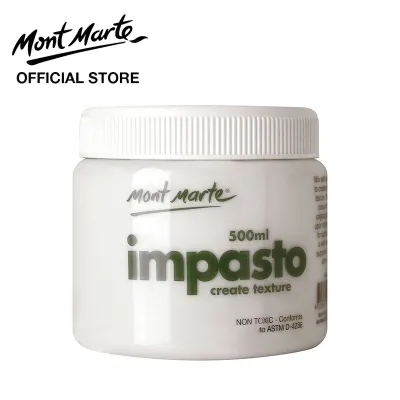
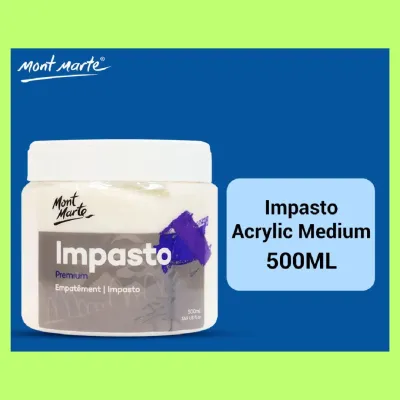
Prices are valid at publication and may change. Please refer to the product page for the latest price.
This structural requirement introduces the concept of paint viscosity, which refers to a fluid’s resistance to gradual deformation by shear or tensile stress. In the art world, paints are generally categorized as heavy body, soft body, or fluid. Heavy body paints possess a high viscosity and a thick, buttery consistency similar to cold butter or toothpaste. Fluid or soft body paints, by contrast, have a low viscosity; they flow easily and are designed to self-level, making them ideal for smooth glazing or flat washes but entirely unsuitable for impasto work because they will quickly flatten out and lose their shape.
While traditional impasto was achieved using oil paints, heavy body acrylics have become the preferred choice for modern beginners. Oil paints are highly capable of holding texture, but they dry through oxidation rather than evaporation. This chemical process is exceptionally slow, meaning thick layers of oil paint can take several months—or even years—to cure fully throughout. Furthermore, oil painting requires the use of organic solvents like mineral spirits or turpentine for cleanup and thinning, which demand highly ventilated workspaces that can be difficult to maintain in typical Singaporean apartments.
Heavy body acrylics dry much faster through water evaporation, typically curing within a few days even when applied in thick layers. They are water-soluble when wet, allowing for easy cleanup with soap and water, and they emit virtually no harmful fumes. For a beginner learning the physical mechanics of thick paint application, heavy body acrylics provide a safer, faster, and far more practical introduction to the technique.
Using standard student-grade fluid acrylics without modification is a common mistake for new painters. Because these paints lack the necessary binder density and solids content, attempting to pile them thickly on a canvas will result in a saggy, runny mess that shrinks drastically as the water evaporates. If you must use fluid paints, they require the addition of heavy gel mediums or modeling pastes to artificially build up their body, which adds complexity and cost for someone just starting out.
Key Features to Look for in a Beginner Impasto Set
When shopping for your first impasto paint set, understanding how to read product labels and evaluate specifications will save you from purchasing incompatible materials. Manufacturers use specific terminology to denote the physical properties of their paints, and knowing what to look for ensures you get a set capable of holding its shape.

Viscosity and Texture Indicators
Always inspect the packaging for terms like “Heavy Body,” “High Viscosity,” “Stiff,” or “Artist Acrylic.” If a starter set is simply labeled “Acrylic Paint” or “Studio Acrylic” without any mention of its body or viscosity, it is highly likely a medium-viscosity or fluid paint designed for general crafting rather than fine-art impasto. High-viscosity paints are specifically formulated with thickeners and a high concentration of acrylic polymer emulsion to give them the stiff, paste-like quality necessary for palette knife work.
Pigment Load versus Filler Content
Paint consists of pigments (which provide color) and binders (which hold the pigment in suspension and adhere it to the surface). Professional-grade paints feature a high pigment load with minimal fillers, resulting in intense, vibrant colors that remain rich even when spread thin or piled thick. Student-grade paints, on the other hand, contain more fillers—such as calcium carbonate or barium sulfate—to reduce production costs.
While student-grade paints are highly economical, excessive fillers cause the paint to shrink significantly as the water content evaporates during the drying process. This shrinkage can cause your textured peaks to flatten out, lose their sharp edges, or develop unsightly surface cracks. For beginners, finding a set that strikes a balance—offering a respectable pigment load without a premium price tag—is key to achieving satisfying, long-lasting textures.
Strategic Color Selection
It is highly tempting for beginners to purchase massive sets containing 24, 36, or even 48 small tubes of pre-mixed colors. However, these large sets often contain lower-quality paint with low pigment concentrations, and many of the pre-mixed colors can easily be created by hand. A far better approach is to select a smaller set of 5 to 12 high-quality colors.
A classic beginner palette should include a warm and cool version of each primary color (such as Cadmium Yellow and Lemon Yellow, Cadmium Red and Alizarin Crimson, Ultramarine Blue and Phthalo Blue), along with a few essential earth tones like Burnt Umber or Yellow Ochre, and a large container of Titanium White. This forced limitation teaches you the essential skill of color mixing, prevents your mixtures from turning muddy, and ensures that more of your budget goes toward high-quality, high-viscosity paint rather than redundant shades.
Practical Tube Sizes
Because impasto painting relies on applying thick, physical layers of medium, you will consume paint at a much faster rate than you would with watercolor or thin acrylic glazing. Small 12ml or 20ml tubes can easily be fully depleted during a single painting session, especially when mixing highlights with white. Look for starter sets that offer tube sizes of at least 59ml to 75ml. If possible, purchase an additional, separate large tube or jar of Titanium White (120ml or more), as white is the most frequently consumed color in any painter’s inventory.
Evaluating Bundled Accessories
Many beginner kits come bundled with plastic palette knives, a couple of brushes, or a small cardboard palette. While these bundles can seem convenient, the included tools are often of very low quality. Plastic palette knives are frequently too rigid or prone to snapping, and cheap brushes tend to shed bristles into your thick paint, which can ruin the texture of your artwork. It is generally more cost-effective to purchase a dedicated, high-quality paint-only set and buy your application tools separately.
Reliable Brands Offering Impasto-Friendly Starter Sets in Singapore
Several reputable art supply manufacturers produce heavy body acrylic lines that are highly reliable, consistent, and widely available in Singapore. These brands offer starter sets tailored to different budgets and skill levels, allowing you to find an option that matches your commitment.
Winsor & Newton: Galeria and Professional Heavy Body Lines
Winsor & Newton is a historic brand highly regarded by artists worldwide, and their acrylic offerings provide excellent entry points for beginners. They maintain two primary lines: Galeria Acrylics (student grade) and Professional Acrylics (artist grade).
Galeria is designed specifically for students and hobbyists, offering a smooth, free-flowing, yet moderately thick consistency. While it is technically classified as a medium-to-heavy body paint, it possesses enough viscosity to hold moderate textures and basic palette knife strokes. Because it is highly affordable and widely distributed across Singapore, a Galeria starter set is an excellent, low-risk option for beginners who want to practice basic impasto techniques without a significant financial investment.
For those willing to spend a bit more, the Winsor & Newton Professional Acrylic line offers an exceptionally buttery, thick consistency with outstanding pigment strength. This professional line features virtually no color shift from wet to dry—a common issue with cheaper paints where the acrylic binder dries from white to clear, making the dried paint appear darker than when first applied. The Professional line retains incredibly sharp, crisp knife marks and deep ridges, making it highly rewarding for beginners who want to experience premium texture retention from day one.
Liquitex: Heavy Body Acrylic Sets
As the pioneer of commercial water-based acrylic paints, Liquitex is a industry standard-bearer, and their Heavy Body Acrylic line is widely considered one of the best formulations for impasto and palette knife work.
Liquitex Heavy Body paint has a high viscosity with a rich, thick, and slightly stiff consistency. This stiffness is highly advantageous for impasto painting because it allows the paint to hold high peaks, deep ridges, and crisp textures exactly as they are laid down, with minimal shrinkage as it dries. The paint remains highly flexible when dry, reducing the risk of cracking in thick layers.
For beginners, the Liquitex Heavy Body Classic 6-Tube or 12-Tube sets are excellent choices. These sets provide a carefully curated selection of essential colors in generous 59ml tubes, offering a practical volume of paint for learning the craft. Liquitex is also highly regarded for its excellent adhesion to a wide variety of surfaces and its consistent drying times, making it a highly reliable and predictable medium to work with.
Amsterdam: Standard Series Acrylics
Produced by Royal Talens in the Netherlands, the Amsterdam Standard Series Acrylics are highly popular among hobbyists, students, and art educators in Singapore due to their exceptional price-to-performance ratio.
Amsterdam Standard Series is made with 100% pure acrylic emulsion and high-quality pigments, resulting in a paint that is naturally thick and buttery straight from the tube. While it is slightly softer and more fluid than the ultra-stiff Liquitex Heavy Body, it still holds peaks and brush marks remarkably well for its price point. It dries to a uniform satin finish and offers excellent lightfastness, ensuring your artwork remains vibrant over time.
This brand is particularly favored by beginners because it is highly affordable, allowing you to use generous, thick applications of paint without worrying about the cost of materials. Amsterdam offers versatile starter sets ranging from basic 5-tube primary sets to larger 12-tube and 24-tube collections. A major advantage of starting with Amsterdam is the ease of scaling up: once you run out of specific colors in your starter set, you can easily purchase matching 120ml tubes or massive 500ml jars locally.
Daler-Rowney: System 3 Heavy Body
Daler-Rowney’s System 3 Heavy Body is a highly reliable, budget-friendly acrylic line designed specifically for students, art schools, and high-volume painters who require consistent performance at an affordable price.
Formulated to offer a thick, heavy-body consistency, System 3 Heavy Body features a respectable loading of high-quality pigments that provide strong opacity and rich color payoff. The paint is stiff enough to hold textured brushstrokes and palette knife marks, making it an ideal practice medium for beginners who want to experiment with heavy layering and bold textures without the fear of wasting expensive artist-grade paint.
While System 3 Heavy Body may not hold ultra-sharp, microscopic peaks as rigidly as premium lines like Liquitex or Winsor & Newton Professional, its overall texture retention is more than sufficient for mastering the fundamentals of impasto. When purchasing, be sure to double-check the label to ensure you are selecting the “Heavy Body” variant, as Daler-Rowney also produces a standard System 3 line which is significantly more fluid and less suitable for thick texture work.
Essential Tools to Complete Your Impasto Setup
To successfully execute the impasto technique, having the right paint is only half the battle. You also need specialized application tools and surfaces capable of handling the physical weight and unique characteristics of heavy body acrylics.
Palette Knives
While you can apply heavy paint with a brush, a palette knife is the ultimate tool for impasto work. It allows you to scoop up large dollops of paint and lay them down cleanly, creating flat planes, sharp ridges, and sculptural effects that are impossible to achieve with bristles alone.
Avoid cheap plastic palette knives, as they lack flexibility, have rough molded edges that can ruin your textures, and are highly prone to snapping. Instead, invest in a flexible, stainless steel painting knife with an offset wooden handle. The offset handle is crucial because it keeps your knuckles from dragging through the wet paint on your canvas. A teardrop, diamond, or medium-sized trowel shape is highly versatile, allowing you to both mix colors on your palette and apply them to your canvas with precision.
Brushes
If you prefer the look of textured brushstrokes, standard soft watercolor or synthetic wash brushes will not work; their soft bristles will simply bend and collapse under the physical weight of heavy body paint. You need stiff, resilient brushes that can push thick paint around and leave visible, textured marks.
Look for brushes made from natural hog bristle or stiff, heavy-duty synthetic fibers designed specifically for acrylic or oil painting. Flat, filbert, or bright shapes are excellent for blocking in thick areas of color, while round brushes can be used for detailed, raised linework. Ensure you clean these stiff brushes thoroughly with soap and water immediately after use, as dried heavy body acrylic will ruin the bristles permanently.
Painting Surfaces
Thick layers of impasto paint add significant physical weight to a substrate, and as the paint dries, it exerts a pulling force on the surface. Standard drawing paper, thin sketching pads, or lightweight cardboards will quickly warp, buckle, or tear under this moisture and tension.
For successful impasto painting, always use heavy-duty, deeply primed stretched canvases or rigid canvas boards. Stretched canvases should have sturdy wooden stretcher bars, and the canvas itself should be tightly stretched. If you prefer working on paper, look for heavy-duty acrylic paper that is at least 300gsm to 400gsm in weight and specifically primed to handle thick media. Ensure your surface is pre-treated with a high-quality acrylic gesso, which provides a textured grip for the heavy paint to adhere to and prevents the binder from soaking into the substrate.
Palettes
Because you will be working with large volumes of thick paint, your choice of palette is highly important. Avoid porous surfaces like paper plates or raw cardboard, which will quickly absorb the moisture from your paint, causing it to skin over and dry out prematurely on your mixing area.
Instead, use a non-porous palette made of tempered glass, thick acrylic, or sealed wood. Glass is highly recommended because it is completely flat, does not absorb moisture, and is incredibly easy to clean—once your acrylic paint dries, you can simply spray it with water and scrape it off cleanly with a razor blade. Alternatively, a specialized “stay-wet” palette, which utilizes a damp sponge layer under a sheet of permeable paper, is highly useful in Singapore’s warm climate to prevent your thick paint dollops from drying out during long painting sessions.
Where to Source Art Supplies in Singapore
Finding high-quality heavy body acrylic paint sets and tools in Singapore is straightforward once you know where the local art community shops. The most reliable physical sourcing options are concentrated in specialized retail hubs and dedicated art stores.
For a comprehensive, hands-on shopping experience, the historic Bras Basah district is Singapore’s primary civic hub for art and drafting supplies. The multi-story complexes in this area house several long-standing, family-owned art retailers and large specialty stationery shops. Visiting these physical stores allows you to inspect paint tube sizes in person, test the flexibility of various stainless steel palette knives, and feel the texture and weight of different canvases before making a purchase.
In addition to the Bras Basah district, major shopping malls across Singapore often feature large, dedicated lifestyle and stationery stores with well-stocked art sections. These retail outlets frequently carry starter sets from mainstream brands like Winsor & Newton and Amsterdam, making them highly convenient for quick purchases.
If you prefer shopping from the comfort of your home, authorized online art retailers and specialized local craft marketplaces offer extensive catalogs with convenient door-to-door delivery. When browsing online, always verify the product specifications carefully to ensure you are purchasing “Heavy Body” or “High Viscosity” formulations rather than fluid lines. It is also wise to factor in shipping costs and delivery times, as heavy items like large paint sets, wooden palettes, and stretched canvases can incur higher delivery fees. Ordering from local online retailers often ensures faster transit times and lower shipping costs compared to international shipping.
To ensure a successful start, always perform a simple “peak test” on a scrap piece of canvas or heavy paper when trying a new paint brand. Squeeze a small dollop of paint onto the surface, pull it into a sharp peak with your palette knife, and observe how well it retains its shape over 48 hours. This simple trial will help you understand the unique drying speed, shrinkage, and texture retention of your specific paint-and-surface combination under Singapore’s local humidity levels.
Frequently Asked Questions (FAQ)
Can I use regular student-grade fluid acrylics for impasto painting?
No, regular fluid or soft body student-grade acrylics do not have the structural viscosity required to hold peaks, ridges, or sharp knife marks. If you attempt to pile them on thickly, they will self-level, sag, or flatten out as they dry, leaving a relatively flat surface rather than the textured, sculptural effect of impasto.
However, if you already own fluid acrylics, you do not need to discard them. You can artificially increase their viscosity by mixing them thoroughly with a heavy gel medium, modeling paste, or impasto gel. This raises the paint’s body to a thick, paste-like consistency, allowing you to practice the technique using your existing supplies. Note that adding mediums may slightly alter the color transparency or drying time, so it is always best to perform a small test patch first.
Do I need to add a thickening medium to my heavy body paint?
No, true heavy body acrylic paints are specifically formulated to be used straight from the tube for impasto painting. They already possess the buttery, stiff consistency needed to retain sharp brush and knife marks without any modification.
Adding a medium is entirely optional and is generally done to alter other properties rather than to thicken the paint further. For instance, mixing in a gloss gel medium can increase transparency and give the paint a luminous, oil-like finish, while a matte gel medium will reduce surface shine. Mediums can also be used to extend the volume of your paint—saving you money on expensive pigments—or to slow down the drying time, which is particularly useful for blending colors in Singapore’s warm climate.
Community discussion
Share your experience or ask a question. Comments are reviewed before publication.