
Selecting the right packing peanuts foam is one of the most effective ways to protect fragile items during shipping, relocation, or local courier transit. In Singapore’s busy logistics landscape, parcels undergo significant movement, stacking, and vibration before reaching their final destination. The ideal void fill must absorb these forces while preventing items from shifting inside their boxes.
To choose the best packing peanuts, you must evaluate the weight, surface sensitivity, and electrical properties of your items, as well as Singapore’s high-humidity climate. While standard foam peanuts offer excellent shock absorption for lightweight goods, specialized anti-static or interlocking variants are necessary for electronics and heavy items. Additionally, eco-friendly starch-based alternatives are widely available but require careful handling to prevent moisture-related degradation.
Quick Selection Guide: Matching Peanuts to Fragile Items
Different fragile items require specific protective qualities to survive transit. Using the wrong type of packing peanut can lead to settling, static damage, or surface abrasions. The table below matches common fragile items with their recommended packing peanut characteristics and primary protection requirements.
Products mentioned in this guide
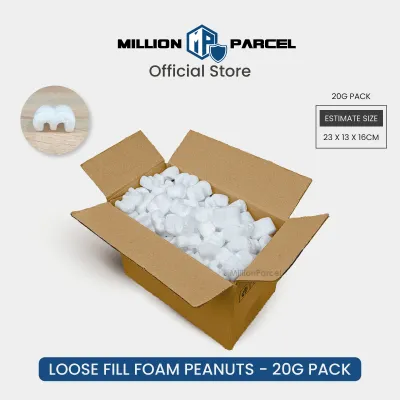
Prices are valid at publication and may change. Please refer to the product page for the latest price.
| Fragile Item Type | Recommended Peanut Type | Key Characteristic | Required Primary Protection |
|---|---|---|---|
| Lightweight Glassware & Porcelain | Standard EPS (Expanded Polystyrene) | High compressive strength, lightweight | Bubble wrap or foam sheeting |
| Sensitive Electronics & PC Parts | Anti-Static EPS (typically pink/green) | Dissipates static charge, dust-resistant | Anti-static bags or bubble wrap |
| Heavy Ceramics & Dense Ornaments | Interlocking / S-Shaped Peanuts | Resists settling under heavy loads | Thick corrugated wrap or foam corners |
| Eco-Conscious General Shipping | Biodegradable Starch-Based | Soluble in water, non-toxic, static-free | Sealed plastic lining (for humidity protection) |
| High-Value Polished Items | Any (with dense primary wrapping) | Void fill only; must not touch bare surfaces | Acid-free tissue paper or soft foam wrap |
Packing peanuts are designed primarily as void fill to occupy empty space and prevent movement. They should never be used as the sole protective layer for high-value or highly delicate items. For optimal protection, always wrap your items in a primary cushioning material, such as bubble wrap or foam sheets, before surrounding them with loose-fill peanuts.
What to Look for When Choosing Foam Packing Peanuts
Understanding the physical properties and material limitations of loose-fill packaging ensures your items remain secure from the moment they are sealed until they are opened by the recipient.

Material Composition
Loose-fill packaging is manufactured from several distinct materials, each offering unique performance profiles:
- Expanded Polystyrene (EPS): The most common synthetic foam. It consists of 98% air, making it incredibly lightweight. EPS offers excellent cushioning, high moisture resistance, and reliable structural integrity under moderate loads.
- Expanded Polyethylene (EPE): A highly resilient, flexible foam that can withstand multiple impacts without breaking down. EPE is less common as loose-fill peanuts but is highly valued for custom-molded packaging.
- Starch-Based Materials: Made from natural starches like corn, potato, or wheat. These peanuts are fully biodegradable and dissolve in water, offering an eco-friendly alternative to synthetic foams, though they behave differently under load and environmental exposure.
Shape and Interlocking Capabilities
Standard round or peanut-shaped loose fill can slide past one another when subjected to the continuous vibrations of a delivery vehicle. This movement causes the heavy item to sink to the bottom of the carton, leaving it vulnerable to ground impacts.
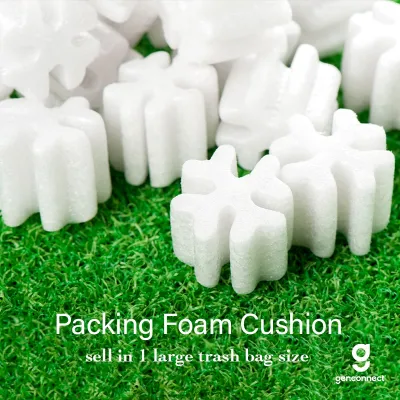
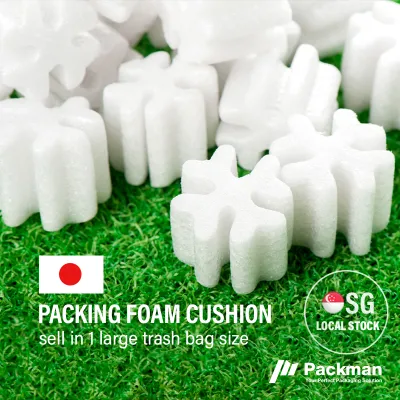
To combat this, look for S-shaped, figure-8, or interlocking designs. These shapes feature ridges and curves that physically hook into one another. When packed tightly, they form a cohesive, structured matrix that resists settling and distributes the weight of the item evenly across the entire volume of the box.
Static Electricity Risks
Friction between standard plastic foam peanuts during transport generates significant electrostatic charge. When you open a box filled with standard EPS peanuts, they will cling to your hands, clothing, and the item itself.
For sensitive electronic components, this static charge is more than an annoyance; it can cause electrostatic discharge (ESD), which can permanently damage internal microchips, circuit boards, and sensors without leaving any visible external marks. Shippers of electronics must use specially treated anti-static peanuts to prevent this hazard.
Environmental Impact and Climate Sensitivity
Singapore’s tropical climate, characterized by high relative humidity (often exceeding 80%) and warm temperatures, plays a major role in material selection. Standard EPS peanuts are completely impervious to moisture, maintaining their shape and strength regardless of humidity levels. However, they do not biodegrade and can persist in the environment for centuries if not properly managed.
Starch-based biodegradable peanuts are highly sensitive to moisture. In high-humidity environments, they can absorb ambient water vapor, causing them to shrink, lose structural integrity, or become sticky. If you choose starch-based peanuts in Singapore, you must store your bulk supply in airtight containers and ensure your shipping boxes are thoroughly sealed against moisture ingress.
Recommended Foam Packing Peanut Types by Use Case
Evaluating the specific strengths and limitations of each packing peanut type helps you make an informed decision based on your shipping volume, budget, and product vulnerability.
Standard Expanded Polystyrene (EPS) Peanuts
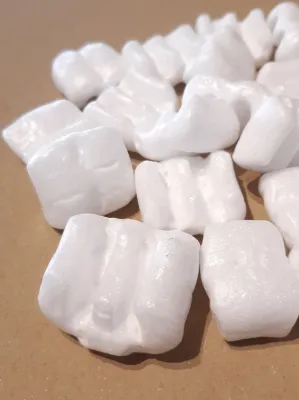
Standard white EPS peanuts are the industry standard for general-purpose shipping. They are best suited for lightweight to medium-weight fragile items, such as non-electronic household goods, toys, plastic ornaments, and sturdy glassware.
The primary advantage of standard EPS is its high compressive strength relative to its weight. It does not compress easily under steady pressure, ensuring your items remain suspended in the center of the box throughout transit. Because they are incredibly light, they add virtually zero weight to your parcel, keeping your courier and postal fees to a minimum.
However, standard EPS is highly prone to static buildup. This makes unpacking messy, as the peanuts cling stubbornly to surfaces. From an environmental perspective, standard EPS is difficult to dispose of responsibly through domestic waste streams in Singapore, as it is non-biodegradable and bulky.
Anti-Static Foam Peanuts
Anti-static foam peanuts are manufactured with an added topical agent or integrated compound that prevents the accumulation of static electricity. These peanuts are easily identified by their distinct pink or light green coloration, which serves as a visual indicator for warehouse staff and consumers alike.
These peanuts are essential for shipping computer components, graphics cards, hard drives, internal circuitry, cameras, and medical devices. They allow electronics to be packed safely without the risk of ESD. Additionally, because they do not carry a static charge, they do not cling to your hands or clothes, making the unpacking process much cleaner and more professional for the end recipient.
While highly effective, anti-static peanuts are typically more expensive than standard white EPS. They are also made of synthetic polymers, meaning they carry the same environmental disposal challenges as standard polystyrene.
Interlocking and S-Shaped Peanuts
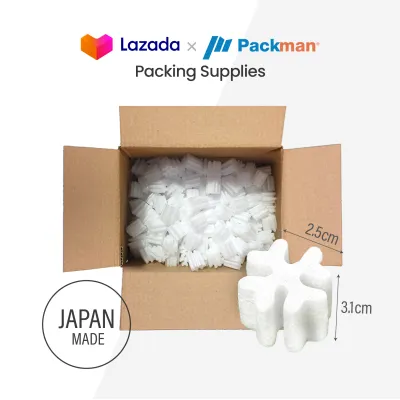
Interlocking peanuts are engineered with specific geometries, such as S-shapes, M-shapes, or figure-8s, designed to lock together under pressure. They are highly recommended for shipping heavy ceramics, dense glassware, small household appliances, and high-value items that must travel long distances.
When packed into a shipping carton, these peanuts nestle into one another, creating a dense, supportive barrier. This interlocking mechanism prevents the packed item from shifting or sinking to the bottom of the container, even when subjected to the heavy vibrations of air freight or prolonged road transport. This ensures the item remains perfectly centered and cushioned on all sides.
On the downside, interlocking peanuts tend to have a slightly higher purchase cost per cubic meter. They also require more storage space in your home or warehouse, as they do not compress down easily when stored in bulk bags.
Biodegradable and Starch-Based Alternatives
Biodegradable packing peanuts are made from natural starches and serve as a direct alternative to synthetic foam. While they are not technically “foam” in the polymer sense, they are processed to have a similar airy, expanded structure that provides comparable void-fill performance.
These peanuts are ideal for eco-conscious businesses and individuals shipping non-moisture-sensitive items. Their greatest advantage is their environmental profile: they are fully compostable, non-toxic, and dissolve completely in water within seconds. They also carry a natural resistance to static electricity, eliminating the cling associated with standard EPS.
However, their sensitivity to water is a significant limitation in Singapore. If a shipping box is exposed to heavy rain during delivery, or if the peanuts are stored in a damp warehouse, they can dissolve or collapse, leaving your fragile items completely unprotected. They are also heavier than EPS, which can slightly increase shipping costs for high-volume senders.
How to Pack Fragile Items Effectively Using Foam Peanuts
Simply filling a box with packing peanuts is not enough to guarantee protection. To ensure your fragile items survive transit, you must follow a structured packing process.
Primary Wrapping
Never place a bare fragile item directly into a bed of packing peanuts. Small particles of foam dust, dirt, or loose starch can find their way into delicate mechanisms, hinges, or ports. Furthermore, the friction of the peanuts rubbing against polished glass, glazed ceramics, or delicate metal surfaces during transit can cause micro-scratches.
Always wrap your item securely in a primary protective layer first. Use bubble wrap, PE foam sheets, or acid-free tissue paper, securing the wrapping with packaging tape. For items with screens or highly polished finishes, refer to the manufacturer’s care instructions to ensure your wrapping material will not damage the surface coating.
Base and Top Layers
To pack your item securely, follow these steps:
- Create the Base Layer: Pour a minimum of 5 to 7 centimeters (2 to 3 inches) of packing peanuts into the bottom of your shipping box. This layer acts as a shock-absorbing cushion against ground impacts.
- Position the Item: Place your wrapped fragile item in the exact center of the box. Ensure there is at least 5 centimeters of space between the item and all four side walls of the box.
- Fill the Sides: Pour packing peanuts into the gaps around the sides of the item, gently tapping the sides of the box to help the peanuts settle into any empty pockets.
- Add the Top Layer: Fill the remainder of the box with peanuts until they sit slightly above the top rim of the carton (about 1 to 2 centimeters). This overfill ensures that when you close the box flaps, the peanuts compress slightly, locking the item firmly in place.
The Shake Test
Before taping the box shut, close the top flaps and gently shake the package. If you can feel or hear the item shifting, sliding, or knocking against the sides of the box, the packing density is insufficient.
Open the box and add more packing peanuts, pressing them down gently into the corners until the item is completely immobile. Once the shake test yields zero movement, seal all seams of the box securely using high-quality packaging tape in an “H” pattern.
Box Selection
Packing peanuts distribute external forces, but they cannot maintain the structural integrity of a weak carton. Always use a rigid, double-walled corrugated cardboard box for shipping fragile items.
If you reuse an old box that has soft corners or structural creases, it can easily buckle under the weight of heavier parcels stacked on top of it in a courier van. Packing peanuts cannot prevent damage if the outer box itself collapses. Check the manufacturer’s stamp on the box to verify its burst strength or edge crush test (ECT) rating before shipping high-value goods.
Where to Source Packing Peanuts in Singapore
Finding the right supplier in Singapore depends on your shipping volume, budget, and storage capacity.
Industrial and Packaging Distributors
For businesses, e-commerce sellers, or individuals undertaking a major home relocation, industrial packaging distributors are the most cost-effective option. Located primarily in industrial hubs such as Ubi, Jurong, Woodlands, and Geylang, these suppliers sell packing peanuts in bulk bags, typically measuring 10 to 15 cubic feet.
Buying in bulk significantly lowers the cost per liter. Many of these distributors also offer specialized options, including certified anti-static pink peanuts and interlocking S-shaped foam, which may not be readily available in smaller retail stores. Most industrial suppliers offer local delivery within Singapore, which is highly convenient given the bulky nature of these bags.
Office Supply and Stationery Chains
If you only need to ship a single gift or pack a few fragile items for a small move, purchasing a massive industrial bag of peanuts is impractical. Local office supply stores and major stationery chains across Singapore stock smaller, consumer-friendly bags of packing peanuts.
These retail packs are easy to transport and store. While the cost per liter is higher than buying in bulk, it eliminates waste and saves valuable storage space in smaller Singaporean apartments.
E-commerce Platforms and Online Marketplaces
Online marketplaces are an excellent middle ground for sourcing packing peanuts. Local packaging merchants list various quantities on these platforms, ranging from small 10-liter bags to full-sized industrial sacks.
Shopping online allows you to compare prices easily and read customer reviews to verify the quality, shape, and cleanliness of the peanuts. Many local sellers offer free or low-cost home delivery within Singapore, saving you the hassle of transporting bulky bags on public transport or in a personal vehicle.
Reuse and Recycling Programs
To minimize environmental waste and packaging costs, consider sourcing clean, used packing peanuts through local community channels. Many residents and businesses in Singapore receive parcels containing packing peanuts and look to dispose of them sustainably.
Check local online community boards, neighborhood recycling groups, or specialized packaging reuse initiatives. Many people are happy to give away clean EPS or starch-based peanuts for free, helping to extend the lifecycle of these materials and reduce plastic waste in Singapore.
Frequently Asked Questions (FAQ)
Can I reuse foam packing peanuts from previous deliveries?
Yes, you can safely reuse foam packing peanuts from previous deliveries, provided they are clean, dry, and have retained their original shape and compressive strength. Before reusing them, inspect the peanuts to ensure they are free of dust, moisture, or food residue, which could damage your items.
However, avoid reusing standard white EPS peanuts for shipping sensitive electronics. Over time, these peanuts lose any temporary anti-static properties they may have had and accumulate static-attracting dust, increasing the risk of electrostatic discharge during transit.
Are foam packing peanuts accepted in Singapore's standard recycling bins?
No, standard expanded polystyrene (EPS) packing peanuts are not accepted in the blue household recycling bins in Singapore. Because of their extremely light weight and low density, they easily blow away during collection, causing litter. They can also break into tiny pieces, contaminating other recyclable materials and clogging sorting machinery at recycling facilities.
To dispose of EPS packing peanuts responsibly, you should contact specialized packaging recycling drop-off points or local e-waste and bulky item collection services that specifically accept clean EPS for densification and recycling. Otherwise, they must be disposed of in your general waste bin, where they will be sent for incineration.
Community discussion
Share your experience or ask a question. Comments are reviewed before publication.