
Embroidery is a deeply rewarding craft, but starting out can feel overwhelming when you are faced with hundreds of thread options, hoop sizes, and fabric types. For beginners in Singapore, choosing the right embroidery thread kit is the most critical first step to ensuring a smooth, frustration-free introduction to needlework. A well-curated kit provides the exact materials needed to practice basic stitches without the stress of sourcing individual tools from multiple specialty stores.
When selecting your first kit, the goal is to find a balance between thread quality, essential tool inclusion, and clear instructions. The right choice allows you to focus on mastering your tension and stitch placement rather than fighting with tangling, fraying, or bleeding threads. Whether you want to complete a pre-designed pattern or build a colorful stash for freehand designs, understanding what makes a kit beginner-friendly will save you time and money.
What to Look for in a Beginner Embroidery Thread Kit
To evaluate any embroidery thread kit, you must first look closely at the thread quality and material composition. Most high-quality embroidery floss is made from 100% mercerized cotton. Mercerization is a treatment that increases luster, strength, and dye affinity while reducing lint and fraying. When you pull mercerized cotton through fabric, it glides smoothly, maintaining consistent tension. In contrast, cheap synthetic polyester blends or unmercerized cotton threads tend to snag, split, or stretch unevenly, which can quickly frustrate a beginner trying to maintain neat stitches.
Products mentioned in this guide
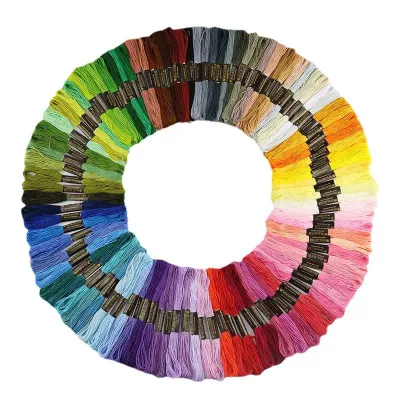
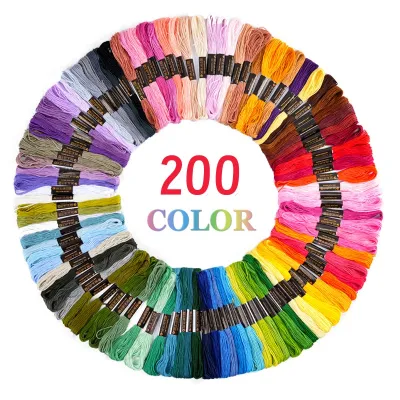
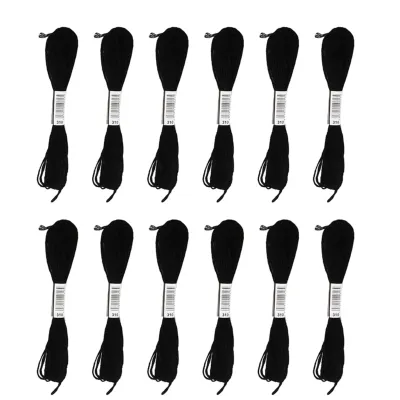
Prices are valid at publication and may change. Please refer to the product page for the latest price.
Color variety and organization methods also play a massive role in your stitching workflow. Some kits deliver thread as loose skeins (coiled bundles), while others provide them pre-sorted on paper or plastic bobbins. For a beginner, pre-sorted threads are incredibly beneficial. Untangling loose skeins and winding them onto bobbins yourself can take hours of preparation before you can even make your first stitch. A kit that offers clearly labeled color codes on organized cards or bobbins lets you start stitching immediately and keeps your workspace tidy.
If you are buying a comprehensive kit, you must also assess the inclusion and quality of the essential tools. A standard starter kit should feature a sturdy embroidery hoop, a selection of needles in various sizes, suitable fabric, and a detailed instruction manual. Pay close attention to the hoop quality; cheap plastic hoops can slip, while poorly finished wooden hoops can snag delicate fabric. The needles should have smooth eyes that do not shred the thread as you thread them, and the fabric must have an appropriate weave density to support the weight of the provided thread.
Finally, evaluate the overall value within the local context of Singapore. Basic thread-only packs or small starter kits typically range from S$10 to S$25, while comprehensive all-in-one kits or premium themed imports can range from S$30 to S$60 or more. While international e-commerce platforms offer incredibly low prices, you must factor in shipping costs, potential transit damage, and delivery times. A cheap kit from overseas might take weeks to arrive and could feature warped hoops or crushed packaging. Conversely, local craft shops in Singapore offer immediate availability and reliable quality, though often at a higher price point. Balancing these factors ensures you get a kit that is both affordable and pleasant to use.
Which Type of Embroidery Kit Matches Your Needs?
All-in-One Starter Kits
All-in-one starter kits are designed specifically for absolute beginners who want to skip the preparation phase and start stitching right away. These comprehensive packages typically include everything you need for a single project: pre-printed fabric, a coordinating selection of threads, needles, an embroidery hoop, and a step-by-step instruction booklet. The main appeal of this setup is convenience, as you do not need to spend time researching which fabric or needle size to buy.

However, because these kits are bundled for mass consumption, there can sometimes be a compromise on individual tool quality. For instance, the included hoop might be a basic bamboo ring that requires frequent tightening, or the needles might have rough eyes that wear down your thread. When evaluating an all-in-one kit, check user feedback regarding the hoop’s grip and the needle smoothness.
Additionally, it is essential to verify that the included fabric is suitable for the provided thread weight. A common issue with low-cost starter kits is the pairing of heavy six-strand floss with thin, loosely woven synthetic fabrics. This combination causes the fabric to pucker or warp under the tension of your stitches. Look for kits that specify cotton canvas, linen, or high-quality cotton twill as the base fabric to ensure a stable stitching experience.
Thread-Only Variety Packs
Thread-only variety packs focus entirely on providing a wide spectrum of colors, making them the ideal choice for crafters who already own basic tools like hoops and needles. These packs usually contain dozens of individual skeins of embroidery floss, offering an instant library of shades for freehand designs or custom patterns. They are highly cost-effective for expanding your color palette without paying for redundant tools you already own.
When shopping for thread-only packs, you must verify the thread length per skein and check for colorfastness claims on the packaging. Standard high-quality embroidery skeins are typically 8 meters (8.7 yards) long and consist of six easily separable strands. Some budget packs look appealing because they offer a high number of colors, but they may only provide 4 or 5 meters per skein, which runs out quickly on larger projects.
While these packs offer maximum creative freedom, they require you to be self-sufficient. You will need to source your own fabric, transfer your designs manually, and select the appropriate needle sizes yourself. If you enjoy the process of planning your own projects and choosing your own materials, a thread-only variety pack provides excellent long-term value and creative flexibility.
Project-Specific or Themed Kits
Project-specific or themed kits are centered around a particular design motif, such as delicate floral arrangements, modern geometric patterns, or vibrant tropical scenes. These kits are excellent for maintaining motivation because they provide a clear, guided path to a finished piece of art. They are particularly popular among beginners who want to learn specific embroidery techniques, like satin stitch or French knots, within a structured context.
One of the primary benefits of a themed kit is that it contains the exact amounts of thread required for that specific design, which minimizes waste and keeps costs down. You do not have to buy entire skeins of ten different colors just to use a few inches of each. This makes themed kits an efficient way to try out different styles of embroidery without accumulating excess leftover materials.
The main limitation of these kits is that they offer very little room for error or customization. Because the thread quantities are precisely measured, making mistakes that require you to cut out and redo stitches can leave you short of thread. Furthermore, the leftover threads are usually minimal, meaning you will have very little material left over to use for future, unrelated projects once the main design is complete.
How to Verify Kit Quality When Shopping Online
Shopping for an embroidery thread kit on online marketplaces requires a discerning eye to avoid low-quality products that lead to frustration. The first step is to read beyond the product title and look closely at the detailed material specifications. Sellers often pack their listings with generic, high-ranking search terms like “premium,” “soft,” or “professional grade.” Instead of relying on these buzzwords, search the product description for concrete terms like “100% mercerized cotton” or “long-staple Egyptian cotton.” If the material is listed simply as “polyester,” “cotton blend,” or is not specified at all, it is highly likely to be a rough, synthetic thread that will split and knot easily.
Next, analyze user reviews, paying close attention to photos uploaded by previous buyers. Review photos provide an honest look at what actually arrives in the box, showing the true colors of the threads and the physical quality of the tools. Look for reviews that mention “color bleeding” or “fraying.” If multiple buyers show photos of thread dyes running onto the fabric after washing, or complain that the thread shreds easily when pulled through the needle, you should avoid that listing. Also, check if users report missing items, such as needles or the instruction manual, which is a common issue with unbranded bulk kits.
It is also crucial to verify the actual number of skeins and the yardage per skein. Some online listings use misleading phrasing to inflate their product specifications. For example, a listing might claim to offer “150 pieces of thread,” but upon closer inspection, they are counting individual short strands or counting accessories like bobbins and needles as part of the total piece count. Ensure the description explicitly states the number of full skeins (e.g., “50 individual skeins”) and the length of each skein in meters or yards.
Finally, check the seller’s rating, return policies, and estimated delivery times to Singapore. Many kits sold on local e-commerce platforms are shipped from cross-border warehouses. While these items are often inexpensive, they can take several weeks to arrive and are prone to damage during transit. A wooden embroidery hoop can easily warp or crack if it is not packaged securely for international shipping. Choosing a seller with a high rating, positive local feedback, and a clear return policy ensures you have recourse if your kit arrives damaged, incomplete, or significantly different from the online description.
Common Mistakes to Avoid When Buying Your First Kit
One of the most common mistakes beginners make is buying kits with non-colorfast threads. Colorfastness refers to a fabric or thread’s ability to retain its dye without running or fading when wet. In Singapore’s hot and highly humid climate, moisture from your hands or the air can cause cheap dyes to bleed onto your background fabric while you stitch. Furthermore, if you plan to wash your finished piece to remove pre-printed pattern lines, non-colorfast threads will bleed and ruin your entire project. Always look for kits that explicitly state their threads are colorfast or reactive-dyed.
Another frequent pitfall is overlooking the need for proper storage solutions from the very beginning. It is easy to assume you can keep your threads loose in a box, but they will quickly turn into a tangled, unusable mess. Without bobbins to wind the thread onto and an organized storage box, you will waste valuable stitching time trying to separate individual strands from a tangled knot. Investing in a kit that includes plastic or cardboard bobbins, or purchasing them separately, is essential for maintaining the quality and usability of your thread supply over time.
Beginners also frequently fall into the trap of assuming that “more colors” automatically equals “better quality.” A massive kit offering 200 colors for an incredibly low price can be tempting, but these budget packs often sacrifice material quality to keep prices down. The threads are often made of cheap, rough polyester that is difficult to work with, and the dyes can easily stain your hands and fabric. It is always better to start with a smaller, high-quality kit of 30 to 50 well-made cotton threads than a massive box of frustrating, low-grade synthetic floss.
Lastly, do not ignore the fabric type included in all-in-one starter kits. Many cheap kits include stiff, heavily starched synthetic fabrics or thin polyester sheets that are difficult to needle and do not hold tension well in a hoop. Proper embroidery requires a stable, workable medium like 100% cotton, linen, or cotton-linen blends. Before purchasing, verify that the kit specifies the fabric material so you do not end up struggling to push your needle through a stiff, unyielding synthetic backing.
Frequently Asked Questions (FAQ)
How should I store my embroidery threads in Singapore's humid climate?
To protect your embroidery threads from Singapore’s high humidity, store them in airtight plastic containers or heavy-duty resealable bags. Always include a few silica gel packets inside the storage container to actively absorb any trapped moisture, which prevents mold growth and fiber degradation. Additionally, keep your storage boxes in a cool, dark place, such as a closet or drawer, away from direct sunlight. Prolonged exposure to sunlight can fade the dyes and weaken the cotton fibers over time, making them brittle and prone to snapping.
What is the difference between embroidery floss and pearl cotton?
The primary difference lies in their structure and how they are used. Standard embroidery floss, also known as stranded cotton, consists of six individual strands twisted loosely together. These strands can be easily separated, allowing you to adjust the thickness of your thread depending on the level of detail required for your project. Pearl cotton, on the other hand, is a single, non-divisible thread that is tightly twisted to create a distinct, rope-like appearance with a high sheen. It is ideal for adding texture, creating bold outlines, and working on surface embroidery where a uniform, raised line is desired.
Community discussion
Share your experience or ask a question. Comments are reviewed before publication.