
Quick Answer: The Best Embroidery Thread for Your First Project
When embarking on your first needlework journey, choosing the right thread is the single most important decision you will make. For almost every beginner, standard stranded cotton is the absolute best choice. This material is highly forgiving, widely accessible, and specifically engineered to make the learning process as smooth as possible.
Stranded cotton features a natural, matte texture that provides an excellent grip on your fabric. This natural friction prevents your stitches from slipping or losing their shape while you are still developing your tension control. Additionally, the unique structure of stranded cotton allows you to easily separate the individual plies, giving you complete control over the thickness of your lines and fills.
In contrast, alternative materials like polyester and silk present unnecessary obstacles for a first-time stitcher. Polyester is highly durable and offers a brilliant shine, but its slippery synthetic fibers are notoriously prone to tangling, looping, and knotting. Silk provides an unmatched, luxurious luster, but its high cost, delicate nature, and sensitivity to friction make it highly frustrating to handle without advanced technical skills. Starting with stranded cotton ensures you can focus on mastering your basic stitches without fighting your materials.
Products mentioned in this guide
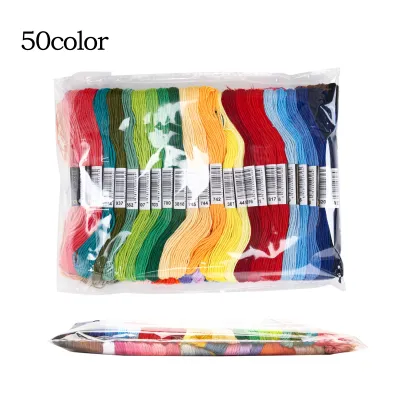
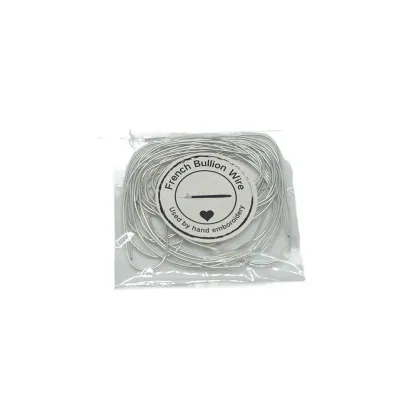
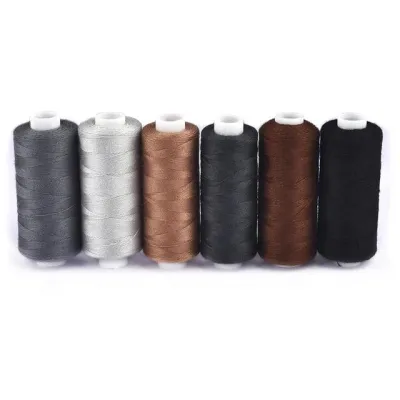
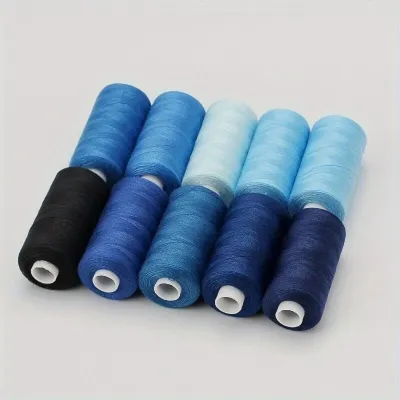
Prices are valid at publication and may change. Please refer to the product page for the latest price.
Cotton, Polyester, and Silk: How Thread Material Affects Your Stitching
The physical properties of a fiber dictate exactly how it behaves when pulled through fabric, how it reflects light, and how long the finished piece will endure. Understanding the structural differences between cotton, polyester, and silk will help you anticipate how each material responds to your needle.

Cotton Embroidery Thread: The Forgiving Standard
Cotton is the undisputed benchmark of the hand-embroidery world. Most high-quality cotton threads undergo a process called mercerisation. This chemical treatment strengthens the natural fibers, increases their dye uptake for richer colors, and imparts a subtle, elegant sheen. However, even mercerised cotton retains enough of its natural staple-fiber texture to provide excellent friction against the weave of your fabric. This characteristic, often referred to as “bite,” ensures that once a stitch is pulled into place, it stays secure without sliding or loosening.
Another major benefit of cotton is its multi-ply construction. A standard skein of embroidery cotton consists of six individual strands loosely twisted together. You can easily pinch and pull apart these strands to customize your thread thickness. For instance, using a single strand allows for incredibly fine detail work, while using three or four strands creates bold, textured outlines. This versatility makes a single skein of cotton highly adaptable to various design elements.
Furthermore, cotton has virtually no elasticity. When you pull the thread through your fabric, it does not stretch out of shape, which drastically reduces the risk of puckering your background material. While it lacks the high-gloss shine of synthetic alternatives, its soft, classic finish is highly forgiving of minor mistakes, making uneven stitches far less noticeable to the naked eye.
Polyester Embroidery Thread: Durable but Slippery
Polyester is a synthetic filament fiber known for its incredible tensile strength and resilience. It is highly resistant to abrasion, chemical bleaching, and intense washing cycles, which is why it is the industry standard for machine embroidery and commercial garments. If you are embroidering an item that will undergo frequent, heavy laundering, polyester is an incredibly durable choice.
However, these same properties make polyester highly challenging for hand embroidery, especially for beginners. Synthetic filaments are exceptionally smooth and round, meaning they lack the natural grip of cotton. When hand sewing, polyester thread tends to slip through the fabric, making it difficult to maintain consistent stitch tension. If your grip relaxes even slightly, the thread can slacken, resulting in loose, uneven loops on the front of your work.
Additionally, polyester fibers possess a high level of structural “memory.” This means the thread resists bending and constantly attempts to return to its straight, uncoiled state. This springiness frequently leads to frustrating loops, twists, and spontaneous knots (often called “pig-tailing”) as you pull the thread through the fabric. For someone still trying to master basic stitch mechanics, managing these constant tangles can quickly turn an enjoyable hobby into a frustrating chore.
Silk Embroidery Thread: Beautiful but Demanding
Silk is a natural protein fiber harvested from silkworm cocoons, renowned for its unmatched, deep luster and fluid drape. It reflects light in a unique, multi-directional way that synthetic fibers cannot truly replicate. In professional needle painting and historical embroidery, silk is the premier medium for creating realistic shading and delicate, lifelike textures.
Despite its beauty, silk is highly demanding and generally unsuitable for a beginner’s first project. First, it is a premium material that carries a significant financial investment. In Singapore specialty craft shops, a single skein of high-quality silk thread can cost several times more than a standard skein of cotton, making it an expensive option for practicing basic techniques.
Handling silk also requires immaculate hand hygiene and advanced tension control. The delicate protein filaments are highly sensitive to friction; even minor rough patches on your skin or cuticles can snag the thread, causing it to fuzz, split, or shred instantly. Silk also reacts strongly to moisture and natural skin oils, meaning prolonged handling can dull its brilliant sheen before the project is even completed. Without specialized needles and a highly practiced, gentle touch, working with silk can easily ruin both the thread and the beginner’s confidence.
Matching Your Thread to the Right Fabric and Project
Achieving a beautiful finished piece requires more than just choosing the right thread; you must also ensure your thread material is perfectly compatible with your background fabric and the scope of your project.
- Fabric Pairing: For your first project, pair your cotton embroidery thread with a stable, medium-weight, non-stretchy woven fabric. Excellent options include 100% cotton calico, medium-weight linen, or a sturdy cotton canvas. These fabrics feature a balanced, visible weave that supports the weight of the thread without warping. Avoid highly elastic knits, slippery silks, or sheer synthetics for your first attempt, as these materials require specialized backing stabilizers and advanced tension management to prevent severe puckering.
- Project Selection: Keep your initial project scope manageable. Opt for simple hoop art, basic stitch samplers, or small, flat decorative motifs on stable items like a canvas tote bag. These projects allow you to keep the fabric tightly stretched in an embroidery hoop, which mechanically assists you in maintaining even tension. Avoid functional garments, stretchy socks, or items with complex three-dimensional curves until you are comfortable managing thread tension on more dynamic surfaces.
- Checking Labels and Care: Always review the manufacturer's care instructions on both your thread skein and your base fabric before you begin stitching. In Singapore’s warm, humid climate, washing and drying behavior is a critical consideration. Ensure that the shrinkage rates of your thread and fabric are compatible. If you embroider with a non-shrunk cotton thread on a highly shrinkable cotton fabric, the entire design will warp, pucker, and distort the moment it is washed. Pre-washing your fabric is a highly recommended step to eliminate this risk entirely.
Practical Thread Handling Tips to Avoid Tangles and Frustration
To keep your stitching sessions enjoyable and productive, adopting proper thread preparation and maintenance habits is essential. These simple, low-risk steps will protect your materials and prevent common physical frustrations.
- Managing Length: A very common beginner mistake is cutting an excessively long piece of thread to avoid having to re-thread the needle. However, as thread is repeatedly pulled through the fabric, the friction wears down the fibers, causing them to thin, fray, and tangle. To prevent this, always cut your thread to a manageable length. A good rule of thumb is the "forearm rule"—measure the thread from your fingertips to your elbow, which is roughly 45 to 50 centimeters. This length is short enough to prevent tangling but long enough to give you plenty of stitching time.
- Threading and Needles: Always match your needle size to the thickness of your thread. For general hand embroidery with stranded cotton, use a crewel or embroidery needle (typically sizes 5 to 9 for beginners). These needles feature a long, oval eye designed to accommodate multiple strands of floss without pinching or damaging the fibers. If you struggle to separate and thread the fine plies, use a sturdy metal needle threader rather than forcing the thread through an eye that is too small, which can shred the cotton.
- Environmental Care: Natural fibers like cotton and silk are highly sensitive to environmental factors. Singapore's high relative humidity can trap moisture in natural fibers, leading to mold, mildew, or fiber degradation over time. Store your embroidery threads in a cool, dry, and dark place. Clear plastic organizer boxes fitted with small silica gel packets are excellent for protecting your thread collection from moisture, dust, and UV-induced color fading.
- Colorfastness Check: Highly saturated or dark thread colors, such as deep reds, navy blues, and forest greens, can sometimes bleed their dyes when exposed to water. Before you begin a project that you plan to wash, perform a simple, low-risk spot test. Wet a small scrap of the thread in room-temperature water, lay it flat on a white paper towel or a scrap piece of your project fabric, and press it gently. If any dye transfers to the surface, you will need to take extra precautions, such as washing the finished piece only in cold water with a color-catcher sheet, or choosing a different brand of thread.
Frequently Asked Questions (FAQ)
Can I use regular sewing thread for my first embroidery project?
While it is physically possible to stitch with regular sewing thread, it is not recommended for hand embroidery. Sewing thread is engineered to be incredibly thin, tightly twisted, and strong enough to withstand the high-speed tension of a sewing machine. Because of this tight twist, it lacks the volume, soft texture, and light-reflecting properties of embroidery floss. If you try to fill a shape or stitch a line with sewing thread, the results will look flat, thin, and sparse, requiring an exhausting number of stitches to achieve basic coverage.
How many strands of thread should I use as a beginner?
Standard stranded cotton consists of six individual plies. As a beginner, you should generally start by using two or three strands for your projects. This thickness provides a clean, highly visible line that fills shapes efficiently without creating excessive bulk. Using all six strands at once creates a massive amount of friction as you pull the needle through the fabric, which can enlarge the holes in your woven material, tire out your hands, and make detailed stitch placement incredibly difficult.
Does embroidery thread expire or go bad?
Embroidery thread does not have a strict expiration date, but natural fibers like cotton and silk will degrade if stored poorly. Prolonged exposure to direct sunlight, high heat, and high humidity will break down the natural fibers, making them brittle, weak, and prone to snapping mid-stitch. To test if older thread is still usable, cut a small piece and give it a gentle, firm tug. If it snaps with almost no resistance, the fibers have degraded, and the thread should be discarded to avoid frustration during your project.
Community discussion
Share your experience or ask a question. Comments are reviewed before publication.