
Selecting the right Disney stickers for your child’s primary school journey is more than just picking their favorite movie characters. It requires balancing developmental milestones, fine motor skills, and classroom rules. Younger children benefit from large, tactile stickers that serve as immediate positive reinforcement, while older students require subtle, functional designs that aid in organization and study planning. By matching sticker formats to your child’s specific grade level, you can transform these fun stationery items into valuable tools for learning and self-expression.
How to Choose Age-Appropriate Disney Stickers for School
Using Disney stickers in a school setting requires a thoughtful balance between fun and academic focus. While stickers are highly motivating and visually appealing, they must not disrupt the learning environment. Choosing the right stickers involves considering how they will be used, where they will be placed, and whether they comply with classroom expectations.
Sticker size is a primary consideration for school supplies. Large, oversized designs can easily clutter notebooks, obscure important teacher feedback, or distract classmates during lessons. Compact, flat stickers are generally more school-appropriate as they fit neatly within margins, ruled lines, or the small grid spaces of student planners without overwhelming the page.
Products mentioned in this guide
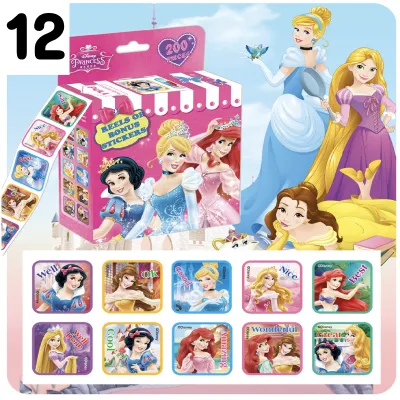
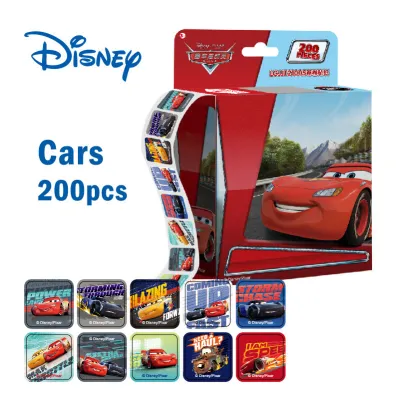
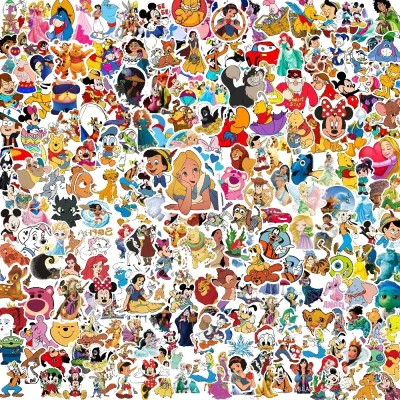
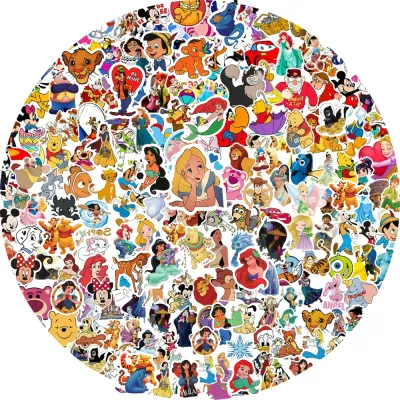
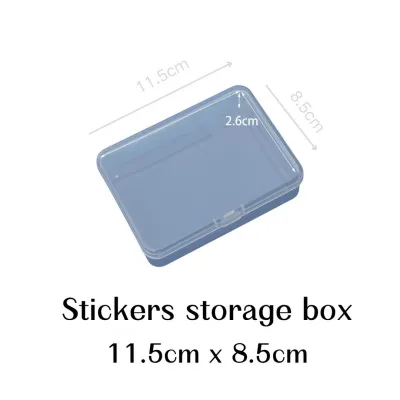
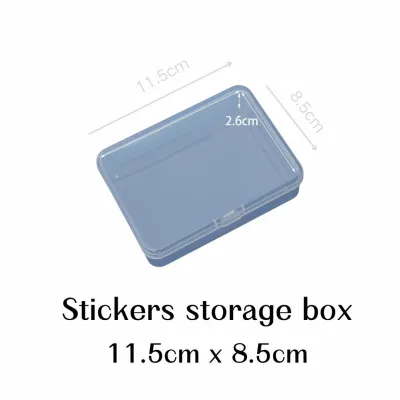
Prices are valid at publication and may change. Please refer to the product page for the latest price.
Adhesive selection is equally critical for preserving school property. Permanent adhesives are excellent for personal belongings like water bottles, lunchboxes, and pencil cases that undergo daily wear and tear. However, they can ruin school-issued worksheets, library books, or rental textbooks. For any item that must eventually be returned in pristine condition, prioritizing removable or low-tack adhesives is essential.
Before purchasing, always check your child’s specific school policies regarding decorated stationery. Some primary schools in Singapore maintain strict guidelines regarding decorated notebooks, distracting accessories, or the trading of items during class hours. Keeping stickers confined to personal homework diaries or home-based study spaces ensures compliance with classroom expectations.
Finally, consider your child’s developmental readiness. Peeling and placing stickers is a fantastic way to refine fine motor skills, but the physical format must match your child’s current dexterity level. Providing stickers that are too small or intricate for younger hands can lead to frustration, turning a fun activity into a challenging task.
Lower Primary (Grades 1-2): Bright, Simple, and Reward-Focused
Transitioning to Primary 1 and 2 is a major milestone for young learners. During this stage, children respond exceptionally well to visual encouragement and familiar faces that offer emotional comfort in a new environment. Stickers used during these early years should focus on simplicity, ease of use, and positive reinforcement.

Recommended Themes and Formats
Classic Disney characters like Mickey Mouse, Minnie Mouse, Donald Duck, and Winnie the Pooh are ideal for this age group. These timeless figures provide a sense of security and are universally recognized, helping young children feel more at home at their desks as they navigate their new daily routines.
Tactile formats, such as thick puffy stickers or textured foam stickers, are highly engaging for younger hands. These raised designs are easy to grasp, helping to build hand-eye coordination as children peel them from the backing sheet. The physical feedback of a textured sticker makes the process of decorating personal folders highly satisfying.
High-contrast, colorful reward stickers featuring encouraging phrases like “Great Job!” or “Super Star!” are excellent for early readers. These bold visual cues help young students associate positive efforts with their favorite characters, turning daily tasks like packing their schoolbags or completing spelling reviews into rewarding achievements.
What to Look For and School Tips
Look for sticker sheets featuring wide, pre-cut borders and easy-peel backing. Children in lower primary are still developing their fine motor control, and overly intricate sticker edges can easily tear, leading to frustration. Simple geometric shapes like circles or squares are much easier for small hands to manage independently.
Use these stickers as structured positive reinforcement tools at home rather than letting children carry entire sheets to school. You can establish a simple reward chart for packing schoolbags, completing spelling homework, or reading a daily storybook, allowing your child to place their favorite Disney character on the chart upon completion.
Ensure the adhesive is gentle and paper-friendly. Lower primary students frequently work with thin worksheets and library books. Low-tack stickers allow for easy repositioning or removal without tearing delicate paper fibers, keeping school-issued materials neat and undamaged.
Middle Primary (Grades 3-4): Story-Driven and Interactive Designs
As children enter Primary 3 and 4, their interests shift toward complex narratives, social connections, and personal organization. They begin to manage more subjects, requiring practical stationery solutions that reflect their growing independence and expanding social circles.
Recommended Themes and Formats
Popular movie franchises and action-oriented series, such as Pixar’s Toy Story, Inside Out, and modern Disney favorites like Frozen or Encanto, resonate deeply with this age group. These characters spark imaginative discussions and help children connect with peers over shared interests during recess.
Waterproof name labels featuring Disney characters are highly functional for middle primary. With science kits, art supplies, and physical education (PE) gear added to their daily routines, clear name labels help prevent misplaced items in crowded classrooms. These durable labels ensure that water bottles and lunchboxes make it back home safely.
Multi-sheet sticker books and interactive activity sets are perfect for quiet play during recess or after school. These sets often include scene backdrops where children can arrange characters to create their own stories, encouraging creative writing, narrative skills, and cooperative play with classmates.
Sharing and trading duplicate stickers can become a healthy social activity among peers. It teaches children negotiation, sharing, and respectful interaction, provided it is kept to designated break times and does not interfere with classroom lessons.
What to Look For and School Tips
Select flat, thin vinyl stickers that do not add bulk to notebooks. Bulky stickers can make writing on subsequent pages difficult, creating uneven surfaces that hinder neat handwriting. Flat designs sit flush against the paper, ensuring that notebooks remain easy to write in.
Encourage your child to use stickers for functional color-coding. For instance, they can place a blue Disney sticker on their English folder and a red one on their Mathematics notebook, making it easy to grab the correct materials from their cubby or schoolbag during quick lesson transitions.
Avoid overly complex, multi-piece sticker sets that require extensive cleanup. If a sticker set has dozens of tiny, loose pieces, it is highly likely to cause clutter or get lost under classroom desks, leading to unnecessary distractions during lesson time.
Upper Primary (Grades 5-6): Subtle, Functional, and Aesthetic Picks
Students in Primary 5 and 6 face increased academic responsibilities as they prepare for major examinations. Their taste in stationery matures, shifting away from bright toy-like items toward sophisticated, aesthetic designs that aid in time management and personal organization.
Recommended Themes and Formats
Older primary students often prefer minimalist Disney designs, vintage sketch-style illustrations, or subtle character silhouettes. Muted pastel palettes or classic black-and-white retro Disney art allow them to express their fandom in a mature, stylish way that feels appropriate for their age.
Planner stickers and functional icon sheets are incredibly useful for this age group. Stickers shaped like small clocks, books, or pencils help students mark exam dates, project deadlines, and Co-Curricular Activity (CCA) schedules in their student planners, making academic tracking more visual and engaging.
Bullet journal kits featuring coordinated Disney themes allow students to design their own study layouts. These cohesive kits provide a creative outlet that doubles as a practical organizational tool, helping older children manage their busy weekly routines and develop essential time-management skills.
What to Look For and School Tips
Look for high-quality paper or matte vinyl stickers that feature a write-on surface. This allows students to write short notes, dates, or subject abbreviations directly onto the sticker using standard school pens, integrating their favorite designs directly into their study notes.
Keep in mind that ink compatibility varies depending on the sticker material. To prevent smudging, always verify the write-on surface by performing a quick test with your child’s preferred gel pen, ballpoint, or highlighter on a small corner before writing important notes.
Encourage the use of stickers as visual cues for executive functioning. Placing a small, distinct Disney icon next to high-priority tasks in their diary helps students learn to prioritize homework, track study habits, and manage their preparation schedules effectively.
Where to Buy Authentic Disney Stickers in Singapore
Finding genuine, licensed Disney stickers in Singapore is essential for ensuring both quality and safety. Authentic merchandise utilizes high-grade adhesives and non-toxic inks that comply with strict manufacturing standards, protecting your child’s health and their school supplies.
Reliable local options include established stationery chains like Popular Bookstore, NBC Stationery & Gifts, and Tokyu Hands. These physical stores offer a hands-on shopping experience where you can examine the sticker texture, adhesive type, and size before purchasing, ensuring they fit your child’s school notebooks.
For online shopping, prioritize official brand stores and authorized distributors on major e-commerce platforms. Look for official verification badges, which guarantee that the products are sourced directly from licensed manufacturers and meet all safety standards.
Always verify authenticity by examining the packaging. Genuine Disney products feature official holographic licensing seals, clear copyright notices, and high-quality character printing without color bleeding, pixelation, or distorted facial features that are common in counterfeit goods.
Avoid unverified third-party sellers offering unusually cheap bulk packs. These counterfeit items often use low-grade adhesives that leave stubborn, sticky residue on school property, or worse, may contain non-compliant inks that emit strong chemical odors and are unsafe for prolonged handling.
Frequently Asked Questions (FAQ)
Are Disney stickers safe for young children?
Yes, authentic and licensed Disney stickers are generally safe because they must comply with international toy and stationery safety regulations. These standards ensure that the materials, including the backing paper and adhesives, are free from harmful chemicals and heavy metals.
Always check the product packaging for age recommendations and non-toxic labels before purchasing. For lower primary students, it is wise to supervise the use of small puffy or 3D stickers, as these can easily be peeled off and present a choking hazard if placed in the mouth.
How can I remove sticker residue from school books?
To safely remove stubborn adhesive residue from school books, always check the book cover’s material and the manufacturer’s care instructions first. For laminated or plastic covers, rubbing a soft vinyl eraser gently over the residue is often the safest, chemical-free way to roll the adhesive away.
If the residue persists on a water-resistant surface, apply a tiny drop of mild baby oil to a cotton swab and rub the area gently in circular motions, followed by a clean microfiber cloth. Always test this removal method on a small, inconspicuous corner of the book first to ensure it does not stain or discolor the cover.
Never use harsh chemical solvents, nail polish removers, sharp blades, or excessive heat from a hair dryer on school books. These aggressive methods can easily melt plastic laminates, strip the printed ink off textbook covers, or permanently warp paper pages.
Community discussion
Share your experience or ask a question. Comments are reviewed before publication.