
Selecting the right Chinese calendar in Singapore involves matching your personal planning habits with your cultural and spiritual needs. Whether you are tracking traditional festivals like the Mid-Autumn Festival, looking for auspicious dates for home renovations, or simply organizing your daily schedule, the ideal calendar bridges traditional lunar wisdom with modern functionality. For most Singaporeans, the choice comes down to three main types: a traditional Tong Shu (almanac) for comprehensive Feng Shui guidance, a daily tear-off block calendar for a nostalgic touch in the household, or a hybrid diary planner that integrates lunar dates with a modern Gregorian layout. By understanding the physical specifications and information depth of each format, you can select a tool that keeps you organized and culturally connected throughout the year.
How to Choose the Right Chinese Calendar
Format and Binding Types
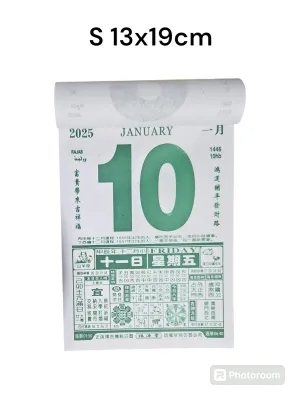
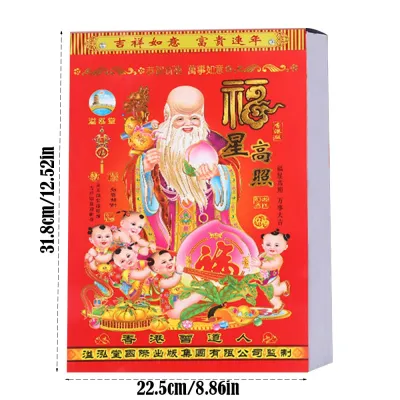
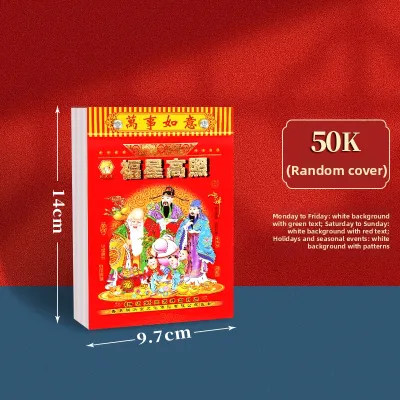
The physical format of your calendar dictates how you will interact with it every day. Traditional daily tear-off calendars, often featuring thin bamboo paper or newsprint, offer a tangible, satisfying ritual of removing a page each morning, but they do not allow you to write down future appointments or look back at past notes easily. Bound diary planners are highly portable and excellent for active scheduling, keeping your historical notes intact throughout the year. Wall calendars with wire-o binding or metal tin-sliding strips are ideal for shared household spaces, hanging securely in the kitchen or living room for quick monthly or daily reference. Desk pad calendars lay flat on your workspace, acting as a blotter while keeping major lunar dates and solar terms within your peripheral vision.
Paper Quality and Pen Compatibility
When selecting a calendar that you intend to write on, paper specifications are critical. Many traditional Chinese calendars, especially daily tear-off blocks, use lightweight paper ranging from 40 to 60 GSM (grams per square meter), which is highly susceptible to ink feathering, ghosting, and bleed-through if you use gel pens, rollerballs, or fountain pens. For active daily planning and journaling, look for hybrid planners that utilize premium wood-free or acid-free paper of at least 80 to 100 GSM. Coated papers can prevent ink absorption and result in longer drying times, which might lead to smudging, whereas uncoated, high-density paper offers a smoother writing experience and faster drying speeds. If you rely on highlighters or felt-tip pens to color-code your schedule, performing a quick ink test on a back page is always recommended before committing to a daily layout.
Products mentioned in this guide
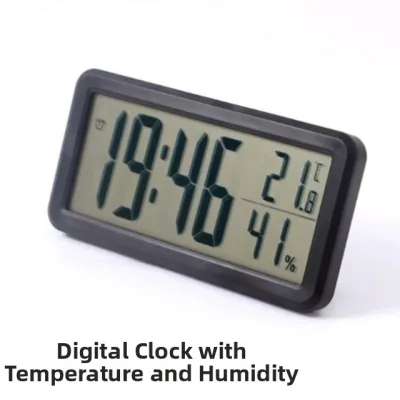
Prices are valid at publication and may change. Please refer to the product page for the latest price.
Information Depth
Chinese calendars vary widely in the amount of traditional data they display. A basic lunar calendar simply maps the Gregorian dates to their corresponding lunar dates, sometimes accompanied by the current zodiac animal and major solar terms like Liqiu or Dongzhi. On the other end of the spectrum, a comprehensive Tong Shu (Chinese almanac) contains dense, specialized astrological data. This includes daily clash signs, hourly auspicious and inauspicious windows, daily planetary positions, and specific activities that are favored or avoided on that day, such as moving house, starting a business, or travel. Understanding your own needs—whether you just want to know when the Hungry Ghost Festival begins or if you need to consult precise hours for Feng Shui adjustments—will save you from buying an overly complex or overly simplified calendar.
Localization Needs
A common pitfall when purchasing a Chinese calendar in Singapore is buying an import that lacks local context. Because traditional calendars are printed globally, many imported versions from Hong Kong, Taiwan, or Mainland China will display public holidays specific to those regions while omitting Singapore’s multi-cultural holiday calendar. For a calendar to be functional for daily planning, it must accurately reflect Singapore’s public holidays, including Hari Raya Puasa, Hari Raya Haji, Deepavali, Good Friday, and National Day. Before purchasing, flip through the pages to verify that these local holidays are clearly marked, ensuring you do not accidentally schedule a business meeting on a local public holiday or miss a long weekend.
Best Options for Auspicious Dates and Feng Shui Tracking
Traditional Tong Shu (Almanac) Books
For those who require deep, uncompromised access to astrological calculations, a bound traditional Tong Shu book is the definitive choice. These books serve as comprehensive reference manuals, detailing the daily elemental balances, “flying stars” positions, and specific hourly guides for activities like signing contracts, starting renovations, or conducting wedding tea ceremonies. Because of the sheer volume of data, these books are typically printed on thin, high-density paper to keep the volume manageable, and they are usually bound with traditional thread sewing to allow the thick book to lay relatively flat during consultation. When using a Tong Shu, the reader must navigate traditional Chinese characters and complex tables, making it a tool best suited for experienced practitioners or those willing to learn the foundational rules of the Chinese metaphysical calendar.

Daily Tear-Off Desk Calendars
If you want the benefits of daily Feng Shui insights without wading through a dense reference book, a daily tear-off desk calendar is an excellent compromise. These calendars dedicate a single page to each day, presenting the core “Yi” (auspicious) and “Ji” (avoid) activities in clear, high-contrast print. They often feature a sturdy cardboard backing that folds into a stand, allowing the calendar to sit upright on your office desk or home console table. Each morning, tearing off the previous day’s sheet reveals the new day’s astrological outlook, offering a quick, visual reminder of the day’s energy, such as whether it is a good day for haircuts, medical treatments, or financial transactions.
Buying Checklist
To ensure your selected calendar is accurate and practical, review these essential criteria:
- Publisher Reputation: Ensure the calendar is compiled by a recognized Feng Shui lineage or reputable publisher, as minor mathematical errors in lunar calculations can shift auspicious hours significantly.
- Year Alignment: Double-check that the edition matches the upcoming Gregorian and Lunar years, verifying the correct zodiac animal year on the cover.
- Sturdy Stand and Binding: For desk-based tear-offs, inspect the cardboard stand to ensure it can support the weight of the full calendar block without collapsing, and verify that the top perforation allows for clean tears without ripping the page content.
Best Options for Daily Planning and Journaling
Lunar-Integrated Diary Planners
Modern professionals and students who want to maintain a connection to traditional heritage while managing a busy modern schedule often prefer hybrid diary planners. These planners are typically designed with a sleek, contemporary aesthetic, featuring a standard Gregorian weekly or monthly layout while integrating subtle lunar dates, traditional 24 solar terms, and major Chinese festivals. This layout allows you to track corporate deadlines, school exams, and social events alongside traditional observations like the Lunar New Year or the Mid-Autumn Festival. These planners are highly versatile, offering the structure of a professional organizer with the cultural depth of a traditional calendar.
Layout and Writing Space
Choosing between a daily and a weekly spread depends heavily on your journaling habits and scheduling density. A daily spread provides a full page for every 24 hours, giving you ample room for detailed time-blocking, extensive note-taking, and personal journaling. This is ideal for those who use their planner as a reflective diary or require detailed task lists. Conversely, a weekly spread displays the entire week across a two-page layout, offering a bird’s-eye view of your commitments. This format is highly efficient for tracking recurring meetings, project timelines, and high-level goals, though it limits the space available for long-form writing or decorative elements like stickers and tape.
Stationery and Build Check
To ensure your planner survives a full year of daily use, pay close attention to its construction. Look for lay-flat binding, such as Smyth-sewn or case-bound designs, which allow the planner to remain completely flat on your desk without you having to hold the pages down while writing. The paper should be premium, acid-free stock, ideally 100 GSM or higher, to prevent yellowing over time and to resist ink bleeding from fountain pens or heavy gel ink. If you enjoy customizing your planner with stickers, stamps, or washi tape, a sturdy hardcover or a durable polyurethane (PU) leather cover will protect the pages from wear and tear in your bag during daily commutes in Singapore’s humid tropical weather.
Best Options for Traditional Festival and Holiday Tracking
Large-Print Wall Calendars
For communal spaces and multi-generational households, a large-print wall calendar is often the most practical choice. These calendars feature massive, high-contrast numbers for Gregorian dates, with the corresponding lunar dates printed clearly underneath. They are designed to be read easily from a distance, making them highly accessible for elderly family members who rely on them to track traditional fast days, lunar first and fifteenth days, and major festivals. The layout typically features large daily grids with sufficient blank space to write down family events, doctor appointments, or utility bill due dates, serving as the central organization hub for the entire household.
Desk Pad Calendars
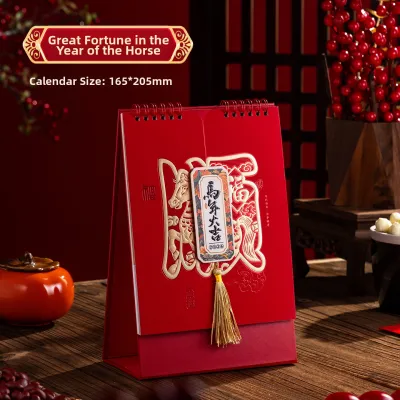
For an office setting, a desk pad calendar provides a wide, monthly overview that sits directly on your workspace. These large paper pads are designed to lie flat under your keyboard or laptop, keeping your monthly schedule and major holidays constantly visible. Each month features a clean grid showing both Gregorian and lunar dates, allowing you to cross-reference corporate timelines with traditional dates at a glance. At the end of the month, you simply tear off the top sheet to start fresh. This format is highly favored by professionals who prefer a spacious, visual layout over a compact book or a digital screen.
Visual and Structural Verification
When choosing a wall or desk pad calendar, structural integrity is key to preventing frustration mid-year. For wall calendars, check the mounting mechanism: look for a thick, double-loop wire-o binding or a reinforced metal eyelet that will not tear through the paper under the weight of the calendar. The paper should be heavy cardstock (at least 150 GSM) to prevent the edges from curling due to Singapore’s high humidity. For desk pads, ensure the bottom corners have protective plastic or vinyl pockets to keep the pages from fraying or dog-earring as your arms move across the desk during the workday. Finally, inspect the printing quality to ensure the ink is crisp and smudge-resistant, especially on glossy paper stocks.
Where to Buy and What to Verify Before Purchasing
Purchasing Channels
In Singapore, Chinese calendars are widely available across several physical and digital retail channels. For traditional wall calendars, daily tear-off blocks, and standard Tong Shu books, local bookstore chains like Popular Bookstore are reliable options, particularly during the peak season from September to January. If you are looking for specialized, high-end Feng Shui almanacs or expert advice, visiting dedicated geomancy and Feng Shui boutiques in historic districts like Chinatown or Fu Lu Shou Complex is highly recommended. For modern, design-focused hybrid planners, boutique stationery shops in Bras Basah Complex or independent lifestyle stores offer curated selections. Additionally, general online marketplaces provide a convenient alternative, offering international shipping on unique designs from overseas publishers.
Edition and Year Verification
One of the most critical steps before finalizing your purchase is verifying the exact year of the calendar. Because calendar covers often feature similar traditional designs, auspicious red colors, and gold foil typography year after year, it is easy to accidentally purchase leftover stock from the previous year, which is sometimes sold at a steep discount online. Always check the cover and the introductory pages to confirm that the calendar is printed for the correct upcoming Gregorian year and the corresponding Chinese zodiac year. Using an outdated calendar will lead to incorrect lunar date mapping and inaccurate Feng Shui calculations, rendering the tool useless for planning.
Physical Inspection
If you are buying your calendar from a physical store, take a few moments to conduct a thorough physical inspection. Gently flip through the pages to ensure the binding is secure, with no loose pages or misaligned wire-o loops. Check that all twelve months are present and bound in the correct chronological order, as printing errors can occasionally result in duplicated or missing sections. For online purchases, carefully read the product description to confirm the dimensions, paper weight, and whether it includes Singapore-specific public holidays. Additionally, review the seller’s return and exchange policy so you can easily request a replacement if the calendar arrives with bent corners, torn pages, or printing defects.
Frequently Asked Questions (FAQ)
Do Chinese calendars sold in Singapore include local public holidays?
Yes, most commercial Chinese calendars, wall grids, and daily tear-off blocks designed specifically for the Singapore market will include local public holidays such as National Day, Hari Raya Puasa, Deepavali, and Good Friday. However, if you purchase a highly traditional Tong Shu almanac or a calendar imported directly from Hong Kong, Taiwan, or Mainland China, it will likely only feature the public holidays of its country of origin. It is always best to check the holiday markings on the sample pages or product description before purchasing to ensure it meets your local scheduling needs.
What is the difference between a standard lunar calendar and a Tong Shu?
A standard lunar calendar is a straightforward date-tracking tool that maps the Gregorian calendar to the traditional Chinese lunar calendar, indicating major festivals, solar terms, and the current zodiac sign. A Tong Shu (or Chinese Almanac) is a much more comprehensive astrological guide. In addition to basic date mapping, a Tong Shu contains detailed calculations for daily auspicious and inauspicious activities, hourly favorable windows, clashes with specific zodiac signs, daily directional Feng Shui guides, and traditional star alignments, making it a specialized tool for geomancy and planning significant life events.
When is the best time to buy a Chinese calendar for the upcoming year?
The optimal time to purchase a Chinese calendar for the upcoming year is between late September and December of the current year. During this window, local bookstores, Feng Shui boutiques, and online retailers receive their fresh inventory, offering the widest selection of formats, sizes, and designs. Waiting until after the Lunar New Year often means dealing with extremely limited stock, damaged display copies, or having to settle for formats that do not fully suit your writing or planning preferences.
Community discussion
Share your experience or ask a question. Comments are reviewed before publication.