
Planning for Chinese New Year 2027 requires a specialized approach to stationery. Because the lunar festival shifts annually on the Gregorian calendar, a standard planner often falls short. The ideal calendar or planner for this festive season must bridge the gap between the solar and lunar calendars, offering clear visibility of key dates leading up to the first day of the lunar new year. It should provide structured layouts for managing complex family logistics, budgeting for red packets, and tracking multi-week preparation phases. By choosing stationery that balances functional lunar tracking with ample writing space, you can transform a chaotic preparation period into a structured, enjoyable countdown.
Key Features to Look for in a Chinese New Year Planner
To successfully coordinate the 2027 festive season, look for planners that explicitly integrate both Gregorian and lunar dates. In Singapore, where public holidays dictate long weekends and family gatherings, having these dates clearly highlighted is essential for scheduling reunion dinners and visiting routes.
Beyond basic date tracking, the planner’s layout should offer dedicated spaces for task management. Look for sections or blank margins that can be adapted for spring cleaning checklists, grocery inventories, and reunion dinner menu planning. A well-designed planner avoids overwhelming the user with overly loud festive graphics on every page; instead, it strikes a balance between subtle thematic accents and clean, minimalist writing grids. This ensures the planner remains highly usable for daily work or personal tasks throughout the rest of the year.
Products mentioned in this guide
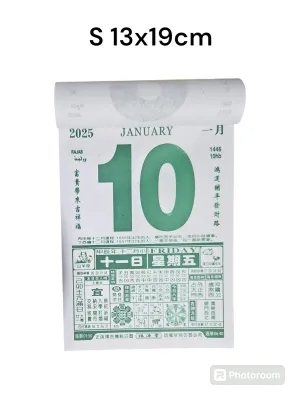
Prices are valid at publication and may change. Please refer to the product page for the latest price.
Finally, look for specialized tracking pages. A dedicated budget tracker is invaluable for managing holiday expenses, including groceries, festive decorations, and the allocation of cash for red packets. Gift lists and visiting schedules require structured columns where you can note down names, addresses, and specific visiting times to prevent scheduling conflicts during the busy fifteen-day celebration.
Types of Calendars and Planners for Festive Preparation
The physical format of your stationery dictates how you interact with your schedule. Choosing between a shared household display and a highly portable personal book depends on whether your planning style is collaborative or individual.

Wall Calendars and Desk Blotters
Wall calendars and large desk blotters serve as the central command station for busy households. These formats offer expansive daily blocks that allow multiple family members to write down their individual schedules, visiting commitments, and catering delivery times. Because everyone can see the layout at a glance, it minimizes communication breakdowns regarding who is hosting on which day.
When choosing a wall calendar, consider the physical wall space available in high-traffic common areas, such as the kitchen or living room. A sturdy hanging mechanism is crucial, especially if the calendar uses heavy cardstock. Desk blotters, while requiring a flat surface, can sit on a study desk or console table, providing a wide, flat overview of the entire month of preparation.
Daily and Weekly Planners
Bound daily and weekly planners are ideal for individuals who manage detailed, multi-step preparation phases. The hourly breakdowns in a daily planner are particularly useful during the high-intensity weeks before the festival, when you must coordinate deep cleaning schedules, baking sessions, and grocery runs. Weekly layouts offer a broader view, allowing you to balance daily tasks with long-term deadlines.
Portability is a major advantage of this format. A compact A5 or B6 planner easily slips into a bag, making it simple to reference your shopping lists, check off ingredients at the market, or update your budget while on the go. Look for durable covers, such as synthetic leather or thick bookcloth, to protect the pages during frequent travel.
Bullet Journals and Custom Inserts
For those who find pre-printed layouts too restrictive, bullet journals and modular binder systems offer unmatched flexibility. You can design custom spreads tailored precisely to your festive needs, such as a dedicated red packet distribution log, a recipe testing matrix for festive cookies, or a visual map of your home for spring cleaning zones. This modularity allows you to expand your planning space as the holiday approaches and shrink it afterward.
However, this system requires a significant upfront time investment. Drawing grids, writing headers, and setting up trackers manually can be time-consuming, especially during an already busy season. If you prefer immediate usability, pre-printed planners or downloadable custom inserts that fit into existing disc-bound or ring-bound binders may be a more efficient compromise.
Structuring Your Chinese New Year 2027 Preparation Timeline
Effective festive planning relies on backward scheduling. Start by identifying the first day of Chinese New Year 2027 on your calendar, and then work backward by six to eight weeks to establish key milestones. This structured approach prevents the last-minute rush that often causes stress.
In the early planning phase, which should begin about six weeks prior, allocate specific pages in your planner to establish your festive budget in S$. Create columns for different expense categories: groceries for the reunion dinner, home decorations, new clothes, and the cash required for red packets. Having a clear financial overview early helps you pace your spending and avoids unexpected cash flow issues. During this phase, schedule early preparation tasks such as booking spring cleaning services, ordering custom festive goods or catering, and starting the initial decluttering of your living spaces.
As you move closer to the date—around two to three weeks prior—transition your planner focus to phased, time-sensitive tasks. Use weekly spreads to schedule deep cleaning room by room, and set aside specific days for baking or purchasing non-perishable ingredients. The final week should be reserved for highly time-sensitive errands, such as collecting fresh market produce, picking up pre-ordered food, and packing red packets with crisp notes.
Do not stop planning once the festival begins. Use your daily layouts to map out visiting routes to different relatives’ homes, ensuring you account for travel times and rest periods. Finally, dedicate a section to post-festival logistics, such as scheduling the return of borrowed items, organizing leftover food, and planning a smooth transition back to work or school routines.
Purchasing Considerations and Compatibility Checks
Selecting the right stationery requires careful attention to physical specifications to ensure a frustration-free writing experience. First, verify the paper weight and texture. If you prefer using fountain pens, gel pens, or heavy markers for color-coding your schedule, look for paper with a weight of at least 80 gsm, though 100 gsm or higher is preferable. Thicker paper prevents ink bleeding and feathering, ensuring that notes written on one side do not ruin the readability of the next page. If possible, test a small corner of the page with your preferred pen to observe drying speed and smoothness before committing to heavy logging.
The binding type is another critical factor for usability. During busy preparation sessions—such as when you are cooking in the kitchen or sorting decorations—you need a planner that stays open on its own. Lay-flat thread binding, spiral binding, and disc-bound systems are excellent choices because they allow the planner to remain completely flat on a table without requiring you to weigh down the pages. Avoid tight perfect-bound books that snap shut constantly, as they can be highly frustrating to use when your hands are full.
When purchasing your planner from online stationery retailers or online marketplaces, pay close attention to delivery timeframes and return policies. Seasonal and imported festive editions can experience shipping delays, especially during the year-end peak period. Ensure the planner will arrive well before your planned start date in late 2026. Finally, double-check the date range covered by the planner. Some academic or fiscal planners run on non-standard calendars that might cut off mid-year or fail to cover the early months of 2027, which would disrupt your entire Chinese New Year planning timeline.
Frequently Asked Questions (FAQ)
Do standard planners include lunar calendar dates?
Standard international planners typically focus on the Gregorian calendar and only include major global holidays. They rarely feature detailed lunar dates or specific regional public holidays. If you choose a standard planner, you will likely need to manually write in the lunar dates or purchase specialized lunar calendar stickers and printable inserts to supplement your layout. Alternatively, look for region-specific editions designed for Asian markets, which often come pre-printed with both solar and lunar dates.
When is the best time to buy a planner for Chinese New Year 2027?
The best time to purchase your planner is during the late third quarter or early fourth quarter of 2026. Specialized festive planners and limited-edition designs tend to sell out quickly once the holiday season approaches. Checking online stationery retailers and local bookstores in Singapore starting around October or November 2026 ensures you have the widest selection of layouts and designs before stock runs low. This timing also allows ample buffer space for shipping and gives you time to set up your backward-planning timeline before the busy preparation period begins.
Community discussion
Share your experience or ask a question. Comments are reviewed before publication.