
Selecting the right sewing button tool for your home projects depends on your sewing frequency, the types of garments you repair, and whether you already own a domestic sewing machine. For quick, occasional repairs on delicate fabrics, hand-sewing aids like specialized needles and threaders are highly practical. If you manage a busy household with frequent school uniform repairs or garment-making projects, a dedicated button sewing foot for your sewing machine offers unmatched speed and consistency. Handheld portable button sewers fill the gap for quick, on-the-go fixes without the need to set up a full machine. Finding the ideal option requires understanding these distinct categories and matching them to your specific fabric types and button styles.
How to Assess Your Button Sewing Needs
Before purchasing any sewing button tool, it is essential to evaluate your specific household sewing habits, the frequency of your repairs, and the equipment you already have on hand. For many households in Singapore, button sewing is an occasional maintenance task triggered by a school uniform losing a button or a work shirt losing its fastening. If this describes your situation, a simple, low-cost manual setup is highly practical and easy to store. Conversely, if you regularly engage in garment construction, tailoring, or home decor projects, investing in a specialized mechanical tool or sewing machine attachment will save you significant time and frustration.
The thickness and structural characteristics of your fabrics also play a critical role in your choice. Light, delicate materials such as silk, satin, chiffon, or fine cotton require gentle handling to prevent snags and puckering. These fabrics are best served by fine hand-sewing needles or highly polished, lightweight machine feet that exert minimal pressure. On the other hand, heavy fabrics like denim, canvas, linen, or thick wool coats demand robust tools capable of piercing multiple dense layers without bending or breaking. Attempting to use a lightweight tool on heavy denim can damage both the fabric fibers and the tool itself.
Products mentioned in this guide
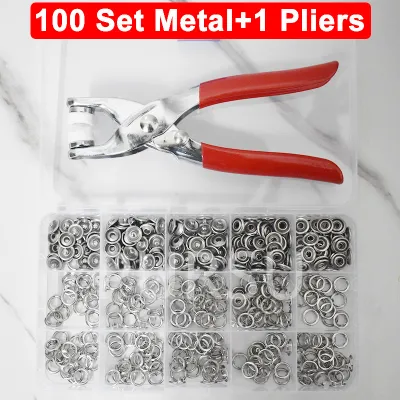
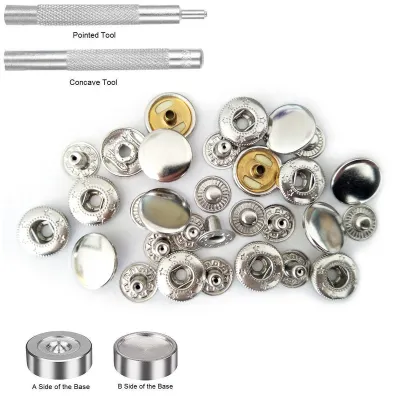
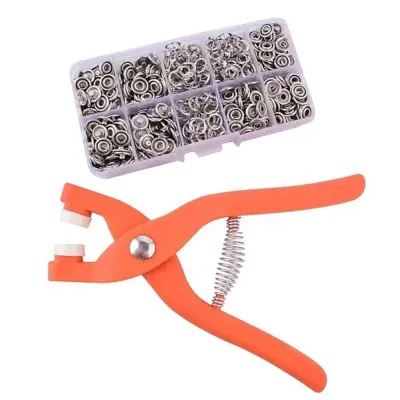
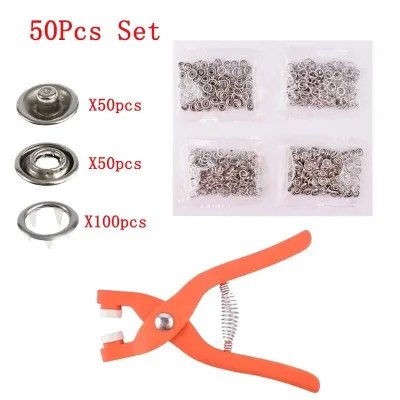
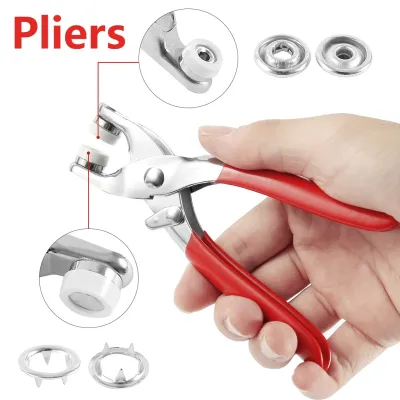
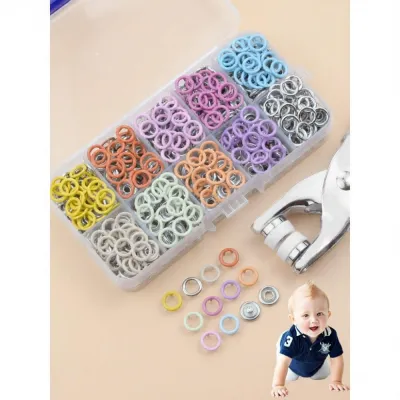
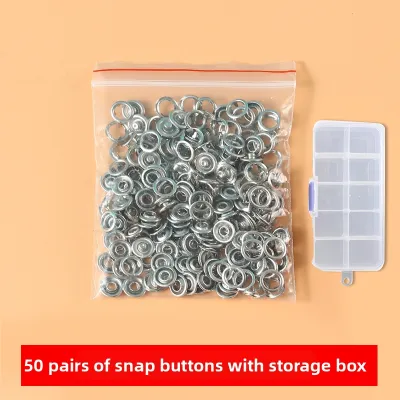
Prices are valid at publication and may change. Please refer to the product page for the latest price.
Your existing equipment setup should guide your purchasing path. If you already own a domestic sewing machine, purchasing a compatible button sewing presser foot is the most efficient and cost-effective route. These attachments leverage your machine’s existing motor and stitch patterns, eliminating the need to store a separate, single-use device. If you do not own a sewing machine and have no plans to purchase one, your choices will naturally narrow to manual hand-sewing aids or compact, standalone portable devices.
Additionally, you must consider the physical design and sizing of the buttons you intend to sew. Button sizes are traditionally measured in “lignes” (where 1 ligne equals 0.635 mm, or roughly 40 lignes to an inch). A standard shirt button is usually 16 to 20 lignes, while coat buttons can exceed 40 lignes. Flat buttons, which feature either two or four holes passing directly through the face, are highly versatile and compatible with almost all automated and manual tools. Shank buttons, however, feature a solid face with a small metal or plastic loop protruding from the underside. Because shank buttons do not lie flat, they cannot be held securely by standard machine presser feet and typically require manual hand-sewing techniques or highly specialized machine attachments.
Choosing a Sewing Button Tool: Types and Categories
To find the best sewing button tool for your needs, it is helpful to compare the three primary categories available on the market. Each category offers distinct advantages, limitations, and ideal use cases, ranging from traditional high-precision hand tools to automated machine attachments and portable quick-fix devices.

Hand Sewing Tools and Aids
Manual hand sewing remains the most versatile and reliable method for attaching buttons to delicate or highly structured garments. Modern hand-sewing aids go far beyond the basic needle and thread, incorporating specialized tools designed to improve precision, reduce physical strain, and protect your fabrics. Specialized hand-sewing needles, such as sharps or betweens, feature reinforced shafts and highly polished eyes that glide smoothly through dense weaves without snagging.
A key tool in manual button sewing is the button sewing awl or spacer. When sewing a button by hand, it is crucial not to stitch it flush against the fabric; doing so leaves no room for the buttonhole to slide underneath, causing the fabric to bunch when fastened. A sewing awl or a simple metal spacer is placed between the button and the fabric during the stitching process. Once the stitches are complete, the spacer is removed, and the thread is wrapped tightly around the slack to create a sturdy “thread shank” that elevates the button to the perfect height.
For those who struggle with manual dexterity or visual strain, automatic needle threaders are invaluable hand-sewing companions. These compact devices use tiny wire hooks to pull thread through the needle eye instantly, removing one of the most frustrating barriers to manual sewing. While hand-sewing tools are highly affordable, portable, and gentle on delicate fabrics, they are inherently time-consuming. Hand sewing is ideal for individual repairs and heavy wool coats where machine access is impossible, but it is not suited for batch-sewing multiple garments.
Sewing Machine Button Feet
If you already own a domestic sewing machine, a dedicated button sewing foot is an incredibly efficient tool that automates the attachment process. This presser foot is typically characterized by its short length and textured, rubberized prongs. These blue or grey rubber grips hold a flat button firmly in place against the fabric, preventing it from slipping while the needle moves back and forth.
To use a button sewing foot, you must configure your sewing machine to prevent the fabric from feeding forward. This is achieved by either dropping the machine’s feed dogs using the lever typically located at the back of the machine, or by covering the feed dogs with a plastic darning plate. Once the feed dogs are disengaged, you select a standard zigzag stitch. You must then manually adjust the stitch width so that the needle lands precisely in the center of the left and right buttonholes.
Before pressing the foot controller, it is critical to perform a manual test. Turn the machine’s handwheel slowly by hand to complete at least two full stitch cycles, ensuring the needle clears the buttonholes perfectly. If the needle strikes the solid plastic or shell of the button, it will instantly shatter, risking damage to your machine’s timing mechanism or eye injury. While machine button feet offer unmatched speed and consistency for flat buttons, they require careful setup and cannot accommodate standard shank buttons.
Portable and Mini Button Sewers
Portable and mini button-sewing devices represent a middle ground for users who want the speed of automated stitching but do not own or wish to set up a full-sized domestic sewing machine. These tools are often handheld, battery-operated, or manual staple-style devices. They are designed to quickly tack a button back onto a garment using specialized nylon fasteners or single-thread chain stitches.
These portable tools are exceptionally convenient for travel, emergency office repairs, or quick fixes before school. They allow you to secure a loose button in seconds without threading a needle or setting up a workspace. Because they are compact, they store easily in a desk drawer, glove compartment, or travel bag, making them highly accessible for busy individuals in Singapore who prioritize convenience.
However, portable button sewers come with significant physical limitations. Most of these devices are designed strictly for standard, flat two-hole or four-hole buttons and cannot handle unique shapes or shank buttons. Additionally, their mechanical parts are often made of lightweight plastic rather than durable metal, meaning they can struggle to pierce heavy materials like denim, canvas, or thick linen. Before purchasing, always check the manufacturer’s specifications for the maximum fabric thickness capacity to ensure the tool suits your wardrobe.
Key Features to Check Before Buying
When shopping for a sewing button tool, comparing technical specifications and build quality will help you avoid incompatible or fragile products. Use the following checklist to evaluate your options before making a purchase.
- Machine Compatibility: If you are purchasing a presser foot, verify your sewing machine's shank height. Domestic sewing machines generally use low-shank, high-shank, or snap-on systems. Measure the distance from the center of the thumb screw (where the foot attaches) to the needle plate with the presser foot lowered; a distance of approximately 1.25 cm indicates a low shank, while 2.5 cm indicates a high shank.
- Button Type Support: Ensure the tool matches your button inventory. Standard machine feet and portable tacking tools are designed exclusively for flat buttons. If your wardrobe features many garments with shank buttons, focus on high-quality hand-sewing needles and specialized metal spacers.
- Stitch Adjustability: For machine presser feet, check that your sewing machine allows manual customization of the zigzag stitch width. The distance between buttonholes is not universally standardized, so your machine must be able to adjust its stitch width (typically between 3.0mm and 4.5mm) to match the button precisely. Computerized machines often feature a dedicated button-sewing stitch program that automates this process and includes an automatic tie-off knot.
- Build Quality and Materials: Look for presser feet made of solid metal or thick, clear plastic. Clear plastic feet offer the distinct advantage of superior visibility, allowing you to see the needle alignment clearly. For hand tools, prioritize rust-resistant stainless steel or nickel-plated needles. In Singapore's humid climate, low-quality carbon steel needles can rust quickly, which can stain delicate fabrics during use. Storing your hand tools in airtight containers with silica gel packs is highly recommended.
- Included Accessories: Many high-quality button sewing kits include valuable accessories such as universal darning plates (for machines without drop-feed capabilities), metal shank spacers, and specialized heavy-duty polyester threads. Purchasing a comprehensive kit can save you a separate trip to a specialty craft store.
Where to Source Haberdashery and Sewing Tools in Singapore
Finding reliable sewing tools in Singapore is straightforward if you know where to look. For high-quality, authentic tools, specialty craft and haberdashery shops are excellent starting points. The Bras Basah area is historically renowned for its concentrated selection of established craft stores, such as Golden Dragon, where you can physically inspect the build quality of presser feet, handle manual tools, and seek expert advice from knowledgeable staff.
If you are looking for brand-specific sewing machine attachments, visit the authorized showrooms or official websites of major sewing machine brands like Singer, Brother, Janome, or Bernina in Singapore. Purchasing directly from authorized dealers guarantees that the presser foot will be perfectly compatible with your machine model, preventing mechanical misalignment that could damage your needle bar.
For basic hand-sewing kits, button spacers, and portable quick-fix tools, general online craft retailers and local neighborhood haberdashery shops in areas like Chinatown (such as those in People’s Park Centre) or heartland estates (including Ang Mo Kio and Toa Payoh) offer highly accessible options. When purchasing online, always verify the seller’s return policy, especially for machine parts, as minor sizing discrepancies can render a presser foot unusable. Additionally, check for authentic manufacturer packaging to avoid poorly molded, counterfeit plastic feet that can snag delicate fabrics or cause needle breakage.
Frequently Asked Questions (FAQ)
Can I sew a shank button with a sewing machine button foot?
No, standard sewing machine button feet are designed exclusively to clamp flat buttons flat against the fabric. Because shank buttons have a protruding loop or shank on the back, they cannot lie flat under a presser foot. Attempting to machine-sew a shank button can cause the button to tilt, leading to needle deflection, needle breakage, or damage to the machine’s needle plate. Shank buttons should always be sewn by hand using a standard hand-sewing needle, a spacer to maintain appropriate tension, and heavy-duty thread.
What thread should I use for heavy-duty button repairs?
For heavy-duty button repairs on thick fabrics like denim, canvas, or heavy coats, you should use specialized buttonhole twist or heavy-duty polyester thread. These threads are thicker and have high tensile strength, preventing them from snapping under the daily tension of fastening and unfastening. If you do not have specialized heavy-duty thread on hand, you can double a standard lightweight polyester thread by threading it through your needle and tying the ends together, resulting in four strands of thread securing the button for added durability. Avoid standard cotton thread for heavy garments, as it lacks the elasticity and strength required for high-tension areas.
Community discussion
Share your experience or ask a question. Comments are reviewed before publication.