
When shipping fragile items within or from Singapore, ensuring your goods arrive intact depends heavily on selecting the right protective packaging. While many buyers search for specific bubble wrap brands, the local market is primarily supplied by various industrial manufacturers and generic distributors. Therefore, finding the best protection is not about chasing a specific brand name, but rather about evaluating the material specifications, bubble dimensions, and structural integrity of the wrap.
In Singapore’s tropical, high-humidity climate, packaging materials can behave differently than in cooler regions. Humidity can affect adhesive tape grip and the structural stiffness of cardboard boxes, making high-quality bubble wrap your primary defense against shock and vibration during transit. Whether you are relocating between HDB flats, shipping delicate electronics overseas, or running an e-commerce business, understanding how to select and apply this cushioning material is essential.
This guide provides a comprehensive framework to help you evaluate bubble wrap specifications, match the right wrap type to your item’s fragility, check for physical quality, and source reliable options across Singapore. By focusing on measurable standards rather than marketing labels, you can secure your shipments with confidence.
Products mentioned in this guide
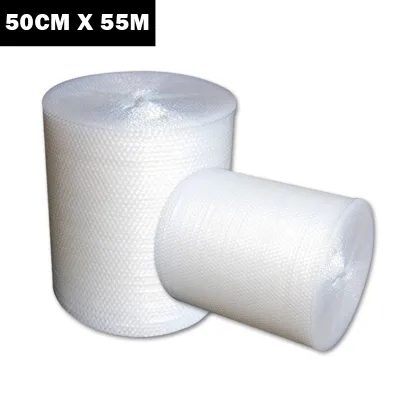
Prices are valid at publication and may change. Please refer to the product page for the latest price.
Understanding Bubble Wrap Specifications for Protection
To make an informed decision, you must first understand the technical specifications that govern how bubble wrap cushions fragile items. The protective capability of any bubble wrap roll is determined by three core physical properties: bubble diameter, bubble height, and material density. These factors dictate how much impact energy the air pockets can absorb before bottoming out and allowing the force to transfer directly to your fragile item.
Bubble size is typically categorized by diameter, with the most common standards being 10mm (small bubbles) and 25mm (large bubbles). Bubble height is directly proportional to diameter, providing the clearance distance between the outer box wall and the item’s surface. Larger bubbles contain a greater volume of air, which allows them to compress further and absorb more significant shocks from drops or rough handling.
Material density and film thickness are measured in microns (µm), which represents the thickness of the polyethylene film used to form the bubbles. Standard-grade bubble wrap typically ranges from 40 to 50 microns, while heavy-duty industrial grades can exceed 70 to 100 microns. A higher micron rating indicates a thicker plastic barrier, which dramatically improves puncture resistance and prevents the bubbles from popping under heavy loads.
Another critical factor is air retention, which refers to how long the bubbles remain fully inflated under pressure. Premium bubble wraps feature a co-extruded barrier layer—often made of nylon—sandwiched between layers of Low-Density Polyethylene (LDPE). This barrier prevents air from slowly diffusing through the plastic film over time, ensuring your items remain cushioned during prolonged storage or long-distance international shipping.
Ultimately, effective protection depends on matching the weight and fragility of your item to the structural integrity of the wrap, rather than relying on a brand name. When sourcing bubble wrap in Singapore, always look for clear labeling on the roll packaging that specifies the bubble dimensions, roll width, total length, and material grade. If these specifications are missing, you may be purchasing low-grade, thin-film alternatives that offer minimal protection.
Matching Wrap Types to Item Fragility
Different fragile items require distinct levels of cushioning to survive the physical stresses of transit. Using a single type of bubble wrap for every packing scenario can lead to inadequate protection or unnecessary bulk that increases shipping costs. By understanding the specific use cases for each wrap type, you can build a highly efficient and secure packaging system.

Standard Protection (Small Bubbles)
Small bubble wrap, featuring 10mm diameter bubbles, is the most versatile and widely used variety for general packing. It is designed primarily for lightweight, low-profile items that require surface protection against scratches, abrasions, and minor impacts. Excellent examples include cosmetics, books, small plastic housewares, and compact consumer electronics.
The primary advantage of small bubbles is their flexibility, allowing you to wrap tightly around irregular shapes and complex contours without adding excessive bulk to the package. This keeps the overall dimensions of your shipping box smaller, which is particularly beneficial for reducing volumetric weight charges when shipping via local couriers or international air freight.
Heavy-Duty Protection (Large Bubbles)
For high-value, heavy, or exceptionally fragile items, large bubble wrap with a 25mm or larger diameter is indispensable. This variety is specifically engineered to provide maximum shock absorption for items like glassware, porcelain figurines, ceramic tableware, and bulky household appliances. The larger air pockets act as a robust cushion that absorbs high-impact forces during drops.
When packing heavy items, standard small bubbles will easily pop or compress completely under the item’s weight, rendering them useless. Large bubbles maintain their structural integrity under substantial static loads, ensuring a protective air gap remains between the item and the outer shipping box throughout the journey.
Anti-Static Varieties (Pink/Blue)
Electronic components are highly sensitive to electrostatic discharge (ESD), which can permanently damage internal circuitry without leaving any physical marks. Anti-static bubble wrap, easily identified by its distinctive pink or blue color, contains special chemical additives that prevent the buildup of static electricity caused by friction during movement.
This specialized wrap is essential for packing items such as computer motherboards, graphics cards, hard drives, and delicate laboratory instruments. While standard clear bubble wrap can generate significant static charges when unrolled or rubbed against other plastics, anti-static wrap dissipates these charges safely, protecting your valuable electronics from invisible electrical damage.
Self-Adhesive Options
Self-adhesive bubble wrap features a light, pressure-sensitive adhesive coating on one side, allowing the wrap to stick securely to itself or the item’s surface. This option is highly favored in fast-paced e-commerce fulfillment environments because it eliminates the need for packing tape during the initial wrapping stage, speeding up the packing process significantly.
However, when using self-adhesive wrap, you must verify that the adhesive formulation is safe for the specific material you are wrapping. Delicate finishes, such as painted wood, antique varnishes, or polished metals, can sometimes be damaged or leave a sticky residue when the wrap is peeled off. Always perform a small trial on an inconspicuous area before wrapping the entire item.
Evaluating Quality and Durability
With numerous unbranded packaging rolls available in Singapore, physically evaluating the quality of the bubble wrap before committing to a large purchase is crucial. Low-quality wraps often feature thin, brittle films that pop under the slightest pressure, leaving your fragile items completely unprotected. By conducting a few simple visual and tactile checks, you can easily distinguish high-grade protective materials from inferior alternatives.
Visual and Tactile Checks
Begin by inspecting the roll for uniform bubble inflation and consistent film thickness across the entire width. High-quality bubble wrap should have fully inflated, firm bubbles that do not feel soft or partially deflated to the touch. Look closely for any thin spots, irregular bubble shapes, or cloudy patches in the plastic, which indicate poor manufacturing quality control.
You can perform an easy, observable trial by applying firm pressure with your thumb directly onto a single bubble. A durable, high-density film will resist popping and distribute the pressure evenly, whereas a low-quality, thin-gauge film will rupture immediately with minimal effort. If the bubbles pop easily under light finger pressure, they will certainly fail under the weight of your items during transit.
Puncture Resistance
In addition to pressure resistance, high-quality bubble wrap must resist punctures from sharp corners or protruding edges of the items you are wrapping. Look for manufacturers that explicitly label their rolls as “high-impact,” “double-layer,” or “extra strength.” These products typically feature a multi-layer film construction that offers superior tensile strength and tear resistance.
If you are wrapping items with sharp edges, such as metal picture frames or industrial parts, standard single-layer wrap is highly susceptible to tearing. In these scenarios, verifying the film’s puncture resistance through a quick physical test with a blunt object can save you from costly shipping damages.
Roll Integrity
The physical condition of the roll itself is a strong indicator of overall quality. A well-manufactured bubble wrap roll should be tightly and evenly wound around a sturdy, rigid cardboard core. Loose winding often leads to the roll unraveling during handling, which can crease the film, deform the bubbles, and make the wrapping process highly frustrating.
Furthermore, a solid cardboard core prevents the roll from collapsing inward during storage. In Singapore’s humid climate, cheap, thin cardboard cores can quickly absorb moisture from the air, losing their structural strength and causing the entire roll to deform, making it difficult to mount on standard packaging dispensers.
Eco-Friendly Claims
As sustainability becomes increasingly important, many suppliers in Singapore now offer eco-friendly bubble wrap options made from recycled materials. When evaluating these products, look for clear labeling specifying the percentage of post-consumer recycled (PCR) content used in the manufacturing process.
It is important to note that recycled LDPE can sometimes exhibit slightly lower tensile strength and clarity compared to virgin LDPE. To compensate for this, reputable manufacturers often increase the overall film thickness of their recycled wraps. Ensure you verify that the eco-friendly wrap still meets your required micron rating and puncture resistance standards before using it for highly fragile shipments.
Sourcing Options in Singapore
Finding the right bubble wrap in Singapore involves choosing the appropriate sourcing channel based on your specific volume requirements and the level of protection needed. Different retail and wholesale outlets cater to different packing scales, from occasional home movers to high-volume e-commerce businesses.
Stationery and Office Supply Stores
For quick, small-scale packaging needs, local stationery chains and neighborhood office supply stores are highly convenient. These outlets typically stock standard 10mm small-bubble rolls in shorter, manageable lengths, such as 5-meter or 10-meter rolls.
While convenient for wrapping a few gifts or small parcels, stationery stores generally offer limited variety, rarely stocking specialized anti-static or heavy-duty large-bubble wraps. Additionally, the unit cost per meter is usually significantly higher compared to wholesale channels, making this option less cost-effective for larger packing projects.
Industrial Packaging Suppliers
If you are planning a major house move, shipping high-value items, or operating an online business, sourcing directly from specialized industrial packaging suppliers in Singapore is the most economical and practical choice. These wholesalers stock a comprehensive range of bubble wrap varieties, including heavy-duty, large-bubble, and anti-static rolls in various widths (e.g., 30cm, 50cm, and 100cm) and lengths up to 100 meters.
Purchasing from industrial suppliers allows you to verify exact technical specifications, such as micron thickness and material composition. Many of these suppliers offer significant volume discounts and direct delivery services within Singapore, ensuring you have an uninterrupted supply of high-quality packaging materials.
Online Marketplaces
E-commerce platforms and online marketplaces offer an unparalleled selection of bubble wrap products from both local and international sellers. This channel is highly convenient for comparing different specifications, roll sizes, and prices from the comfort of your home or office.
However, purchasing bubble wrap online requires careful diligence. Because you cannot physically inspect the product before buying, you must read the product descriptions thoroughly to verify key dimensions, bubble sizes, and material grades. Always review customer feedback and seller ratings, paying close attention to comments regarding the actual fullness of the bubbles and whether the roll arrived tightly wound and undamaged.
Proper Wrapping Techniques for Fragile Items
Even the highest-quality, thickest bubble wrap will fail to protect your fragile items if it is applied incorrectly. Proper wrapping technique is a critical component of the packaging process, ensuring that the material’s shock-absorbing properties are fully utilized to create a secure protective barrier.
Layering
When wrapping any fragile item, always ensure that the bubbles face inward, directly against the item’s surface. This orientation is crucial because the individual air pockets are designed to conform to the shape of the item, providing immediate, localized cushioning. The smooth outer film should face outward, creating a clean surface that resists snagging and allows for easy handling.
For high-value or exceptionally delicate goods, such as crystal glassware or fine porcelain, a single layer of bubble wrap is rarely sufficient. Apply at least two to three complete layers of wrap around the entire item, paying extra attention to vulnerable areas like handles, spouts, and corners. Secure each layer firmly but without compressing the bubbles, as over-tightening will reduce their air volume and cushioning effectiveness.
Securing the Wrap
Once the item is fully wrapped, secure the bubble wrap using high-quality, heavy-duty packing tape. The tape should be applied directly to the wrap itself, forming a secure bond that prevents the layers from shifting or unraveling during transit. Avoid applying strong adhesive tape directly to the surface of the item, as this can leave a sticky residue or damage delicate finishes when unpacked.
When taping, do not wrap the tape so tightly that it compresses the bubbles flat. Compressed bubbles lose their ability to absorb shock, significantly increasing the risk of breakage. Use just enough tape to hold the wrap securely in place, focusing on sealing the open seams and loose ends of the roll.
Void Fill
A common packing mistake is assuming that bubble wrap alone is sufficient to protect an item inside a box. Bubble wrap is primarily designed for surface protection and initial shock absorption; it cannot prevent an item from shifting inside a partially empty box. If the wrapped item is allowed to slide or bounce around during transit, it can easily break upon impacting the box walls.
To prevent this, you must fill all remaining empty space inside the shipping box with additional cushioning materials, known as void fill or dunnage. Excellent options include crumpled packing paper, biodegradable foam peanuts, or air pillows. Pack the void fill tightly around the wrapped item until there is absolutely no movement when you gently shake the closed box.
Box Selection
The final step in a secure packaging system is selecting an appropriate outer box. The box must be sturdy, structural, and free from existing damage or soft spots. For heavy or highly fragile items, always opt for double-walled corrugated cardboard boxes, which offer superior crush resistance compared to standard single-walled boxes.
Ensure the box is large enough to accommodate your wrapped item plus at least two to three inches of void fill on all sides. A box that is too small will force the wrapped item directly against the outer walls, leaving it highly vulnerable to external impacts and compression during handling.
Frequently Asked Questions (FAQ)
How many layers of bubble wrap do I need for shipping glass?
For standard glassware, such as drinking glasses or small glass ornaments, a minimum of two complete layers of small bubble wrap is recommended. For highly fragile or valuable glass items, such as crystal decanters, large vases, or stained glass panels, you should use three to four layers of wrap, preferably combining a layer of small bubbles for surface protection with an outer layer of large bubbles for superior shock absorption.
Can I reuse bubble wrap for shipping?
Yes, bubble wrap can be reused multiple times, provided that the majority of the bubbles remain fully inflated and the plastic film is free from significant tears or punctures. Before reusing any wrap, inspect it carefully by gently pressing the bubbles; if a large portion of the bubbles have popped or deflated, the material’s protective capability is severely compromised, and it should be recycled or disposed of rather than reused for fragile shipments.
Is bubble wrap waterproof?
The Low-Density Polyethylene (LDPE) plastic used to manufacture bubble wrap is inherently water-resistant and will protect your items from minor surface moisture and humidity. However, bubble wrap rolls are not completely waterproof because water can easily penetrate through the open seams, taped joints, and ends of the wrapped package. For shipments that require complete protection against wet environments or heavy rain, you must seal the wrapped item inside a waterproof plastic liner or poly mailer before placing it in the shipping box.
Community discussion
Share your experience or ask a question. Comments are reviewed before publication.