
Selecting your first brush pen is the most critical decision you will make when starting your calligraphy journey. In Singapore’s vibrant creative community, the rise of modern hand lettering has made a wide variety of tools available, but not all of them are friendly to a beginner’s untrained hand. The best brush pens for calligraphy beginners are those featuring firm, resilient synthetic nibs that offer predictable stroke control, such as the Tombow Fudenosuke or the Pentel Touch Brush Sign Pen. Starting with these forgiving tools prevents the early frustration of inconsistent lines and rapidly frayed tips.
While professional calligraphers often use highly flexible brush pens or traditional dip pens, these require a level of pressure control that takes months of daily practice to develop. For a beginner, a pen that is too soft will result in shaky, thick lines where you want thin upstrokes, and blobbing ink where you want clean transitions. By focusing on brands that offer structural support in their nibs and consistent ink delivery, you can focus on learning basic stroke forms without fighting your equipment.
What to Look for in a Beginner Calligraphy Brush Pen
Evaluating brush pens requires looking past aesthetic appeal to understand the mechanics of the nib and the chemistry of the ink. The primary factor for any beginner is nib flexibility. Brush pens generally fall into firm, medium, or soft categories. Firm and medium tips, often made of elastomer or hard felt, provide physical resistance against the paper. This resistance acts as a guide, helping you control the transition between heavy downstrokes and delicate upstrokes. Soft tips, while offering dramatic line variation, require an incredibly light touch that absolute beginners rarely possess.
Products mentioned in this guide
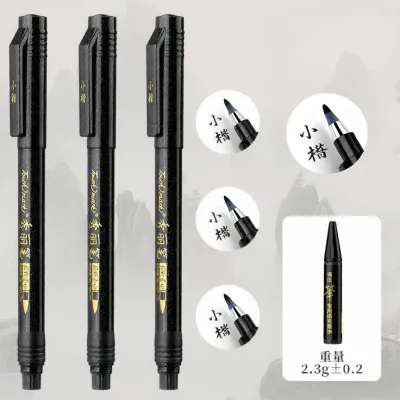
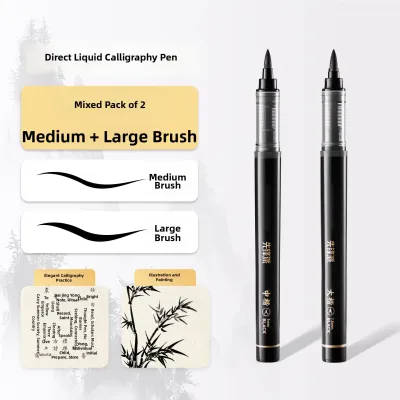
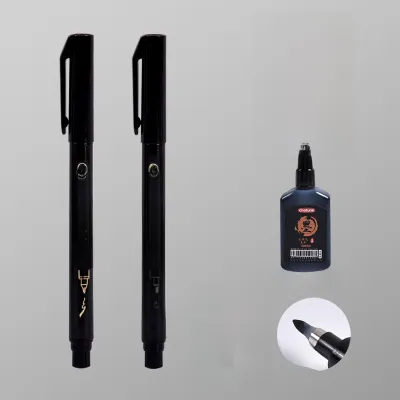
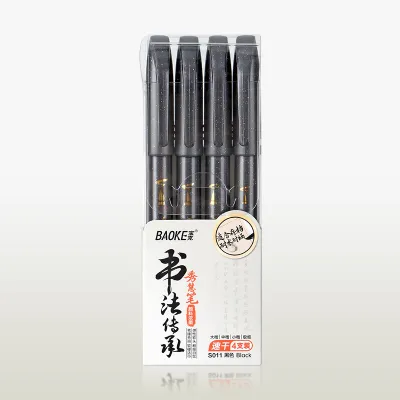
Prices are valid at publication and may change. Please refer to the product page for the latest price.
Ink formulation is another key variable that dictates how your calligraphy behaves on the page. Brush pens typically use either water-based dye inks or pigment-based inks. Water-based dye inks are highly vibrant and blendable, making them popular for colorful, artistic lettering. However, they are highly soluble, meaning they will bleed if they touch water, and they tend to dry slower, increasing the risk of smudging. Pigment-based inks, on the other hand, are waterproof and fade-resistant once dry. They bond permanently with the paper fibers, making them the preferred choice for envelopes, final art pieces, or work that will be layered with water-based mediums.
Ergonomics and barrel design also play a subtle but significant role in your practice sessions. Calligraphy requires precise hand movements, and beginners often make the mistake of gripping their pens too tightly. A pen barrel with a medium thickness and a comfortable, non-slip grip surface helps reduce hand fatigue and cramping. Additionally, the overall weight distribution of the pen—whether you prefer to post the cap on the back of the pen or leave it off—can alter your balance and control over fine strokes.
Finally, the material of the nib itself determines the longevity of your tool. Synthetic nibs, particularly those made from high-grade elastomer or nylon, are vastly superior for beginners compared to natural hair brushes. Synthetic materials are engineered to spring back to their original shape after being bent under pressure. Natural hair brushes require meticulous maintenance, are highly sensitive to paper texture, and fray easily if dragged across standard paper by an untrained hand. Choosing a durable synthetic nib ensures your pen maintains its sharp point throughout your practice cycle.
Reliable Brush Pen Brands for Beginners
Finding the right brand involves balancing performance, durability, and local availability. In Singapore, several established stationery brands offer excellent entry-level lines that cater specifically to those learning pressure control.

Tombow
Tombow is a household name in the global lettering community, and its reputation is well-earned through consistent ink flow and thoughtful nib engineering. For absolute beginners, the Tombow Fudenosuke is widely considered the gold standard starter pen. It is available in two distinct versions: the Hard Tip (GCD-111) and the Soft Tip (GCD-112). The Hard Tip features a resilient elastomer nib that provides excellent resistance, making it incredibly easy to keep upstrokes thin and controlled. The Soft Tip offers slightly more flexibility, allowing for thicker downstrokes and serving as a natural step up once your hand control improves.
For those looking to explore color and larger-scale lettering, the Tombow ABT Dual Brush Pens are highly popular. These pens feature a flexible nylon brush tip on one end and a fine bullet tip on the other. The water-based dye ink in ABT pens is designed for blending, allowing you to create beautiful gradient transitions and watercolor-like effects using a blending palette or a water brush.
However, the ABT series has a notable limitation: the large nylon tips are relatively soft and highly susceptible to bleeding and feathering on thin or uncoated paper. Beginners must pair ABT pens with smooth, high-quality paper to prevent the tips from fraying prematurely and to keep the ink from spreading uncontrollably across the page.
Pentel
Pentel has built a formidable reputation for producing incredibly durable synthetic nibs that resist the heavy-handed pressure common among beginners. The standout recommendation from their lineup is the Pentel Touch Brush Sign Pen (SES15C). This pen features a small, polyester-infused brush tip that behaves like a hybrid between a felt-tip pen and a brush. It is highly resilient, springing back to a sharp point even after being pressed firmly against the page. It is the ideal tool for small-scale modern calligraphy, bullet journaling, and daily planners where space is limited.
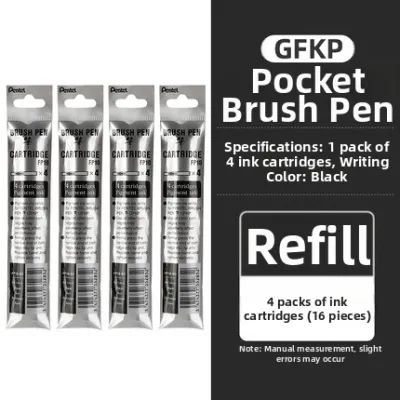
For learners who want to experience a more traditional, painterly brush feel, Pentel offers the Pocket Brush Pen (GFKP). This pen uses a nib made of individual synthetic bristles rather than a solid elastomer tip, and it is fed by permanent pigment ink cartridges. It delivers deep, rich black lines and beautiful dry-brush textures.
However, the Pocket Brush Pen has a significantly steeper learning curve. Because the individual bristles are highly flexible, it requires excellent hand stability and pressure control to avoid messy, unpredictable strokes. It is best reserved as an aspirational tool once you have mastered firmer elastomer pens.
Sakura
Sakura is highly regarded for its archival ink technology, making it the brand of choice for beginners who want their practice pieces and final projects to stand the test of time. The Sakura Pigma Brush Pen is powered by the brand’s famous Pigma pigment ink, which is chemically stable, waterproof, fade-resistant, and quick-drying. This ink will not bleed or smear, even if you wash watercolor paint over it after it dries. It is an exceptional choice for outlining, card making, and mixed-media projects.
For those interested in exploring vibrant colors and wet-blending techniques, the Sakura Koi Coloring Brush Pen series offers a water-based dye alternative. These pens feature a flexible, medium-sized synthetic nib that behaves similarly to a traditional paintbrush. They are designed to work alongside water brushes, allowing beginners to experiment with portable color palettes and soft color washes without investing in expensive paint sets.
Compared to other brands, the Pigma Brush Pen series features a relatively firm felt-style nib. This stiffness offers excellent physical feedback, allowing new learners to feel exactly how much pressure they are applying. This makes it easier to maintain consistent line weights across long sentences.
Zebra
Zebra offers highly practical, forgiving tools that are excellent for casual practice, everyday writing, and greeting card creation. The Zebra Brush Sign Pen (often designated as the WF series) is designed with a durable synthetic elastomer nib that handles heavy beginner pressure exceptionally well. The nib is engineered to recover its shape quickly, preventing the tip from splitting or becoming mushy over time.
This brand is particularly suited for quick journaling, planners, and casual calligraphy where extreme, dramatic stroke variation is not the primary goal. The line transitions are clean and subtle, making your everyday handwriting look polished without requiring a highly formalized calligraphy technique.
In Singapore’s retail landscape, Zebra is highly accessible and generally positioned at a very budget-friendly price point. This affordability makes it an excellent option for building a starter collection of various tip sizes—ranging from extra-fine to medium—without a significant financial commitment.
Matching Your Brush Pen with the Right Paper
Many beginners experience immediate frustration when their brand-new brush pens bleed, feather, or fray, often assuming they bought a defective pen. In reality, the culprit is almost always the paper. To achieve clean, crisp calligraphy lines and preserve the lifespan of your pen tips, you must understand how paper weight, measured in Grams per Square Meter (GSM), and surface coating interact with ink.
Standard, uncoated printer paper (typically 70 to 80 GSM) is highly fibrous and absorbent. When a brush pen touches this paper, the fibers act like a sponge, pulling the ink outward in a process called feathering. This results in fuzzy, messy edges. Furthermore, the rough, microscopic texture of uncoated paper acts like sandpaper on delicate synthetic nibs, wearing down the sharp point and causing premature fraying within just a few hours of practice.
To prevent this, always test your paper before committing to a long practice session. A simple, reliable testing method is to draw a solid, heavy ink swatch on the corner of a new paper pad. Wait 30 seconds, then check the reverse side of the page for bleed-through (ink soaking completely through the sheet) or ghosting (ink showing through the paper without breaking the surface). At the same time, inspect the edges of your swatch under bright light to ensure the lines remain sharp and free of feathering.
For optimal results, look for paper specifically labeled as “marker paper,” “smooth bristol,” or dedicated calligraphy practice pads. These papers feature a highly compacted surface coating that keeps the ink on top of the sheet rather than absorbing it. This coating allows the pen to glide effortlessly across the surface, protecting your synthetic tips from abrasion and ensuring your fine upstrokes remain incredibly sharp.
Where to Buy Calligraphy Supplies in Singapore
Singapore offers a wealth of retail options for sourcing authentic, high-quality calligraphy supplies, ranging from major physical chains to specialized boutique art stores.
Physical stationery chains are the best starting point for beginners who want to see and feel the pens in person before purchasing. Major chains such as Popular Bookstore, Art Friend, and Spotlight carry a reliable selection of beginner-friendly brush pens. Art Friend, with its large flagship locations at Bras Basah Complex and Plaza Singapura, is particularly valuable because they often have dedicated tester stations. These stations allow you to try different nib flexibilities and verify the ink flow on various paper types before spending your money.
For a broader, more specialized selection of professional-grade paper, imported inks, and niche brush pen models, visit local specialized art supply stores. Retailers like Overjoyed (located at The Cathay) and Straits Art Co (near Bras Basah) carry curated inventories of high-end calligraphy pads, smooth practice papers, and individual brush pens that are difficult to find in general stationery stores. The staff at these boutique shops are usually artists themselves and can offer tailored advice on matching specific pens to your choice of paper.
If you prefer the convenience of online marketplaces, it is crucial to exercise caution to avoid expired, dried-out, or counterfeit stock. Always check the seller’s ratings, read recent customer reviews, and verify that the merchant is an authorized distributor for brands like Tombow or Pentel. Look for listings that explicitly state the manufacturing origin and shelf-life details, as brush pens stored in hot, humid warehouses can lose their moisture over time.
Finally, when purchasing multi-pen sets, carefully read the product description to check which colors are included. Many beginner-targeted sets bundle highly saturated pastel or neon colors but omit essential neutrals, deep grays, or rich blacks. For a beginner learning the fundamentals, starting with a single high-quality black pen and a pad of smooth paper is far more beneficial than buying a large, colorful set of pens that you may not yet know how to control.
Frequently Asked Questions (FAQ)
How do I prevent my brush pen nib from fraying?
To prevent your brush pen nib from fraying, you must adjust your writing angle and storage habits. Always hold the pen at a 45-degree angle relative to the paper, rather than holding it vertically like a standard ballpoint pen. When creating thick downstrokes, use the side of the brush nib to apply pressure, which distributes the force evenly across the structural core of the tip. Applying heavy pressure directly onto the delicate point of the pen will split the fibers rapidly. Additionally, store your brush pens horizontally or tip-down. Horizontal storage keeps the ink evenly distributed, preventing the tip from drying out and becoming brittle, which is a primary cause of physical fraying during use.
Can I use standard printer paper for brush pen calligraphy?
You should avoid using standard 80 GSM printer paper for brush pen calligraphy. This paper is highly absorbent and has a rough surface texture that acts like microscopic sandpaper on synthetic nibs, causing them to fray and lose their sharp points. The high absorbency also pulls excessive ink from your pen, leading to feathering and severe bleed-through. Instead, invest in dedicated calligraphy practice pads, smooth marker paper, or high-quality laser-printer paper (such as 100 to 120 GSM ultra-smooth options). These alternatives provide a slick, dense surface that protects your brush tips and ensures clean, crisp line transitions.
Community discussion
Share your experience or ask a question. Comments are reviewed before publication.