
Selecting the right physical study tools can make a significant difference in academic performance, especially when tackling rigorous exams in Singapore’s competitive educational landscape. While digital study applications have their place, physical flash cards blank options remain a cornerstone of active recall and spaced repetition. The tactile act of writing out information by hand has been shown to improve cognitive retention, but the effectiveness of this method depends heavily on the quality of your paper stock.
To build a highly functional study deck, you must look beyond basic paper cards. The ideal blank flash cards must feature sufficient thickness to prevent ink from bleeding through, offer a surface texture that accommodates your preferred writing instruments, and provide a format that fits your daily study routine—whether that involves desk-based revision or reviewing concepts during an MRT commute. Understanding these physical specifications ensures your study aids remain durable, legible, and organized throughout your preparation.
How to Choose the Right Blank Flash Cards for Your Study Needs
Card Stock Thickness and Opacity
Paper density is measured in Grams per Square Meter (GSM), and it is the single most critical factor in determining how well a flash card performs. Standard printing paper typically ranges between 70 and 80 GSM, which is far too thin for double-sided study cards; ink from gel pens, highlighters, or fine-liners will instantly bleed through, making the reverse side unreadable. For effective flash cards, look for a minimum thickness of 150 GSM, though 200 to 300 GSM is highly recommended for maximum opacity. Heavy card stock ensures that when you write a question on the front, the answer on the back remains completely hidden until you flip the card over, preserving the integrity of your self-testing.
Products mentioned in this guide
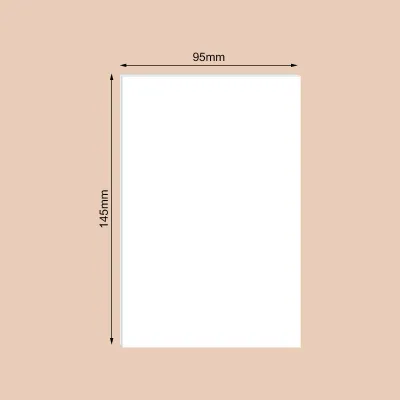
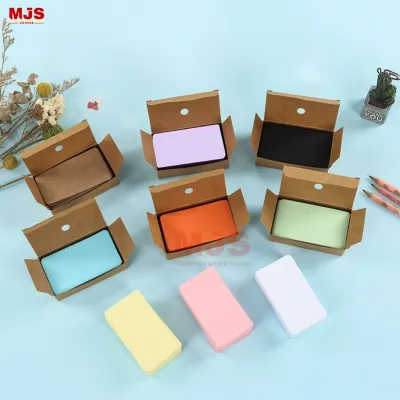
![[SG] Flash Blank Card 100pcs Note Index Card Blank Korean Portable Buckle Binder Notes DIY Stationery Flash Cards](https://img.lazcdn.com/g/p/75bee323a39b3d06bb2f6992f36a92f4.jpg_400x400q80.jpg_.webp)
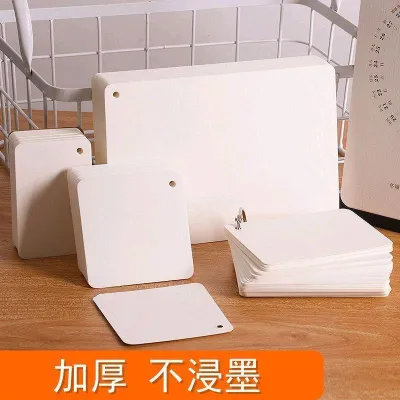
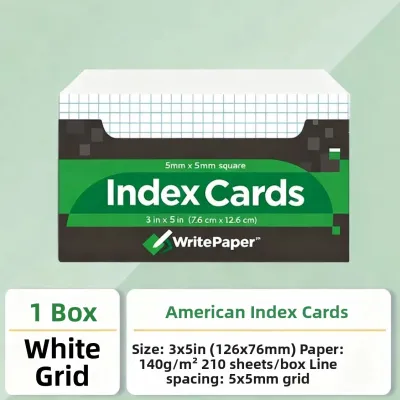
![[SG] 100pcs 350gsm Thick Blank Kraft Flash Card Gift Card for Christmas Birthday Wedding Message Card](https://img.lazcdn.com/g/ff/kf/S3edc0c7b24ed4d9086b3ded2c41132e4V.jpg_400x400q80.jpg_.webp)
Prices are valid at publication and may change. Please refer to the product page for the latest price.
Size Options and Their Practical Applications
Physical dimensions dictate how much information a card can comfortably hold without becoming cluttered. Selecting the wrong size can either restrict your notes or leave you with excess, wasted space that makes the deck cumbersome to carry.
- 3×5 Inches (Approx. 76×127 mm): This is the classic index card size. It is highly portable and ideal for brief, single-concept prompts, such as foreign language vocabulary, historical dates, scientific terms, or simple mathematical formulas.
- 4×6 Inches (Approx. 102×152 mm): A mid-sized option that provides extra breathing room. It is well-suited for short definitions paired with a small supporting diagram, bulleted lists, or multi-step processes.
- 5×8 Inches (Approx. 127×203 mm): The largest standard size, best reserved for highly complex subjects. Use these cards for detailed anatomical drawings, organic chemistry reaction pathways, comprehensive mind maps, or structured essay outlines.
Surface Texture and Ruling Options
The finish of the card stock directly impacts your writing speed and ink drying times. Unlined cards offer complete visual freedom, making them the preferred choice for visual learners who rely on sketches, diagrams, and non-linear mind maps. Lightly ruled cards, on the other hand, feature faint horizontal lines that help keep text neat and aligned, which is beneficial for writing long definitions or structured lists. Dotted or grid patterns are also available, offering a balanced middle ground for technical subjects where both text alignment and precise drawing are required.
Binding and Packaging Formats
How your cards are bundled affects their portability and how you interact with them daily. Loose cards sold in boxes are excellent for desktop studying and are easy to file away into categorized storage boxes as you master each concept. Pre-punched cards held together by metal or flexible plastic binder rings are highly portable, allowing you to flip through cards with one hand while standing on a crowded bus or train. Shrink-wrapped bulk packs are generally the most cost-effective option for students who expect to go through hundreds of cards over a semester, allowing you to customize your own binding or storage methods.
Top Flash Card Specifications for Different Learning Styles
Best for Heavy Memorization and Vocabulary Drills
Students preparing for content-heavy disciplines—such as medicine, law, or language acquisition—require a system optimized for high-volume, repetitive testing. For these demanding scenarios, standard 3×5 inch unlined or lightly ruled cards are the gold standard. Because these subjects require constant self-quizzing, the cards must feature a high-opacity paper stock of at least 200 GSM to prevent any shadow or ghosting of the answer from showing through to the front.

To manage the sheer volume of information, look for bulk packaging options containing 300 to 500 cards per pack to keep your cost per card low. Organization is paramount when dealing with hundreds of active terms, so pre-punched cards paired with detachable metal binder rings are highly recommended. This setup allows you to curate smaller, highly targeted sub-decks of 30 to 50 cards to carry on your daily commute, leaving the mastered cards safely filed away at home.
Best for Visual Learners and Complex Diagrams
Visual learners rely on spatial organization, color-coded systems, and detailed illustrations to process and recall information. If you are studying subjects like biology, chemistry, or geography, standard small cards will quickly feel restrictive. Instead, opt for larger 4×6 or 5×8 inch cards that provide the canvas needed for complex diagrams, chemical structures, or historical timelines.
Incorporating color-coded blank card sets can significantly enhance cognitive association. By assigning specific pastel or neon colors to different subjects, modules, or levels of difficulty, you create an immediate visual cue that aids in mental sorting. For highly iterative practice—such as drawing and redrawing molecular structures or mathematical proofs—reusable whiteboard-style flash cards made from synthetic, dry-erase materials are an excellent alternative. These allow you to sketch, test yourself, wipe the surface clean, and practice the diagram again without wasting paper.
Best for Young Learners and Frequent Handling
When selecting flash cards for primary school students or early learners, durability and physical safety are the primary considerations. Young children often handle study materials roughly, leading to bent corners, torn edges, and water damage from accidental spills. To counter this, choose smaller, thick cards designed specifically with rounded corners. Rounded edges prevent painful paper cuts and are far less prone to dog-earing over time.
For maximum longevity, look for cards made from extra-heavy card stock (250 GSM and above) or those featuring a light plastic-coated or laminated finish. While glossy finishes require specific writing instruments like permanent fine-liners, they provide excellent resistance to moisture and sticky fingers. Utilizing vibrant, multi-colored packs can also help maintain a child’s visual engagement and make it simple to partition different learning modules, such as separating basic addition facts from spelling words.
Where to Buy Quality Blank Flash Cards in Singapore
Offline Retail Options
For students and parents who prefer to feel the weight and texture of the paper before purchasing, Singapore offers several reliable brick-and-mortar retail options. Major local stationery chains, such as Popular Bookstore, carry a consistent supply of standard index cards and blank flash card packs in various sizes and rulings. These stores are highly accessible, with branches located in almost every suburban heartland mall across the island.
For more specialized or premium paper options, university campus bookstores—such as the NUS Co-op or NTU retail outlets—frequently stock high-quality, student-focused stationery designed to handle heavy ink usage. Independent specialty stationery shops, particularly those located in cultural hubs like Bras Basah Complex, are excellent for sourcing unique formats, such as thick Japanese-style ring cards or premium high-GSM sketch cards.
Online Marketplaces and E-Commerce
Online shopping platforms offer unparalleled convenience and access to a wider variety of international stationery brands. When browsing local online marketplaces or specialty e-commerce stores, you can easily find bulk packs of blank flash cards at highly competitive prices. However, buying paper products online requires careful verification to ensure you do not receive flimsy, low-quality cards.
When purchasing online, always perform the following verification checks:
- Verify the exact GSM: Avoid listings that simply state "thick paper" without providing a numerical GSM rating. Look for explicit specifications of 150 GSM or higher.
- Check the dimensions: Ensure the dimensions are listed in millimeters or inches so you do not accidentally order miniature cards.
- Read user reviews for ink performance: Search customer feedback specifically for mentions of "bleed-through," "ghosting," or "warping" to gauge how the paper handles different pens.
- Account for local climate factors: Singapore's high relative humidity can cause thin, unprotected paper cards to absorb moisture and warp over time. Look for cards packaged in resealable plastic cases or sturdy boxes to protect them from the humid air.
- Factor in delivery times and shipping fees: While bulk packs are cost-effective, their weight can increase shipping costs significantly. Look for local sellers or platforms offering consolidated shipping to minimize extra expenses.
Tips for Making and Organizing Your Flash Cards
Selecting the Right Writing Instruments
To ensure your flash cards remain legible and pristine, you must match your writing tool to the specific card stock finish. For standard, uncoated card stock, quick-dry gel pens with a fine tip (0.5mm or 0.7mm) or pigment-based fine-liners are ideal. These inks dry rapidly, preventing the smudging that often occurs when you flip cards over quickly during intensive study sessions. Ballpoint pens are also a highly reliable, smear-free option, though they require slightly more writing pressure. Avoid using heavy alcohol-based markers or wet fountain pens unless you are certain your cards feature a premium, high-GSM finish specifically treated to handle heavy liquid inks.
Structural Layout and Content Design
The layout of your card directly influences how quickly your brain processes the information. Keep your prompts concise and focused on a single core concept per card; packing too many ideas onto a single piece of paper dilutes the effectiveness of active recall. Use clear, bold headings for the main prompt, and break down answers on the back into bullet points or simple, numbered steps. Whenever possible, replace long blocks of text with simple hand-drawn sketches, flowcharts, or mnemonics, as visual representations are significantly easier to recall under exam conditions.
Devising an Effective Organization System
An unorganized stack of flash cards quickly becomes overwhelming. To get the most out of your physical decks, implement a structured organization system like the Leitner box method, which uses spaced repetition to optimize study time.
Create three to five physical compartments or boxes labeled with review frequencies, such as “Every Day,” “Every Other Day,” and “Once a Week.” All new cards start in the daily box. When you review a card and get the answer correct, move it to the next box. If you get it wrong, return it to the very first box. You can physically separate these categories using colored divider tabs, heavy-duty rubber bands, or specialized plastic flash card storage boxes. This structured approach ensures you spend your valuable study time focusing on your weakest areas rather than reviewing material you have already mastered.
Frequently Asked Questions (FAQ)
Can I use standard index cards as flash cards?
Yes, standard index cards and blank flash cards are physically very similar and can be used interchangeably for studying. However, many standard office-grade index cards are manufactured with thin paper (often under 120 GSM) designed primarily for one-sided filing notes. If you plan to write on both sides or use highlighters, check the paper density first. It is highly recommended to perform a quick test write with your preferred pen on a single card before purchasing a large bulk pack to ensure the ink does not bleed through and obscure the writing on the reverse side.
What pen works best on blank flash cards without smudging?
For most uncoated blank flash cards, quick-dry gel pens, pigment-based fine-liners, and standard ballpoint pens work best. These writing instruments deliver clean lines and dry almost instantly on standard card stock, minimizing the risk of smearing when you handle or stack the cards. If your flash cards have a glossy, laminated, or water-resistant coating, standard water-based gel pens will smear easily; in these cases, you should use a permanent fine-tip marker or a oil-based ballpoint pen to ensure the ink adheres permanently to the surface.
Community discussion
Share your experience or ask a question. Comments are reviewed before publication.