
Starting your needlework journey in Singapore is an exciting step, but walking into a craft store or browsing online marketplaces can quickly become overwhelming. The sheer volume of individual tools—from various needle sizes to different thread weights—makes a pre-assembled sewing kit set box an incredibly practical choice for beginners. Instead of purchasing items separately, these curated sets offer a streamlined entry point, saving you time and ensuring you have the basic tools to start immediately.
However, because product availability and inventory fluctuate constantly across local retailers and online platforms, the key to finding the right kit lies in knowing how to evaluate tool completeness, box durability, and project suitability. By focusing on these core quality indicators, you can confidently select a set that supports your learning curve without unnecessary frustration.
Essential Tools to Look for in a Beginner Sewing Kit
To ensure your sewing kit set box is truly functional, you must verify that it contains the foundational tools required for basic needlework. Many budget kits inflate their piece counts with hundreds of low-quality items you may never use, while omitting the absolute essentials. A truly beginner-friendly set should prioritize high-quality core tools over sheer quantity.
Products mentioned in this guide
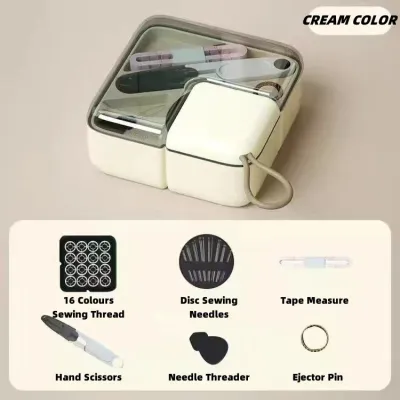
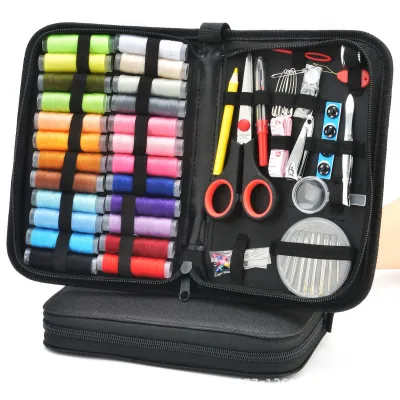
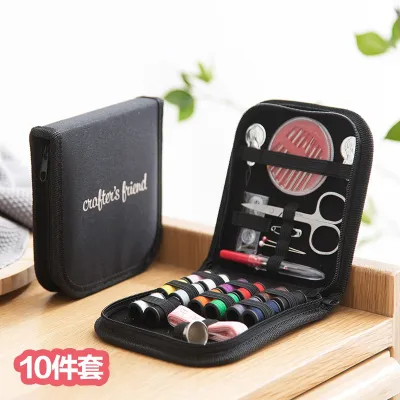
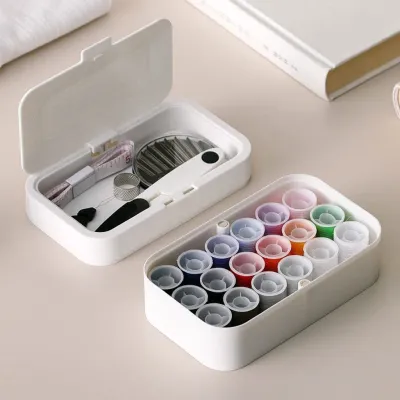
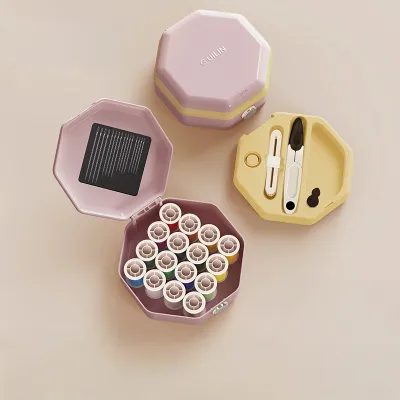
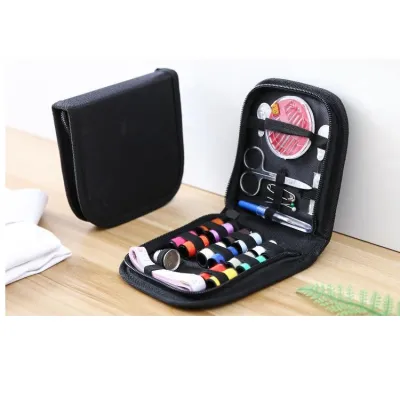
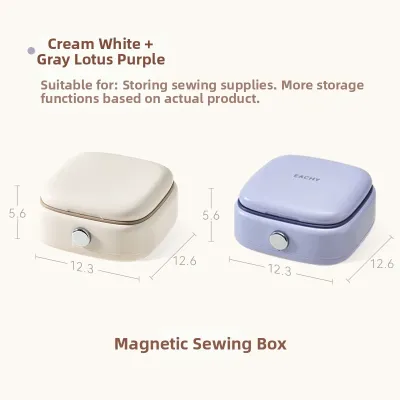
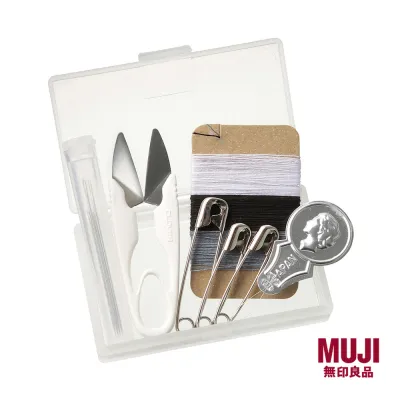
Prices are valid at publication and may change. Please refer to the product page for the latest price.
First, examine the cutting and measuring instruments. A pair of dedicated fabric scissors is non-negotiable; these should be sharp enough to cut through cotton or linen cleanly without chewing the edges. Alongside fabric shears, look for small thread snips, which are invaluable for quick, precise cuts close to the fabric surface. A flexible measuring tape, preferably marked in both centimeters and inches, is also essential for taking accurate measurements on curved surfaces or garments.
Next, evaluate the fastening and stitching basics. Your kit should include an assortment of hand sewing needles in various sizes, housed in a secure dial or case. Look for glass-head pins rather than cheap plastic-headed ones, as glass heads will not melt if you accidentally run an iron over them during pressing. A reliable needle threader is another critical inclusion, especially for beginners who may struggle with threading fine needle eyes.
Finally, pay close attention to the thread variety and quality. Many low-cost kits include brittle, low-grade threads that snap under minimal tension or fray during hand sewing. Ensure the kit provides spools made of durable polyester or long-staple cotton. Polyester thread is highly recommended for beginners due to its strength, elasticity, and resistance to breaking, making it suitable for a wide range of fabric types.
Evaluating the Box and Organization Features
The container holding your tools is just as important as the tools themselves. A poorly organized sewing kit set box leads to tangled threads, lost needles, and general frustration, which can quickly stall your enthusiasm for the craft. When evaluating storage options, consider how the box will perform over years of regular use.

Material durability is the first line of defense for your sewing tools. Rigid plastic, tin, or wooden boxes offer excellent protection for sharp items like scissors, pins, and needles. In contrast, flimsy cardboard boxes or soft fabric pouches can easily be punctured by sharp tools, and they offer little protection if stepped on or dropped. For those living in humid climates like Singapore, a sturdy, sealed container also helps protect metal tools from moisture, reducing the risk of rust.
Compartmentalization is another critical factor. A high-quality sewing box should feature dedicated slots, trays, or adjustable dividers. This structure keeps your thread spools upright and separated, preventing them from unspooling and tangling with one another. It also ensures that small, easily lost items like thimbles, buttons, and needle threaders have designated spots, allowing you to take inventory at a glance before closing the lid.
Lastly, consider the physical footprint and portability of the box. If you live in a compact apartment, space is at a premium. A compact, stackable box with a secure latch and a folding handle is ideal for easy storage on a shelf or in a drawer. If you plan to take your kit to sewing classes or community workshops, look for a lightweight yet rigid design that can be transported in a tote bag without spilling its contents.
Embroidery vs. Basic Sewing: Matching the Kit to Your Goal
Before purchasing a sewing kit set box, it is vital to clarify your creative goals, as basic garment mending and decorative embroidery require significantly different toolsets. Purchasing a kit designed for one purpose when you intend to practice the other will leave you missing essential items.
Basic sewing and mending kits are designed for utility. They focus on straight needles, thimbles, safety pins, and a wide palette of basic thread colors to match common garments. These kits are perfect for sewing buttons, repairing torn seams, or working on simple structural crafts. The tools are geared toward joining fabrics securely and invisibly.
In contrast, specialized embroidery kits focus on decorative stitching. These sets require embroidery hoops—usually made of bamboo, wood, or plastic—to keep the fabric taut while you work. They also feature specialized embroidery needles, often called crewel needles, which have larger eyes to accommodate multiple strands of embroidery floss. Additionally, embroidery kits should include pattern transfer tools, such as water-soluble pens or carbon transfer paper, to help you trace designs onto your fabric.
You will also encounter hybrid “all-in-one” kits that claim to cover both basic sewing and embroidery. While these can be tempting, they often compromise on the quality of specialized tools to keep the price low. For example, the included embroidery hoop might be flimsy, or the embroidery floss might be prone to knotting. If you are certain about which craft you want to pursue, it is generally better to choose a dedicated kit rather than a hybrid set that tries to do everything.
How to Verify Quality and Completeness Before Buying
When shopping on e-commerce platforms or local craft store websites, you cannot physically handle the tools, making careful verification essential. To avoid disappointment, you must learn to read product listings critically and look for specific indicators of quality.
Start by reading between the lines of product descriptions. Avoid listings that rely on vague marketing terms like “premium thread” or “professional grade” without providing specifications. Instead, look for concrete details, such as the material of the scissors (stainless steel is preferred) and the composition of the thread (such as 100% polyester). If a listing fails to specify these details, the components are likely lower-grade generics.
Next, assess the clarity of any included instructions. For beginners, a kit that includes a clear, illustrated guide or access to video tutorials is incredibly valuable. This is especially true for embroidery kits, where understanding different stitch types (like backstitch, satin stitch, or French knots) is crucial. Check user reviews or product photos to see if the instructions are written in clear English with easy-to-follow diagrams.
It is also important to evaluate the listed price in S$ against the actual utility of the tools. Do not be swayed by kits advertising “150 pieces” for a suspiciously low price. Often, 100 of those pieces are cheap plastic pins or tiny, single-use thread spools. Instead, calculate the value based on the core tools: a good pair of scissors, a sturdy box, and a solid selection of full-sized thread spools. A slightly more expensive kit with fewer, higher-quality pieces is always a better investment than a massive box of fragile tools.
Finally, leverage user feedback to spot potential issues. Search customer reviews for specific mentions of tool performance. Look for complaints about scissors that fail to cut fabric, needles that bend or break under light pressure, or thread that frays and breaks constantly. If multiple reviewers highlight these issues, it is a clear sign to look for a different kit.
Frequently Asked Questions (FAQ)
Do I need to buy extra fabric or threads with a starter kit?
Yes, in most cases, you will need to purchase fabric separately. While basic sewing kit set boxes provide the tools and a selection of threads, they rarely include practice fabric or project-specific materials. If you are buying an embroidery-specific kit, it may include a pre-printed fabric panel, but for general sewing, you should source some scrap cotton fabric to practice your stitches. Additionally, check the yardage of the included thread spools. Starter kits often feature smaller spools with limited yardage, which are perfect for quick repairs but may run out quickly during larger projects. For major sewing projects, plan to buy larger, individual spools of thread that match your fabric perfectly.
Are plastic or wooden boxes better for sewing kits?
Both materials have distinct advantages, and your choice should depend on your storage environment and portability needs. Plastic boxes are lightweight, highly portable, and usually feature transparent lids or compartments, allowing you to locate tools without opening the box. They are also highly resistant to moisture, which is a significant benefit in humid environments where metal tools are prone to rusting. Wooden boxes, on the other hand, offer classic aesthetic appeal, excellent durability, and a sturdy weight that keeps the box stable on your work table. However, they can be heavy to transport and may be susceptible to warping or splintering if exposed to high humidity or poor finishing.
Community discussion
Share your experience or ask a question. Comments are reviewed before publication.