
Preparing your child for a new school year in Singapore involves more than just buying textbooks and uniforms. Personalising and organising school gear is a crucial step that helps young learners feel ownership over their belongings and stay organised throughout the busy terms. High-quality stickers for kids serve as indispensable tools in this process, transitioning from simple motivational aids in Lower Primary (Primary 1 to 3) to highly functional organisational assets in Upper Primary (Primary 4 to 6). Selecting the right types of stickers ensures that school items remain clearly identifiable, textbooks stay protected, and students develop essential time-management skills.
By matching the appropriate sticker materials and designs to your child’s specific developmental stage, you can streamline their daily routine and prevent lost property. Lower primary students benefit immensely from tactile reward stickers that encourage positive habits, alongside robust, waterproof name labels that withstand daily washing and the humid tropical climate. Conversely, older primary students require functional planner stickers and aesthetic journaling kits that assist with tracking homework deadlines, project phases, and co-curricular activities (CCAs). This comprehensive guide outlines how to curate the perfect back-to-school sticker selection for every grade level, ensuring all choices are durable, school-compliant, and highly practical.
How to Choose School-Safe and Age-Appropriate Stickers
When selecting stickers for kids to use in a school environment, safety and material standards must be your primary consideration. Many low-cost novelty stickers contain PVC, phthalates, or toxic adhesives that are unsuitable for children who handle their school supplies daily. Look for products explicitly labeled as non-toxic, acid-free, and lead-free to ensure they are safe for prolonged skin contact. Additionally, avoid stickers featuring heavy, loose glitter or small, easily detachable plastic gems. These components can shed off onto classroom desks, create persistent litter that frustrates maintenance staff, or present choking hazards if younger siblings at home happen to find them.
Products mentioned in this guide
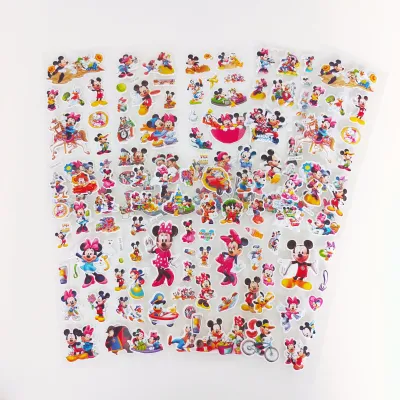
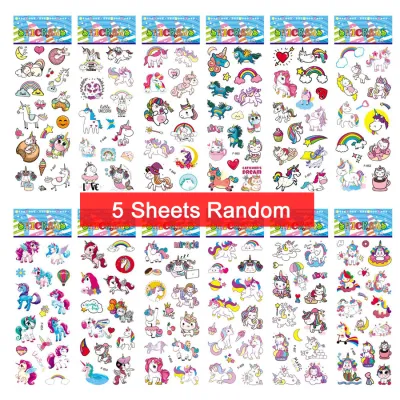
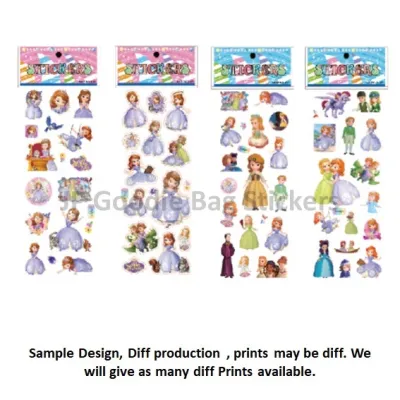
![[SG Ready Stock] Waterproof Stickers PVC Vinyl Plastic Pokemon Mario Children Birthday Gift Cartoon Kids Phone Luggage Laptop ipad Water Bottle Helmet](https://img.lazcdn.com/g/p/38ca957958d955ed67d20ac8ce8eaa46.png_400x400q80.png_.webp)
Prices are valid at publication and may change. Please refer to the product page for the latest price.
The type of adhesive used on the stickers is another critical factor that determines their suitability for school items. Permanent adhesives form a strong, irreversible bond with paper, plastic, and metal, making them ideal for personal name labels that must endure the entire academic year. However, permanent stickers should never be applied directly to rented school textbooks, library books, or shared school equipment, as removing them can tear the paper or leave a stubborn, sticky residue. For these items, opt for removable or repositionable adhesives, which allow stickers to be peeled away cleanly without damaging the underlying surface. Static cling stickers, which use no adhesive at all, are also excellent options for temporary decorations on smooth surfaces like plastic folders or clear book covers.
Before purchasing any stickers, parents should carefully review the school’s official handbook or code of conduct regarding personal property. Many schools in Singapore maintain strict guidelines concerning the appearance of school-issued items, textbooks, and uniforms. While personalising water bottles and pencil cases is generally accepted, excessive decoration of school diaries, official exercise books, or school-issued tablets (such as those used for personal learning devices) may be discouraged or prohibited. Choosing subtle, functional, and easily removable stickers ensures your child can express their personality and stay organised without violating school policies or causing unnecessary distractions in the classroom.
Lower Primary (Grades 1–3): Reward and Identification Stickers
During the transition into Primary 1, Primary 2, and Primary 3, children are adapting to structured routines, learning to manage their own stationery, and developing their fine motor skills. At this stage, stickers play a dual role: they serve as highly effective motivational tools for tracking positive behaviors and act as essential identification markers to prevent the frequent loss of personal belongings in crowded classrooms or play areas.

Puffy and Textured Reward Stickers
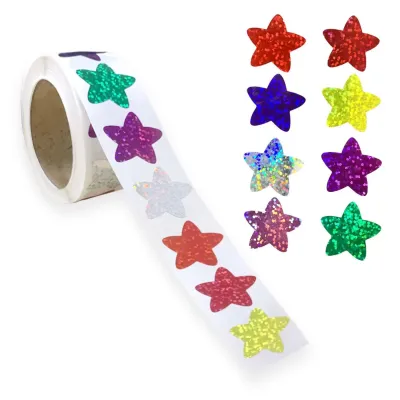
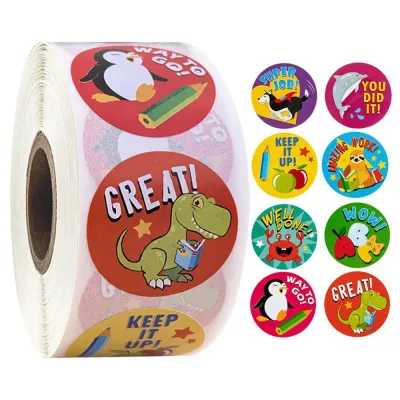
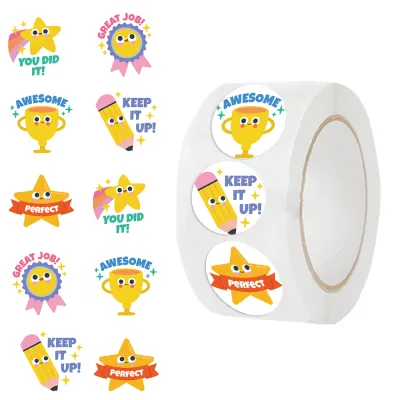
Tactile stickers are exceptional tools for reinforcing positive behavior, encouraging homework completion, and helping young children build confidence. Puffy, foam, and textured stickers—featuring classic motifs like bright stars, friendly animals, and encouraging smiley faces—provide instant sensory feedback that younger children find highly engaging. These stickers are particularly beneficial for small hands, as their raised profiles and pre-scored backing liners make them easy to peel and place independently, which helps refine hand-eye coordination and finger strength.
However, parents should be mindful of the physical limitations of thicker, three-dimensional stickers. When applied to the inside pages of notebooks, workbooks, or school diaries, bulky puffy stickers can prevent the books from closing flat, resulting in bent pages and uneven writing surfaces. To avoid this issue, establish clear rules with your child on where these tactile stickers should be placed. They are best reserved for decorating the exterior covers of personal sketchbooks, dedicated home reward charts, or the outside of rigid pencil cases where their thickness will not interfere with schoolwork.
Waterproof Name Labels and Folder Stickers
In the bustling environment of lower primary school, identical-looking water bottles, lunchboxes, and stationery items frequently end up in the lost-and-found bin. High-durability, waterproof name labels are the most effective solution for keeping track of these everyday essentials. Look for vinyl-based stickers that feature a laminated protective layer, ensuring the printed or written name remains completely legible even after repeated cycles of washing with dish soap and exposure to condensation in school bags.
For labeling textbooks, exercise books, and art portfolios, choose writable paper-based labels with a matte finish. These labels accept standard ballpoint pen or permanent marker ink without smudging, allowing you to write your child’s name, class, and subject clearly. Before applying any adhesive label, ensure the target surface is completely clean and dry; wiping the plastic or paper cover with a clean, dry cloth removes dust and oils, allowing the adhesive to form a secure, long-lasting bond that won’t peel at the corners in Singapore’s humid climate.
Upper Primary (Grades 4–6): Functional and Planner Stickers
As students progress into Primary 4, Primary 5, and Primary 6, their academic workload increases, and they are expected to take greater responsibility for their schedules, homework, and test preparation. Consequently, their sticker needs shift away from simple rewards and basic name labeling toward highly functional, organizational, and self-expressive tools that support advanced study habits and personal time management.
Aesthetic and Journaling Sticker Kits
Upper primary students often use school diaries, personal journals, and study notebooks to express their personal style and process their daily experiences. Aesthetic sticker kits featuring cohesive themes—such as minimalist geometric shapes, botanical illustrations, or vintage-inspired color palettes—allow older children to personalise their academic materials in a mature, structured way. Opt for ultra-thin matte paper or thin vinyl stickers, as these materials lie completely flat on the page and can be written over easily with gel pens, fine-liners, or highlighters without causing ink to bead or smudge.
These decorative stickers can be integrated directly into study notes to serve as visual anchors, helping students categorise information and make their revision materials more visually engaging. For example, a student can use a specific botanical sticker to mark the start of a new science chapter or apply a geometric border to highlight key mathematical formulas. To keep these stickers organised and prevent them from getting crumpled at the bottom of a school bag, select compact sticker books or flat sheets that slide easily into the internal pockets of a backpack or a standard zippered pencil case.
Functional Planner and Schedule Stickers
With the introduction of multiple school subjects, CCA commitments, and preparation for major examinations like the PSLE, time management becomes a vital skill for upper primary students. Functional planner stickers are designed specifically to help students navigate these complex schedules visually. Color-coded dot stickers, small subject labels, exam countdown flags, and tiny checkbox stickers allow students to transform a standard school diary into an active, easy-to-read homework tracker.
Using a consistent color-coding system helps students assess their weekly workload at a single glance. For instance, assigning blue stickers to Mathematics, red to Science, and green to English allows a child to quickly identify which subjects require immediate attention. It is highly recommended to choose repositionable or static cling stickers for scheduling purposes; school timetables, remedial lessons, and CCA sessions frequently shift, and using non-permanent adhesives ensures that schedules can be updated cleanly without leaving unsightly tears or sticky patches in the planner.
Material and Adhesive Checklist for School Supplies
To ensure that your back-to-school stickers perform well and do not cause damage to school property, it is essential to match the sticker material and adhesive type to the specific surface of the school item. The following checklist and comparison table provide a quick-reference guide to help you make the right selection for every category of school supply.
| Sticker Material | Best School Surfaces | Recommended Adhesive Type | Key Performance Characteristics |
|---|---|---|---|
| Paper (Matte/Glossy) | Notebooks, exercise books, paper folders, envelopes | Permanent or Removable | Easy to write on with standard pens; cost-effective; prone to tearing if wet. |
| Vinyl (Laminated) | Water bottles, lunchboxes, plastic files, metal tins | Permanent | Extremely durable; water-resistant; fade-resistant; withstands daily washing. |
| Puffy / Foam | Pencil case exteriors, reward charts, book covers | Permanent or Removable | Highly tactile and visual; bulky; best kept away from interior pages of books. |
| Static Cling | Whiteboards, glass windows, clear plastic book covers | None (Cohesive cling) | 100% removable and reusable; leaves zero residue; ideal for temporary schedules. |
Surface Preparation for Long-Lasting Adhesion
To get the best performance from permanent labels on plastic, metal, or glass surfaces, proper preparation is key. Begin by wiping the surface with a damp cloth and a drop of mild dish soap to remove any accumulated oils, dust, or manufacturing residues. Dry the surface completely with a clean, lint-free towel before applying the sticker. When placing the sticker, press firmly from the center outward to the edges to push out any trapped air bubbles, ensuring a complete bond that prevents moisture from seeping under the edges during washing.
Safe Removal Practices for School Property
When the school year ends or textbooks need to be returned, removing stickers cleanly without damaging the items is a common challenge. For paper-based covers or plastic folders, avoid using sharp metal blades or harsh chemical solvents like acetone, which can melt plastic, strip book cover inks, or warp paper. Instead, apply a very small amount of warm, soapy water to a soft microfiber cloth and gently rub the sticker residue in a circular motion. For stubborn adhesive left on plastic water bottles or metal pencil cases, a tiny drop of common cooking oil (such as canola or olive oil) applied to the residue for a few minutes will break down the adhesive bond, allowing it to be wiped away cleanly with a soapy cloth. Always check the manufacturer’s care instructions for high-value items like electronic devices before applying any liquids or oils.
Frequently Asked Questions (FAQ)
Are puffy stickers allowed in school pencil cases?
While puffy stickers are generally not prohibited by school rules, carrying large quantities of them inside a pencil case is often impractical. Their three-dimensional shape takes up significant volume, reducing the space available for essential stationery like pens, rulers, and erasers. Additionally, the constant friction inside a crowded pencil case can cause the puffy stickers to get crushed, lose their adhesive backing, or accidentally stick to other pens. It is best to keep puffy stickers at home for reward charts, or use flat vinyl or paper stickers if your child wants to carry decorative stickers to school.
How do I remove sticker residue from a school textbook?
To remove sticky residue from a school textbook cover without causing damage, you must exercise caution, especially with paper covers. If the cover is laminated or made of plastic, dampen a soft cloth with warm water and a single drop of mild dish soap, then gently wipe the sticky area. Avoid using excessive water, heat guns, or harsh chemical solvents, as these can warp the paper pages, dissolve the printed inks, or peel the protective laminate off the cover. For non-laminated paper covers, use a clean, high-quality rubber eraser to gently roll the adhesive residue off the surface using light, consistent pressure.
What is the difference between paper and vinyl stickers for school?
The primary differences lie in durability, water resistance, and writability. Paper stickers are highly cost-effective and have a texture that is easy to write on using standard school pens, making them the perfect choice for labeling paper notebooks, indexing files, and decorating planner pages. However, they tear easily and dissolve when exposed to moisture. Vinyl stickers are synthetic, tear-proof, and highly water-resistant, making them essential for items subjected to heavy wear, outdoor exposure, or daily washing, such as water bottles, lunchboxes, and sports equipment.
Community discussion
Share your experience or ask a question. Comments are reviewed before publication.