
Selecting the correct packaging is critical to ensuring fragile goods survive the journey from warehouse to doorstep. An air column bag provides a highly effective, shock-absorbing barrier, but its performance depends entirely on choosing the correct dimensions and material thickness. Selecting an incorrect size can leave items loose and vulnerable, while choosing the wrong thickness can lead to premature punctures or structural failure during transit.
To get the most out of this packaging solution, you must match the physical attributes of your item—such as its weight, sharp edges, and total volume—with the technical specifications of the bag. This guide breaks down how to interpret bag specifications, calculate the precise dimensions you need, and select the ideal thickness to protect your fragile shipments.
Decoding Air Column Bag Specs: Thickness and Dimensions
Before purchasing air column packaging, you must understand how manufacturers define their technical specifications. The most common metrics you will encounter are film thickness, uninflated versus inflated dimensions, and individual column width.
Products mentioned in this guide
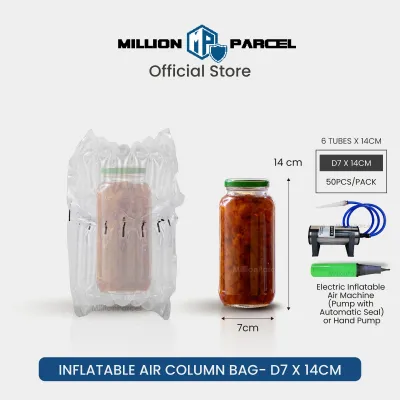
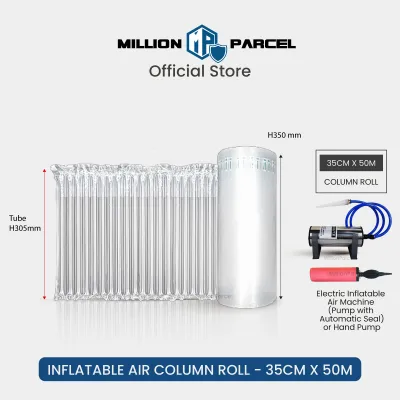
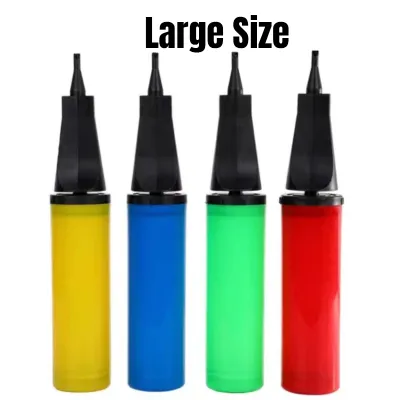
![Inflatable air packaging column 100 cm length [SG SELLER]](https://img.lazcdn.com/g/p/d53781b2c27f5b99411f3fff3344ab89.jpg_400x400q80.jpg_.webp)
Prices are valid at publication and may change. Please refer to the product page for the latest price.
Film thickness is typically measured in microns or mils (where 1 mil is approximately 25.4 microns). This measurement represents the thickness of a single layer of the co-extruded plastic film. A higher micron count directly correlates with increased puncture resistance and a higher load-bearing capacity, making it a critical specification to verify against the weight of your items.
A frequent point of confusion for buyers is the difference between uninflated (flat) dimensions and inflated (usable) dimensions. When you inflate an air column bag, the air chambers expand outward, which pulls the sides of the bag inward. This inflation process typically reduces the internal usable width and length by approximately 30% to 40% compared to the flat, uninflated measurements.
Column width, or the diameter of each individual chamber when flat (often 20mm, 30mm, or 40mm), determines how the bag wraps around your item. Narrower columns bend more easily around tight curves, whereas wider columns provide a thicker cushion barrier but are more rigid.
While some manufacturers highlight the number of internal material layers or proprietary co-extrusion formulas, everyday buyers should focus primarily on the total thickness and the manufacturer’s verified weight capacity. Checking these two specifications provides a reliable indicator of real-world performance without requiring deep chemical knowledge of the plastics used.
How to Choose the Right Thickness for Your Items
Selecting the appropriate film thickness requires balancing the weight of your item, its physical shape, and the potential hazards it will encounter during shipping. Using a film that is too thin risks a blowout under pressure, while an excessively thick film unnecessarily increases material costs and shipping weight.

The primary factors driving your thickness decision are item weight and the presence of sharp edges. Heavy items exert more concentrated force when dropped, requiring a thicker film to absorb the kinetic energy. Similarly, items with hard, sharp corners—such as metal pen nibs, glass corners, or rigid plastic art supply cases—can easily puncture thin films under tension, necessitating a highly puncture-resistant barrier.
Rather than relying solely on thickness numbers, always consult the manufacturer’s stated weight limits and puncture resistance ratings. High-quality air column bags are typically made from a co-extruded blend of Polyethylene (PE) and Polyamide (PA), commonly known as nylon. The ratio of PA in the blend heavily influences the film’s elasticity and strength; a thinner bag with a high PA content can sometimes outperform a thicker bag made from low-grade PE.
When choosing your specifications, consider the practical trade-offs involved. Thicker bags (such as those ranging from 60 to 75 microns per layer) offer robust protection for heavy or sharp items, but they are more expensive, take up more storage space in your warehouse, and add slight weight to your packages. For lightweight, rounded items, a standard thickness of 45 to 55 microns per layer is usually sufficient and more cost-effective.
Sizing Your Air Column Bag: Measurements and Column Width
To ensure a secure fit that prevents your item from shifting during transit, you must calculate the correct bag size based on three-dimensional measurements. A bag that is too small will not seal properly, while an oversized bag allows the item to bounce inside, reducing the effectiveness of the air cushion.
Begin by measuring the exact length, width, and height of your item (or its retail box) using a standard ruler. To find the minimum flat width of the air column bag you need, calculate the total circumference of the item (Width + Height) x 2, and then add a buffer of at least 10% to 15% to account for the shrinkage that occurs during inflation.
The choice of column width also plays a vital role in how securely the bag holds your item. For small, intricate, or highly delicate items, narrower columns (such as 20mm) are ideal because they provide more contact points and wrap tightly around irregular shapes. For larger, heavier items, wider columns (such as 30mm or 40mm) are preferred because they create a deeper, more rigid air barrier that keeps the item suspended away from the outer box walls.
Finally, remember to account for the sealed edges of the bag and the inflation valve area. The valve strip at the top of the bag is not usable storage space, and the heat-sealed seams on the sides reduce the internal width. Always subtract at least 3cm to 5cm from the manufacturer’s stated flat length to determine the true usable internal length of the inflated bag.
General Spec Guidelines for Common Fragile Items
To help you visualize the selection process, here are general specification guidelines tailored to common fragile items often shipped by stationery retailers and e-commerce merchants.
Glass Ink Bottles and Liquid Art Supplies
Glass ink bottles are heavy for their size and contain liquids that can cause severe damage if they leak. For these items, prioritize leak prevention and a snug fit that prevents any internal movement. A bag thickness of 50 to 60 microns with a narrow column width (such as 20mm) is recommended to wrap tightly around the cylindrical or square glass bottles, ensuring the weight is distributed evenly across multiple air chambers.
Premium Fountain Pens and Delicate Stationery Sets
Premium fountain pens and boxed stationery sets require a delicate touch to avoid crushing the original retail presentation boxes. Use a standard thickness of 45 to 50 microns to provide gentle cushioning without applying excessive compressive force when inflated. Opt for a 20mm column width to allow the packaging to bend precisely around the rectangular edges of the gift boxes without warping them.
Ceramics, Mugs, and General E-Commerce Fragile Goods
Ceramic mugs, clay pots, and general household fragile goods feature irregular shapes and can produce sharp shards if they break. These items require wider columns (30mm to 40mm) and a higher thickness of 60 to 75 microns. The thicker film resists punctures from handles or sharp ceramic edges, while the wider columns provide the deep shock absorption needed to survive drops onto hard sorting-office floors.
Note: These recommendations serve as general starting points. You must always verify the physical dimensions of your specific product packaging and perform test shipments before committing to a bulk order.
Essential Inflation and Packing Tips for Maximum Protection
Even the highest-quality air column bag will fail to protect your items if it is inflated or packed incorrectly. Achieving the perfect balance of air pressure is critical to maintaining the bag’s structural integrity throughout its journey.
Aim for an inflation level where the columns are firm to the touch but still retain a slight amount of give when squeezed. Over-inflating the bag makes the plastic rigid and highly susceptible to bursting when subjected to atmospheric pressure changes during air freight, or when exposed to high temperatures in tropical transit environments like Singapore. Conversely, under-inflating the bag leaves the columns soft, allowing the item to bottom out and strike the outer box during a drop.
Before sealing your shipping box, inspect the inflated bag for any slow leaks or faulty valves. Ensure you place the wrapped item inside a correctly sized outer cardboard box; if the outer box is too small, it will compress the air columns excessively, transferring external impacts directly to your fragile item and defeating the purpose of the air cushion.
Frequently Asked Questions (FAQ)
Can air column bags be deflated and reused for multiple shipments?
Most standard air column bags are designed with one-way valves that automatically seal after inflation, making them difficult to deflate without damaging the internal plastic valves. While you can sometimes insert a long, thin straw into the valve to release the air slowly, this process can compromise the valve’s integrity. Reuse is only recommended if the bag remains fully inflated, shows no signs of stretching or micro-punctures, and the heat-sealed seams are completely intact.
How should air column bags be disposed of or recycled?
Air column bags are typically manufactured from co-extruded Polyethylene (PE) and Polyamide (PA) plastic blends. Because these bags are made of multi-layer plastics, they are generally classified under plastic resin identification code 7 (Other) and cannot be processed in standard domestic curbside recycling bins. To dispose of them responsibly, check your local municipal recycling guidelines—such as Singapore’s National Environment Agency (NEA) recommendations—to locate specialized soft plastic drop-off points or recycling facilities equipped to handle multi-layer films.
Community discussion
Share your experience or ask a question. Comments are reviewed before publication.