
Selecting the right stationery for school-aged children involves balancing personal expression with classroom practicality. Among the most popular embellishments are 3d stickers, which add texture, depth, and vibrant designs to notebooks, pencil cases, and folders. However, a sticker that delights a lower primary student might prove highly impractical for a secondary school student carrying a tightly packed backpack. The suitability of these stickers depends heavily on matching the student’s developmental stage, motor skills, and organizational habits with the physical properties of the sticker materials.
For younger children in Grades 1 to 3, soft, highly tactile materials like ethylene-vinyl acetate (EVA) foam or puffy plastic are ideal because they support sensory development and are easy for small hands to manipulate. As students progress to upper primary (Grades 4 to 6), their interests shift toward detailed journaling and peer socialization, making sleek, durable epoxy or acrylic stickers a better fit. Secondary school students require a completely different approach, prioritizing low-profile, textured materials like embossed paper or thin PVC that offer a mature, minimalist aesthetic without adding bulk to heavy study binders. Understanding these material differences ensures that school supplies remain personalized yet fully functional throughout the academic year.
How to Evaluate 3D Stickers for School Environments
Before purchasing any adhesive embellishments for school use, parents and students must evaluate how the physical characteristics of the stickers interact with the daily demands of an educational environment. School supplies are subjected to constant handling, temperature fluctuations, and tight storage conditions, all of which affect how well an adhesive product performs over time.
Products mentioned in this guide
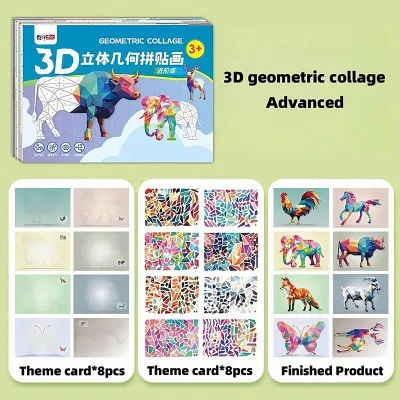
![[SG seller] 10 sheets $1.99 Cheapest 3D Kids Stickers Cartoon Puffy Children Goodie Birthday Party Reward Paw Patrol Frozen Princess Unicorn Pokemon Pony Spiderman McQueen Mickey Dinosaurs Sofia Melody Peppa Stiker Minions Hello Kitty Thomas Animal](https://img.lazcdn.com/g/p/afe3ef10d071d2018c551103fbbc499a.jpg_400x400q80.jpg_.webp)
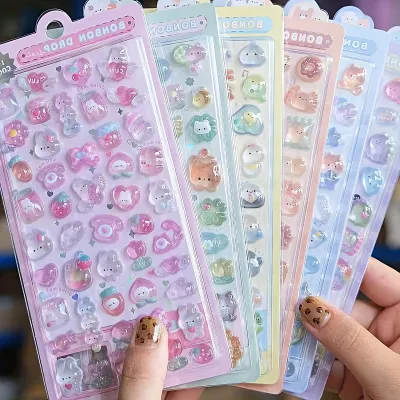
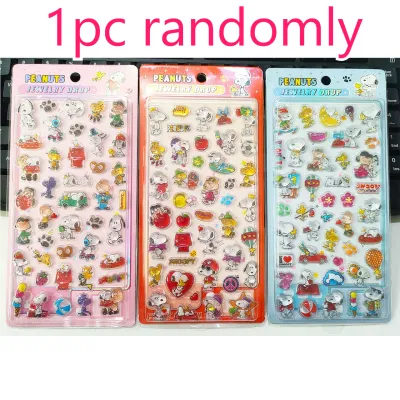
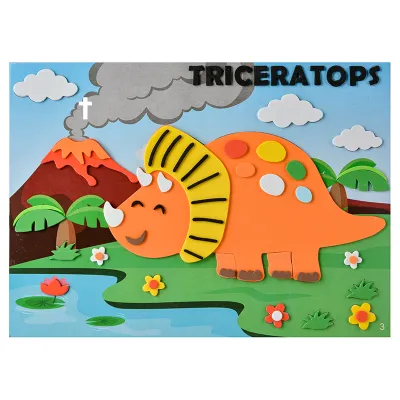
![[KW] Dream & Play Studio Landscape Sticker | 3D Scene Sticker for Journaling Scrapbook Stress Relief & Gift – HG 314-3](https://img.lazcdn.com/g/p/9f81d412ee5b0705611641a0e1b2d9ea.jpg_400x400q80.jpg_.webp)
Prices are valid at publication and may change. Please refer to the product page for the latest price.
Adhesive Quality and Residue
School environments require a careful approach to adhesives because students frequently decorate items that are not their permanent property, such as school-issued textbooks, rented lockers, or borrowed library materials. When selecting stickers, it is vital to distinguish between permanent and removable adhesives. High-tack permanent adhesives use solvent-based acrylics that cure strongly over time, making them highly resistant to peeling but nearly impossible to remove without tearing paper covers or leaving a sticky, dirt-attracting residue. Removable adhesives, often water-based, allow for easy repositioning but may lift prematurely at the corners. In Singapore’s hot and humid climate, high relative humidity can soften low-quality water-based adhesives, causing them to slide, bleed sticky residue along the edges, or lose their grip entirely. Selecting high-quality, humidity-resistant adhesives prevents these messy issues.
Thickness and Book Closure
Physical thickness is a critical factor that directly impacts the longevity of school books. A sticker that stands 3 to 5 millimeters proud of a surface creates a localized pressure point when the book is closed. When several decorated notebooks are stacked together or compressed inside a school bag, this uneven distribution of force bends the surrounding paper and strains the bookbinding. Over a semester, this localized pressure can cause the spine of a textbook to crack, pages to loosen, and adjacent books to develop permanent indentations. To preserve book bindings, limit thick, three-dimensional designs to rigid outer surfaces, such as plastic file folders or hard-shell pencil cases, rather than the inner pages or softcovers of working notebooks.
Durability Against Friction
School bags are high-friction environments where binders, pencil cases, and water bottles constantly rub against one another. Different 3D materials react uniquely to this continuous mechanical wear. Soft puff stickers, which contain trapped air pockets, are highly susceptible to puncturing or tearing when scraped by the edge of a metal ruler or a plastic divider. Foam stickers made from low-density EVA can compress permanently under the weight of heavy textbooks, losing their three-dimensional appeal and turning into flattened, dirty patches. Epoxy and acrylic stickers are much harder and resist compression, but their rigid edges can catch on fabric bag liners, causing the entire sticker to shear off if the adhesive backing cannot withstand the lateral force.
School Appropriateness
While personal expression is important, classroom decorations must comply with general school rules and maintain a focused learning environment. Highly distracting designs—such as those featuring flashing LED lights, built-in liquid glitter shakers that make noise when moved, or overly aggressive, non-educational themes—should be avoided. Many schools enforce guidelines regarding neatness and visual distractions on desks. Opting for subtle, cheerful, or functionally organized designs ensures that the student’s stationery remains a tool for productivity rather than a source of classroom disruption.
Best 3D Sticker Types for Lower Primary Students (Grades 1–3)
Lower primary students are in a key developmental phase where fine motor skills, hand-eye coordination, and sensory exploration are rapidly evolving. The stationery items they interact with should support these milestones while remaining safe and easy to use.

Design Complexity
For children aged seven to nine, sticker designs should feature large, simple geometric shapes and easily recognizable icons. Bold outlines of animals, stars, smiley faces, and basic reward symbols are highly recommended. Intricate designs with thin, spindly projections or complex interlocking patterns are incredibly difficult for young children to peel off the backing sheet without tearing. Simple, self-contained shapes allow children to successfully grip, peel, and place the stickers independently, fostering a sense of confidence and fine motor control.
Material Needs
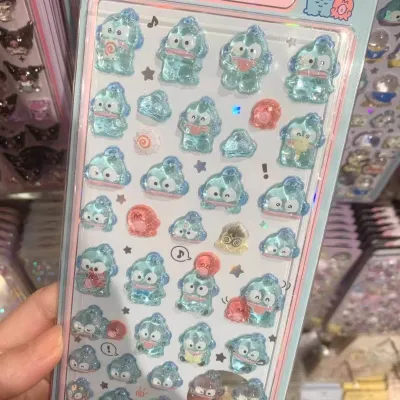
Soft puff stickers and thick EVA foam stickers are the outstanding choices for this age group. These materials provide immediate, satisfying tactile feedback that appeals to a young child’s sensory-seeking behavior. EVA foam is highly resilient; it can be squeezed, bent, and pressed repeatedly without tearing easily. Furthermore, these materials are lightweight and do not add noticeable weight to a young child’s school bag, which is already a health consideration for growing shoulders.
Primary Use Cases
In lower primary, these stickers serve primarily as motivational tools and basic organizational markers. Parents and teachers frequently use them on behavior reward charts, homework trackers, and reading logs to celebrate milestones. For the students, these tactile labels are excellent for personalizing plastic storage boxes, color-coding subject folders, or decorating simple classroom craft projects. Placing a distinct, tactile foam sticker on a pencil case or water bottle also helps young children quickly identify their personal belongings in a crowded classroom cubby.
Buying Checklist
- Easy-Peel Backing: Look for sticker sheets that feature a slightly oversized backing paper or pre-cut split backings, which allow small fingers to easily separate the sticker from the sheet.
- Non-Toxic Certifications: Ensure the packaging explicitly states compliance with international safety standards, such as EN71 or ASTM D-4236, confirming that the materials and adhesives are free from harmful phthalates and heavy metals.
- Rounded Edges: Avoid hard plastic or acrylic stickers with sharp corners that could accidentally scratch sensitive skin or catch on clothing.
Best 3D Sticker Types for Upper Primary Students (Grades 4–6)
As students enter upper primary, their academic workload increases, and they begin to develop more structured personal organizational habits, such as keeping a daily planner or maintaining a homework diary. Peer relationships and personal identity also play a much larger role in their aesthetic choices.
Design Complexity
Students in Grades 4 to 6 generally reject simplistic reward icons in favor of detailed, themed sticker sets. Popular themes include space exploration, botanical illustrations, cute character art, sports motifs, and hobby-specific illustrations. These designs feature moderate detail and a more sophisticated color palette, allowing students to create visually cohesive layouts in their personal notebooks and scrapbooks.
Material Needs
Epoxy and acrylic 3D stickers are highly suitable for upper primary students. Epoxy stickers feature a printed design covered by a clear, domed layer of polyurethane resin, giving them a smooth, glossy, and glass-like finish. This protective dome makes the sticker highly durable, water-resistant, and resistant to scratching. Acrylic stickers are made from molded hard plastic, offering a clean, rigid three-dimensional structure that looks premium and sophisticated compared to basic foam.
Primary Use Cases
At this stage, stickers are heavily utilized for personalizing student planners, decorating the covers of project presentation folders, and enhancing personal diaries. The trading of cute or unique stickers during recess also serves as a common social activity, helping students bond over shared interests. Because these students are more careful with their belongings, they can successfully maintain these slightly raised embellishments on the covers of their daily school binders without damaging them.
Buying Checklist
- Cohesive Color Palettes: Select multi-pack sheets that offer a unified color theme, making it easier for the student to design attractive, coordinated layouts in their planners.
- No Sharp Protrusions: Inspect molded acrylic designs to ensure there are no sharp points or delicate, protruding limbs that could snag on fabric pencil cases, mesh pockets, or clothing.
- Low-Profile Dome: Opt for epoxy domes that do not exceed 2 millimeters in height to minimize the bulk added to stacked schoolbooks.
- Water-Resistant Adhesives: Verify that the adhesive backing can withstand occasional moisture, especially if the stickers are applied to items like water bottles or lunchboxes that undergo regular hand-washing.
Best 3D Sticker Types for Secondary School Students
Secondary school students prioritize functionality, personal efficiency, and a mature, understated aesthetic. They carry a significantly heavier academic load, requiring multiple thick binders, textbooks, and electronic devices that must be packed tightly into their school bags daily.
Design Complexity
For teenagers, sticker designs should lean toward minimalism, vintage aesthetics, or purely functional patterns. Highly popular options include 3D textured label tapes, subtle geometric borders, abstract shapes, and stickers featuring high-quality faux-material finishes, such as metallic foil, brushed steel, or faux leather textures. These designs allow for subtle personalization without appearing childish or overly flashy.
Material Needs
To accommodate the intense compression inside a secondary school student’s backpack, the ideal 3D materials must be exceptionally thin yet physically textured. Textured PVC, embossed paper, and very low-profile resin stickers are the premier choices. Embossed paper stickers provide a beautiful tactile depth through raised paper fibers, yet they remain virtually flat, ensuring they do not interfere with the flat closure of heavy study notes. Textured PVC offers excellent durability and water resistance while maintaining a slim profile.
Primary Use Cases
In secondary school, the primary application of stickers shifts from pure decoration to practical organization. Students use textured labels and color-coded 3D dots to organize subject dividers, highlight key chapters in thick study guides, and label archive boxes at home. Where school IT policies permit, these low-profile, high-adhesion stickers are also used to subtly personalize the outer cases of laptops, tablets, and scientific calculators, helping students distinguish their expensive electronic devices from those of their peers.
Buying Checklist
- Matte and Satin Finishes: Prioritize matte, satin, or textured paper finishes over high-gloss or glittery options to maintain a professional, academic appearance.
- High-Strength Adhesive for Non-Porous Surfaces: Ensure the adhesive is specifically formulated to bond securely with plastic folders, metal pencil cases, and anodized aluminum or polycarbonate electronic casings.
- Minimalist Packaging: Look for compact sticker booklets or storage sheets that can slide easily into a binder pocket or a flat laptop sleeve without bending.
Quick Comparison: 3D Sticker Features by Grade Level
The following table synthesizes the key recommendations for each educational stage, allowing parents and students to quickly identify the most practical and age-appropriate options for their school gear.
| Grade Level | Ideal 3D Material / Type | Design Focus | Primary School Use Case | Key Buying Check |
|---|---|---|---|---|
| Lower Primary (Grades 1–3) | Soft puff, thick EVA foam | Large, simple shapes, animals, stars, reward icons | Behavior charts, folder decoration, water bottle identification | Easy-peel backing, non-toxic certifications, rounded edges |
| Upper Primary (Grades 4–6) | Epoxy dome, molded acrylic | Detailed themed sets, cute characters, hobby motifs | Student planners, project covers, recess trading | Cohesive color palettes, no sharp protrusions, low-profile dome |
| Secondary School | Textured PVC, embossed paper, thin resin | Minimalist patterns, textured labels, metallic finishes | Subject color-coding, folder labeling, subtle tech personalization | Matte/satin finishes, high-strength adhesive, minimal thickness |
Practical Tips for Applying and Protecting 3D Stickers in School Bags
To ensure that 3D stickers remain intact and do not cause damage to other school supplies, proper application and maintenance techniques are essential.
Strategic Placement
To prevent structural damage to books and notebooks, never place thick 3D stickers near the spine or binding. When books are stacked, any raised element near the spine acts as a fulcrum, multiplying the leverage force and pulling the binding apart. The ideal location for a thick sticker is in the center or along the outer vertical third of a hard, rigid cover. Furthermore, avoid placing three-dimensional stickers on the inner pages of notebooks; reserve these pages exclusively for flat paper stickers to ensure the notebook can close completely flat.
Protection Methods
For softer foam or puff stickers applied to high-wear items like plastic folders, you can extend their lifespan by applying a protective border. Placing a frame of durable, high-quality washi tape around the edges of the sticker helps smooth out the transition from the flat folder surface to the raised sticker edge. This significantly reduces the likelihood of the sticker catching on bag liners or other books. For flat, embossed paper stickers on book covers, wrapping the entire book in clear plastic contact paper (book wrapping plastic) seals the edges completely, preventing dust accumulation and edge peeling.
Safe Removal
If a sticker must be removed from a school-issued folder or textbook, hasty scraping can permanently ruin the cover material. Before attempting removal, check the material of the cover.
- For Plastic-Coated or Polypropylene Covers: Gently peel back the sticker at a shallow 180-degree angle rather than pulling straight up. To remove any remaining sticky residue, use a soft, clean white vinyl eraser and rub the adhesive gently. The friction will cause the adhesive to ball up, making it easy to brush away. For stubborn residue, apply a single drop of ordinary vegetable oil to a microfiber cloth, rub the spot gently to break down the adhesive tack, and immediately wipe the area clean with a damp, soapy cloth. Always test this oil method on a tiny, hidden corner first to ensure it does not discolor the plastic.
- For Uncoated Paper or Cardboard Covers: Avoid all liquid solvents, oils, and water, as they will instantly stain and warp the paper fibers. Instead, use a hair dryer on its lowest heat setting, holding it roughly 15 centimeters away from the sticker for 10 to 15 seconds to soften the adhesive. Gently peel the sticker away while the adhesive is warm. If residue remains, very gently dab it with the sticky side of some masking tape to lift the remaining adhesive without tearing the paper fibers.
Storage of Unused Stickers
Unused sheets of 3D stickers should never be left loose in a school bag, where they can easily bend, collect dust along the exposed adhesive edges, or have their dimensional elements permanently crushed. Store sticker sheets flat inside a rigid plastic folder, a dedicated pocket of a ring binder, or a flat tin pencil case. Keeping them in a cool, dry drawer away from direct sunlight preserves the chemical integrity of the adhesive, ensuring the stickers remain fully functional when the student is ready to use them.
Frequently Asked Questions (FAQ)
Are 3D stickers safe for young children in lower primary?
Yes, 3D stickers are generally safe for lower primary school children (typically aged seven and older), as they have moved past the developmental stage of putting non-food items in their mouths. However, parents should always check the product packaging for certified non-toxic labels, such as the CE mark, EN71 compliance, or ASTM D-4236 certification, to ensure the plastics and adhesives are free from harmful chemicals. While the stickers themselves are safe, very small, detachable 3D elements—such as tiny individual rhinestones, small plastic gems, or loose shaker beads—can still pose a minor choking hazard if peeled off and swallowed. For younger primary students, it is best to stick to large, single-piece foam or puff stickers and avoid sheets with small, easily detachable parts.
Will thick 3D stickers damage my child's school textbooks?
Yes, thick 3D stickers can easily damage textbooks if applied incorrectly. When heavy books are packed tightly together inside a school bag, a raised, rigid sticker creates a concentrated pressure point. This pressure transfers directly to the pages of the adjacent book, often causing deep, permanent indentations, warping, or even tearing of thin paper pages over time. Additionally, thick stickers placed near the spine of a book prevent it from closing flat, placing immense structural strain on the binding. To prevent damage, apply thick foam, epoxy, or acrylic stickers only to rigid, external items like plastic pencil cases, water bottles, or hard-shell folders. For textbooks and softcover notebooks, stick to thin, textured alternatives like embossed paper or flat vinyl stickers.
Where is the best place to buy school-appropriate 3D stickers in Singapore?
In Singapore, school-appropriate 3D stickers are widely available across several physical and digital retail channels. Major local bookstore chains, such as Popular Bookstore, offer an extensive selection of educational, motivational, and craft-focused stickers suitable for all primary school levels. For older students seeking minimalist, aesthetic, or functional designs, specialty lifestyle and stationery shops—including Tokyu Hands and MUJI—provide high-quality, low-profile options. Additionally, neighborhood art supply shops and various online marketplaces or ecommerce platforms offer a vast array of imported sticker sheets, allowing parents to browse through diverse material specifications, safety certifications, and bulk-buying options from the comfort of home.
Community discussion
Share your experience or ask a question. Comments are reviewed before publication.