
Quick Answer: Which Board is Better for Teaching?
Selecting the ideal writing surface for an educational environment requires balancing visual clarity, interactive utility, and spatial constraints. Neither the acrylic transparent magnetic board nor the traditional whiteboard is universally superior for every teaching scenario. The optimal choice depends heavily on your classroom’s physical dimensions, lighting conditions, and the specific teaching aids you use daily.
Traditional whiteboards remain the industry standard for large classrooms due to their high-contrast visibility and robust magnetic holding power. Conversely, acrylic transparent magnetic boards offer a sleek, modern aesthetic that excels in smaller tutoring spaces, home classrooms, or offices where they can be mounted on glass partitions or windows to maintain an open feel. However, these transparent boards require careful background contrast management and specialized magnetic accessories to perform effectively.
Writing Visibility and Classroom Contrast
In any teaching environment, student comprehension relies directly on visual legibility. Traditional whiteboards, whether constructed from melamine or high-end porcelain-on-steel, feature an opaque white surface. This white background reflects a high percentage of ambient light, creating an immediate, high-contrast canvas when paired with dark dry-erase markers in black, blue, or red. This stark contrast ensures that hand-written text, mathematical formulas, and diagrams remain easily readable from the back row of a large lecture hall or deep classroom, even under varied lighting conditions.
Products mentioned in this guide
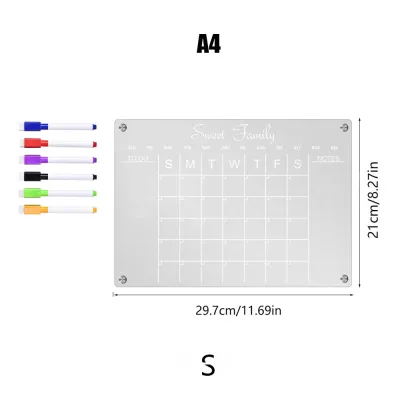
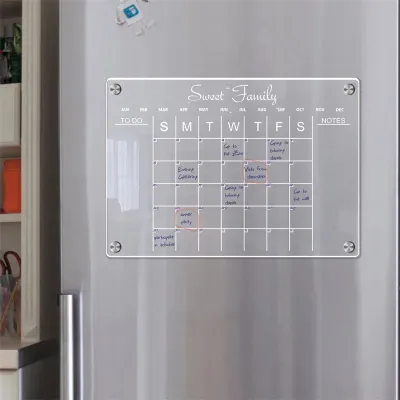
![🇸🇬 [In Stock]Magnetic Board Clear Acrylic Calendar Board Fridge Magnet Dry Erase Board Planner Daily Weekly Monthly Schedule](https://img.lazcdn.com/g/p/9825d932826324a771fc1554bdd6e9ec.jpg_400x400q80.jpg_.webp)
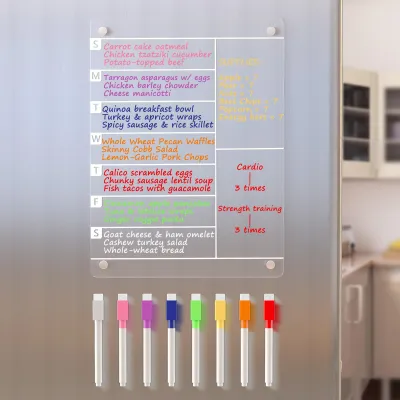
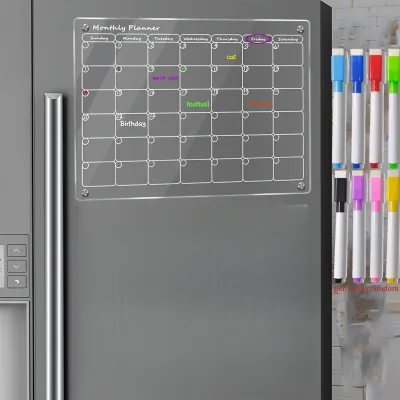
Prices are valid at publication and may change. Please refer to the product page for the latest price.

An acrylic transparent magnetic board presents a completely different set of optical characteristics. Because the board is entirely clear, its visibility is not inherent; it is highly conditional upon the surface directly behind it. If you mount a transparent board against a light-colored wall, such as off-white or light beige, standard dry-erase markers will lose their visual definition, making the text difficult for students to read. To achieve adequate contrast, these boards must be mounted against a dark-colored wall or utilize a specialized dark backing panel. Without this intentional contrast management, students may experience eye strain trying to decipher notes.
Glare and light reflection present additional challenges for both mediums, though they manifest differently. Glossy traditional whiteboards can catch harsh reflections from overhead fluorescent tubes or direct sunlight, creating blind spots for students seated at certain angles. Acrylic boards, with their highly polished polymer surfaces, are even more prone to specular reflection. When mounted directly on glass partitions or windows—a popular setup in modern Singapore tuition centres—acrylic boards can create a double-reflection phenomenon. Light refracts through the front surface of the acrylic, reflects off the glass behind it, and exits through the front again, creating a subtle visual shadow or ghost image of the written text. To mitigate this, place transparent boards away from direct window glare and position overhead lighting to strike the board at non-reflective angles.
Magnetic Strength for Letters and Teaching Aids
Interactive teaching methods often rely on magnetic accessories, such as magnetic letters for phonics, colored magnetic pins for tracking progress, or heavy cardstock flashcards backed with magnetic tape. The ability of a board to support these tools depends entirely on its internal construction. Traditional magnetic whiteboards are built with a solid sheet of steel laminated beneath the writing surface. This steel backing provides a highly conductive magnetic field across the entire board. Because the protective writing layer (whether porcelain or paint) is incredibly thin, magnets can make near-direct contact with the steel, resulting in a strong, uniform magnetic pull. This setup easily supports heavy plastic magnetic letters, thick folders, and even small tablets or magnetic trays without slipping.
In contrast, an acrylic transparent magnetic board features a different structural design that inherently limits its magnetic efficiency. Acrylic itself is a non-magnetic polymer. To give these boards magnetic properties, manufacturers must place a metal sheet or a series of magnetic points behind the acrylic panel. Because the acrylic sheet itself must have a certain thickness (typically 3mm to 6mm) to maintain structural rigidity and prevent warping, it acts as a significant physical barrier between the magnet and the metal backing. According to the physics of magnetism, magnetic force decreases exponentially as the distance between the magnet and the metal increases.
Consequently, standard ceramic magnets or flexible rubber magnetic strips that work effortlessly on a traditional whiteboard will slide down or fall off an acrylic magnetic board. If you plan to use an acrylic board for teaching, you must adapt your accessories. You will need to purchase high-strength neodymium (rare-earth) magnets to overcome the thickness of the acrylic panel. When purchasing an acrylic board, always check the manufacturer’s specifications regarding the maximum thickness of compatible magnets and the rated magnetic pull force to ensure your existing teaching aids will remain securely in place.
Durability, Ghosting, and Daily Maintenance
The daily wear and tear of an educational environment demands a surface that can withstand constant writing, erasing, and occasional accidental impacts. Traditional whiteboards vary in durability based on their material. High-end porcelain (ceramic-on-steel) boards are incredibly hard and resistant to scratches, dents, and chemical damage. Their non-porous glass surface prevents marker ink from penetrating, making them virtually immune to ghosting—the faint, permanent staining left by old marker ink. Melamine boards, while more budget-friendly, are made of resin-infused paper over particleboard. Over time, the protective resin layer wears down, exposing a porous surface that easily traps ink pigments, leading to severe ghosting and requiring frequent deep cleaning.
Acrylic transparent boards offer excellent resistance to shattering compared to glass, but they possess a much softer surface than porcelain. This polymer composition makes acrylic highly susceptible to micro-scratches. Even seemingly harmless cleaning habits, such as using rough paper towels, dry-erase erasers with embedded grit, or abrasive kitchen sponges, can leave microscopic scratches on the acrylic surface. Over months of use, these micro-scratches accumulate, trapping marker pigments and creating a cloudy, hazy appearance that permanently ruins the board’s transparency and aesthetic appeal.
To maintain the pristine look of an acrylic board, you must implement strict cleaning protocols. Only use clean, high-quality microfiber cloths for daily erasing. For deeper cleaning, rely on specialized acrylic-safe whiteboard cleaners or a mild solution of dish soap and warm water. You must strictly avoid harsh chemical solvents commonly found in schools, such as isopropyl alcohol, ammonia, or acetone. These chemicals react aggressively with polymethyl methacrylate (acrylic), causing a physical phenomenon known as crazing. Crazing introduces thousands of microscopic cracks throughout the internal structure of the plastic, instantly turning a beautiful transparent board into a cloudy, brittle, and permanently damaged sheet.
Installation, Weight, and Classroom Setup
The physical installation of a teaching board affects both classroom safety and spatial design. Traditional whiteboards, particularly larger models or those with steel porcelain construction, are heavy and rigid. Installing them requires secure anchoring into wall studs or using heavy-duty masonry plugs if mounting on concrete walls, which are common in Singapore’s residential and commercial buildings. Once installed, a traditional whiteboard becomes a permanent, opaque focal point in the room, dominating the wall space and defining the front of the classroom.
Acrylic boards are generally lighter than high-end porcelain-on-steel boards of equivalent size, making them easier to transport and handle during setup. Their transparency allows them to blend seamlessly into modern architectural designs, making them highly favored in boutique tuition centres, corporate training rooms, and home study areas. Instead of consuming valuable solid wall space, an acrylic board can be mounted directly onto glass partitions, internal windows, or room dividers using specialized stainless steel standoff hardware. This hardware suspends the board a few centimetres away from the glass or wall surface, creating a floating effect that preserves natural light transmission and maintains an open, spacious feel in compact rooms.
When planning your installation, it is crucial to verify that the included mounting hardware is appropriate for your specific wall material. Standard screws and plastic anchors provided in retail packaging are often insufficient for drywall installations in commercial spaces, which require toggle bolts or butterfly anchors to distribute the weight safely. For concrete walls, ensure you have a rotary hammer drill and appropriate masonry wall plugs to guarantee a secure, permanent mount that can withstand the physical pressure of daily writing and erasing.
Decision Framework: Which Board Should You Buy?
To choose the right board for your educational space, evaluate your specific teaching methods, classroom layout, and maintenance capacity against the following criteria.
Choose a Traditional Whiteboard if:
- Large Room Visibility: You teach in a medium-to-large classroom where students are seated more than three meters away from the board and require maximum contrast.
- Heavy Magnetic Use: Your lessons rely heavily on heavy magnetic letters, heavy cardstock flashcards, magnetic pocket charts, or interactive metal teaching aids.
- Low-Maintenance Durability: You require a rugged, high-traffic surface (especially porcelain) that resists scratches, can be cleaned quickly with standard erasers, and resists ghosting over years of daily use.
Choose an Acrylic Transparent Magnetic Board if:
- Compact or Modern Spaces: You are outfitting a small tutoring room, a home study, or a modern office where space is limited and a bulky white board would overwhelm the room's design.
- Glass Mounting: You want to mount the writing surface directly onto a glass partition, window, or room divider to maximize natural light and maintain an open-plan aesthetic.
- Lightweight or Direct Writing: You primarily write directly on the board with markers and only use lightweight magnetic accessories that can be paired with strong neodymium magnets.
Verify first if:
- Background Contrast: The wall behind your planned acrylic board is dark enough, or you have a dark backing panel, to ensure dry-erase marker ink is highly legible.
- Magnetic Compatibility: The board's magnetic pull is rated to support the specific weight of the magnetic letters or teaching aids you intend to use.
Frequently Asked Questions (FAQ)
Can I use liquid chalk or neon markers on an acrylic transparent board?
Yes, liquid chalk and neon wet-erase markers are excellent choices for acrylic transparent boards because they offer much higher pigment density and contrast compared to standard dry-erase markers. This makes your writing significantly easier to read, especially against lighter backgrounds. However, you must verify with the board manufacturer that the acrylic surface is non-porous and compatible with wet-erase pigments. Some lower-grade acrylics can absorb the liquid carriers in these markers, leading to permanent staining or shadowing that is difficult to remove.
How do I remove permanent marker stains from an acrylic board?
If a permanent marker is accidentally used on your acrylic board, do not use harsh chemical solvents like acetone, nail polish remover, or high-concentration alcohol, as these will permanently damage and cloud the plastic. Instead, use the dry-erase marker method. Draw directly over the permanent marker ink with a fresh, dark dry-erase marker. The solvents present in the dry-erase ink will naturally dissolve the permanent ink’s binding agents. Wait a few seconds, then gently wipe the area clean with a soft microfiber cloth. Repeat the process if any faint residue remains.
Community discussion
Share your experience or ask a question. Comments are reviewed before publication.